Search "240-72" and you'll land in two different worlds that share a part-number collision. In solar catalogs, "240-72" almost always means a 240-watt, 72-cell module — the workhorse format of the 2010s that still fills warehouses, replacement markets, and budget off-grid builds. In electrical contexts, it reads as 240 volts with a 72-amp load or circuit — a combination that shows up on equipment nameplates, data-center PDUs, and industrial heaters, and that breaks the tidy breaker-size chart most people memorized. We field questions on both meanings at Portlandia Electric Supply — replacement-panel buyers chasing a 72-cell 240W to match a legacy array, and electricians staring at a 240V/72A nameplate wondering why 72 isn't on the standard amp chart. This guide covers both, with the sizing math done out loud.

Interpreting 240-72: Which Meaning Applies to You
Context decides. If you found "240-72" in a solar panel model string (formats like XXX-240-72, JAP72, or "240W 72 cell"), you're shopping for a legacy module. If you found it on an electrical nameplate, spec sheet, or drawing note ("240V, 72A"), you're sizing a circuit. Occasionally it appears as a bare model or SKU fragment on unrelated industrial equipment — contactors, transformers, rack PDUs — where it's simply the manufacturer's internal code. We'll take the solar meaning first, then the electrical one, then the crossover cases.
Meaning One: The 240W, 72-Cell Solar Panel
What the format is
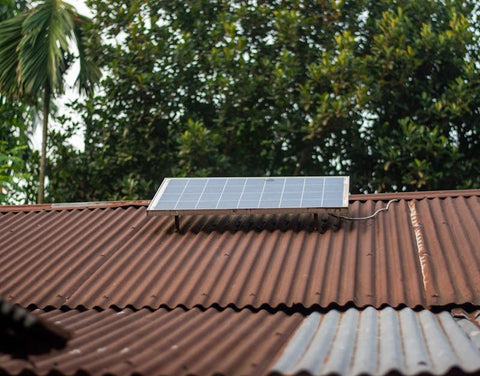
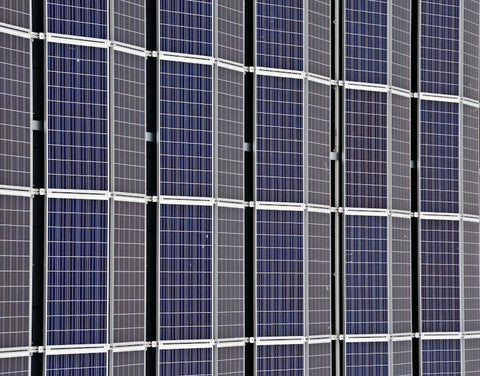
Seventy-two-cell modules (also stamped as 6×12 cell layouts) were the standard "large" panel from roughly 2010 to 2018. A 240W 72-cell panel of that era is built from 72 full square polycrystalline or early monocrystalline cells, each contributing about 3.3W, wired in three series strings of 24 cells inside the laminate. Typical physical size: about 1956 × 992 mm (77 × 39 in), 40 mm frame, 45–55 lb. The format survives today as 144-half-cut-cell modules — electrically the same geometry, cells sliced in half — but when someone says "72-cell 240W" they mean the legacy full-cell panel.
Representative electrical specs for a 240W/72-cell module of that era (always design from the actual datasheet — these are typical published ranges, not one model's numbers):
| Parameter | Typical Value (240W, 72-cell, poly) | Field Note |
|---|---|---|
| Rated power (Pmax) | 240 W | ±3% or ±5W tolerance depending on bin |
| Open-circuit voltage (Voc) | 43.5–45.5 V | Multiplies up fast in cold weather — see NEC 690.7 |
| Max-power voltage (Vmp) | 36.0–37.5 V | Two in series ≈ 72–75V: the "72V" battery-charge sweet spot |
| Short-circuit current (Isc) | 7.0–7.4 A | Low current — forgiving on wire size |
| Max-power current (Imp) | 6.5–6.9 A | Four parallel strings still under 30A |
| Module efficiency | 14.5–15.5% | Why modern 400W+ panels exist — same roof, nearly double the watts |
| Max system voltage | 600V (some 1000V) | Check the label before putting old panels in new strings |
Why people still buy them
Three honest reasons. First, array matching: when one panel in a 2014-era string dies, mixing a modern 450W module into that string drags the string down to the weakest link and can void what's left of the warranty — a like-for-like 240W/72-cell replacement is the correct repair. Second, legacy charge-controller math: off-grid systems built around 72-cell panels on MPPT controllers charging 48V banks were engineered around Vmp ≈ 36V per panel; the replacement needs to sit in the same voltage window. Third, price: surplus and new-old-stock 72-cell panels trade well under modern modules per piece, which matters for budget cabin and ag builds where roof area is free. For format context, read 72-cell vs 144-cell panels explained.
Replacement and expansion math (NEC, worked)
Say you're matching a legacy string on a 600V inverter input with panels at Voc 45V, Voc temp coefficient −0.30%/°C, and a design minimum of −15°C. NEC 690.7 correction: 1 + (40 × 0.0030) = 1.12. Corrected Voc = 45 × 1.12 = 50.4V. Max modules in series: 600 ÷ 50.4 = 11.9 → 11 modules. With modern 144-half-cell replacements (Voc ~49–50V, coefficient −0.26 to −0.29%/°C) the count drops to 10 — which is why "just swap in new panels" quietly redesigns your strings.
Current side, NEC 690.8: Isc 7.4A × 1.25 × 1.25 = 11.6A minimum ampacity per string — 14 AWG copper PV wire handles a single string, 12 AWG for two paralleled (14.8A × ... run the actual sum for your string count). The NEC wire ampacity chart, NEC wire sizing guide, and PV wire vs USE-2 vs THHN guide carry the full tables.
| Sizing Step | NEC Reference | Formula | 240W/72-Cell Example |
|---|---|---|---|
| Max series count (cold) | 690.7 | Voc × [1 + (25 − Tmin) × β/100] × N ≤ Vmax | 45 × 1.12 × 11 = 554 V ≤ 600 V → max 11 |
| String conductor ampacity | 690.8(B) | Isc × 1.5625 | 7.4 × 1.5625 = 11.6 A → 14 AWG Cu minimum |
| Two paralleled strings | 690.8/690.9 | 2 × Isc × 1.5625 | 23.2 A → 10 AWG Cu, 25A OCPD if required |
| Rapid shutdown | 690.12 | Module-level or boundary compliance | Legacy arrays pre-2017 may be exempt; expansions often trigger it |
Meaning Two: A 240-Volt, 72-Amp Electrical Load
Why 72A breaks the breaker chart
NEC 240.6(A) lists standard overcurrent device ratings: ...50, 60, 70, 80, 90, 100A... Notice what's missing: 72. A 240V/72A nameplate — common on commercial water heaters, industrial heaters, kilns, EV supply equipment clusters, and some rack PDUs — forces a judgment call that the code actually answers cleanly. For a continuous load (likely to run 3+ hours — heaters almost always are), NEC 210.19/210.20 require conductors and OCPD at 125% of continuous current: 72 × 1.25 = 90A. That lands exactly on a standard size: 90A breaker, conductors at 90A minimum ampacity.
| Step | NEC Reference | Calculation | Result |
|---|---|---|---|
| Continuous-load sizing | 210.19(A)(1), 210.20(A) | 72 A × 1.25 | 90 A |
| OCPD | 240.6(A) | Standard size ≥ 90 A | 90 A breaker (exact standard size) |
| Conductor (Cu, 75°C terminations) | 310.16 | ≥ 90 A ampacity | 2 AWG Cu THHN/THWN-2 (95A @ 75°C) — 3 AWG (85A) fails the 90A requirement |
| Equipment grounding conductor | 250.122 | Per 90A OCPD | 8 AWG Cu |
| Non-continuous alternative | 210.19/240.6(B) | 72 A load on 80A OCPD, conductors ≥72A | 80 A breaker, 4 AWG Cu (85A @ 75°C) — only if truly non-continuous |
The trap in that last row: electricians see 72A, round up to an 80A breaker per 240.6(B), and hang 4 AWG on it — perfectly legal for a non-continuous load. Then the "intermittent" process heater runs eight hours a day, the 4 AWG runs warm, and the 80A breaker nuisance-trips on cold mornings because it was sized at 100% of a continuous load instead of 125%. If it heats, treat it as continuous. We've never regretted the 90A/2-AWG answer.
Voltage drop on the 240V/72A run
At 72A, voltage drop stops being an academic exercise fast. Single-phase 240V, 100 ft one-way, 2 AWG copper: VD = 2 × L × R × I ÷ 1000, with 2 AWG resistance ≈ 0.194 Ω/1000 ft → VD = 2 × 100 × 0.194 × 72 ÷ 1000 ≈ 2.79V, or 1.2% — fine. Stretch the same run to 250 ft and you're at ~7V / 2.9%, right at the NEC informational 3% branch-circuit guideline, and the heater element runs cooler and slower. Past that, step to 1/0 (0.121 Ω/1000 ft: VD ≈ 4.4V / 1.8% at 250 ft). Size for the distance, not the minimum the table allows.
Crossover Cases: Where the Two Meanings Meet
Data centers and industrial panels are where "240-72" turns into a genuine ambiguity. A rack PDU labeled 240V/72A (derated to 57.6A continuous per the 80% rule in UL/NEMA practice) feeds exactly the kind of continuous IT load where the 125% math above is mandatory — 72A × 1.25 = 90A circuit, full stop. Meanwhile the same facility's rooftop array may run legacy 72-cell modules. When a submittal package says "240-72" without context, ask before you order; we've watched a wholesaler ship a pallet of solar panels to a contractor who needed a PDU. It was a quiet drive back.
In solar-plus-backup systems the meanings stack: 72-cell legacy panels on the roof, a 240V split-phase inverter-charger, and a generator input. If that's your project, the system components overview, hybrid inverter guide, and panel wiring basics map the whole chain.
Common Applications and Deployment Scenarios
| Scenario | Which "240-72" | Key Decision |
|---|---|---|
| Replacing a dead panel in a 2010s array | 240W 72-cell module | Match Voc/Vmp within ~5% of string mates; check max system voltage label |
| Budget off-grid cabin, 48V battery bank | 240W 72-cell module | 2-in-series Vmp ~72V suits MPPT charging 48V banks — see battery sizing for off-grid |
| Commercial water heater / process heat | 240V / 72A circuit | Continuous duty: 90A OCPD, 2 AWG Cu, per NEC 210.19/240.6/310.16 |
| Data-center rack PDU | 240V / 72A class | 80% continuous derating practice; verify plug/receptacle standard (e.g., IEC 60309) |
| Equipment model/SKU fragment | Manufacturer code | Pull the datasheet; never spec from a bare number |
Compatibility, Standards, and Compliance
On the solar side, any module you install — legacy 240W or new — must carry UL 61730 listing (or the older UL 1703 for true legacy replacements, per AHJ acceptance), and additions to an existing array can trigger current-code requirements like NEC 690.12 rapid shutdown on the new work. Ask the AHJ before the truck rolls. On the electrical side, 240V/72A-class equipment lands under NEC Article 422 (appliances), 424 (fixed electric space heating), or 625 (EV supply equipment) depending on the load, each with its own disconnect and GFCI overlays. Cross-border readers: IEC and CE-marked gear uses 230V nominal with different breaker steps (63A, 80A), so the "72A" problem looks different — but the 125%-of-continuous logic survives translation.
Troubleshooting the Failures We Actually See
For legacy 72-cell arrays: chronic underperformance usually traces to one of three causes — a single shorted bypass diode dropping a third of a panel's voltage (find it with a clamp meter and a thermal camera, in that order), potential-induced degradation on old poly strings run at high voltage on transformerless inverters, or a mismatched replacement panel dragging the string. For 240V/72A circuits: nuisance trips on cold mornings (inrush plus a breaker sized at 100% of continuous), hot lugs from untorqued terminations (re-torque to the manufacturer spec — typically 35–50 in-lb on 2 AWG lugs, marked with a witness line), and heater elements that "failed" but were actually running 4% low on voltage for years and died young.
Glossary Quick Reference
| Term | Meaning in This Guide |
|---|---|
| Voc / Vmp | Open-circuit and max-power voltage of a module; Voc drives NEC 690.7 string-voltage math |
| Isc / Imp | Short-circuit and max-power current; Isc drives NEC 690.8 conductor sizing (×1.5625) |
| 72-cell / 144-half-cell | Legacy full-cell format and its modern half-cut electrical equivalent |
| Continuous load | Load at max current for 3+ hours; forces 125% conductor/OCPD sizing (NEC 210.19/210.20) |
| Standard OCPD sizes | NEC 240.6(A): 15–100A in steps of 5/10; 72A is not one of them |
| EGC / GEC | Equipment grounding conductor (250.122) vs grounding electrode conductor (250.66) |
| MTBF | Mean time between failures — marketing-adjacent; ask for field return rates instead |
Buying 72-Cell Panels in 2026: New, Surplus, and Used
The 72-cell 240W-class market today splits three ways, and the channels price very differently. New-old-stock (NOS) — sealed pallets from cancelled 2016–2019 projects — is the best value when you can verify storage conditions: panels that sat indoors on a dry pallet degrade essentially not at all in the box; panels that sat in a field in Arizona are a lottery ticket. Surplus/dealer stock carries some warranty through the reseller and costs 10–20% more. Used pulls from decommissioned arrays are the cheapest per watt and the riskiest: insist on a flash test or at minimum a Voc/Isc spot check with a meter before paying for a pallet, and expect 5–10% degradation plus the odd dead diode. Whatever the channel, match four numbers against your existing string — Voc, Vmp, Isc, Imp — within about 5%, and check the max system voltage rating on the label. A 600V-rated legacy panel has no business in a new 1500V string design.
Charge-Controller Sizing for 72-Cell Panels (Off-Grid Math)

The classic off-grid pairing — 72-cell panels into an MPPT controller charging a 48V bank — works because of the voltage match, and it still needs arithmetic. Take eight 240W panels as 4 strings of 2: array 1,920W, string Vmp ≈ 72V, Imp ≈ 6.7A per string, 26.8A total. Controller current on a 48V bank: 1,920W ÷ 48V ≈ 40A at full sun, so a 60A MPPT covers it with margin — and per NEC 690.8 practice you'd size the controller-to-battery conductors for 40 × 1.25 = 50A minimum, i.e. 8 AWG copper (50A at 75°C) with a 50–60A breaker per NEC 240.6. Array Voc check for cold mornings: 2 in series × 45V × 1.12 (−15°C correction) ≈ 101V — comfortably under a 150V-input MPPT, and a reminder of why series strings of 3 legacy panels (≈151V corrected) blow the input stage of 150V controllers in cold snaps. We see a few of those every February.
| Off-Grid Element | Rule | 8×240W Example |
|---|---|---|
| Array size | Daily Wh ÷ (peak sun hr × 0.75 system factor) | 1,920 W → ~5.7 kWh/day at 4 PSH |
| Controller current | Array W ÷ battery V, ×1.25 margin | 1,920 ÷ 48 = 40 A → 60 A MPPT |
| Array Voc (cold) | String Voc × NEC 690.7 correction ≤ controller max | 2 × 45 × 1.12 = 101 V ≤ 150 V ✓ |
| Charge conductors | I × 1.25, NEC 310.16 | 50 A → 8 AWG Cu, 50–60 A OCPD |
| Battery bank | Days of autonomy × daily Wh ÷ DoD | 2 days × 5.7 kWh ÷ 0.5 (lead) = 22.8 kWh ÷ 0.8 (LFP) = 14.3 kWh |
For the storage side of that math, our home battery bank sizing guide and battery sizing calculator take it from array watts to bank amp-hours, and the runtime calculator checks autonomy claims.
Data-Center Corner: 240V/72A-Class PDUs
Spend one paragraph in the other world. High-density rack PDUs at 240V with ratings in the 60–80A class exist because 240V single-phase (or 208V three-phase) delivers twice the watts per receptacle of 120V at the same copper — a 72A-class 240V PDU supports roughly 13.8 kW continuous per rack after the 80% continuous derating (17.3 kVA × 0.8). The installation rules mirror the heater case: continuous load, 125% sizing, 90A circuit, 2 AWG copper. The differences are termination standards (IEC 60309 pin-and-sleeve instead of NEMA), metering expectations (branch-circuit monitoring is standard in colo), and redundancy (A/B feeds from separate UPS paths). If you're speccing both the rack power and the rooftop array for the same facility, the electrical one-line is where the two "240-72"s meet — and where a good electrical engineer earns their fee.
EV Charging and 240V: Where 72A-Adjacent Numbers Show Up at Home
The residential cousin of the 72A problem is EV charging. A typical 48A Level 2 charger on a 240V circuit is a continuous load by definition — EVSE is treated as continuous under NEC 625 — so it lands on a 60A breaker (48 × 1.25 = 60) with 6 AWG copper. Push to a 64A charger and the math forces an 80A breaker and 4 AWG. The pattern is the same one from the industrial case: continuous load, 125% sizing, land on a standard NEC 240.6 rating, and don't cheat the conductor because the load "probably won't run that long" — an EV absolutely will. If your project pairs EV charging with solar and storage, the commercial EV charging installation guide and the EV charging cost breakdown cover the site side, and Level 2 chargers and 240V home fast chargers are the hardware shelves.
Troubleshooting Legacy 72-Cell Arrays in Depth
Three failure signatures account for most service calls on 2010s-era 72-cell systems, and each has a field test. Signature one: one string reads about two-thirds of expected Voc — a shorted bypass diode has dropped one of the panel's three cell-strings out of circuit. Test: clamp-meter current comparison across strings under the same sun, then thermal camera — the bad panel shows a hot spot at the junction box. Fix: module replacement with a matched 72-cell unit. Signature two: whole-array output sagging 15–25% from early-years production on transformerless inverters — classic potential-induced degradation on old poly cells. Test: insulation resistance and a night-time voltage check per the inverter manufacturer's PID procedure; some systems respond to anti-PID devices that raise array potential at night. Signature three: production dropped right after a "cheap panel swap" — a mismatched replacement module dragging the string to its current. Test: compare the replacement's Imp against string mates; if it's more than ~5% low, the string is now a 240W string wearing one small panel's ceiling. Fix: matched replacement, which is why the surplus 72-cell channel still exists. For wiring-level faults, the panel wiring basics and maintenance guide are the references.
Procurement Checklist for Both Meanings
| If You Mean… | Verify Before Purchase | Red Flag |
|---|---|---|
| 240W 72-cell module | Voc/Vmp/Isc/Imp within ~5% of string mates; max system voltage label; flash test on used pallets | Seller can't produce a datasheet or flash report |
| 240V / 72A circuit | Continuous vs non-continuous duty; 90A OCPD + 2 AWG Cu for continuous; voltage drop at actual run length | "Just put it on an 80A breaker with 4 AWG, heaters aren't continuous" — they are |
| 240V rack PDU | 80% continuous derating; IEC 60309 vs NEMA terminations; branch metering requirements | Rating plate without a derated continuous rating |
| Bare model/SKU "240-72" | Manufacturer datasheet, always | Spec'ing from the part number alone |
Safety Notes for 240V Work: The Part That Saves Lives
Everything in the electrical half of this guide involves 240V circuits that can kill you, so the safety stack deserves its own space. Lockout/tagout before conductor work — at 72–90A, an accidental backfeed or an auto-transfer event isn't a shock hazard, it's an arc-flash event. Verify de-energization with a meter you tested on a known live source immediately before and after (the live-dead-live method). Torque terminations to the manufacturer spec — at these currents a loose lug doesn't fail immediately; it heats over months, cooks the insulation, and fails on the hottest day of the year under full load. And label everything: the next person to open that panel in ten years deserves to know it's fed from two sources. These aren't legalisms; they're the habits that separate electricians with all their fingers from the other kind. Our electrical safety guide and NEC compliance guide expand on the jobsite side.
Where Each Format Is Heading
Both "240-72" worlds are moving, in opposite directions. The 72-cell solar format is settling into its afterlife: no new residential designs specify 240W-class modules, but the replacement and off-grid niches will keep a market alive for a decade — 25-year-old arrays don't retire on schedule, they get repaired, and repair means matched modules. Watch the surplus channel; it gets better as large early-2010s commercial arrays repower onto modern glass. The 240V high-amperage world is growing the other way: electrification keeps pushing more loads (heat pumps, EV charging, induction, resistance process heat) onto 240V continuous-duty circuits, which means the 125%-of-continuous discipline in this guide will only get more relevant. If there's one sentence to carry out of the electrical half, it's the one inspectors repeat: a heater never runs "just a little while," and an EV never charges "just a few minutes." Size for the load that exists, not the one the owner imagines.
The NEC Tables Behind the Math (Quick Reference)
For readers who want the primary sources behind every number in this guide, here are the code anchors we used, with the rows that matter most for 240V / 72A-class work:
| Table / Section | What It Gives You | Key Values Used Here |
|---|---|---|
| NEC 240.6(A) | Standard OCPD ampere ratings | 15, 20, 25 … 60, 70, 80, 90, 100A (no 72A) |
| NEC 310.16 (Cu, 75°C) | Conductor ampacities | 3 AWG = 85A; 2 AWG = 115A... (2 AWG selected: meets 90A requirement with margin) |
| NEC 250.122 | Equipment grounding conductor sizes | 90A OCPD → 8 AWG Cu EGC |
| NEC 210.19/210.20 | 125% continuous-load sizing | 72A × 1.25 = 90A |
| NEC 690.7 / 690.8 | PV string voltage & conductor sizing | Voc cold correction; Isc × 1.5625 |
| NEC Chapter 9 | Conduit fill limits | See our conduit fill chart |
Code editions differ by state — the 2020 and 2023 NEC rearranged some 705.12 interconnection language, and your AHJ's adopted edition controls. When the job is real, buy the handbook or pull your state's adopted text; a blog table is a map, not the territory.
Final Word From the Shop Floor
If you take one thing from the solar half of this guide: match the module to the string, not the wish. Voc, Vmp, Isc, Imp — four numbers on the datasheet decide whether your repair makes the array whole or quietly handicaps it for a decade. If you take one thing from the electrical half: continuous loads get 125%, always, and 72A × 1.25 = 90A is the cleanest arithmetic you'll do all year — a standard breaker size hiding inside a non-standard nameplate. And if you take one thing overall: when a two-part number like "240-72" shows up on a PO, a drawing, or a search bar, establish which world it lives in before you order anything. The phone call is free. The wrong pallet is not. We answer those calls every week — it's literally what the counter is for.
Cross-Reference: Finding the Right Datasheet Fast
Since "240-72" hunts usually start with incomplete information, here's the lookup discipline we use at the counter. For solar modules: find the full model string on the frame label or the original invoice — the wattage and cell count alone won't uniquely identify a panel, because multiple manufacturers shipped 240W 72-cell product with different electricals. With the full model string, the manufacturer's archive or a distributor's spec library gets you the original datasheet; without it, a clamp-meter and Voc measurement on a healthy string mate tells you the numbers you need to match. For electrical equipment: the nameplate is authoritative — voltage, full-load amps, phase, and duty class are all printed there, and they're the values the NEC math above runs on. Guessing from the equipment's physical size or age is how undersized conductors happen. Ten minutes with the nameplate and the code tables beats a redo, every single time.
Estimating a 72-Cell Replacement Job, Start to Finish
To pull the solar half of this guide together, here's how a matched-replacement job actually prices and schedules. Diagnosis visit: one tech, two hours, clamp meter and thermal camera — confirm the dead module and rule out wiring faults, because a third of "dead panel" calls are connectors or home-run problems that no new panel will fix. Sourcing: pull the failed module's full model string and electricals, then query the surplus and NOS channels for a Voc/Vmp/Isc/Imp match within 5%; expect one to three weeks for a good match on common formats, longer for obscure ones. Install: a two-person crew, a morning — but budget the electrical verification around it: string Voc and current re-measured after the swap, and the monitoring baseline re-established so the array's "normal" is re-anchored. Paperwork: if the array is under a production guarantee or a lease/PPA, notify the offtaker before the swap — some contracts require approved-equipment substitutions, and the phone call is cheaper than the amendment. The whole job, done this way, typically runs a few hundred dollars of labor plus the module, and the array goes back to performing like it did in year one. Done the fast way — unmatched module, no verification — it becomes a string that underperforms forever and a customer who stops trusting solar.
And a last note on documentation, whichever world your "240-72" lives in: save the datasheet. Print it, PDF it, put it in the project folder. In five years, when the panel needs a string mate or the circuit needs a breaker, the person holding the datasheet finishes the job in an afternoon; the person guessing from memory makes two trips and a phone call to us.
That's the whole discipline: identify, verify, then order — in that sequence, every time.
Frequently Asked Questions
What does 240-72 mean on a solar panel?
A 240-watt, 72-cell module — the standard large-format panel of the 2010–2018 era, roughly 77 × 39 inches, with Voc around 44–45V and Isc around 7–7.5A. Still common in the replacement and surplus market.
Can I replace a 240W 72-cell panel with a modern 450W panel?
Not inside an existing string — the string performs to its weakest module and mixing formats can create reverse-bias hot spots. Replace like-for-like, or rebuild the string with matched modern modules and re-run the NEC 690.7 voltage check.
What size breaker do I need for a 240V 72-amp load?
For a continuous load: 72A × 1.25 = 90A, so a 90A breaker (a standard NEC 240.6 size) with 2 AWG copper conductors at 75°C per Table 310.16, and an 8 AWG copper EGC per 250.122.
Why isn't 72 amps a standard breaker size?
NEC 240.6(A) standard ratings step 60 → 70 → 80 → 90 → 100A. Equipment at 72A is designed knowing installers must apply the 125% continuous rule or the 240.6(B) round-up rule to land on a standard size.
Are 72-cell panels still being made?
The full-cell 72 format is largely legacy; the modern equivalent is the 144-half-cut-cell module at 530–600W+. New-old-stock and surplus 72-cell 240W-class panels remain available for array matching and budget builds.
What voltage does a 240W 72-cell panel put out?
Vmp typically 36–37.5V and Voc 43.5–45.5V. Two in series give roughly 72–75V at max power — historically matched to 48V battery charging through MPPT controllers.
Related: can a 200W panel run a 12V system · kWh to amps conversion · NEC compliance guide · grounding and bonding guide · conduit fill chart · solar panels · 200–225A transfer switches · circuit breakers · THHN wire