


Solar Panels
Tier 1 mono, bifacial, and TOPCon modules from 350W to 700W+ — pallet and truckload pricing with full factory warranties.
13160 products · Trade pricing · Full OEM warrantiesLive prices & real stock
Buy now at published prices — no RFQ, no quote-wait, no bidding against other buyers.
Authorized distributor
Full factory warranties and one point of accountability. Not an anonymous marketplace seller.
Freight handled nationwide
Pallet, liftgate, and truckload logistics arranged for you — priced up front at checkout.
1-business-day quotes
Job-lot and project pricing answered by a specialist within one business day.
Browse Solar Panels
By Application
By Technology
Shop Solar Panels by Type
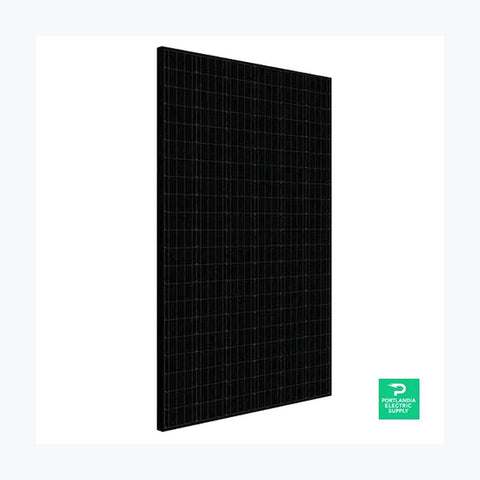
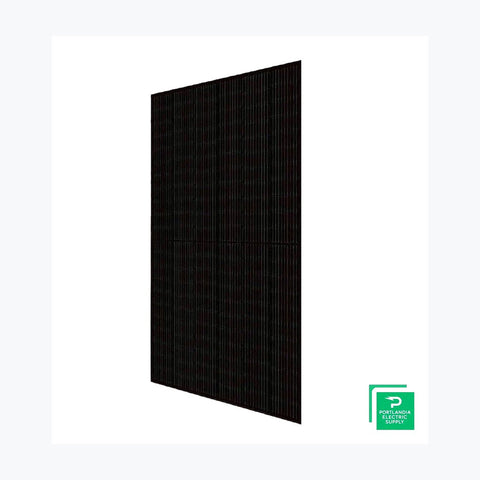
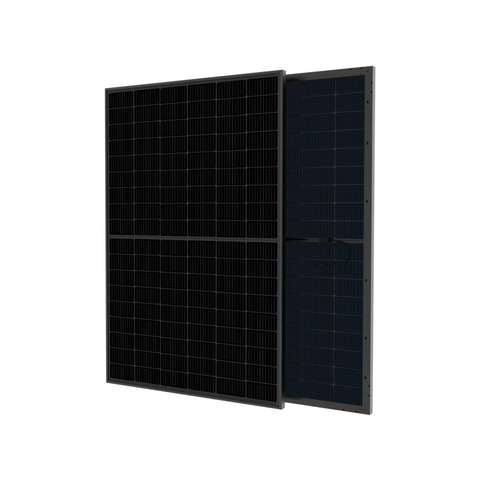
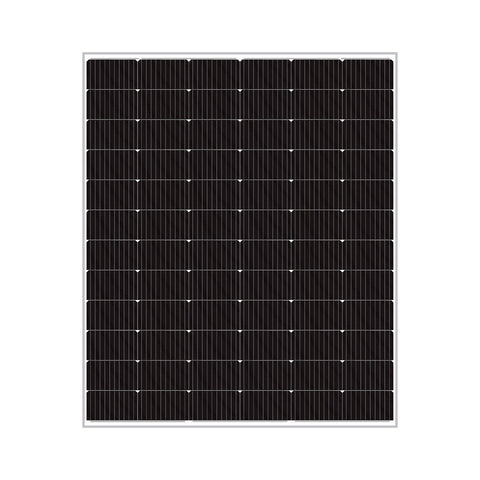
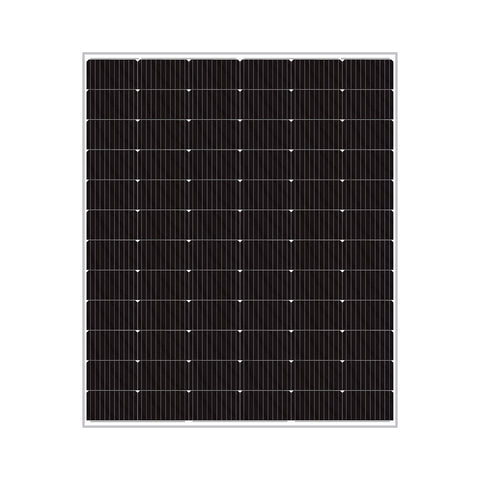
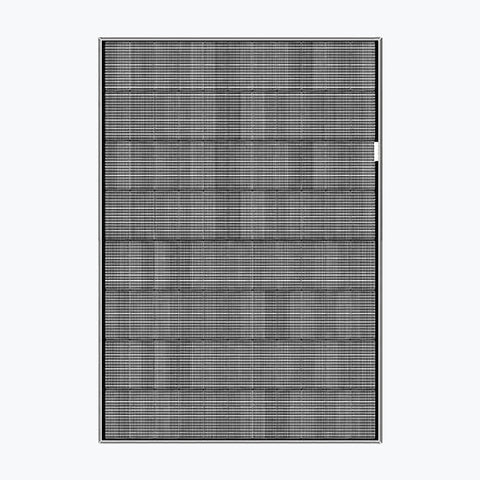
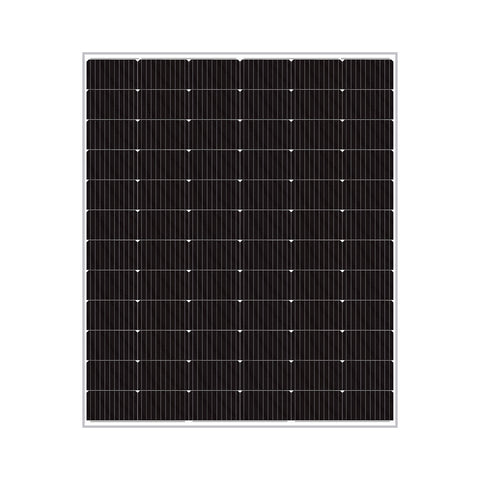
Top Brands


Proven Movers in Solar Panels


Popular in Solar Panels


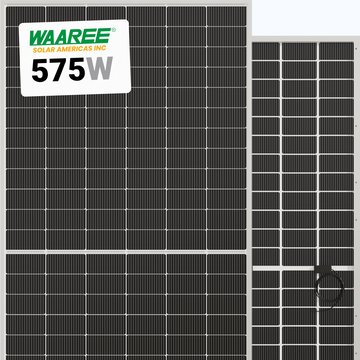
Buying Solar Panels by the pallet or truckload?
Tiered contractor and volume pricing with freight quoted up front. Send your material list — most quotes come back same business day.
How to Choose Solar Panels
Start with your available roof or ground area and work backward from your annual kWh target. Monocrystalline N-type and TOPCon modules deliver the highest efficiency per square foot, while bifacial panels add rear-side gain on ground mounts and light-colored roofs. Check the temperature coefficient if you install in hot climates — every 0.1%/°C matters on a dark roof in August. For most residential projects, 400–450W all-black modules balance aesthetics, output, and price per watt.
Pro Tips
- Match panel wattage to inverter DC/AC ratio — 1.2 to 1.35 is typical
- Bifacial shines on ground mounts and tilted flat roofs
- Compare $/W at pallet quantities, not single-panel retail
Solar Panels — Frequently Asked Questions
What wattage solar panel do I need?
Most homes land on 400–450W modules — the best balance of roof space, racking cost, and $/W. Divide your annual kWh target by your local sun-hours to size the array, then pick the wattage that fits the layout.
Are bifacial panels worth it?
On ground mounts and light-colored or flat roofs, bifacial gain of 5–20% is realistic. Flush-mounted on dark shingles the gain is minimal — standard mono is the better value there.
Do you sell panels by the pallet?
Yes — pallet and truckload pricing is our core business. Pallets typically hold 31–36 panels. Request a volume quote for tiered $/W pricing with freight included.
Which brands are Tier 1?
Silfab, Canadian Solar, JA Solar, REC, Trina, LONGi, and Qcells all carry BloombergNEF Tier 1 bankability status, backed by 25–30 year performance warranties.
Related Departments
 Inverters
 Batteries & Storage
 Racking & Mounting
 Charge Controllers
 Generators
 EV Chargers
 Electrical Supplies
 Wire & Cable
Solar Panels — Delivered Nationwide
Shop solar panels at PES Supply — Tier 1 monocrystalline, bifacial, and N-type TOPCon modules from Silfab, Canadian Solar, JA Solar, REC, Trina, LONGi, Mission Solar, and Qcells. Residential and commercial PV modules from 350W to 700W+ with 25-year power output warranties, pallet and truckload pricing, and freight delivery across the continental US. Authorized distributor pricing for installers, contractors, and DIY homeowners.
Solar panels at PES Supply: Tier 1 monocrystalline, bifacial, and N-type TOPCon modules from Silfab, Canadian Solar, JA Solar, REC, Trina, LONGi, Mission Solar, and Qcells — residential and commercial PV modules from 300W to 700W+ with 25-year power output warranties.
Whether you're pricing a single replacement panel, a 20-panel residential array, or a multi-pallet commercial job, start with wattage class: 300-399W for budget and off-grid, 400-459W for residential rooftops, 460-549W for premium residential and light commercial, and 550W+ for ground mounts and commercial builds. Pallet and truckload pricing available on every line.
Frequently Asked Questions
What wattage solar panel should I buy?
Match wattage class to the project. Budget builds, RVs, and off-grid: 300-399W. Standard residential rooftops: 400-459W (the industry sweet spot). Premium residential and small commercial: 460-549W. Ground mounts and commercial roofs: 550-709W. The right answer maximizes watts per square foot of usable mounting area, not watts per panel.
Monocrystalline, bifacial, TOPCon — what's the difference?
Monocrystalline PERC is today's value standard at ~21% efficiency. TOPCon N-type adds efficiency and degrades more slowly (about 0.4%/year vs 0.55%). Bifacial glass-glass modules harvest reflected light on the rear side for 5-15% extra yield on ground mounts — but gain almost nothing on a flush rooftop. Buy TOPCon for the warranty curve, bifacial for ground mounts, PERC for the price.
How do solar panels ship?
Single panels and small lots ship by the most economical carrier for their size; pallet quantities (typically 31-36 panels) ship LTL freight with curbside delivery. Panels are glass — we palletize and corner-protect every shipment, and we recommend inspecting at delivery and noting any damage on the freight receipt before signing.
What warranty do solar panels carry?
Two warranties matter: product (defects) and performance (output). Product warranties run 12-25 years depending on brand — Silfab and REC sit at the long end. Performance warranties are linear 25-30 year guarantees, typically promising 84-87% of rated output at the end of term on N-type modules.
Do I need permits or utility approval to install panels?
Grid-tied systems require a building/electrical permit from your AHJ and an interconnection agreement with your utility before energizing — plan on both. Off-grid systems generally skip the utility but still need electrical permits in most jurisdictions. Panels themselves carry the UL 61730 listing inspectors look for.
Is pallet pricing worth it if I don't need 30+ panels?
Usually, yes — pallet per-panel pricing plus one freight charge often beats small-quantity pricing plus parcel shipping, and spare panels are cheap insurance against breakage or future expansion. Contractors buying for multiple jobs should ask about multi-pallet and truckload quotes.
Proven Movers in Solar Panels


 SolarSpace
 550W Solar Panel 144 Cell Bifacial SS8-72HD-...
$155.50
Available to orderLead time confirmed at checkoutTop Seller
SolarSpace
SolarSpace 550W Solar Panel 144 Cell Bifacial SS8-72HD-...
$155.50
Available to orderLead time confirmed at checkoutTop Seller REC
REC Alpha Pure-RX 470W N-Type HJT Residential Panel
$206.50
REC
REC Alpha Pure-RX 470W N-Type HJT Residential Panel
$206.50
 Aptos
Aptos Solar DNA-120-BF10-440W 440W Bifacial Solar Panel
$185.92
$0.42/W · 440WAvailable to orderLead time confirmed at checkout
Aptos
Aptos Solar DNA-120-BF10-440W 440W Bifacial Solar Panel
$185.92
$0.42/W · 440WAvailable to orderLead time confirmed at checkout Talesun
 TM7G54M-450 450W Bifacial Solar Panel
$185.63
$0.41/W · 450WAvailable to orderShips in Ships from US warehouse
Talesun
Talesun TM7G54M-450 450W Bifacial Solar Panel
$185.63
$0.41/W · 450WAvailable to orderShips in Ships from US warehouse Canadian Solar
 CS3W-440MS
$179.99
$0.41/W · 440WAvailable to orderLead time confirmed at checkout
Canadian Solar
Canadian Solar CS3W-440MS
$179.99
$0.41/W · 440WAvailable to orderLead time confirmed at checkout LONGi
LONGi Solar LGi7-72HTD 610M
$173.33
Available to orderLead time confirmed at checkout
LONGi
LONGi Solar LGi7-72HTD 610M
$173.33
Available to orderLead time confirmed at checkout CW Energy
 CWT550-144PMB10 550W Bifacial Solar Panel
$169.98
$0.31/W · 550WAvailable to orderLead time confirmed at checkout
CW Energy
CW Energy CWT550-144PMB10 550W Bifacial Solar Panel
$169.98
$0.31/W · 550WAvailable to orderLead time confirmed at checkout Trina Solar
 Vertex N 500W N-Type TOPCon Commercial Module
$132.26
$0.26/W · 500WAvailable to orderLead time confirmed at checkout
Trina Solar
Trina Solar Vertex N 500W N-Type TOPCon Commercial Module
$132.26
$0.26/W · 500WAvailable to orderLead time confirmed at checkout Aptos
Aptos DNA-108-BF10-410W 410W Bifacial Solar Panel
$169.14
$0.41/W · 410WAvailable to orderLead time confirmed at checkout
Aptos
Aptos DNA-108-BF10-410W 410W Bifacial Solar Panel
$169.14
$0.41/W · 410WAvailable to orderLead time confirmed at checkout Lesso New Energy Co.
Lesso 430C(HBB) 430W Bifacial Solar Panel
$145.60
$0.34/W · 430WAvailable to orderLead time confirmed at checkout
Lesso New Energy Co.
Lesso 430C(HBB) 430W Bifacial Solar Panel
$145.60
$0.34/W · 430WAvailable to orderLead time confirmed at checkout Solarever
 450
$78.57
Available to orderLead time confirmed at checkout
Solarever
Solarever 450
$78.57
Available to orderLead time confirmed at checkout-
Regular price $140.99 USDRegular priceUnit price per
-
-8%Regular price $159.30 USDRegular priceUnit price per
$172.80 USDSale price $159.30 USD$0.36/WAvailable to orderLead time confirmed at checkoutSaleIn Stock -
Regular price $321.23 USDRegular priceUnit price per
-
Regular price $18,872.70 USDRegular priceUnit price per
$18,920.00 USDSale price $18,872.70 USDAvailable to orderShips in 10-15 business daysSaleIn Stock -
Regular price $8,617.00 USDRegular priceUnit price per
$8,620.00 USDSale price $8,617.00 USDAvailable to orderShips in 10-15 business daysSaleIn Stock -
Regular price $7,877.00 USDRegular priceUnit price per
$7,880.00 USDSale price $7,877.00 USDAvailable to orderShips in 10-15 business daysSaleIn Stock -
Regular price $196.80 USDRegular priceUnit price per
-
Regular price $212.84 USDRegular priceUnit price per
-
Regular price $203.78 USDRegular priceUnit price per
-
Regular price $205.56 USDRegular priceUnit price per
-
Regular price $214.32 USDRegular priceUnit price per
-
-15%Regular price $196.81 USDRegular priceUnit price per
$231.54 USDSale price $196.81 USD$0.46/WLegacy ModelAvailable to orderLead time confirmed at checkoutSaleIn Stock -
Regular price $249.00 USDRegular priceUnit price per
-
Regular price $182.00 USDRegular priceUnit price per
-
Regular price $170.00 USDRegular priceUnit price per
-
Regular price $147.61 USDRegular priceUnit price per
-
Regular price $196.88 USDRegular priceUnit price per
-
Regular price $185.92 USDRegular priceUnit price per
-
Regular price $185.63 USDRegular priceUnit price per
-
Regular price $167.76 USDRegular priceUnit price per
-
Regular price $296.69 USDRegular priceUnit price per
-
Regular price $288.42 USDRegular priceUnit price per
-
Regular price $149.99 USDRegular priceUnit price per
-
Regular price $235.25 USDRegular priceUnit price per
-
Regular price $299.35 USDRegular priceUnit price per
-
Regular price $230.00 USDRegular priceUnit price per
-
Regular price $279.44 USDRegular priceUnit price per
-
Regular price $168.66 USDRegular priceUnit price per
-
Regular price $329.44 USDRegular priceUnit price per
-
Regular price $145.81 USDRegular priceUnit price per
-
Regular price $247.75 USDRegular priceUnit price per
-
-15%Regular price $178.14 USDRegular priceUnit price per
$209.58 USDSale price $178.14 USD$0.45/WLegacy ModelAvailable to orderLead time confirmed at checkoutSaleIn Stock -
-15%Regular price $178.14 USDRegular priceUnit price per
$209.58 USDSale price $178.14 USD$0.45/WLegacy ModelAvailable to orderLead time confirmed at checkoutSaleIn Stock -
Regular price $413.00 USDRegular priceUnit price per
-
Regular price $179.99 USDRegular priceUnit price per
-
Regular price $169.14 USDRegular priceUnit price per
-
Regular price $169.20 USDRegular priceUnit price per
-
Regular price $130.22 USDRegular priceUnit price per
-
Regular price $203.97 USDRegular priceUnit price per
-
Regular price $6,308.50 USDRegular priceUnit price per
-
Regular price $148.96 USDRegular priceUnit price per
-
Regular price $158.30 USDRegular priceUnit price per
-
Regular price $169.98 USDRegular priceUnit price per
-
Regular price $155.50 USDRegular priceUnit price per
-
Regular price $145.60 USDRegular priceUnit price per
-
 Sold Out — Call or EmailRegular price $129.34 USDRegular priceUnit price per
 -
 Sold Out — Call or EmailRegular price $192.70 USDRegular priceUnit price per
 -
 Sold Out — Call or EmailRegular price $233.75 USDRegular priceUnit price per


About Solar Panels
Solar panels at PES Supply: Tier 1 monocrystalline, bifacial, and N-type TOPCon modules from Silfab, Canadian Solar, JA Solar, REC, Trina, LONGi, Mission Solar, and Qcells — residential and commercial PV modules from 300W to 700W+ with 25-year power output warranties.
Whether you're pricing a single replacement panel, a 20-panel residential array, or a multi-pallet commercial job, start with wattage class: 300-399W for budget and off-grid, 400-459W for residential rooftops, 460-549W for premium residential and light commercial, and 550W+ for ground mounts and commercial builds. Pallet and truckload pricing available on every line.
Frequently Asked Questions
What wattage solar panel should I buy?
Match wattage class to the project. Budget builds, RVs, and off-grid: 300-399W. Standard residential rooftops: 400-459W (the industry sweet spot). Premium residential and small commercial: 460-549W. Ground mounts and commercial roofs: 550-709W. The right answer maximizes watts per square foot of usable mounting area, not watts per panel.
Monocrystalline, bifacial, TOPCon — what's the difference?
Monocrystalline PERC is today's value standard at ~21% efficiency. TOPCon N-type adds efficiency and degrades more slowly (about 0.4%/year vs 0.55%). Bifacial glass-glass modules harvest reflected light on the rear side for 5-15% extra yield on ground mounts — but gain almost nothing on a flush rooftop. Buy TOPCon for the warranty curve, bifacial for ground mounts, PERC for the price.
How do solar panels ship?
Single panels and small lots ship by the most economical carrier for their size; pallet quantities (typically 31-36 panels) ship LTL freight with curbside delivery. Panels are glass — we palletize and corner-protect every shipment, and we recommend inspecting at delivery and noting any damage on the freight receipt before signing.
What warranty do solar panels carry?
Two warranties matter: product (defects) and performance (output). Product warranties run 12-25 years depending on brand — Silfab and REC sit at the long end. Performance warranties are linear 25-30 year guarantees, typically promising 84-87% of rated output at the end of term on N-type modules.
Do I need permits or utility approval to install panels?
Grid-tied systems require a building/electrical permit from your AHJ and an interconnection agreement with your utility before energizing — plan on both. Off-grid systems generally skip the utility but still need electrical permits in most jurisdictions. Panels themselves carry the UL 61730 listing inspectors look for.
Is pallet pricing worth it if I don't need 30+ panels?
Usually, yes — pallet per-panel pricing plus one freight charge often beats small-quantity pricing plus parcel shipping, and spare panels are cheap insurance against breakage or future expansion. Contractors buying for multiple jobs should ask about multi-pallet and truckload quotes.