

Home EV Fast Chargers (240V) — Overview As electric vehicles (EVs) become increasingly popular, homeowners need reliable and efficient charging solutions. Home EV Fast Chargers operating at 240 volts, often known as “Level 2 chargers,” provide the ideal balance of speed, convenience, and safety for everyday drivers. These chargers support fast charging at home, making…


3 products
 Trina Solar
 Vertex N 600W N-Type TOPCon Commercial Module
$299.00
$0.50/W · 600WAvailable to orderLead time confirmed at checkoutTop Seller
Trina Solar
Trina Solar Vertex N 600W N-Type TOPCon Commercial Module
$299.00
$0.50/W · 600WAvailable to orderLead time confirmed at checkoutTop Seller ZNShine
ZNshine 400W ZXM7-SH108-400/M All Black Monocrystalline...
$144.99
$0.36/W · 400WIn stockShips in 1–2 business daysTop Seller
ZNShine
ZNshine 400W ZXM7-SH108-400/M All Black Monocrystalline...
$144.99
$0.36/W · 400WIn stockShips in 1–2 business daysTop Seller ZNShine
 Solar 405W 108-Cell Solar Panel
$147.61
$0.36/W · 405WAvailable to orderLead time confirmed at checkout
ZNShine
ZNShine Solar 405W 108-Cell Solar Panel
$147.61
$0.36/W · 405WAvailable to orderLead time confirmed at checkout LONGi
LONGi Hi-MO X6 Scientist 600W N-Type TOPCon Bifacial Mo...
$161.29
$0.27/W · 600WAvailable to orderLead time confirmed at checkout
LONGi
LONGi Hi-MO X6 Scientist 600W N-Type TOPCon Bifacial Mo...
$161.29
$0.27/W · 600WAvailable to orderLead time confirmed at checkout Jinko Solar
Jinko Tiger Neo N-Type 600W Bifacial TOPCon Solar Panel
$216.00
$0.36/W · 600WAvailable to orderLead time confirmed at checkout
Jinko Solar
Jinko Tiger Neo N-Type 600W Bifacial TOPCon Solar Panel
$216.00
$0.36/W · 600WAvailable to orderLead time confirmed at checkout Canadian Solar
 HiKu6 395W Mono Solar Panel - CS6R-395MS-HL
$163.99
$0.42/W · 395WAvailable to orderLead time confirmed at checkout
Canadian Solar
Canadian Solar HiKu6 395W Mono Solar Panel - CS6R-395MS-HL
$163.99
$0.42/W · 395WAvailable to orderLead time confirmed at checkout Hyundai Energy Solutions
Hyundai HiS-S410YH(BK) 410W Bifacial Commercial Solar P...
$149.00
$0.36/W · 410WAvailable to orderLead time confirmed at checkout
Hyundai Energy Solutions
Hyundai HiS-S410YH(BK) 410W Bifacial Commercial Solar P...
$149.00
$0.36/W · 410WAvailable to orderLead time confirmed at checkout Talesun
 TM7G54M-450 450W Bifacial Solar Panel
$185.63
$0.41/W · 450WAvailable to orderLead time confirmed at checkout
Talesun
Talesun TM7G54M-450 450W Bifacial Solar Panel
$185.63
$0.41/W · 450WAvailable to orderLead time confirmed at checkout Aptos
Aptos Solar DNA-120-BF10-440W 440W Bifacial Solar Panel
$176.00
$0.40/W · 440WAvailable to orderLead time confirmed at checkout
Aptos
Aptos Solar DNA-120-BF10-440W 440W Bifacial Solar Panel
$176.00
$0.40/W · 440WAvailable to orderLead time confirmed at checkout JA Solar
 545 W Solar Panel – JAM72D30‑545/MB, 144‑cell ...
$185.32
Available to orderLead time confirmed at checkout
JA Solar
JA Solar 545 W Solar Panel – JAM72D30‑545/MB, 144‑cell ...
$185.32
Available to orderLead time confirmed at checkout-
Vendor:SolarEdge
MPN: PES-EVC-L2C-0002
Pallet of 12Regular price $513.91 USDRegular priceUnit price per -
Vendor:Generac
MPN: PES-EVC-L2C-0005
Regular price $799.00 USDRegular priceUnit price per -
Vendor:Generac
MPN: PES-EVC-L2C-0004
Regular price $749.00 USDRegular priceUnit price per



About Home EV Fast Chargers (240V)
Home EV Fast Chargers (240V) — Overview
As electric vehicles (EVs) become increasingly popular, homeowners need reliable and efficient charging solutions. Home EV Fast Chargers operating at 240 volts, often known as “Level 2 chargers,” provide the ideal balance of speed, convenience, and safety for everyday drivers. These chargers support fast charging at home, making EV ownership more practical and accessible.
Choosing the right home EV charging stations is essential to ensuring your vehicle is consistently ready to go. Home box chargers blend well into residential environments and offer a smart way to charge your EV overnight or whenever convenient.
Why 240 V Fast Chargers Matter
- Faster charging speed than standard outlets: Compared to standard 120 V outlets, a 240 V Home EV Fast Charger delivers significantly more power. Level 2 chargers can add 10 to 30 miles of range in an hour, which is much faster than Level 1 chargers that offer 2 to 5 miles per hour.
- Convenience for everyday use: Installing a 240 V charger at home allows EV owners to plug in immediately after returning, ensuring the car is charged by morning. This reduces the need to visit public charging stations frequently.
- Fits well into residential settings: These chargers are designed to integrate smoothly with typical home electrical setups. They resemble major household appliances in size and installation requirements, offering a discreet and practical solution.
What Goes Into a Home 240 V EV Charging Setup
A typical 240 V home EV charging setup includes several critical components to ensure efficiency and safety.
- A dedicated 240 V circuit in the electrical panel, which usually requires a 30 to 40 amp breaker. This dedicated circuit supports the heavy load from EV charging without overloading your electrical system.
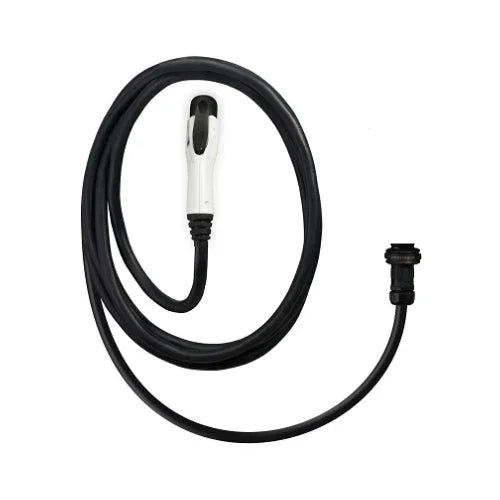
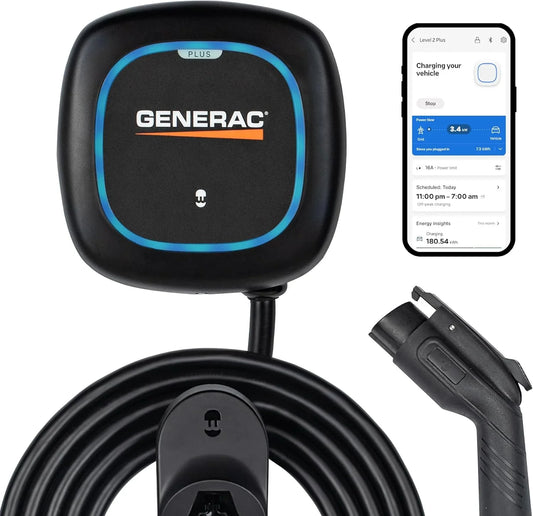
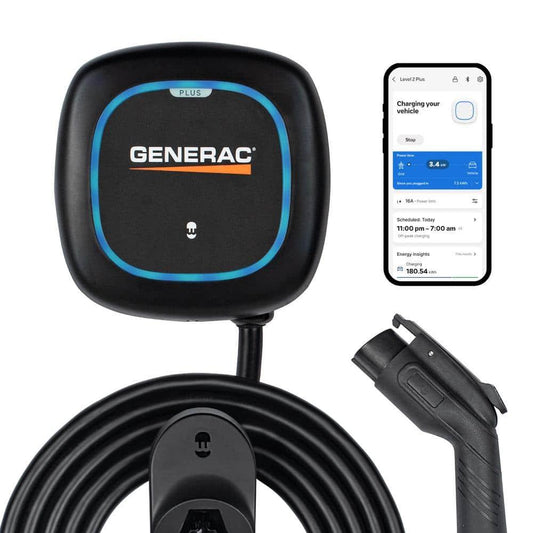
- An Electric Vehicle Supply Equipment (EVSE) unit, the actual charging station connected to the 240 V supply. These units can either be plugged in or hardwired inside your garage or parking spot for convenience.
- Built-in safety mechanisms help protect against electrical risks. Modern chargers have ground-fault, overcurrent, and overvoltage protection to prevent hazards like electrical fires or shocks.
- Optional smart features allow scheduling for off-peak charging and load management. These functions help avoid overloading your home wiring and reduce electricity costs.
Benefits for EV Owners
- Time-saving: Using home EV charging stations lets you fully charge your EV overnight. You avoid frequent charging stops during your busy day.
- Cost efficiency: Charging at home usually costs less than public fast chargers, especially when you charge during off-peak electricity hours. This saves money on your daily commute.
- Reliability: A dedicated circuit paired with certified EVSE ensures consistent performance. You maintain control over when and how your EV charges.
- Future readiness for heavier use: As electric vehicle adoption increases and travel distances grow, a 240 V Home EV Fast Charger supports frequent and multiple-vehicle use. While public EV charging stations expand, having a home box remains highly convenient.
Home EV Fast Chargers: Installation and Safety
Choosing and installing the right Home EV Fast Chargers requires attention to safety and proper setup.
Professional installation by a licensed electrician is important to add a dedicated 240 V circuit with the correct breaker size. This ensures installation complies with electrical codes and safety standards.
Modern Home EV Fast Chargers include safety protections like overcurrent and ground-fault safeguards. These minimize risks such as fire hazards or electric shocks.
Compatibility and Use of Home EV Fast Chargers
Most electric vehicles support Level 2 charging with standard EVSE connectors that meet IEC standards, such as IEC 62196. This compatibility ensures broad usability with the chargers tickets available on the market.
Before installing your dc home charger EV unit, check your vehicle’s manual for compatibility details. Proper match guarantees optimal charging performance and safety.
However, it’s important to check your EV’s user manual to verify compatibility (connector type, maximum AC input, recommended amperage) before installing a charger.
Ready to Get Started?
Shop code-compliant solar equipment at wholesale prices. Pro contractors save up to 40% with a free Pro Account.
Shop Solar Panels Apply for Pro Account