Updated September 2026 — refreshed against the live PES catalog; product pricing verified 2026-09-26.
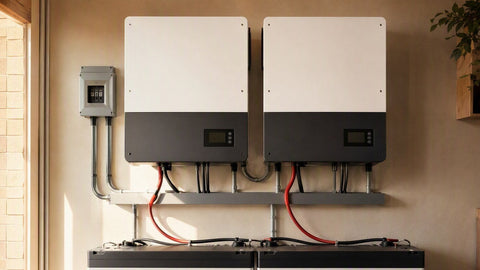
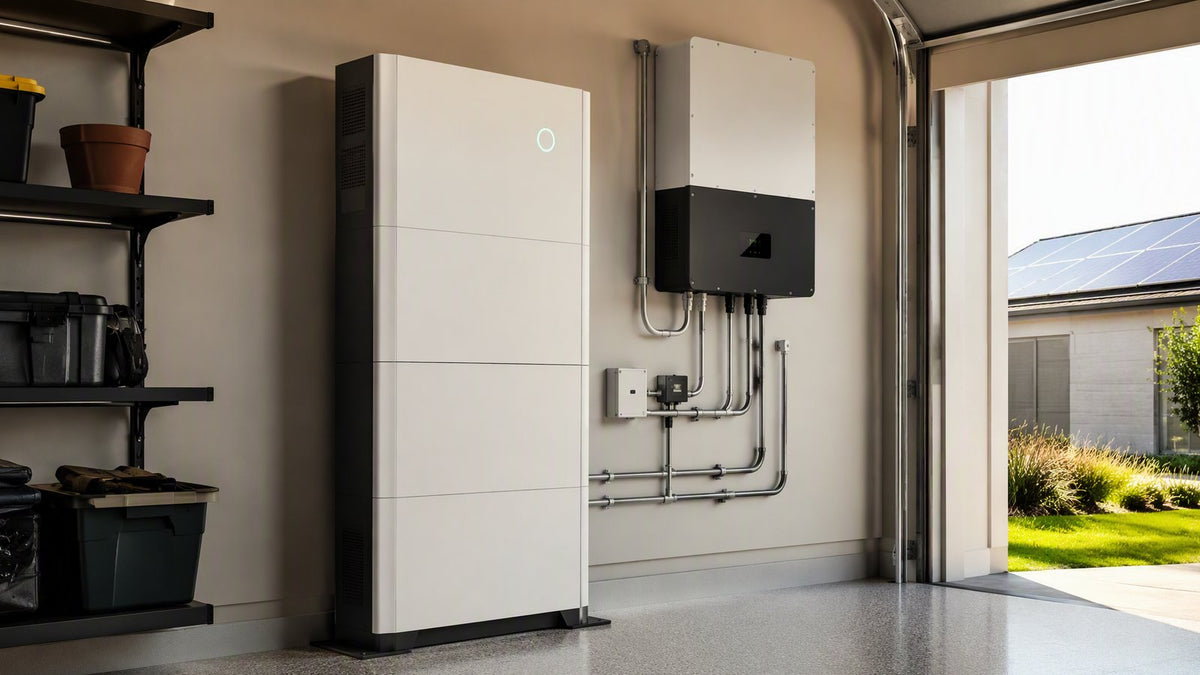
A battery energy storage system (BESS) is exactly what the name says — equipment that stores electrical energy chemically and returns it on demand — but the gap between that sentence and a working installation is where most confusion lives. A BESS is not just a battery. It is the cells, plus the management electronics that keep them safe, plus the inverter that converts DC to AC, plus the controls that decide when to charge and discharge. Understanding those four layers is the difference between buying a box and buying a solution.

We supply residential and commercial storage from EG4, Fortress Power, BYD, Pylontech, Tesla, and others, and the questions that land on our desk are remarkably consistent: what is it, how big should it be, how long will it last, and what does it cost. This article answers all four with the numbers we use when we help customers spec systems.
What a Battery Energy Storage System Actually Is
At its simplest, a BESS captures electricity when it is cheap or abundant — midday solar, off-peak grid power — and releases it when it is expensive or unavailable — evening peaks, outages. The system has four functional layers:
| Layer | Component | Job | Failure Mode Without It |
|---|---|---|---|
| 1. Energy | Battery cells/modules (usually LiFePO4) | Store and release energy chemically | — |
| 2. Safety | Battery Management System (BMS) | Monitor voltage, current, temperature; balance cells; disconnect on fault | Cell damage, fire risk, voided warranty |
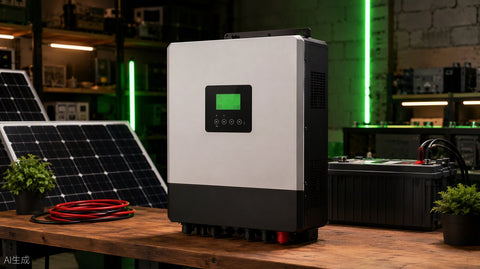
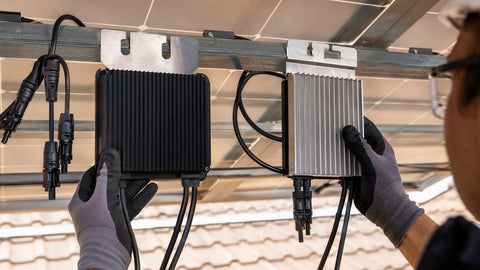
| 3. Power | Inverter/charger (hybrid or AC-coupled) | Convert DC↔AC; set charge/discharge power limits | Energy stuck in the battery |
| 4. Intelligence | Energy management controls/software | Schedule around tariffs, solar forecast, backup reserve | System saves a fraction of its potential |
The chemistry of choice for stationary storage is lithium iron phosphate (LiFePO4). It trades a bit of energy density for dramatically better thermal stability, 6,000+ cycle life, and no cobalt. Older lead-acid banks still appear in off-grid cabins, but for anything cycled daily, lithium's cost per lifetime kWh is now far lower. Our LiFePO4 battery collection and battery storage lineup show the current residential options.
The Numbers That Define Any BESS
Three specifications tell you almost everything about a storage system, and confusing them is the most common buyer error:
| Spec | Unit | What It Tells You | Residential Typical | Analogy |
|---|---|---|---|---|
| Energy capacity | kWh | How long it runs loads | 5–40 kWh | Size of the fuel tank |
| Power rating | kW | What it can run at once | 3–11.5 kW | Size of the engine |
| Depth of discharge | % | Usable fraction of capacity | 90–100% (LiFePO4) | How much of the tank you can use |
| Round-trip efficiency | % | Energy out ÷ energy in | 90–96% | Leakage in the system |
A 13.5 kWh battery with a 5 kW power rating runs a 5 kW load for about 2.7 hours at full tilt — or a 1 kW critical-loads panel (fridge, lights, internet, furnace blower) for roughly 12 to 13 hours after efficiency losses. Power rating is what determines whether your central AC or well pump can start at all; capacity is what determines how long they run. Our battery backup runtime calculator does this arithmetic for your specific load list.
Why the BMS Is the Most Important Part You Never See
Every quality lithium battery hides a battery management system between the cells and the terminals. The BMS watches every cell group's voltage, total pack current, and multiple temperature points; balances cells during charging; and opens the contactors the instant anything exceeds safe limits. Overcharge protection, over-discharge protection, over-current cutoff, short-circuit cutoff, and thermal shutdown are all BMS functions. When a cheap battery fails early or a no-name pack catches fire, the root cause is usually an absent or inadequate BMS.
For a deep dive, read our companion piece on battery management systems — and never buy a lithium battery whose datasheet does not name its BMS protections. I have torn down failed packs where the "BMS" was a single $2 board with no balancing at all; the cells told the story.
How BESS Creates Value: The Four Use Cases
| Use Case | How It Pays | Typical Annual Value (Residential) | Who It Fits |
|---|---|---|---|
| Backup power | Avoided outage losses (food, work, comfort, medical) | Priceless when needed; hard to schedule | Outage-prone regions |
| Solar self-consumption | Store midday solar, use it at night instead of exporting at low rates | $300–$900 | Low net-metering export rates |
| Time-of-use arbitrage | Charge off-peak at $0.10, discharge at peak $0.35 | $400–$1,200 | TOU rate plans (CA, AZ, NY, TX) |
| Demand charge management | Clip peak kW draws that trigger demand charges | $1,000–$6,000 | Commercial accounts |
Most residential systems stack two or three of these. A California NEM 3.0 customer, for example, uses the same battery for self-consumption, evening arbitrage, and backup — which is why storage attachment rates on new California solar systems went from under 10 percent to a majority of installations after the tariff change.
Sizing a Home BESS: A Worked Example
Sizing starts with the load list, not the battery catalog. Here is the process we walk customers through, applied to a typical outage-priority scenario:
| Step | Calculation | Result |
|---|---|---|
| 1. List critical loads | Fridge 150W + furnace blower 600W + lights 200W + internet/TV 150W + misc 200W | 1,300 W combined |
| 2. Apply duty cycle | Fridge and blower cycle ~50%; effective average ≈ 850 W | 0.85 kW average |
| 3. Multiply by target hours | 0.85 kW × 24 h | 20.4 kWh per day |
| 4. Divide by usable capacity | 20.4 kWh ÷ 0.90 DoD ÷ 0.95 efficiency | ~23.9 kWh nameplate per day |
| 5. Reality check vs. solar recharge | 8 kW array makes ~30 kWh/day — enough to refill daily in decent weather | System is sustainable |
That worked example lands near two 13.5 kWh-class batteries — or a single 24-hour target trimmed by load discipline. For a full walkthrough, our home battery bank sizing guide and the battery sizing calculator go deeper, and off-grid buyers should read the off-grid storage sizing guide since autonomy days change the math entirely.
Lifespan, Degradation, and Warranty Math
LiFePO4 cells are typically rated to 6,000 cycles at 80 percent depth of discharge before capacity falls to 70 to 80 percent of original — roughly 15 years of daily cycling. Warranties reflect that: ten years is the industry standard, usually guaranteeing 70 percent retained capacity. Degradation is not linear catastrophe; a battery at 75 percent capacity still does useful work, it just holds less. The practical maintenance regimen is nearly zero: keep the unit in its rated temperature range, avoid long storage at 0 or 100 percent state of charge, and let the BMS do its job. Our battery life extension guide covers the details that genuinely move the needle, and the 20–80 rule explainer covers daily state-of-charge strategy.
What a BESS Costs in 2026
Residential turnkey storage runs roughly $700 to $1,100 per installed kWh depending on brand, integration complexity, and whether it pairs with new solar or retrofits onto an existing system — a 13.5 kWh class system typically lands between $10,000 and $15,000 installed before incentives. The 30 percent federal tax credit applies to storage whether or not it charges from solar, which materially changes payback. On the equipment side, per-kWh hardware prices have fallen far enough that the battery itself is often less than half the installed cost; labor, permitting, and electrical work are the rest. Compare options in our 10 kWh, 15–30 kWh, and commercial 100–200 kWh ranges, or read the Generac PWRcell cost guide for a branded-system cost breakdown.
I tell customers to think of storage like a generator that earns its keep every single day instead of sitting idle waiting for a storm. Once you see it that way, the question stops being "is a battery worth it" and becomes "how big a battery is worth it" — and that question has a real, calculable answer.
AC-Coupled vs. DC-Coupled: The Architecture Decision
How the battery connects to the solar system determines efficiency, retrofit-ability, and cost. DC coupling puts the battery on the same hybrid inverter as the panels — solar charges the battery directly, with one fewer conversion step and 2 to 4 percent better round-trip efficiency. AC coupling gives the battery its own inverter and connects it on the AC side, which makes it a bolt-on to any existing solar system without touching the solar inverter.
| Attribute | DC-Coupled | AC-Coupled |
|---|---|---|
| Round-trip efficiency (solar→battery→home) | ~94–96% | ~90–92% |
| Retrofit to existing solar | Requires inverter replacement | Bolts on, keeps existing inverter |
| Inverter count | One hybrid unit | Solar inverter + battery inverter |
| Best fit | New installations | Retrofits, phased builds |
The rule we give customers: new build, go DC with a hybrid inverter; existing system you are happy with, go AC and keep what works. Both paths are well supported across our battery storage and compatible power systems inventory.
Safety Standards: UL 9540, NFPA 855, and What They Mean for Placement
Stationary storage is one of the most code-regulated product categories in the electrical world, for good reason. UL 9540 is the system-level safety listing your inspector will ask for — never install a battery without it. UL 9540A is the thermal-runaway test protocol whose results determine how close units may sit to each other and to the house. NFPA 855, the installation standard, governs locations: garages and exterior walls are typical, habitable rooms are restricted, and spacing rules apply between units. Most jurisdictions also cap residential systems at 40 kWh per location segment without additional fire engineering.
These rules are why "where does the battery go" is a design question, not an afterthought. A shaded exterior wall on the driveway side, a garage corner with clearances, or a purpose-built enclosure all work; a closet under the stairs does not. The battery installation guide covers placement planning, and the grounding and bonding guide covers the electrical safety side.
Residential vs. Commercial BESS: Same Physics, Different Business Case

Commercial and industrial storage runs the same lithium chemistry at larger scale, but the revenue logic inverts. Residential storage earns through retail-rate arbitrage and resilience; commercial storage earns through demand charges, which can constitute 30 to 50 percent of a commercial utility bill. A single 15-minute demand spike sets the billing demand for the month, and a battery that shaves 50 kW off that peak can save thousands of dollars monthly — payback periods under three years are common in high-demand-charge territories. Our 100–200 kWh commercial batteries and utility-scale solutions serve that segment, while 5–15 kWh residential packs cover homes.
BESS vs. Generators: Choosing, or Choosing Both
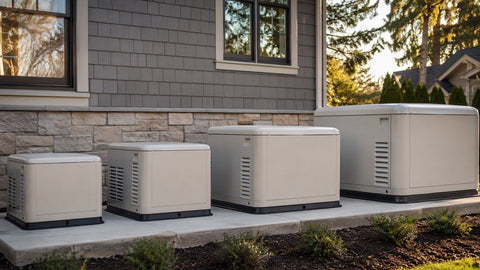
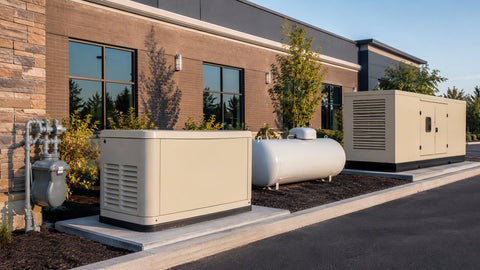
The most common cross-shop on our desk is battery versus generator, and the honest answer is that they complement rather than compete. A BESS is silent, instant, emission-free, and earns daily value through solar shifting and rate arbitrage, but its runtime is bounded by stored energy. A generator runs indefinitely on natural gas or propane but sits idle between outages and needs engine maintenance. Households with frequent short outages and time-of-use rates lean battery; rural properties facing multi-day storm outages lean generator; and an increasing share install both, letting the battery ride through the 95 percent of outages measured in minutes while the generator covers the rare long event. Our whole-house generator guide covers the generator side of that decision.
Charging Sources: Solar Is Only One Option
A BESS can charge from rooftop solar, the grid, a generator, or any combination — and the control strategy changes with the source. Solar-charged systems maximize self-consumption and qualify cleanly for incentives. Grid-charged systems run pure arbitrage on time-of-use spreads and provide backup without any panels at all. Generator-paired systems use the battery as a buffer so the generator runs at efficient full load for short bursts instead of inefficient partial load for days — cutting fuel consumption substantially during extended outages. Modern hybrid inverters manage all three sources automatically, which is why the inverter choice is as consequential as the battery choice in any BESS design.
Monitoring, Warranties, and What Good Support Looks Like
A BESS is a connected appliance, and its monitoring is the early-warning system. Watch for three things monthly: state-of-charge behavior (sudden jumps suggest BMS recalibration is due), charge and discharge totals (confirm the system cycles as designed), and cell-balance alarms (persistent warnings indicate an aging cell group). Warranty terms deserve the same attention as capacity specs: ten years and a retained-capacity guarantee of 70 percent is the current industry standard, with throughput caps that matter for heavy-cycling applications. Buy from suppliers who can answer BMS-protocol and warranty-log questions before the sale — the answers predict the support you will get after it.
Off-Grid BESS: Where Storage Is the System
Everything above describes storage supplementing the grid. Off-grid design inverts the priority list: storage becomes the foundation the whole system stands on, and the sizing rules tighten accordingly. Grid-tied storage can be optimistic — the grid forgives a shortfall. Off-grid storage must be honest: autonomy targets of two to three days for critical loads, solar arrays oversized 1.5 to 2 times the daily load to guarantee recharge through cloudy stretches, and a generator input as the final backstop for weather that defeats the array. Depth-of-discharge discipline matters more off-grid, where every cycle is a real withdrawal from a finite reserve. The equipment categories shift too — 48V rack batteries and off-grid inverters dominate, as seen in our off-grid inverter and cabin kit lines. The off-grid storage sizing guide runs this math in full detail.
The Grid Services Future: Your Battery as a Revenue Asset
The newest chapter in the BESS story turns the direction of value around: utilities now pay homeowners for access to their batteries. Virtual power plant programs dispatch thousands of residential batteries simultaneously during grid emergencies, paying participants annual fees or per-event credits while preserving the household's backup reserve. The enabling technology is the communication layer discussed throughout this article — a BMS that reports state of charge and health, an inverter that accepts dispatch commands, and software that reconciles your settings with grid needs. Programs vary by utility, but where they exist, they add hundreds of dollars per year to the storage value stack without changing how the system serves the home day to day. Buyers choosing equipment today should favor platforms with active VPP integrations — it is the one feature that can pay you back twice.
Maintenance and Ownership: The Decade View
A BESS asks remarkably little of its owner, but the little it asks matters. Quarterly: confirm the system logged full cycles as expected and check for firmware updates, which routinely add features and refine charge limits. Seasonally: verify the installation environment stays within the rated temperature band — garage units in cold climates benefit from insulation or heaters, and desert installations from shade. Annually: review the capacity trend in the monitoring data; healthy degradation is slow and smooth, and a step-change is an early warranty conversation, not a surprise failure. Keep the purchase documentation and the BMS logs accessible — warranty claims move fast when the data trail is clean. Owners who follow this light regimen routinely report systems performing at specification through year eight and beyond; the technology's reputation for durability is earned one well-kept log file at a time.
Buying Checklist: Eight Questions for Any Storage Quote
Bring these to every proposal. What is the usable capacity, not the nameplate? What is the continuous and surge power rating, and which of my loads does that cover? Is the chemistry LiFePO4? What BMS protections are documented, and what communication protocol pairs with my inverter? Is the system UL 9540 listed, and what do the placement rules mean for my preferred location? What are the warranty terms — years, retained capacity, throughput cap — and who services claims? What does the monitoring show me, and does the platform support utility VPP programs in my territory? And what is the fully installed price after incentives, itemized? Eight honest answers predict a good ownership experience far better than brand familiarity. We quote against this checklist ourselves, and we welcome customers who hold us to it.
One final word on scope before the FAQs: a BESS is a long-lived asset, so buy for the household you expect to be in five years — the EV on the way, the heat pump conversion being quoted, the aging parent who may move in. Expandable platforms exist precisely because storage needs grow, and choosing one keeps today's purchase compatible with tomorrow's loads.
Frequently Asked Questions
What is a battery energy storage system in simple terms?
A BESS is a rechargeable battery bank plus the electronics to manage it and the inverter to connect it to your home. It stores electricity when power is cheap or abundant and releases it when power is expensive or the grid is down.
How is a BESS different from a regular battery?
A bare battery is just cells. A BESS adds a battery management system for safety, an inverter for AC conversion, and control software that decides when charging and discharging make economic sense.
How long can a home battery power a house?
A single 13.5 kWh battery runs essential loads (about 1 kW average) for roughly 12 hours. Whole-home backup with air conditioning typically requires 27 to 40 kWh, and pairing with solar extends runtime indefinitely in decent weather.
How long do battery storage systems last?
Modern LiFePO4 systems are rated for 6,000+ cycles and carry 10-year warranties guaranteeing around 70 percent retained capacity. Real-world service life of 15 to 20 years is common with reasonable temperature management.
Can I add storage to my existing solar system?
Yes — AC-coupled batteries retrofit onto any existing grid-tie system without replacing the solar inverter. DC-coupled options are more efficient but usually make sense only with new installations or inverter replacements.
Is a BESS worth it without solar?
In time-of-use markets, yes: charging off-peak and discharging on-peak can pay back without any panels at all, and the federal tax credit applies to standalone storage. Without TOU rates or outage concerns, the case is weaker.
Shop Energy Storage
Browse energy storage systems, server-rack batteries for DIY-friendly builds, and battery backup kits, or start at portlandiaelectric.supply and ask our team for a sizing review — we do them daily.
From the field: I have commissioned battery systems that paid for themselves in demand-charge savings alone, and I have also opened enclosures where a bargain BMS let one cell group cook the rest of the pack. When I spec a storage system now, I ask about the round-trip efficiency warranty before I ask about capacity, because that number decides your real cost per kWh moved. I learned that the hard way on an early install that lost 18% of its throughput by year three.
Keep Reading
- Home Battery Bank Sizing Guide
- Tesla Powerwall 2 Guide
- Whole-Home Battery Backup Cost
- Storage Battery Solar Energy Systems
Need pricing or availability on anything in this guide?
Portlandia Electric Supply dropships direct from the manufacturer — most items Ship Direct with lead times stated up front, no surprises.
Get a quote from PESBulk, pallet and contractor pricing available.