If you manage a commercial facility, run a small manufacturing operation, or oversee an institution that cannot afford to go dark, you already know the stakes have changed. Power outages in 2026 are no longer rare inconveniences — they are increasingly frequent, longer in duration, and more financially devastating than at any point in recent memory. Grid stress from surging EV charging demand, extreme weather events, and aging distribution infrastructure has created a new reality: continuous utility power can no longer be taken for granted. Explore our full lineup of commercial standby generators to see which solution fits your facility.
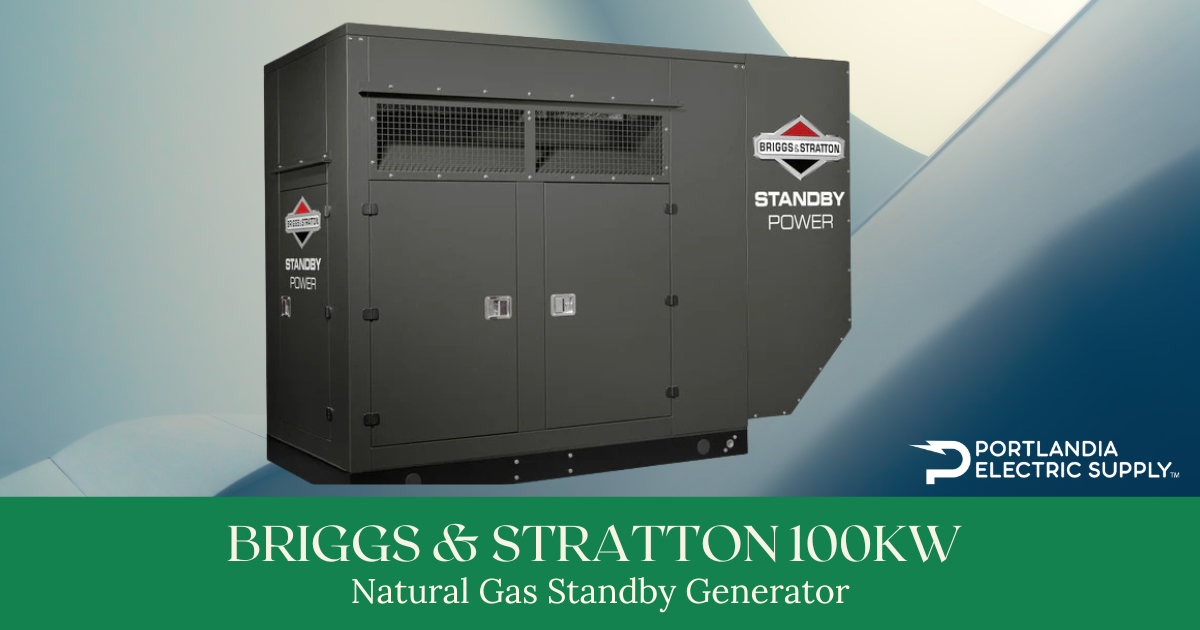
The Briggs & Stratton 100kW Natural Gas Standby Generator, Model 080012, 120/240V Three-Phase is one of the most well-rounded and commercially proven solutions available today for facilities that demand whole-building backup power with clean fuel, low-RPM durability, and fully automatic operation. This guide breaks down the complete specifications, real-world performance advantages, installation requirements, use cases, and the 2026 business case for making this investment now.
⚡ Key Takeaways
- 100kW / 125kVA Output: True whole-facility backup capacity for most small-to-mid-size commercial buildings up to roughly 25,000 sq ft (load dependent).
- Three-Phase Power: 120/240V three-phase configuration supports both heavy motor loads and standard single-phase circuits from a single machine.
- PSI 5.7L V-8 Turbo Engine: Low-speed 1,800 RPM operation extends engine life and reduces maintenance compared with typical 3,600 RPM units.
- Natural Gas Fuel: Continuous pipeline supply eliminates diesel storage, fuel degradation, delivery logistics, and tank compliance requirements.
- Fully Automatic: Detects outages and restores power in seconds — no manual intervention required from staff.
- 81 dB(A) at 7m: Competitive acoustic profile for a generator of this output class, manageable with standard site planning.
In This Guide
- What Is This Generator and Who Is It For?
- Full Technical Specifications
- Engine and Performance Deep Dive
- Natural Gas: The Right Fuel for 2026
- Key Advantages: Why This Generator Stands Out
- Installation Overview
- Maintenance Requirements
- Top Use Cases in 2026
- The 2026 Business Case for Standby Power
- Frequently Asked Questions
What Is This Generator and Who Is It For?
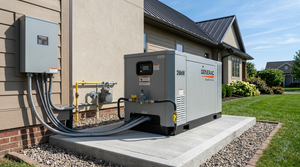
The Briggs & Stratton Model 080012 is a permanently installed, automatic standby generator designed to serve as a complete backup power source for commercial and institutional facilities. When it detects that utility power has failed, it starts automatically, completes its warm-up sequence, and restores electricity to your building within seconds — without any human intervention required. When utility power returns, it transfers back automatically and shuts itself down.
This is a commercial-grade machine engineered for permanent outdoor installation, connected directly to your facility's electrical system through an automatic transfer switch and to your existing natural gas utility service. It is designed to run reliably whether it has been idle for a week, a month, or six months.
This generator is an excellent fit for:
- Small-to-medium commercial buildings (typically ~5,000–25,000 sq ft depending on load density)
- Light industrial facilities with three-phase motor loads
- Agricultural operations with pumps, fans, and refrigeration
- Healthcare facilities, clinics, and medical offices
- Restaurants, grocery stores, and food service operations
- Schools, churches, and community institutions
Full Technical Specifications
Understanding every specification matters when you are making a capital investment of this size. The table below summarizes the core specs of the Briggs & Stratton 100kW Natural Gas Generator, Model 080012.
Engine and Performance Deep Dive
The PSI 5.7L V-8 turbo-charged, liquid-cooled engine is the mechanical foundation of this generator's reliability and longevity. It is an industrial stationary engine purpose-built for the demands of standby power, not a light-duty repurposed design.
The 1,800 RPM Advantage
Many smaller residential and light-duty commercial generators spin at 3,600 RPM. This unit runs at 1,800 RPM using a four-pole alternator to produce 60 Hz output, and that difference carries real benefits:
- Lower mechanical wear thanks to fewer revolutions per hour of operation.
- Improved oil film stability and reduced bearing and ring wear.
- Lower heat generation and reduced thermal stress on seals and windings.
- Longer maintenance intervals and extended overall service life.
Turbo-Charging: Power and Consistency
The turbocharger forces additional air into the combustion chambers, enabling the engine to generate strong output from a modest displacement while maintaining performance across varying site conditions.
- Higher power density from a compact engine package.
- Better altitude and temperature performance compared with naturally aspirated designs.
- More stable output under heavy loads and during extended runtime windows.
Liquid Cooling for Extended Runs
The liquid-cooled design maintains stable operating temperatures even when the generator runs for many hours or days under load. That stability is critical during prolonged outages when air-cooled designs can struggle to manage heat.
💡 Pro Tip: Load Bank Testing
Schedule a professional load bank test after installation and then annually. This verifies that the generator delivers and sustains full-rated output under realistic conditions before you depend on it during a real outage.
Natural Gas: The Right Fuel for 2026
Fuel choice is one of the biggest strategic decisions in any standby power project, and natural gas has become the preferred option for permanent commercial installations in 2026.
Continuous, On-Demand Supply
Natural gas is delivered through underground pipelines as part of your utility service. Unlike diesel, there is no on-site tank level to monitor or refill during an extended outage. As long as the gas utility remains in service, your generator has access to fuel.
No Fuel Degradation
Stored diesel degrades over time due to oxidation, contamination, and moisture. Natural gas arrives fresh every time the generator runs, eliminating concerns about stale fuel, clogged filters, or unreliable starts after long idle periods.
Cleaner Combustion and Compliance Benefits
Natural gas combustion produces fewer particulates and visible emissions than diesel. For businesses that operate in urban or suburban areas, or that track their emissions for ESG reporting, this cleaner profile is a meaningful advantage.
⚠️ Note on Gas Supply Risk
While gas networks typically remain operational during grid outages, extreme events that damage gas infrastructure can disrupt fuel supply. Facilities with strict uptime mandates should consider hybrid backup strategies that combine natural gas generators with battery storage or limited diesel reserves.
Simplified Operations and Regulatory Burden
With natural gas, you avoid the environmental permits, spill prevention measures, periodic tank inspections, and delivery scheduling that come with diesel storage. Once the gas connection is complete and inspected, fuel logistics effectively disappear from your to-do list.
Key Advantages: Why This Generator Stands Out
Whole-Facility Coverage at a Practical Scale
A 100kW standby generator sits in an ideal range for many commercial buildings, striking a balance between substantial capacity and practical installation requirements.
Fully Automatic, Zero-Operator-Required
Paired with an automatic transfer switch, the generator continuously monitors utility power. When an outage occurs, it starts, warms up, and transfers load automatically. When grid power returns, it smoothly transfers back and shuts down on its own. Staff do not need to be on site or trained in manual generator operation.
💡 Pro Tip: Weekly Exercise
Program a weekly automatic exercise run of 15–30 minutes. This keeps the engine lubricated, the battery charged, and ensures any problems surface while you have time to address them — not in the middle of an outage.
Three-Phase Flexibility for Mixed Loads
With 120/240V three-phase output, this generator can feed:
- Three-phase HVAC compressors, motors, and process equipment.
- Single-phase 240V loads like some HVAC units and water heaters.
- Single-phase 120V circuits for lighting, outlets, IT, and POS systems.
That mix mirrors the reality of most commercial buildings, allowing you to protect your entire load profile with one machine.
Long-Term Durability and Total Cost of Ownership
The low-RPM, liquid-cooled architecture is designed for multi-decade service life when maintained correctly. When you consider the cost over 20+ years — including maintenance, fuel, and avoided downtime — a durable commercial generator like this often delivers a lower cost per protected hour than cheaper, short-lived alternatives.
📊 Lifetime Cost Perspective
A generator that costs more upfront but lasts longer and needs fewer repairs can produce a lower yearly cost of protection than a cheaper unit that must be replaced or frequently repaired. Always look at lifetime cost, not just purchase price.
Installation Overview
Installing a 100kW commercial standby generator is a multi-trade project that must be planned and executed carefully. At a high level, you will move through site preparation, pad construction, gas work, electrical integration, and final commissioning.
Site Preparation
Choose a level outdoor location with enough clearance for ventilation, service access, and code-required separation from windows, doors, and air intakes. Engage your local building department early to understand permit requirements and review timelines.
Concrete Equipment Pad
The generator should be installed on a reinforced concrete pad sized for its footprint and weight. The pad must be level, properly drained, and fully cured before equipment placement to prevent future settling and vibration issues.
Gas Service Extension
A licensed gas contractor will extend a dedicated natural gas line from your existing service to the generator. Pipe sizing and supply pressure must be calculated to ensure adequate flow at full load, with correctly placed shutoff valves for maintenance and emergency isolation.
Electrical Integration
A licensed electrician will install the automatic transfer switch, connect the generator output to your building's electrical system, and confirm proper grounding and bonding. The switch rating must match your service entrance and project design.
⚠️ Permit and Inspection Reminder
Operating a permanently installed generator without proper permits and inspections can void warranties, create insurance issues, and trigger code enforcement action. Always work with contractors experienced in commercial standby installations in your jurisdiction.
System Commissioning
After installation, a qualified technician should perform full commissioning — verifying start-up, load transfer, voltage and frequency stability, and all safety shutdowns. Baseline readings from this process become your reference for future maintenance and diagnostics.
Maintenance Requirements
Commercial standby generators are reliable only when supported by consistent preventive maintenance. The good news: most tasks are straightforward once you establish a schedule.
- Weekly: Automatic exercise run (15–30 minutes), quick visual inspection, and status check on the controller.
- Quarterly: Air filter inspection, coolant level check, visual inspection of belts and hoses, battery terminal inspection.
- Annually: Oil and filter change (or per hours of operation), comprehensive inspection by a professional technician, and optional load bank test.
- Every few years: Coolant replacement per manufacturer guidelines and proactive replacement of the starter battery.
💡 Pro Tip: Maintenance Contracts
Consider an annual maintenance contract with a generator service company. You get scheduled preventive maintenance, priority emergency response, and documentation that helps preserve warranty coverage.
Top Use Cases in 2026
Retail and Grocery
Outages hit retail and grocery operations on two fronts: lost sales and lost inventory. A 100kW generator keeps refrigeration, lighting, POS, and HVAC running so you can stay open, protect perishable stock, and maintain customer trust when neighboring stores are closed.
Restaurants and Food Service
Commercial kitchens are energy intensive, and a single outage during peak service can destroy food inventory and revenue. With standby power, your cookline, coolers, exhaust, and dining spaces keep operating smoothly through grid events.
Medical and Healthcare Facilities
Clinics, dental practices, and outpatient centers rely on power for critical equipment, records, and temperature-sensitive medications. For these facilities, backup power is a safety requirement and a key part of regulatory and insurance compliance.
Light Industrial and Fabrication
Machine shops and small manufacturers cannot afford to have CNC machines, compressors, and process equipment shut down mid-cycle. A 100kW three-phase generator keeps production operations on schedule and protects sensitive equipment from abrupt power loss.
Agricultural Operations
Farms and livestock operations depend on powered ventilation, water, feeding systems, and refrigeration. During critical seasons, an outage can threaten animal welfare and crop quality. Standby power safeguards both productivity and compliance.
Institutional and Community Facilities
Schools, churches, and community centers serve as critical hubs during regional emergencies. With reliable backup power, these facilities can function as shelters, communication centers, and coordination points when surrounding infrastructure is down.
The 2026 Business Case for Standby Power
The economics of standby power have shifted in recent years. With outages more frequent and business operations more dependent on electricity, the cost of downtime has risen sharply.
Rising Cost of Downtime
For many mid-sized commercial operations, outage-related losses can easily reach thousands to tens of thousands of dollars per hour. When you account for lost revenue, spoiled inventory, missed production deadlines, and reputation damage, a generator investment often pays for itself by avoiding just a handful of serious events.
Competitive Advantage
Staying open when others are closed is a visible competitive advantage. Customers remember who was available during a storm or grid emergency. Tenants factor backup power into leasing decisions. Business partners pay attention to how resilient your operations are.
Insurance and Risk Management
Some insurers explicitly ask about standby power during underwriting, especially for healthcare, food service, and manufacturing risks. Demonstrating that you have permanent backup power in place can support better coverage terms and a stronger overall risk profile.
Frequently Asked Questions
What size building can a 100kW generator support?
It depends on your building's specific load profile, but many commercial facilities between about 5,000 and 25,000 square feet can be served by a 100kW generator for whole-building backup. Facilities with unusually high power density may use this unit to cover critical circuits instead of every load.
How long can a natural gas generator run continuously?
As long as the natural gas utility remains available and the generator receives basic checks (oil level, coolant, etc.), it can run continuously for extended periods. Multi-day runtimes are achievable in real-world scenarios when the system is properly sized and maintained.
Do I need three-phase utility service to use this generator?
No. The generator's output is three-phase, but it connects through an automatic transfer switch to your building's distribution system. Whether you can fully utilize three-phase output depends on your building's electrical infrastructure, which your electrician or engineer can evaluate.
How often does this generator need maintenance?
Plan on weekly exercise runs, quarterly visual checks, and at least one full professional service visit per year. Oil and filter changes are scheduled by operating hours and manufacturer guidance. With this level of care, commercial 1,800 RPM generators are designed for long service lives.
What transfer switch size do I need?
Transfer switch sizing is based on your service entrance amperage and the portion of your building you plan to back up, not just generator kW. Your electrician will specify the correct switch rating after reviewing your service size and conducting a load assessment.
Is natural gas always available during power outages?
In most outage scenarios, underground gas infrastructure continues to operate even when the electrical grid is down. However, extreme events that damage gas lines or disrupt supply can affect availability. If your facility requires absolute uptime, discuss layered backup strategies with a power specialist.
What permits are needed to install this generator?
Expect at least building, electrical, and gas/mechanical permits. Some areas also require environmental or air-quality permits for generators above certain thresholds. Your installation contractor should manage permit applications and coordinate inspections.
Related Products

Briggs and Stratton 100kW Standby Generator - 120/240V, 500A Breaker, Block heater and Battery charger included - 080010
View
Briggs and Stratton 100kW Standby Generator - 120/240V, 350A Breaker, Block heater and Battery charger included - 080012
ViewReady to Protect Your Facility with Standby Power?
Whether you're upgrading an aging generator, adding backup power to a new facility, or designing a complete resilience strategy — we have the products, expertise, and support to make it happen. Contact our team for a personalized quote and expert guidance.
Get a Quote Shop GeneratorsRelated Articles: Solar Energy Guide 2026: Benefits, Costs & ROI | Why Modern Solar Panels Are Shifting to N-Type Silicon | 60 kW Cummins Generator Guide: Specs & Buying Tips
About Portlandia Electric Supply
Portlandia Electric Supply is a nationwide electrical supply distributor offering premium Tier 1 solar panels, standby generators, inverters, battery storage systems, EV chargers, and related electrical equipment. With 3,800+ in-stock SKUs across 229 brands, 12 distribution hubs, and a network of 8,500+ solution providers, we deliver turnkey power solutions with live support and fast nationwide delivery.
Location: 1507 Portland Ave, Louisville, KY, United States | Phone: 1 888-876-0007 | Website: www.portlandiaelectric.supply
Article: Briggs & Stratton 100kW Natural Gas Standby Generator (120/240V) — The Complete 2026 Commercial Power Guide
Category: Standby Generators / Commercial Power Solutions
Last Updated: March 2026
Disclaimer: Performance specifications referenced in this article are based on manufacturer engineering data and industry standards current as of March 2026. Actual generator performance varies based on load profile, installation conditions, fuel pressure, altitude, and ambient temperature. Always consult a licensed electrical engineer and qualified generator contractor for facility-specific design and installation recommendations.
Related Resources:
- Best Solar Panels 2026 — Buyer's Guide
- EG4 vs Tesla Powerwall
- Qcells vs Trina vs JA
- Solar Inverter Buyer's Guide
- Solar Battery Buyer's Guide
- 5kW Solar Kit
- 10kW Solar + Battery Kit
- Off-Grid Cabin Kit
- EG4 Batteries
- Qcells Solar Panels
- Trina Solar
- JA Solar
- REC Solar
- Mission Solar
- Sol-Ark Inverters
- SolarEdge Inverters
- Generac PWRcell
Calculate how much storage you need with our battery sizing calculator.
Check solar incentives available in your state.
Use our free solar system calculator to size your array.
Check out our Solar Panel Comparison Tool. Check out our Inverter Sizing Calculator.
Calculate your solar payback and 25-year savings with our Solar ROI Calculator. Follow our complete DIY solar installation guide for step-by-step instructions. Keep your system running at peak performance with our Solar Maintenance Guide.
Related Resources
- Solar System Calculator
- Battery Sizing Calculator
- Solar Panel Comparison Tool
- Inverter Sizing Calculator
- Solar ROI Calculator
- Solar Installation Guide
- Solar Maintenance Guide
- Solar Permitting Guide
- Battery Installation Guide
- NEC Code Compliance Guide
- Solar Panel Mounting Guide
- Grounding & Bonding Guide
- Solar Incentives by State
- Pro Account — Wholesale Pricing
- PowerLink Network — Contractor Program
Frequently Asked Questions
What size generator do I need for my home?
A typical whole-home generator is 22-26kW. Size based on your essential loads (AC, refrigerator, well pump, lights). A 26kW Generac runs two AC units plus standard household loads.
What is the difference between LP and NG generators?
LP (propane) generators produce more power than NG (natural gas) models. A 26kW Generac outputs 26kW on LP vs 24kW on NG.
Do you install generators?
PES Supply is a distributor, not an installer. We can connect you with a qualified installer through our PowerLink contractor network.
Shop Related Products
PES Supply carries 80,000+ products from 300+ manufacturers. One PO, one invoice, every trade covered.
Need help sizing? Our team can calculate loads, select equipment, and source everything from one PO.
Call (502) 790-0600