

Temperature Sensors: Essential Components for Accurate Heat Measurement Temperature Sensors play a crucial role in electrical, industrial, and HVAC systems. They provide precise readings and offer reliable performance across many applications. Whether it's process management, environmental monitoring, or equipment optimization, selecting the right instruments ensures safety and efficiency. In every system tracking heat or cold,…


2 products
 Trina Solar
 Vertex N 600W N-Type TOPCon Commercial Module
$299.00
$0.50/W · 600WAvailable to orderLead time confirmed at checkoutTop Seller
Trina Solar
Trina Solar Vertex N 600W N-Type TOPCon Commercial Module
$299.00
$0.50/W · 600WAvailable to orderLead time confirmed at checkoutTop Seller ZNShine
ZNshine 400W ZXM7-SH108-400/M All Black Monocrystalline...
$144.99
$0.36/W · 400WIn stockShips in 1–2 business daysTop Seller
ZNShine
ZNshine 400W ZXM7-SH108-400/M All Black Monocrystalline...
$144.99
$0.36/W · 400WIn stockShips in 1–2 business daysTop Seller ZNShine
 Solar 405W 108-Cell Solar Panel
$147.61
$0.36/W · 405WAvailable to orderLead time confirmed at checkout
ZNShine
ZNShine Solar 405W 108-Cell Solar Panel
$147.61
$0.36/W · 405WAvailable to orderLead time confirmed at checkout LONGi
LONGi Hi-MO X6 Scientist 600W N-Type TOPCon Bifacial Mo...
$161.29
$0.27/W · 600WAvailable to orderLead time confirmed at checkout
LONGi
LONGi Hi-MO X6 Scientist 600W N-Type TOPCon Bifacial Mo...
$161.29
$0.27/W · 600WAvailable to orderLead time confirmed at checkout Jinko Solar
Jinko Tiger Neo N-Type 600W Bifacial TOPCon Solar Panel
$216.00
$0.36/W · 600WAvailable to orderLead time confirmed at checkout
Jinko Solar
Jinko Tiger Neo N-Type 600W Bifacial TOPCon Solar Panel
$216.00
$0.36/W · 600WAvailable to orderLead time confirmed at checkout Canadian Solar
 HiKu6 395W Mono Solar Panel - CS6R-395MS-HL
$163.99
$0.42/W · 395WAvailable to orderLead time confirmed at checkout
Canadian Solar
Canadian Solar HiKu6 395W Mono Solar Panel - CS6R-395MS-HL
$163.99
$0.42/W · 395WAvailable to orderLead time confirmed at checkout Hyundai Energy Solutions
Hyundai HiS-S410YH(BK) 410W Bifacial Commercial Solar P...
$149.00
$0.36/W · 410WAvailable to orderLead time confirmed at checkout
Hyundai Energy Solutions
Hyundai HiS-S410YH(BK) 410W Bifacial Commercial Solar P...
$149.00
$0.36/W · 410WAvailable to orderLead time confirmed at checkout Talesun
 TM7G54M-450 450W Bifacial Solar Panel
$185.63
$0.41/W · 450WAvailable to orderLead time confirmed at checkout
Talesun
Talesun TM7G54M-450 450W Bifacial Solar Panel
$185.63
$0.41/W · 450WAvailable to orderLead time confirmed at checkout Aptos
Aptos Solar DNA-120-BF10-440W 440W Bifacial Solar Panel
$176.00
$0.40/W · 440WAvailable to orderLead time confirmed at checkout
Aptos
Aptos Solar DNA-120-BF10-440W 440W Bifacial Solar Panel
$176.00
$0.40/W · 440WAvailable to orderLead time confirmed at checkout JA Solar
 545 W Solar Panel – JAM72D30‑545/MB, 144‑cell ...
$185.32
Available to orderLead time confirmed at checkout
JA Solar
JA Solar 545 W Solar Panel – JAM72D30‑545/MB, 144‑cell ...
$185.32
Available to orderLead time confirmed at checkout-
Vendor:Fronius
MPN: PES-PA-ELC-1398
Pallet of 8Regular price $421.20 USDRegular priceUnit price per -
Vendor:Fronius
MPN: PES-PA-ELC-1397
Pallet of 8Regular price $560.90 USDRegular priceUnit price per


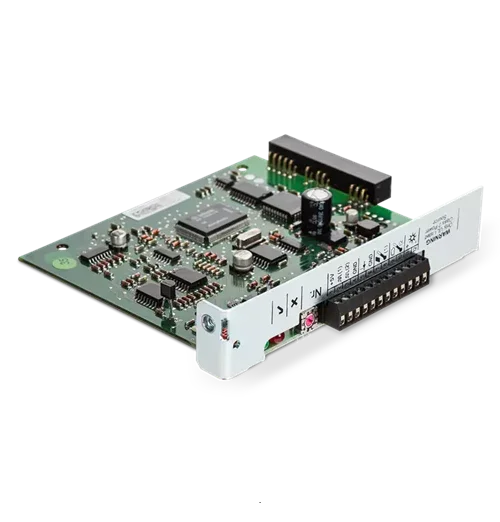
About Temperature Sensors
Temperature Sensors: Essential Components for Accurate Heat Measurement
Temperature Sensors play a crucial role in electrical, industrial, and HVAC systems. They provide precise readings and offer reliable performance across many applications. Whether it's process management, environmental monitoring, or equipment optimization, selecting the right instruments ensures safety and efficiency.
In every system tracking heat or cold, these devices act as the eyes and ears of equipment. They detect thermal changes, relay signals, and enable intelligent control. Understanding the different types, benefits, and selection criteria helps improve uptime, reduce waste, and enhance performance.
What Are These Devices?
Such devices detect heat variations and convert this data into measurable electrical signals. These instruments are widely used in manufacturing, automation, food service, medical equipment, automotive systems, and laboratories. The demand for precise measurement is critical for comfort, safety, and operational efficiency.
For example, industrial ovens require proper instruments to ensure uniform heating. In cooling applications, accurate readings help prevent equipment damage and save energy.
Types of Monitoring Devices
Different categories of instruments suit various uses:
Thermocouples
Thermocouples are robust devices designed to function well in extreme environments. They produce voltage based on temperature differences, offering a fast response time and wide measurement range.
Resistance Temperature Detectors (RTDs)
RTDs are precision instruments that change their resistance with thermal changes. They provide high accuracy and stability, ideal for laboratories and sensitive industrial processes.
Thermistors
Highly sensitive thermistors show significant resistance changes with small thermal shifts. These instruments suit HVAC systems, electronics, and medical applications. Thermistors perform best within limited ranges.
Infrared Sensors
Infrared devices detect radiation emitted by objects for contactless measurement. They are perfect for moving targets or dangerous environments where contact instruments are inadequate.
Why Quality Devices Matter
High-quality devices differentiate reliable system performance from costly downtime and failures. The advantages include multiple benefits:
Enhanced Accuracy and Reliability
Accurate sensing allows systems to respond correctly to environmental changes. This precision reduces false alarms, minimizes waste, and prevents costly errors.
Robust Construction
Industrial applications require rugged devices that tolerate vibration, moisture, and extreme conditions to ensure long-term durability.
Energy Efficiency
Precise data helps optimize energy use for heating and cooling applications, saving costs and reducing environmental impact.
Compliance and Safety
Many industries demand documented control for safety and regulatory compliance. Quality instruments support traceability and meet strict standards.
Choosing the Right Temperature Sensors
Selecting suitable instruments involves assessing the application requirements, environment, and desired accuracy. Consider these key factors:
1. Define Range
Devices perform optimally within specific thermal ranges. Thermocouples handle extreme conditions well, while RTDs are better for moderate, precise uses.
2. Consider Response Time
Fast response time is essential in dynamic environments such as manufacturing or vehicle monitoring, ensuring timely data updates.
3. Evaluate Environmental Conditions
Elements like moisture, dust, vibration, and chemicals affect function. Choose devices with suitable protective ratings for these conditions.
4. Accuracy and Stability
Processes requiring precision must prioritize instruments with minimal drift and high accuracy for consistent results.
5. Integration and Compatibility
Devices should seamlessly integrate with control systems, data units, or automation platforms. Proper compatibility prevents costly retrofits and simplifies installations.
Use Cases for Monitoring Devices
Devices serve versatile applications across many fields:
- Industrial Automation: Used in monitoring machinery, control loops, and safety systems.
- HVAC: Maintaining building comfort and climate control.
- Food & Beverage: Tracking heat during cooking, cooling, and storage processes.
- Healthcare: Supporting patient monitoring and medical equipment operation.
- Automotive: Engine, battery thermal monitoring, and cabin climate control.
- Research Laboratories: Providing precise measurements for experimental data collection.
Install, Monitor & Maintain for Reliable Performance with Temperature Sensors
Once appropriate Temperature Sensors are selected, proper installation and maintenance are critical. Regular calibration, housing protection, and inspections extend lifespan and accuracy. Advanced monitoring platforms track trends, diagnose issues, and optimize overall system performance.
Ready to Get Started?
Shop code-compliant solar equipment at wholesale prices. Pro contractors save up to 40% with a free Pro Account.
Shop Solar Panels Apply for Pro Account