

Portable/Inverter systems offer a versatile and reliable solution for maintaining power continuity during outages, mobile operations, and off-grid applications. Whether equipping a workshop, RV, campsite, or emergency backup plan, a reliable Portable/Inverter allows essential devices to keep running. From lights and laptops to power tools and small appliances, these systems ensure power supply when the…


1 product
 Trina Solar
 Vertex N 600W N-Type TOPCon Commercial Module
$299.00
$0.50/W · 600WAvailable to orderLead time confirmed at checkoutTop Seller
Trina Solar
Trina Solar Vertex N 600W N-Type TOPCon Commercial Module
$299.00
$0.50/W · 600WAvailable to orderLead time confirmed at checkoutTop Seller ZNShine
ZNshine 400W ZXM7-SH108-400/M All Black Monocrystalline...
$144.99
$0.36/W · 400WIn stockShips in 1–2 business daysTop Seller
ZNShine
ZNshine 400W ZXM7-SH108-400/M All Black Monocrystalline...
$144.99
$0.36/W · 400WIn stockShips in 1–2 business daysTop Seller ZNShine
 Solar 405W 108-Cell Solar Panel
$147.61
$0.36/W · 405WAvailable to orderLead time confirmed at checkout
ZNShine
ZNShine Solar 405W 108-Cell Solar Panel
$147.61
$0.36/W · 405WAvailable to orderLead time confirmed at checkout LONGi
LONGi Hi-MO X6 Scientist 600W N-Type TOPCon Bifacial Mo...
$161.29
$0.27/W · 600WAvailable to orderLead time confirmed at checkout
LONGi
LONGi Hi-MO X6 Scientist 600W N-Type TOPCon Bifacial Mo...
$161.29
$0.27/W · 600WAvailable to orderLead time confirmed at checkout Jinko Solar
Jinko Tiger Neo N-Type 600W Bifacial TOPCon Solar Panel
$216.00
$0.36/W · 600WAvailable to orderLead time confirmed at checkout
Jinko Solar
Jinko Tiger Neo N-Type 600W Bifacial TOPCon Solar Panel
$216.00
$0.36/W · 600WAvailable to orderLead time confirmed at checkout Canadian Solar
 HiKu6 395W Mono Solar Panel - CS6R-395MS-HL
$163.99
$0.42/W · 395WAvailable to orderLead time confirmed at checkout
Canadian Solar
Canadian Solar HiKu6 395W Mono Solar Panel - CS6R-395MS-HL
$163.99
$0.42/W · 395WAvailable to orderLead time confirmed at checkout Hyundai Energy Solutions
Hyundai HiS-S410YH(BK) 410W Bifacial Commercial Solar P...
$149.00
$0.36/W · 410WAvailable to orderLead time confirmed at checkout
Hyundai Energy Solutions
Hyundai HiS-S410YH(BK) 410W Bifacial Commercial Solar P...
$149.00
$0.36/W · 410WAvailable to orderLead time confirmed at checkout Talesun
 TM7G54M-450 450W Bifacial Solar Panel
$185.63
$0.41/W · 450WAvailable to orderLead time confirmed at checkout
Talesun
Talesun TM7G54M-450 450W Bifacial Solar Panel
$185.63
$0.41/W · 450WAvailable to orderLead time confirmed at checkout Aptos
Aptos Solar DNA-120-BF10-440W 440W Bifacial Solar Panel
$176.00
$0.40/W · 440WAvailable to orderLead time confirmed at checkout
Aptos
Aptos Solar DNA-120-BF10-440W 440W Bifacial Solar Panel
$176.00
$0.40/W · 440WAvailable to orderLead time confirmed at checkout JA Solar
 545 W Solar Panel – JAM72D30‑545/MB, 144‑cell ...
$185.32
Available to orderLead time confirmed at checkout
JA Solar
JA Solar 545 W Solar Panel – JAM72D30‑545/MB, 144‑cell ...
$185.32
Available to orderLead time confirmed at checkout-
Vendor:Generac
MPN: PES-PS-GEN-00139
Regular price $1,049.00 USDRegular priceUnit price per

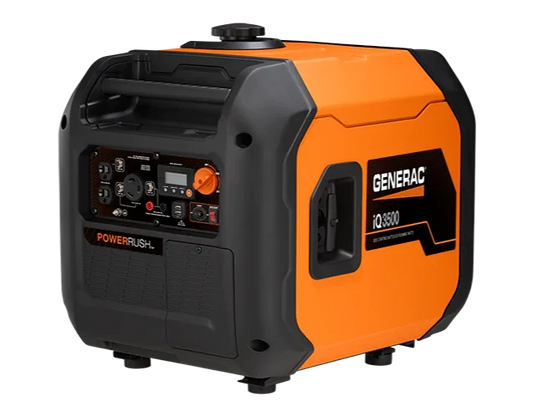
About Portable/Inverter
Portable/Inverter systems offer a versatile and reliable solution for maintaining power continuity during outages, mobile operations, and off-grid applications. Whether equipping a workshop, RV, campsite, or emergency backup plan, a reliable Portable/Inverter allows essential devices to keep running. From lights and laptops to power tools and small appliances, these systems ensure power supply when the main electricity fails. Below, we explore what a Portable/Inverter is, its key benefits, how to select the right model, and tips for safe operation and maintenance.
What is a Portable/Inverter?
A Portable/Inverter is a compact device designed to convert direct current (DC) stored in batteries into alternating current (AC). AC is the electricity type used by most home and office appliances. This system often includes a deep-cycle battery or connects to one, inverter electronics, and output ports. When the primary power source fails, it draws energy from the battery and supplies a stable AC output. Its portability allows use in homes, garages, construction sites, RVs, and remote cabins. Portable inverter generators are ideal for applications demanding both mobility and reliable power.
Benefits of Using a Portable/Inverter
- Power continuity during outages: A main advantage of a portable inverter generator is uninterrupted power supply during blackouts. Crucial devices such as refrigerators, medical equipment, routers, and lighting stay operational.
- Mobility and flexibility: Unlike fixed generators, portable inverter generators are lightweight and easy to move. They perfectly suit mobile worksites, camping, outdoor events, and mobile offices.
- Quieter and cleaner operation: Drawing power silently from a battery without combustion makes these devices quieter than fuel-powered generators. They also emit no exhaust, making them suitable for indoors and noise-sensitive environments.
- Safe for sensitive electronics: Many portable inverter generator models provide clean, stable power. This reduces the risk of electrical spikes or surges that can damage computers, monitors, or medical devices.
- Easy to set up and maintain: Compared to traditional generators, portable inverter generators require minimal installation, mostly connecting batteries. Their maintenance is simpler and less frequent.
How to Choose the Right Portable/Inverter
Capacity and Output
Begin by calculating your power requirements. Portable inverter generators are rated in watts (W). Add the wattage of all devices you anticipate running simultaneously. Then select a portable inverter generator that surpasses this total by about 20–30% to handle surge loads from motor starts. For instance, running a 60 W laptop, 40 W router, and 20 W light totals 120 W. A 200–300 W generator provides adequate headroom.
Features and Build Quality
- Pure sine wave vs. modified sine wave: Pure sine wave inverters deliver cleaner, more stable power, essential for delicate electronics. Modified sine wave inverters cost less but are less ideal for sensitive devices.
- Battery compatibility and capacity: Confirm compatibility of the inverter with your battery's voltage (e.g., 12 V or 24 V). Consider batteries with higher amp-hour ratings, which extend operational runtime.
- Protection mechanisms: Choose units with overload protection, low-voltage shutdown, and short-circuit protection. These safety features help prolong the lifespan of both inverter and connected devices.
- Portability and form factor: Evaluate the weight, handles, and enclosure quality of the portable inverter generator. Rugged and compact models are easier to transport and better suited for outdoor or harsh conditions.
- Output options and connectors: Multiple AC sockets, USB ports, and 12 V DC outputs increase versatility. Some models support 230 V or 110 V outputs to meet different regional power standards.
Tips for Safe Operation and Maintenance
- Use the correct battery type and wiring: Match the inverter’s input voltage (e.g., 12 V) with your battery’s voltage. Use cables rated for the current and ensure all connections are secure to avoid sparks and overheating.
- Avoid overloading: Never exceed the wattage rating of your portable inverter generator. Operating too many high-wattage devices simultaneously can trip overload protections or damage the unit.
- Provide ventilation: Portable inverter generators produce heat during operation. Maintain good airflow and keep ventilation slots clear to prevent overheating and extend device life.
- Regular battery maintenance: For lead-acid batteries, monitor water levels if applicable and clean terminals regularly. Sealed batteries require proper charging and should not be deeply discharged.
- Store safely when not in use: Disconnect batteries, keep the inverter dry and cool, and recharge batteries periodically. This prevents sulfation and battery degradation over time.
Ready to Get Started?
Shop code-compliant solar equipment at wholesale prices. Pro contractors save up to 40% with a free Pro Account.
Shop Solar Panels Apply for Pro Account