Updated September 2026 — refreshed against the live PES catalog; product pricing verified 2026-09-26.
2026 product line update
| Product | Class | Price |
|---|---|---|
| Canadian Solar 710W TOPCon Bifacial Solar Panel | 710W | $340.80 |
| Hyundai 640W 156-Cell TOPCon Bifacial Solar Panel | 640W | $220.78 |
| Thornova Solar TS-BGT72(600) 600W Bifacial Solar Panel | 600W | $165.76 |
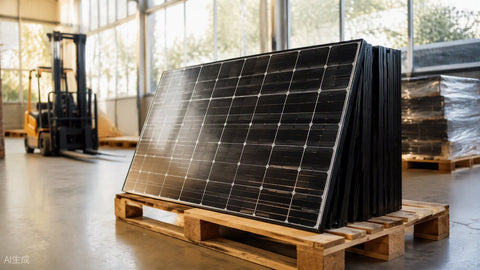
| Thornova Solar 595W Solar Panel 144 Cell Bifacial TS-BGT72(595) Wholesale 31 panels per pallet | 595W | $164.64 |
| ZNShine Solar 585W 144-Cell Bifacial Solar Panel | 585W | $246.99 |
| Hyundai HiS-S585OJ 585W Clear on Transparent156 Half-Cell Bifacial Solar Panel | 585W | $195.86 |
Live prices verified 2026-09-26. The current pallet line tops out at 550–640W, plus the Canadian Solar 710W TOPCon flagship panel.
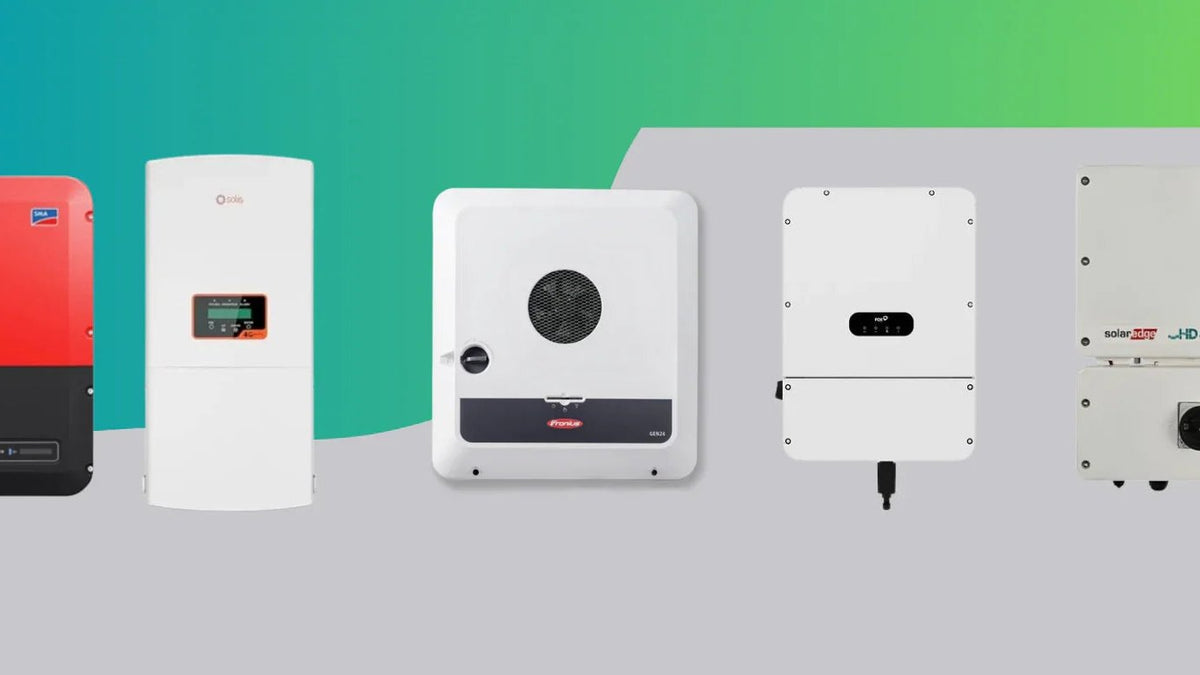
Every watt a solar array produces passes through an inverter, which makes the manufacturer behind that box one of the most consequential choices in any project. Panels are commodities that differ by fractions of a percent; inverters differ in architecture, software, warranty support, and whether the company will still answer the phone in year nine. We distribute and support equipment across this landscape daily, and we've watched manufacturer quality show up in the only place that ultimately matters: service calls, warranty claim turnaround, and fleet uptime. This guide profiles the ten manufacturers that matter for the US market in 2025, compares inverter types, and gives you the selection criteria we apply when stocking the warehouse. For the architecture-level decision — string vs. micro vs. hybrid — pair this with our inverter types guide and the top inverter picks for 2025.

The Global Inverter Market in 2025
The global solar inverter market was valued at roughly $15.4 billion in 2024 and is growing at better than 9% annually, driven by the energy transition, falling hardware costs, and grid codes that increasingly require smart-inverter functions — volt-var support, frequency ride-through, and remote dispatchability. Two structural shifts define the competitive landscape this year. First, the center of gravity has moved from pure grid-tie conversion toward energy management: the winners are the companies whose inverters orchestrate batteries, EVs, and whole-home loads, not just panels. Second, supply chains have regionalized — US content rules, tariff schedules, and domestic assembly capacity now shape which products land on American rooftops at what price. Both shifts favor manufacturers with deep software teams and US service infrastructure, and both show up in how we rank the field below.
The Top 10 at a Glance

This comparison table covers the manufacturers' core identities — headquarters, specialty, and the application where each one is strongest:
| Manufacturer | Headquarters | Inverter Specialty | Best Application |
|---|---|---|---|
| Enphase Energy | Fremont, CA, USA | Microinverters, AC batteries | Residential, shaded rooftops |
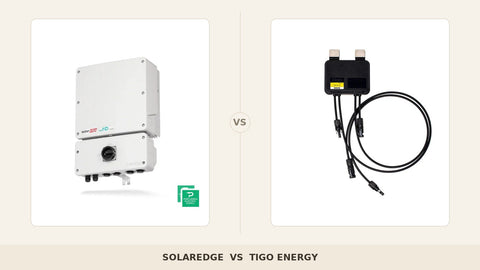
| SolarEdge | Fremont, CA, USA | DC-optimized string inverters | Residential & commercial |
| SMA America | Rocklin, CA, USA | String & central inverters | All scales residential to utility |
| Huawei | Shenzhen, China | Smart string inverters, AI MPPT | Large commercial & utility |
| Fronius | Portage, IN, USA | String inverters, hybrid | Residential & light commercial |
| OutBack Power | Arlington, WA, USA | Off-grid & hybrid inverter/chargers | Off-grid, remote, telecom |
| APsystems | Seattle, WA, USA | Microinverters | Residential & small commercial |
| Tesla Energy | Palo Alto, CA, USA | Hybrid inverter + Powerwall | Residential with battery storage |
A note on reading this table: "headquarters" reflects each company's principal US operations, since that's what determines your warranty service experience, parts availability, and tech-support time zone. Several of these companies are global — Fronius is Austrian, SMA German, Huawei Chinese — but their US organizations are what an installer in Ohio or Oregon actually deals with.
The Profiles: Who These Companies Are
1. Enphase Energy — The Microinverter Standard
Enphase invented the commercial microinverter and still defines the category. The IQ8 series' grid-forming capability — microinverters that can operate during outages when paired with the system controller — broke the old assumption that panel-level electronics meant grid-tie-only. The ecosystem lock-in is real (Enphase wants to sell you the panels' electronics, the battery, and the monitoring), but the integration quality justifies it for residential buyers who value simplicity. Warranty is 25 years on microinverters, and failure rates we observe in the field are genuinely low. Best for: residential rooftops, especially shaded or multi-face roofs.
2. SolarEdge — The Optimizer Ecosystem
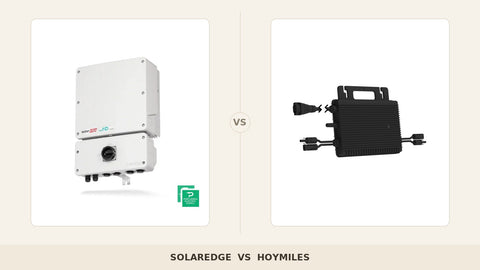
SolarEdge built the power-optimizer architecture into a global business: DC optimizers on every panel, one inverter on the wall, panel-level monitoring throughout. The value proposition is microinverter-grade optimization at a lower per-watt cost, plus a deep residential battery and EV-charger lineup. The counterpoints we share with customers honestly: the ecosystem is proprietary end-to-end, and the company has worked through financial turbulence in 2024–2025 — support infrastructure remains solid, but we watch vendor health on every line we stock. Best for: residential and commercial systems wanting panel-level electronics with central-inverter serviceability.
3. SMA — The Engineer's Choice
SMA is the German pioneer that built the string inverter market, and the Sunny Boy / Sunny Tripower lines remain benchmarks for conversion efficiency and grid-code compliance. Where SMA distinguishes itself in 2025 is commercial and utility credibility: decades of bankability data, the most mature monitoring platform in the string category, and engineering documentation that makes permitting authorities happy. Residential presence in the US is thinner than a decade ago, but for C&I string applications SMA remains a default spec. Best for: commercial rooftops and ground-mounts where bankability matters.
4. Huawei — The Utility-Scale Giant
Huawei ships more inverter capacity globally than anyone, with string inverters that brought AI-driven MPPT optimization and AFCI arc-fault detection to mass-market price points. The US caveat is significant and unavoidable: trade restrictions have kept Huawei largely out of the American residential and commercial market, so US buyers encounter the brand mostly in global project context. Where it's available, the hardware is formidable; where it isn't, the spec sheets still influence what competitors build. Best for: large commercial and utility projects in markets where the brand operates.
5. Fronius — The Craftsman's String Inverter
Fronius (Austrian, with US operations in Indiana) occupies the premium-string niche: SnapINverter mounting that turns service calls into ten-minute swaps, strong light-commercial coverage, and the Gen24 hybrid line that brought genuine backup capability to the string form factor. Active cooling — a fan, by design, which trades a wearing part for thermal headroom — and excellent European build quality define the hardware. Best for: residential and light commercial where serviceability and hybrid capability matter.
6. OutBack Power — The Off-Grid Institution
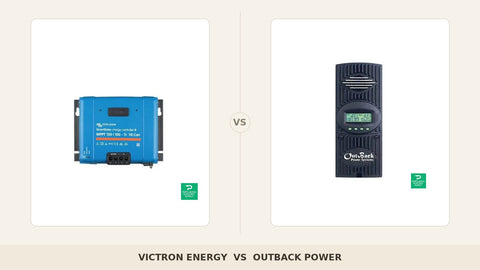
OutBack is the name off-grid professionals trust: inverter/chargers that have powered remote cabins, telecom sites, and mission-critical installations for two decades. The Radian and FXR series handle stacked configurations, generator integration, and abuse that would kill residential-grade equipment. The trade-off is an ecosystem aimed at installers, not homeowners — configuration complexity is real, and grid-tie sellback features lag the hybrid mainstream. Best for: off-grid, remote, telecom, and resilience-critical applications.
7. APsystems — The Microinverter Alternative
APsystems (Seattle-based, global manufacturing) is the credible second source in microinverters: dual- and quad-module units that cut per-panel electronics cost substantially below one-micro-per-panel economics, with QS1 and DS3 lines covering residential through small commercial. Monitoring and ecosystem polish trail Enphase, but price-per-watt leads it, and dual-module units halve the rooftop device count. Best for: cost-sensitive residential and small commercial systems that want panel-level MPPT.
8. Tesla Energy — The Integrated Bundle
Tesla's inverter business is inseparable from the Powerwall ecosystem: the Tesla inverter plus Powerwall combination offers the most vertically integrated residential energy package in the market, with the best consumer-facing software by a wide margin. The limitations match the integration: equipment availability flows primarily through Tesla's own channel, third-party installer access varies, and flexibility outside the ecosystem is limited. Best for: homeowners who want a single-vendor solar-plus-storage package with minimal decision fatigue.
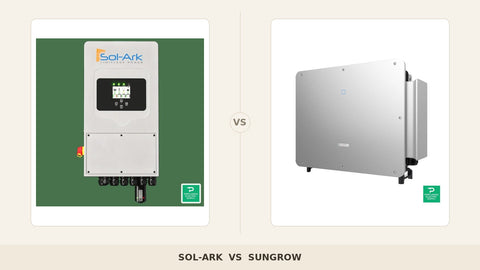
9. Sungrow — The Commercial Climber
Sungrow has quietly become the world's second-largest inverter shipper and the most credible Chinese brand in the US commercial channel: SG-series string inverters for C&I, central inverters for utility scale, and a growing residential hybrid presence. Bankability has improved steadily, pricing is aggressive without being alarming, and the US service organization has matured. Best for: commercial and utility projects where value engineering matters.
10. Growatt — The Value Hybrid Specialist
Growatt built its position on affordable hybrid and off-grid-capable inverters, and in the US it serves the value end of the residential storage market and the DIY/off-grid segment. Feature-per-dollar is exceptional — native battery ports, generator input, and split-phase 120/240V output at prices well below the premium brands. Documentation and support infrastructure are thinner than the top tier, so we steer Growatt toward capable DIYers and installers who can self-support. Best for: budget storage builds, off-grid cabins, and value-driven residential projects.
Inverter Types: The Architecture Under the Brand

Manufacturer choice and architecture choice are separate decisions, and the second one comes first. This table maps the territory:
| Inverter Type | How It Works | Key Advantage | Best For |
|---|---|---|---|
| String Inverter | Panels wired in series strings to a single inverter | Lowest cost; simplest installation and maintenance | Unshaded residential and commercial rooftops |
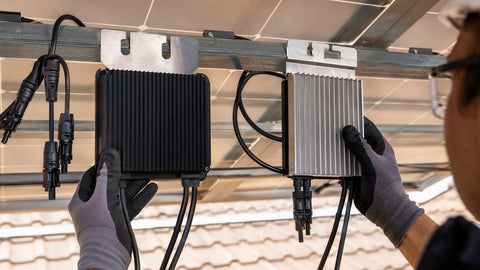
| Microinverter | One inverter per panel; converts DC to AC at source | Panel-level optimization; eliminates shade-related losses | Complex rooftops, partial shading, multi-orientation systems |
| Power Optimizer + String | DC optimizers on each panel; single string inverter | Panel-level monitoring at lower cost than microinverters | Mixed-shade sites needing monitoring without full micro cost |
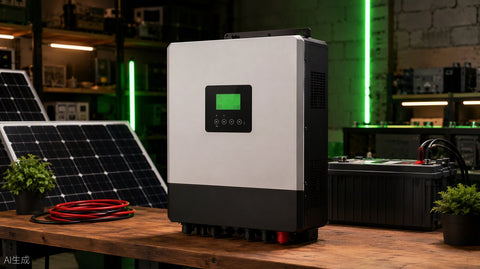
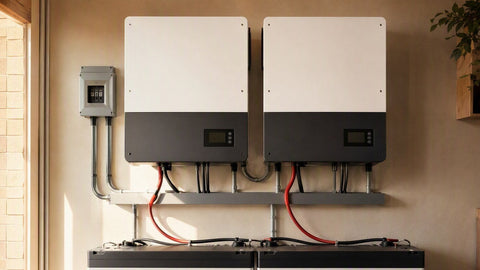
| Hybrid Inverter | Manages solar, battery storage, and grid simultaneously | Backup power, self-consumption optimization, grid independence | Residential & commercial with battery storage or backup needs |
| Central Inverter | One large inverter handles entire array (100kW–multi-MW) | Lowest cost per watt at scale; simple centralized maintenance | Utility-scale ground-mount projects only |
| Off-Grid Inverter/Charger | Converts solar DC to AC and manages battery bank charging | Complete energy independence from utility grid | Remote sites, agricultural, telecom, cabins |
For the deep dive on each architecture — including NEC 690.7 string-sizing math and NEC 690.12 rapid-shutdown implications — see our inverter types explainer.
How to Choose: The Criteria That Actually Predict Satisfaction
| Criteria | What to Look For | Why It Matters |
|---|---|---|
| Inverter Type | String, micro, hybrid, or off-grid based on site conditions | Determines shading tolerance, monitoring capability, and backup power availability |
| Efficiency Rating | Peak efficiency ≥97%; weighted (CEC) efficiency ≥96% | Every 1% efficiency loss reduces annual energy yield and revenue over 25 years |
| Capacity Matching | Inverter AC output within 10–20% of total DC panel capacity | Over- or under-sizing wastes capital or reduces clipping losses respectively |
| Warranty | Minimum 10-year product warranty; 12–25 years preferred | Inverters are the most likely component to require replacement warranty = protection |
| Battery Compatibility | Native support for LiFePO4 (LFP) or NMC batteries | Future-proofs system for battery storage addition without full inverter replacement |
| Monitoring Platform | Cloud-based app with real-time production and fault alerts | Reduces O&M cost and allows rapid remote fault diagnosis |
| Certifications | UL 1741, IEEE 1547, CEC Listed (for California incentives) | Required for utility interconnection and most incentive programs |
Three of those criteria deserve extra emphasis from the field. First, warranty service beats warranty length: a 25-year warranty from a company with a three-week RMA process costs you more production than a 12-year warranty with 48-hour advance replacement. Ask your installer about their actual RMA experience with the brand. Second, monitoring isn't a luxury — it's how you learn within days, rather than at the annual true-up, that a string died in June. Third, battery compatibility should be verified model-to-model, not brand-to-brand: "works with lithium" marketing language covers a narrow list of tested pairings, and the inverter and battery must both be on each other's lists.
Hybrid vs. Standard String: The Defining 2025 Decision

| Feature | Standard String Inverter | Hybrid Inverter |
|---|---|---|
| Battery Storage | Not native requires separate battery inverter | Built-in direct battery port, managed natively |
| Backup Power | No backup shuts down during grid outage | Yes islands from grid, powers critical loads |
| Self-Consumption | Limited excess energy exported at low feed-in rates | Optimized stores excess solar for use at night/peak rates |
| Upfront Cost | Lower simpler hardware | Higher integrated battery management adds cost |
| Future-Proof | Adding battery requires additional hardware | Battery can be added later to existing inverter |
| Monitoring | Solar production only | Solar, battery state of charge, home consumption, grid export |
The market has voted: in high-rate and outage-prone territories, hybrids now dominate new residential quotes we see, and storage attachment rates keep climbing. The standard string inverter retains a durable niche — unshaded roofs, flat-rate utilities, budget-first projects — but any customer who says "battery, eventually" should price the hybrid path today rather than pay for AC-coupling hardware later. Our hybrid inverter guide covers the operating modes, and the battery sizing guide handles the storage side of the pairing.
The Challenges These Manufacturers Are Solving
Three pressures shape every roadmap on this list. Grid codes are tightening worldwide — smart-inverter functions that were premium features five years ago are interconnection requirements now, and firmware has become a compliance surface. Component supply, particularly power semiconductors (IGBTs and SiC MOSFETs), remains the manufacturing bottleneck that decides lead times. And cybersecurity scrutiny of connected power electronics has intensified, with US policy conversations around inverter firmware provenance already influencing procurement on public projects. The manufacturers best positioned are the ones treating the inverter as critical grid infrastructure — because regulators increasingly do.
How We Evaluate Manufacturers as a Distributor

Before a brand earns warehouse space, it passes through a five-gate evaluation we've refined over years of returns data. Gate one is certification completeness — UL 1741 SA/SB, IEEE 1547, CEC listing — because an inverter that can't interconnect can't sell. Gate two is failure-rate evidence: we pull warranty-claim statistics, field-return rates, and installer feedback rather than trusting MTBF marketing. Gate three is service infrastructure: US-based tech support answered by humans, advance-replacement RMA logistics, and parts stocking on this continent. Gate four is software quality — we commission units on the bench and live with the monitoring platform for a month, because the app is what the customer touches daily. Gate five is business durability: balance-sheet health and market commitment, learned the hard way from brands that exited the US market and orphaned their installed base. Roughly half the brands we evaluate fail a gate; the ten profiled above pass all five with varying grades.
Sizing the Inverter to the Array
Manufacturer selection and sizing intersect in one number buyers frequently miss: the DC/AC ratio limit. Pairing a 10kW array with a 7.6kW inverter (a 1.32 ratio) is sound engineering — panels rarely produce nameplate power, and modest noon clipping buys stronger morning and evening harvest — but every inverter carries a maximum ratio, typically 1.2 to 1.55 depending on model, and exceeding it voids warranties and overheats hardware. Cold-climate string voltage is the companion check: NEC 690.7 temperature correction must keep the series string under the inverter's absolute maximum input on the coldest design morning. The system size calculator handles the array side; the inverter datasheet handles the rest. When in doubt between two sizes from the same manufacturer, we generally spec the larger unit — the cost delta is small, the thermal margin is real, and it preserves expansion headroom for additional panels or an EV down the road.
Warranty Deep-Dive: Reading Past the Number
The warranty headline — 10, 12, or 25 years — is the least informative line in the document. What matters: whether labor is covered (often it isn't, and a "free" replacement inverter still costs $400 in truck time), whether the company ships advance replacements or waits for the failed unit's return (the difference between three days and three weeks of lost production), whether the warranty transfers on home sale (important for real-estate value), and what happens to coverage if the manufacturer exits the market (bankruptcy remote guarantees and insurance-backed warranties exist, and some manufacturers carry them). We keep a running scorecard of actual RMA turnaround by brand — measured in days from claim to replacement delivered — and the spread across the top ten ranges from under a week to over a month. Ask your installer which brands they've had painless warranty experiences with; that answer is worth more than any spec sheet.
Commercial and Utility Notes
Above the residential tier, the manufacturer conversation changes character. Commercial string inverters in the 25kW to 125kW range compete on bankability — the willingness of project lenders to accept the brand — as much as on price, which is why SMA, Sungrow, and Solectria-class names dominate financed projects. Utility-scale central inverters add grid-forming requirements, SCADA integration, and master-follower architectures that don't exist in residential vocabulary. For off-grid commercial and telecom, 48V battery-bus inverter/chargers from the OutBack lineage remain the professional standard. The common thread across all three tiers: the manufacturer is a 20-year relationship, not a purchase — choose accordingly.
Honorable Mentions and the Watch List
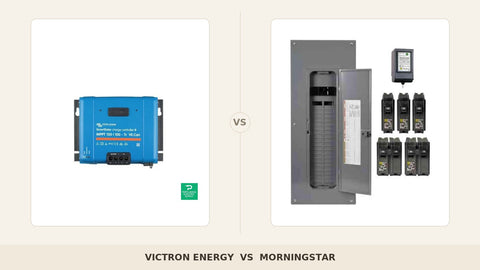
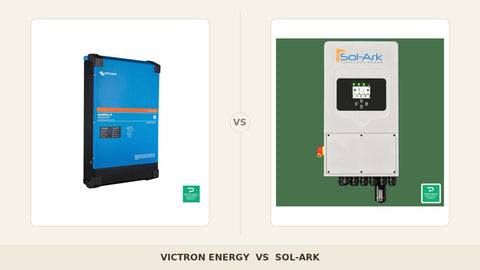
Four more names deserve mention for buyers doing full diligence. Sol-Ark has built a fierce following in the hybrid/off-grid residential segment — the Sol-Ark line combines generous generator input, strong surge capacity, and battery-agnostic flexibility, and it's one of the fastest-moving lines in our warehouse. Deye manufactures the hardware beneath several relabeled US hybrid brands, making it a stealth presence in the market. Morningstar remains the gold standard in charge controllers for smaller off-grid systems — technically a different product category, but the same buyer. And on the utility side, Power Electronics and Gamesa Electric serve the multi-megawatt central-inverter tier where Sungrow and SMA also compete. The watch list changes faster than the top ten — a strong product cycle or a US service investment can promote a brand within a year, and we re-run the five-gate evaluation annually for exactly that reason.
Regional Availability and What It Means for Your Quote
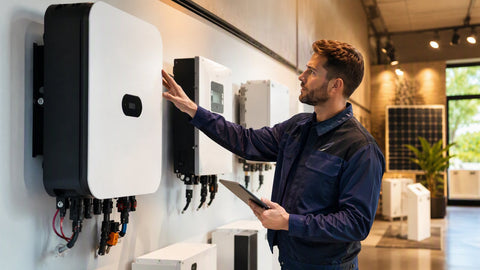
One practical wrinkle most roundups skip: manufacturer strength varies by sales channel. Tesla equipment flows primarily through Tesla's own installer network; Enphase and SolarEdge sell through broad distribution and reach virtually every installer; OutBack, Sol-Ark, and Growatt serve the installer and DIY channels directly; Sungrow's US presence concentrates in commercial distribution. The channel shapes your experience — pricing transparency, installer choice, and service speed all differ between a vertically integrated brand and a distribution-led one. If you already have an installer you trust, ask what they hold certifications for and what they service most; an installer's fluency with a platform routinely outweighs a half-point of spec-sheet efficiency from a brand they touch twice a year. And if you're still choosing an installer, the reverse logic applies: pick the platform first on architecture fit, then select from the contractors certified on it. Every manufacturer on this list publishes a certified-installer locator, and we can point you to partner contractors in the Pacific Northwest who work with each line daily.
Frequently Asked Questions
What is the most important factor when choosing a solar inverter? Match the architecture to the site first — shading, roof geometry, and storage plans determine string vs. micro vs. hybrid — then choose among manufacturers on warranty service quality, efficiency, and battery compatibility.
Are hybrid inverters worth the extra cost? For anyone planning battery storage, time-of-use optimization, or backup power within three years, yes — the hybrid eliminates the separate battery inverter and transfer equipment a retrofit requires. For grid-tie-only systems in flat-rate territories, a standard string inverter is more economical.
What certifications should a solar inverter have for US installation? UL 1741 (including SA/SB smart-inverter functions), IEEE 1547 compliance, and CEC listing for California incentive eligibility. These are prerequisites for utility interconnection approval.
How long do solar inverters last? String inverters typically deliver 12–15 years of service with 10–12 year warranties; microinverters carry 25-year warranties; hybrids average 10-year warranties. Plan for at least one inverter event over a 30-year panel life.
Can I add battery storage to an existing string inverter system? Yes, through AC coupling — a battery with its own inverter/charger installs alongside the existing system. It works well but costs more than the native battery port a hybrid would have provided.
Which solar inverter brand is most reliable? Field data consistently shows low failure rates for Enphase microinverters and SMA string units, with Fronius and SolarEdge close behind. Reliability differences among the top tier are smaller than installation-quality differences — choose a strong installer and any of these brands will serve well.
The right manufacturer is the one whose architecture fits your roof, whose service network covers your zip code, and whose warranty process your installer trusts from experience. At Portlandia Electric Supply we stock and support across this list — from microinverters and hybrid inverters to 10kW-class units for larger homes — and we're happy to match the brand to the project rather than the other way around.
Shop the products mentioned in this guide and get everything you need for your project.


Need pricing or availability on anything in this guide?
Portlandia Electric Supply dropships direct from the manufacturer — most items Ship Direct with lead times stated up front, no surprises.
Get a quote from PESBulk, pallet and contractor pricing available.