Cabin Electrification Buyer Guide
A distributor's practical buyer guide to electrifying a cabin — inverter selection, battery brands, PV mounting, panel/interconnect design, monitoring, and where to spend the money that matters versus where to save.

You have a rural cabin, hunting camp, remote family compound, or off-grid retreat, and you want to move it from generator-only or intermittent power to a real electrical system that runs lights, refrigeration, well pump, internet, and enough small appliances to feel like a normal house. You are not looking for a $180,000 net-zero showpiece — you want a $15,000–$45,000 buildout that just works.
This guide is the buyer's decision framework: which inverter brand to pick and why, which battery chemistry to buy, how much PV to put up, what to spend money on versus what to skip, and the exact PES Supply SKUs that ship most weeks for cabin electrification projects. It is written from the distributor's side of the counter — every model listed is stocked or drop-shipped, and every price is close to street. Use it to build your own bill of materials or to spot-check what your installer is quoting.
The reference build throughout is a 1,000–1,800 sqft cabin, 2–4 person occupancy, weekend-plus-holiday use pattern, with a well pump, refrigeration, LED lighting, and internet. Propane or wood for space heat (see the propane-solar hybrid guide). Cold-climate design considerations flagged where relevant.
-
1
Decide: connect to utility, hybrid, or fully off-grid
The three cabin power architectures are: (a) utility grid extension if the pole is within about 500 ft — usually $8,000–$25,000 in service upgrade and trench, then normal metered service; (b) grid-tied with solar+battery backup for cabins that already have utility; (c) fully off-grid solar+battery+genset if the utility drop is over $20,000 or unavailable. Do the utility-quote math before committing to off-grid — sometimes the pole extension is cheaper than a full off-grid stack.
-
2
Estimate daily electrical load in kWh
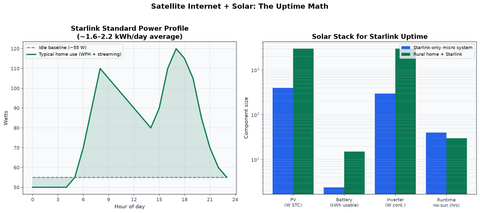
Log every load with wattage × hours/day and sum. Typical cabin: LED lights 0.4, fridge 1.5, well pump 0.5, propane-furnace blower 0.6, laptop and phone 0.3, tankless-heater controls 0.1, TV/entertainment 0.5, appliances 0.5–2, Starlink 2.4. Total 5–8 kWh/day average, 8–12 kWh peak day. Do not use kWh estimates from home-load tables (those assume electric heat, electric water, electric cooking).
-
3
Size the inverter by simultaneous surge, not by average
The well pump start surge dominates: a 1.5 HP submersible pump draws 40A LRA at 240V = 9.6 kVA for 0.5 seconds. Add fridge start (1.5 kVA) and any resistive load and you need 12 kVA of peak inverter capacity. Sol-Ark 12K (12 kW cont / 18 kVA peak), EG4 12kPV, or Growatt SPF 5000ES parallel-pair handles this. Do not undersize.
-
4
Size battery by autonomy × daily kWh
For grid-tied backup: 1 day autonomy = 8 kWh × 0.8 DoD = 10 kWh nameplate. For fully off-grid with genset: 2–3 days autonomy = 20–30 kWh nameplate. For fully off-grid without genset (pure solar): 5+ days = 50 kWh nameplate. Batteries are the single most expensive line item; oversize deliberately and only when necessary.
-
5
Size PV by winter production, not summer
In cold country a cloudy December delivers 1.5–2 kWh per kW installed per day. To generate 6 kWh/day in December you need 3–4 kW of PV. Summer delivers 6–7 kWh per kW day so the same array delivers 20–28 kWh/day — plenty. Design for the worst month, accept the surplus in the best month.
-
6
Choose racking based on site conditions
Ground-mount (IronRidge XR-100 or Tamarack) is easiest for cabins with open acreage — no roof penetrations, easy service access, easy snow-clearing. Roof-mount (IronRidge XR-1000 with FlashFoot 2) suits cabins with south-facing roof and limited land. Pole mount (top-of-pole trackers) rare but useful for tight sites. Every cold-climate install needs snow-clearance clearance — tilt 40°+ so snow slides.
-
7
Plan the electrical service and interconnect
For an off-grid cabin: main disconnect from battery-inverter goes to a 100–200A load center. All cabin circuits feed off this panel. No 'utility side' unless you keep a genset input via manual transfer switch. For a grid-tied cabin: the inverter connects with a Sol-Ark or EG4 style AC-coupled or hybrid arrangement, and the utility interconnect application (net metering or NEM) is submitted through the utility. Cabin-scale grid-tie is often under 10 kW so paperwork is light.
The inverter is the brain and the wallet of a cabin electrification. Get this right and every other decision falls into place. Get it wrong and you spend money on parts that will not be compatible with your next upgrade.
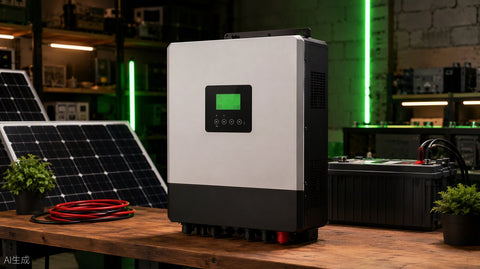
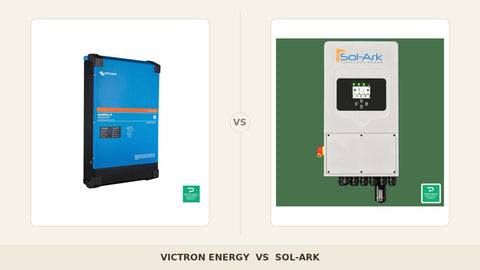
Sol-Ark 12K, 15K, and 15K-2P ($4,500–$5,800): the current market leader for cabin-scale off-grid and hybrid installs. 12–15 kW continuous, 18–24 kVA peak. Split-phase 120/240V. Two independent MPPTs. 200A DC battery input. Generator input with auto-start. Cellular monitoring included. Two-year premium warranty extends to ten. UL 1741 SB listed for both grid-tie and off-grid. For most cabin electrification projects, the Sol-Ark 12K is the default recommendation — you cannot outgrow it easily, and the installer base is deep.
EG4 12kPV, 18kPV, and FlexBOSS21 ($2,999–$3,999): the strong-value competitor. Similar spec sheet to Sol-Ark. Slightly less refined UI. Larger installer base has grown rapidly since 2024. PES ships EG4 systems weekly. For budget-conscious builds where the Sol-Ark premium does not justify itself, EG4 delivers 90% of the outcome at 70% of the price. Match with EG4 Lifepower4 or WallMount batteries for a single-vendor stack with simplified support.
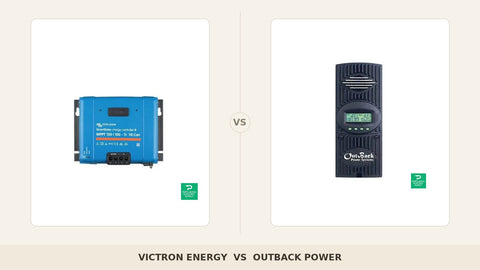
OutBack Radian GS4048A, GS7048E, FLEXpower TWO 7.0kW, and FLEXpower 12kW ($5,319–$17,047): the industrial-grade legacy option. OutBack pioneered off-grid inverters and the Radian remains the workhorse for install shops that have built on the platform for 15 years. Pre-wired FLEXpower packages ship in a single enclosure with disconnects, charge controllers, breakers, and battery-side gear. More expensive, more parts, more capability. For cabins where installer preference or long-term serviceability matters, OutBack wins.
Schneider Conext XW PRO 6848 and SW 4048 ($3,299–$3,900): another legacy platform still in production. Solid stack-and-parallel architecture, InsightHome monitoring, works with any battery. Fewer installers today than Sol-Ark/EG4 but proven reliability.
Magnum MS4448PAE ($2,500): a smaller, simpler pure-off-grid inverter without hybrid grid-tie features. Perfect for a genuine off-grid cabin with genset backup and no grid intention. 4.4 kW continuous, split-phase, DIY-friendly. If you know you will never want grid-tie, save money here.
Victron MultiPlus-II 48/5000 and Quattro 48/10000 ($1,458–$2,628): the marine-and-Euro-import option. Excellent inverter, worldwide support, Modbus-native, integrates beautifully with any DIY monitoring stack. Single-phase 120V or 240V — needs a second unit in split-phase configuration for US whole-house 240V loads like a well pump. Best for smaller cabins (under 1,000 sqft) or specific integrations.
Growatt SPF 5000ES ($1,500): entry-level 5 kW off-grid inverter. Split-phase. Works for very small cabins or seasonal camps. Not for whole-cabin electrification unless the load is genuinely under 4 kW peak.
| Model | Continuous kW | Peak kVA | Split-phase | Grid-tie | PES Price |
|---|---|---|---|---|---|
| Sol-Ark 12K | 12 | 18 | Yes | Yes | $4,500 |
| Sol-Ark 15K-2P | 15 | 24 | Yes | Yes | $5,750 |
| Sol-Ark 30K | 30 | 45 | Yes (3-phase) | Yes | $11,125 |
| EG4 12kPV | 12 | 18 | Yes | Yes | $2,999 |
| EG4 18kPV | 18 | 24 | Yes | Yes | $3,999 |
| EG4 FlexBOSS21 | 12 | 21 | Yes | Yes | $3,599 |
| OutBack Radian GS7048E | 7 | 14 | Yes | Optional | $5,319 |
| OutBack FLEXpower TWO 7.0kW | 7 (pre-wired) | 14 | Yes | Optional | $8,428 |
| OutBack FLEXpower 12kW | 12 (pre-wired) | 24 | Yes | Optional | $17,047 |
| Schneider Conext XW PRO 6848 | 6.8 | 12 | Yes | Yes | $3,299 |
| Magnum MS4448PAE | 4.4 | 8 | Yes | No | $2,500 |
| Victron MultiPlus-II 48/5000 | 5 (per unit) | 9 | With pair | Yes | $1,458 |
| Growatt SPF 5000ES | 5 | 10 | Yes | No | $1,500 |
Batteries are the single largest recurring cost in a cabin power system. Get the chemistry and brand right, and you get 10–15 years of quiet service. Get it wrong and you replace $8,000 of batteries in 4 years.
Lithium iron phosphate (LFP) is the only battery chemistry worth buying today for a cabin. It cycles 4,000–8,000 times to 80% depth of discharge. It does not off-gas. It handles cold better than sealed lead-acid (though not perfectly — see the cold-weather section). It has integrated BMS with cell-level protection. Prices have dropped from $600/kWh in 2018 to $200–$350/kWh in 2026 depending on brand and form factor. Do not buy lead-acid or AGM for a new build; the cycle life and depth-of-discharge math never wins.
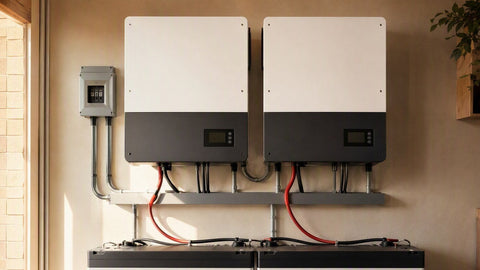
Server-rack LFP (EG4 LL-S 48V 100Ah, EG4 Lifepower4, SOK 48V 100Ah, Ruixu, Pytes E-BOX): $2,200–$3,500 per 5 kWh module. Bolts into a standard 19-inch server rack, communicates over RS-485/CAN with the inverter, easy to expand by adding modules. This is what PES ships most for DIY-oriented cabin builds. Multiple modules parallel to build 15–50 kWh banks. Sol-Ark, EG4, and Schneider inverters all support these.
Wall-mount LFP (Fortress Power eFlex 5.4, eVault Max 18.5, Avalon HV Pro; SimpliPhi PHI 3.8; EG4 WallMount all-in-one): $4,500–$16,000 per unit at 5–18 kWh. Cleaner install than server-rack, higher price. Fortress and SimpliPhi have the strongest cold-climate ratings in the LFP space. Avalon HV Pro 7.6kW + 14.7kWh bundle at $15,699 is the flagship Fortress offering for larger cabin builds.
Integrated all-in-one (EG4 PowerPro WallMount, Fortress Avalon PowerNode): battery + inverter + BMS + controls in one enclosure. Simplifies wiring dramatically. Best for retrofits where wall space matters more than field-servicability. $8,000–$15,000 depending on capacity.
Rolls flooded lead-acid (Rolls S-550, Rolls S-1300): some old-school off-grid installers still specify Rolls. They last 15+ years with religious maintenance. They cycle only 30–40% DoD without accelerated aging, so a 20 kWh nameplate bank is really 8 kWh usable. They require monthly equalization charges and off-gas hydrogen. Only buy Rolls if you have committed to the maintenance discipline and want proven 20-year service life. The Rolls GEL 2V 3660Ah at $3,229 is a niche pick for specific applications.
Bank sizing rule of thumb: 2 kWh of usable LFP per average kWh/day of load, plus another 5 kWh for the well-pump/inverter surge buffer. A cabin using 8 kWh/day wants 16 kWh + 5 kWh = 21 kWh usable = 24–26 kWh nameplate LFP. Three EG4 LL-S 100Ah modules (14.4 kWh) plus one Fortress eFlex 5.4 (5.4 kWh) hits 19.8 kWh — close enough. Or two Fortress Avalon 7.6 kWh modules (15.2 kWh usable) or one Avalon HV Pro bundle at 14.7 kWh.
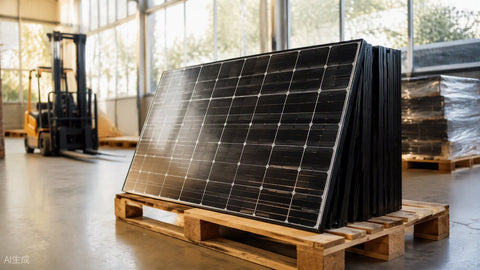
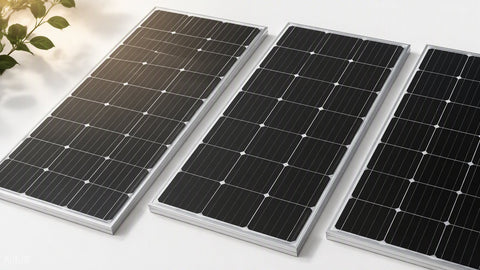
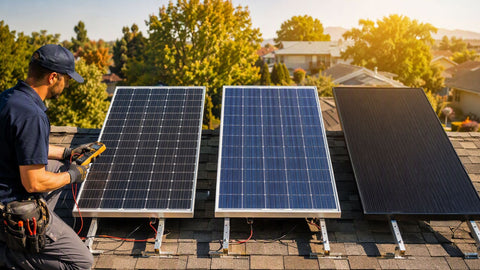
PV modules are cheap in 2026: $0.30–$0.40 per watt at distributor volume for 400–500W bifacial or monofacial residential-grade modules. The array is not where the money hides — mounting, wiring, and permitting typically double the module cost by the time everything is installed.
Module choice: for cabin electrification, buy Tier-1 60-cell 400–430W modules. REC Alpha Pure, Silfab Prime, Q Cells Q.Peak Duo, LG NeON, Panasonic EverVolt (rebadged). Avoid off-brand modules for cabins because warranty support in the middle of nowhere is not going to happen. All Tier-1 modules deliver 20–22% efficiency, 25-year performance warranty. Bifacial gains 5–10% on ground mount over grass or gravel.
Array size (kW installed): for a cabin at 5–8 kWh/day summer, 6–10 kWh/day winter, in the northern tier: 3–5 kW of PV. 8 modules at 425W = 3.4 kW = about $1,700 in modules, $1,500–$2,500 in racking and BOS. For cabins in the sunbelt (Colorado, New Mexico, Arizona) reduce to 2–3 kW. For cabins in Alaska interior or extreme northern latitudes with poor winter sun, oversize to 6–8 kW because winter production is genuinely low.
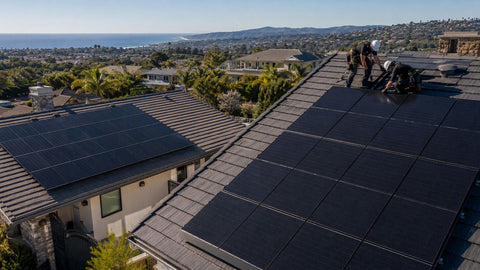
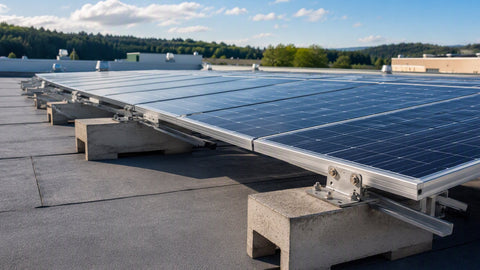
Ground mount vs roof mount: for cabins, ground mount wins about 70% of the time. IronRidge XR-100 ground mount, 2 rows × 4 modules, tilted at latitude+15 for winter bias, on driven ground screws or concrete piers. $800–$1,600 in racking. Roof mount saves on racking cost but adds roof-penetration risk and complicates any future re-roof. Only use roof mount if the cabin has a clean, unshaded, south-facing roof that will outlast the array.
String sizing: the inverter's MPPT input voltage window dictates string length. Sol-Ark 12K MPPT is 125–500 Vdc, so a string of 8 × 40 Voc modules = 320V Voc cold — within window. Confirm at the coldest expected temperature (Voc rises about 0.35%/°C below 25°C). Use the string-sizing calculator in the PES portal for the final math before ordering.
Wire runs: from array to inverter, use 10 AWG or 8 AWG PV wire for runs under 100 ft, 6 AWG for 100–200 ft, 4 AWG for 200–500 ft. Voltage drop under 2% is the target. Long runs from ground mount to cabin electrical are a common cabin problem — do not undersize.
Snow shedding: tilt PV at 40° or more so snow slides off. Cold-climate cabins with array tilted at 20–30° accumulate snow and produce zero from December through March. Bifacial modules with an air gap behind them shed snow faster than mono-face modules.
The "small" parts add up to 15–25% of a cabin electrification build. Underspecify these and you get mid-install surprises. Common cabin BOS list:
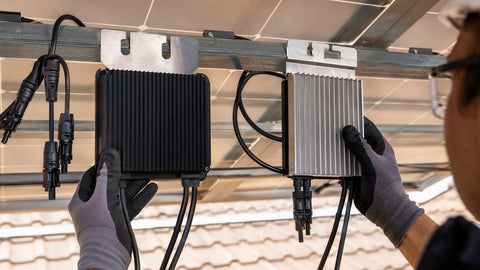
- MidNite Solar E-Panel Micro or Big Baby Box ($400–$1,200): pre-wired combiner with DC disconnects, breakers, and MRBF fuses for the battery. Saves 8–15 hours of labor and passes inspection cleanly.
- MidNite Classic 200 or Classic SL 150 charge controllers: only needed if you are running a separate charge controller (Sol-Ark and EG4 have built-in MPPTs so you usually skip this). Classic 200 at $850, Classic SL at $1,050.
- MidNite Classic pre-wired systems ($11,271–$18,909): full pre-wired charge-and-inverter cabinet for cabins where the installer wants factory-built enclosures. Rare for DIY builds; common for commercial-grade cabin installs.
- Iota DLS-54V-13A backup charger ($511): AC-to-DC charger for genset input to a 48V battery bank. Redundant with inverter's genset-charging function but useful when a smaller genset is used or genset dedicated to only battery charging.
- Battery cables (2/0 or 4/0 AWG, tinned copper, marine-grade): $8–$25 per foot depending on gauge. Between battery and inverter, 6–10 ft cables typical. Do not use welding cable — insulation cannot handle the environment.
- Class T fuse and holder ($120–$220): between battery and inverter positive lead. Required by NEC and by most inverter manufacturer instructions. Common omission on DIY builds — do not skip.
- Battery monitor (Victron BMV-712 Smart, Victron SmartShunt 500A): $200–$260. Gives real state-of-charge and cycle history. Some inverters read this from the battery BMS directly; if not, add one.
- DC and AC disconnects ($150–$400 each): at inverter DC input, at battery, at PV combiner, at genset input, at main load center feed. NEC-required at each source.
- Grounding: 5/8" copper-clad ground rod ($15), #6 bare copper wire, split-bolt connectors ($5 each): per NEC 250, all metallic parts bonded to a common ground rod at the service. Cabin installs sometimes need two rods 6 ft apart.
- Surge protectors (Midnite SPD-300, Delta LA-302 R): $75–$180 at both DC (PV) and AC (main panel) sides. Lightning is real in rural. Cheap insurance.
- Conduit, wire, fittings, misc: budget $600–$1,500 for the miscellaneous BOS on a mid-size install.
Rural cabins are 30–200 miles from the owner most of the time. Monitoring is what turns a cabin power system from "hope it works" to "know it works." Every dollar spent on monitoring pays back the first time you catch a battery low, a genset fault, or a low propane alarm before it becomes a frozen pipe.
Sol-Ark cellular monitoring: included with every Sol-Ark inverter. Ships with a T-Mobile or Verizon SIM. Owner sees battery SOC, PV production, load, genset state, and fault log through the Sol-Ark PowerView app. Set alerts for battery under 40%, genset started, grid lost. Works even without cabin internet.
EG4 EG4 GridBOSS / MonitorMy monitoring: similar functionality on the EG4 side. Requires a small cellular gateway or cabin Starlink. Alert routing through the EG4 app.
Victron Cerbo GX ($350–$450) + Victron VRM cloud (free): best-in-class monitoring for a Victron-based stack. Also plays well with non-Victron gear via Modbus. Adds a 4G modem for cellular uplink at $200.
Sense Home Energy Monitor ($350): circuit-level monitoring at the load center. Useful for cabins where you want to see individual loads, catch phantom drains, or verify a specific appliance is running. Requires cabin internet.
Cellular water leak sensor + smart thermostat combo: the pair that protects the cabin from the two most common shoulder-season failures — burst pipes and heat-off freezes. $250 leak sensor, $200 smart thermostat, $10/month cell service. Cheapest insurance in cabin ownership.
How much does full cabin electrification cost?
Should I buy a Sol-Ark or an EG4?
Can I add a Tesla Powerwall to my cabin?
Do I need a permit to install cabin solar?
How long does a cabin battery bank last?
What happens if my inverter fails in the middle of winter?
Can I install this myself?
How do I keep batteries warm in a cold cabin?
After shipping hundreds of cabin electrification bundles, PES sees the same pattern of spending mistakes. Here is the honest breakdown of where the money matters and where the money is wasted.
Where to spend money:
- The inverter. This is the brain and the failure point. A Sol-Ark 12K at $4,500 vs a $1,500 Growatt is $3,000 well spent for the 10-year warranty, cellular monitoring, US support, and generator-integration quality. On a $25,000 build, the inverter differential is 12% of budget for 80% of the operational-quality difference.
- The battery brand. LFP quality varies. Fortress, SimpliPhi, EG4, and Pytes carry real warranties with actual US-based support. Off-brand server-rack modules from unknown importers save $500 and lose you the warranty when a cell fails in year 3. Stay with named brands.
- Battery capacity. Undersized battery is the number-one cabin-electrification regret. It is cheap during install (–$3,000) and expensive to fix later (–$5,000 to expand). Buy 20–25% more kWh than your load math says you need.
- Cellular monitoring and cabin alerts. $50–$100/year for Sol-Ark cellular plus a water leak sensor is the highest-ROI spending in the entire build. Catching one frozen-pipe risk pays for 40 years of monitoring cost.
- Genset input (even if you do not think you need it). A wired-in generator input on the inverter is $0 in extra hardware if the inverter has the port. Skip the genset itself if you want, but wire the input so a portable genset can plug in later. This is the difference between “we can charge the battery from a generator on day 8 of the storm” and “the battery is dead, we are freezing.”
Where to save money:
- PV modules. Tier-1 modules are commodities. A $180 Silfab 400W and a $210 REC 405W deliver essentially the same output. Buy the cheapest Tier-1 in stock at PES.
- Racking, if the site is simple. Ground-mount kits from IronRidge, Tamarack, and Sinclair all deliver the same structural outcome. Buy the cheapest in stock. Only pay for premium racking if the site has snow-load, wind-load, or terrain challenges that require engineering.
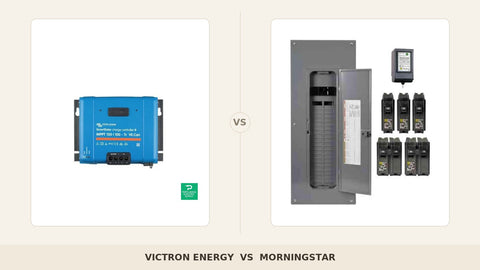
- Charge controllers, if the inverter has MPPTs. Modern hybrid inverters (Sol-Ark, EG4, Schneider) have MPPTs built in. You do not need a separate MidNite Classic or Victron SmartSolar unless you have a specific reason (adding PV to an inverter with no free MPPT input, DC-coupling to a battery in a specific way). Skip the extra hardware.
- All-in-one wall-mount inverter-battery combos. They look clean and cost 30–50% more per kWh than a server-rack bank plus a wall-mount inverter. Only buy all-in-one for retrofits where the aesthetic matters.
- Fancy monitoring dashboards. The inverter's own app is 95% of the monitoring you need. Do not add $2,000 of third-party monitoring for a $20,000 system.
Where the money always lands, whether you plan for it or not: permits ($400–$1,200), electrician labor for the final tie-in ($800–$3,000), miscellaneous BOS ($600–$1,500), shipping and freight on the heavy items (batteries and inverter, $200–$600 LTL), and the second trip to the hardware store for the fittings you forgot ($150). Budget 15% contingency on top of your calculated total. That contingency will get used.
Register for the Axis Distributor Portal
Trade pricing on Sol-Ark, EG4, OutBack, Schneider, Fortress Power, SimpliPhi, MidNite Solar, Victron, and Iota. Freight and system-design support on cabin electrification bundles.
Register Now