Cheap Solar Panels in 2026: Best Budget Modules for Residential & Commercial Projects
Trade-professional guide to sourcing current-generation TOPCon panels at distributor pricing — with real wholesale numbers, Tier 1 manufacturer comparisons, and the policy changes that matter for Q4 2026 procurement.
If you are shopping for solar panels in 2026 and your first instinct is to search for the cheapest option, you are not alone. With the federal Investment Tax Credit (Section 25D) expired as of December 31, 2025, per the One Big Beautiful Bill Act signed July 4, 2025, every homeowner and contractor is paying closer attention to equipment cost than ever before. The good news is that "cheap" no longer means outdated P-type PERC technology or questionable no-name brands. N-type TOPCon cells have taken over the budget tier, module prices have fallen more than 20 percent year-over-year according to SEIA Q1 2026 data, and wholesale distributors like Portlandia Electric Supply are passing those savings through at volume. This guide covers the best budget solar panel brands of 2026, what contractors should look for when sourcing at wholesale, and the Section 232 Minimum Import Price rule taking effect December 4, 2026, that could reset the floor on module pricing for the foreseeable future.
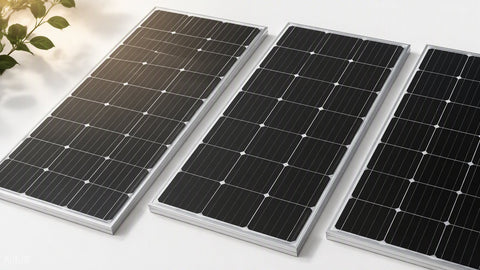
The best budget solar panels in 2026 are Tier 1, N-type TOPCon modules from established manufacturers such as Jinko Solar, LONGi Solar, Trina Solar, Canadian Solar, QCELLS, REC Group, Hanersun, and VSUN. These brands deliver module-level efficiencies in the 21–22 percent range, 25-year performance warranties, and product warranties between 12 and 25 years depending on the series. For contractors and bulk buyers, wholesale module-only pricing from distributors now sits between $0.25 and $0.40 per watt for Tier 1 TOPCon panels, according to PES distributor pricing data and SEIA market reports. Installed budget systems for homeowners currently run between $2.20 and $2.60 per watt all-in, compared with mid-range systems at $2.60–$3.20 and premium systems at $3.20–$4.00 per watt. P-type PERC panels, while still available as distress clearance stock, are end-of-life technology and should be avoided for new permanent installations.
Sources: SEIA Q1 2026 market report (module pricing); Wood Mackenzie / SEIA Aug 2026 market reality (TOPCon share); Proclamation 11052 / 91 FR 51975 (Section 232 MIP timing).
For most of the last decade, the budget tier of the solar market was synonymous with P-type PERC (Passivated Emitter and Rear Contact) cells. PERC was a genuine leap forward when it displaced standard Al-BSF technology in the mid-2010s, pushing commercial module efficiencies from roughly 17 percent into the 19–20 percent range. By 2020, PERC dominated global production. But the technology had hit a practical ceiling. High-temperature coefficients, light-induced degradation (LID), and potential-induced degradation (PID) remained persistent issues, and the physics of P-type silicon left limited headroom for further efficiency gains.
In 2026, PERC is unequivocally end-of-life. According to the SEIA/Wood Mackenzie market reality update from August 2026, PERC production lines are being idled or converted across every major Chinese manufacturer. N-type TOPCon (Tunnel Oxide Passivated Contact) has surged to approximately 83 percent of global module shipments, effectively becoming the default technology even for entry-level and budget product lines. What this means for buyers is profound: the least expensive new panels you can buy today are, in many respects, more advanced than the premium panels available just three years ago.
TOPCon delivers its advantages through a thin tunnel-oxide layer and polysilicon contact structure that reduces recombination losses at the cell surface. The result is higher open-circuit voltage, better low-light performance, lower temperature coefficients, and essentially zero LID because N-type silicon is not susceptible to the boron-oxygen defect that plagued P-type PERC. For installers working in hot climates — Arizona, Texas, Florida — the lower temperature coefficient alone can translate to measurably higher annual energy yield per watt of nameplate capacity.
Price compression has accelerated the transition. SEIA reported module prices at approximately $0.34 per watt DC in the first quarter of 2026, down more than 20 percent year-over-year. That decline reflects massive TOPCon capacity expansion in China, fierce competition among Tier 1 manufacturers, and a temporary oversupply as legacy PERC inventory clears. For contractors reading this, the practical implication is that you can source current-generation N-type modules at prices that, two years ago, would have only bought last-generation PERC. The technology transition is so complete that recommending PERC for a new installation in late 2026 is, from a technical standpoint, indefensible.
There is one legitimate use case for cheap PERC panels in 2026: distress clearance stock for temporary, off-grid, or mobile applications where the absolute lowest upfront cost outweighs long-term efficiency and warranty concerns. RV builders, small shed systems, or experimental projects may find sub-$0.20-per-watt PERC liquidations attractive. But for any grid-tied residential or commercial system with a 25-year design life, PERC should be treated as legacy technology — available, but not advisable. Portlandia Electric Supply stocks current-generation TOPCon panels from multiple Tier 1 manufacturers; shop all solar panels to see live availability and specifications.
The table below compares nine budget-friendly solar panel brands that Portlandia Electric Supply either stocks directly or sources through authorized distribution channels. The installer retail pricing column reflects EnergySage marketplace data from 2024, which remains the most widely cited public benchmark for installed-system component costs. Because those figures include installer markup, overhead, and soft costs, they are directional only; actual wholesale module-only prices from distributors like PES are significantly lower. All current-generation models listed below use N-type TOPCon cell architecture unless otherwise noted.
| Brand | Cell Tech | Installer Retail $/W (EnergySage 2024) | Wholesale Range (PES) | Perf. Warranty | Product Warranty | Notes |
|---|---|---|---|---|---|---|
| Jinko Solar | TOPCon N-type | $2.55 | $0.25–$0.38/W | 25 years | 12 years | High volume, reliable supply; Tiger Neo series widely stocked |
| LONGi Solar | TOPCon N-type | $2.67 | $0.25–$0.38/W | 25 years | 12 years | Former PERC leader; converted lines to Hi-MO X6 TOPCon |
| Trina Solar | TOPCon N-type | — | $0.25–$0.38/W | 25 years | 15 years | Vertex N series; Tier 1 BNEF; PES stocked |
| Canadian Solar | TOPCon N-type | — | $0.25–$0.40/W | 25 years | 15 years | CS6N series; strong North American support |
| QCELLS | TOPCon N-type | $2.89 | $0.28–$0.40/W | 25 years | 25 years | German-Korean engineering; 25/25 warranty |
| REC Group | HJT (Alpha) | $2.82 | $0.30–$0.42/W | 25 years | 20 years | Premium value; heterojunction tech at mid-tier price |
| AXITEC | TOPCon N-type | $2.36 | $0.28–$0.38/W | 25 years | 25 years | German brand; basic warranties but competitive pricing |
| Hanersun | TOPCon N-type | — | $0.25–$0.35/W | 25 years | 12 years | Value-tier Tier 1; aggressive pricing; PES stocked |
| VSUN | TOPCon N-type | — | $0.25–$0.35/W | 25 years | 12 years | Vietnamese-backed manufacture; cost-focused Tier 1 |
Retail $/W sourced from EnergySage marketplace data, 2024. Wholesale ranges reflect Portlandia Electric Supply distributor pricing for Tier 1 TOPCon modules as of Q3 2026. Product and performance warranty terms are per manufacturer datasheets; verify current terms at time of purchase.
Two observations stand out from this comparison. First, the gap between installer retail pricing and true wholesale module cost is substantial — often $2.00 per watt or more. That spread covers labor, permits, overhead, margin, and balance-of-system components, but it also illustrates why contractors who buy direct from distributors can offer sharply competitive installed pricing while preserving healthy margins. Second, the difference between "budget" and "premium" at the module level has narrowed dramatically. In 2024, a $2.89-per-watt QCELLS module sat comfortably above a $2.36 AXITEC unit. In 2026 wholesale terms, both fall within roughly $0.05 per watt of each other when sourced at volume. The real differentiator is no longer price; it is warranty structure, degradation rate, manufacturer financial stability, and regional service presence.
REC Group deserves a special mention. While REC's Alpha series uses heterojunction (HJT) technology rather than TOPCon, it prices within shouting distance of TOPCon competitors and delivers among the lowest temperature coefficients in the industry. For projects in high-irradiance, high-temperature climates, the added yield can offset a modest upfront premium within the first third of system life. REC also carries a 20-year product warranty — longer than the 12-year standard offered by Jinko, LONGi, Hanersun, and VSUN — which matters for residential contractors offering workmanship-backed system warranties.
Notably absent from this list is Maxeon. Once the premium darling of the residential market, Maxeon was removed from the BloombergNEF Tier 1 list in April 2026 following judicial management proceedings. For new projects requiring bankability and long-term warranty enforceability, Maxeon introduces counterparty risk that budget-conscious buyers cannot afford. Portlandia Electric Supply does not recommend Maxeon for new permanent installations until the company's financial restructuring is resolved.
Solar panel pricing in 2026 must be understood at two levels: module-only hardware costs and fully installed system costs. The distinction matters because many published guides — including the EnergySage ranking article from April 2024 that still dominates search results — blur the two, leaving readers with an inflated sense of what panels actually cost and an outdated assumption that a 30 percent federal tax credit will offset the bill.
Module-only pricing is what contractors, integrators, and experienced DIY builders pay when they source equipment from a wholesale distributor. As of Q3 2026, Tier 1 TOPCon modules from established manufacturers trade in the $0.25 to $0.40 per watt range at wholesale, per SEIA Q1 2026 tracking and confirmed by PES distributor pricing. That means a standard 550-watt residential module costs roughly $140 to $220 in single-unit or small-lot quantities, with pallet pricing pushing the per-watt figure toward the bottom of that range. For context, SEIA reported module prices at approximately $0.34 per watt DC in Q1 2026, down over 20 percent year-over-year.
Fully installed pricing includes modules, inverters, racking, conduit, wiring, monitoring, labor, permits, inspection, overhead, and installer margin. In 2026, budget residential installations fall between $2.20 and $2.60 per watt, mid-range systems between $2.60 and $3.20, and premium systems between $3.20 and $4.00. These ranges are based on EnergySage marketplace data, NREL cost benchmarking, and PES contractor channel feedback. The federal ITC is no longer available for homeowner-owned systems; Section 25D expired December 31, 2025, per the OBBB legislation of July 4, 2025. State-level incentives remain available in some jurisdictions; consult the DSIRE database for current programs in your area.
The table below translates these per-watt figures into total system costs for common residential sizes. All figures assume budget-tier equipment and installer pricing; actual quotes will vary by roof complexity, local labor rates, and interconnection requirements.
| System Size | Module-Only (Wholesale) | Budget Installed | Mid-Range Installed | Annual Production (est.) |
|---|---|---|---|---|
| 4 kW | $1,000–$1,600 | $8,800–$10,400 | $10,400–$12,800 | 5,200–6,400 kWh |
| 6 kW | $1,500–$2,400 | $13,200–$15,600 | $15,600–$19,200 | 7,800–9,600 kWh |
| 8 kW | $2,000–$3,200 | $17,600–$20,800 | $20,800–$25,600 | 10,400–12,800 kWh |
| 10 kW | $2,500–$4,000 | $22,000–$26,000 | $26,000–$32,000 | 13,000–16,000 kWh |
| 12 kW | $3,000–$4,800 | $26,400–$31,200 | $31,200–$38,400 | 15,600–19,200 kWh |
| 15 kW | $3,750–$6,000 | $33,000–$39,000 | $39,000–$48,000 | 19,500–24,000 kWh |
Installed ranges sourced from EnergySage 2024 retail data (directional), NREL cost benchmarks, and PES contractor channel feedback. Production estimates assume 1,300–1,600 equivalent peak sun hours annually; actual yield varies by latitude, tilt, azimuth, and shading. No federal tax credit applies to 2026 installations.
For contractors, the math is compelling. A 10-kW system requiring roughly $3,000 in wholesale module cost can be sold at $22,000–$26,000 installed, leaving substantial room for labor, permits, BOS hardware, and margin — even while undercutting competitors who are sourcing at higher tier pricing. The contractor who buys direct from a distributor and passes a portion of that savings to the homeowner wins on price without sacrificing technology. That is the central thesis of this guide: cheap panels are not the problem; expensive procurement channels are.
One additional cost factor is looming. The Section 232 Minimum Import Price, established under Proclamation 11052 and published at 91 FR 51975, takes effect December 4, 2026. It imposes a floor price of $0.38 per watt on crystalline silicon modules plus a 15 percent ad valorem duty on imported cells and modules. Because current wholesale module prices sit at or below that $0.38 floor, the MIP will effectively raise the cost of imported budget modules by 15 percent or more, depending on how domestic and Southeast Asian supply chains adjust. Contractors planning Q4 2026 projects should consider pre-buying inventory before the deadline. For a detailed breakdown of installed system costs including labor and permitting, see our installation cost guide.
When evaluating budget solar panels, the goal is not to find the lowest price per watt at any cost. The goal is to maximize value: the ratio of lifetime energy production to total cost of ownership. Here are the specifications and credentials that separate a genuine value module from a liability waiting to happen.
Efficiency and Power Rating
Current-generation TOPCon modules from Tier 1 manufacturers typically deliver module efficiencies between 21 and 22 percent, with the best commercial lines reaching 22.5 percent or slightly higher. For residential rooftops with limited surface area, every tenth of a percentage point matters. A 22 percent efficient 550-watt module occupies the same footprint as a 20 percent efficient 500-watt module but produces 10 percent more energy per square meter. On commercial flat roofs with abundant space, efficiency is less constraining, but higher-efficiency modules still reduce racking and BOS costs because fewer modules are needed to hit the target capacity.
Warranty Structure
Budget panels in 2026 generally carry a 25-year performance warranty guaranteeing 80–85 percent of nameplate output at the end of the term. Product warranties — which cover defects, delamination, and manufacturing failures — vary more widely. Jinko, LONGi, Hanersun, and VSUN offer 12-year product warranties. Canadian Solar and Trina extend that to 15 years. QCELLS and AXITEC offer 25-year product warranties. REC Group leads the budget-adjacent tier with 20 years. For residential contractors, the product warranty duration should align with your workmanship warranty. If you guarantee your installation for 20 years, sourcing panels with only a 12-year product warranty creates a coverage gap in years 13–20.
Degradation Rate
First-year degradation for TOPCon N-type modules is typically 1 percent or less, compared with 2–3 percent for legacy PERC. Annual degradation thereafter runs 0.4–0.55 percent for most Tier 1 TOPCon lines. Over 25 years, the difference between a 0.4 percent and a 0.55 percent annual degradation rate translates to roughly 3–4 percentage points of cumulative output. That may not sound like much, but on a 10-kW system it can represent thousands of kilowatt-hours over the system lifetime.
Temperature Coefficient
Expressed as a percentage of power loss per degree Celsius above 25°C, the temperature coefficient determines how much output a module sacrifices on hot days. TOPCon modules generally run -0.29 to -0.32 percent per degree Celsius. Legacy PERC was typically -0.35 to -0.40 percent. In Phoenix, where cell temperatures can exceed 65°C, a TOPCon module with a -0.30 coefficient loses roughly 12 percent of nameplate output, while a PERC module at -0.38 loses over 15 percent. That 3-percentage-point gap compounds daily across the cooling season.
Tier 1 Bankability
The BloombergNEF Tier 1 list is not a quality certification, but it is a useful proxy for manufacturer financial stability and bankability. Tier 1 status means a manufacturer has been chosen for six or more non-recourse financed projects over the past 24 months — a signal that banks and insurers trust the company to honor warranties over the long term. Every brand in the table above holds Tier 1 status as of Q3 2026 except Maxeon, which was removed in April 2026. For budget buyers, Tier 1 status is arguably more important than marginal efficiency differences because a 25-year warranty is only as good as the company backing it.
For bundled residential solutions that include panels, inverters, and racking, see our solar starter kits collection.
The low end of the solar market attracts bad actors, obsolete inventory, and misleading marketing. Avoiding these pitfalls is as important as choosing the right module.
P-type PERC Clearance Stock for Permanent Installations
As detailed above, PERC is end-of-life technology. Any seller pitching PERC panels as "just as good as new" in 2026 is either misinformed or dishonest. The only legitimate use for cheap PERC in 2026 is temporary, off-grid, or experimental projects where long-term degradation and warranty support are irrelevant. For grid-tied residential or commercial systems, insist on N-type TOPCon and verify the cell technology on the manufacturer datasheet.
Non-Tier 1 Manufacturers with No U.S. Presence
The solar industry has seen dozens of manufacturers enter and exit the market over the past decade. When a manufacturer disappears, its warranties become unenforceable. Non-Tier 1 brands — especially those with no U.S. office, no authorized distributor network, and no third-party insurance backing their warranties — represent a gamble that budget buyers should not take. The price difference between a no-name module and a Tier 1 budget module is often less than $0.05 per watt. That savings evaporates the moment you need a warranty replacement and discover the manufacturer no longer exists.
Fake "Wholesale" Resellers
A growing number of online storefronts claim to sell "wholesale" solar panels to the public at prices that seem too good to be true. They usually are. Fake wholesalers often ship mislabeled功率 modules, B-grade or cosmetic-second cells sold as A-grade, or pallets that have been dropped, soaked, or stored improperly. Genuine wholesale distributors like Portlandia Electric Supply operate B2B portals with verified supply chains, manufacturer-direct relationships, and warehouse facilities where inventory is stored under controlled conditions. If a seller cannot provide a manufacturer authorization letter, a bill of lading tracing the modules to the factory, or a U.S. warehouse address, walk away.
Misrepresented Warranty Terms
Some sellers advertise "25-year warranty" without specifying whether that covers product defects, performance, or both. A 25-year performance warranty with only a 5-year product warranty means you are covered against gradual output loss but not against delamination, junction box failures, or frame corrosion in years 6–25. Always read the full warranty document, not the marketing summary. If the seller cannot produce the manufacturer's original warranty PDF in English, that is a red flag.
Modules without UL 61730 or IEC 61215 Certification
Any module installed in the United States should carry UL 61730 (safety) and IEC 61215 (design qualification) certifications. These are not optional extras; they are baseline requirements for permitting and interconnection in virtually every jurisdiction. Uncertified modules may be cheaper, but they cannot be legally installed on grid-tied systems and will fail inspection. Reputable manufacturers list certification numbers directly on the module label and in the datasheet.
Contractors and EPC firms face a unique challenge in 2026: clients are more price-sensitive than ever because the federal tax credit is gone, yet module quality expectations have risen as TOPCon has become the baseline. The contractors who thrive in this environment are those who control procurement costs without cutting corners on product.
The traditional residential solar supply chain runs from manufacturer → master distributor → regional distributor → installer → homeowner. Each step adds margin. By the time a panel reaches a homeowner's roof, the hardware cost may be marked up 300–500 percent from the factory gate price. Contractors who buy direct from a master distributor like Portlandia Electric Supply eliminate at least one, often two, layers of markup. The result is that a contractor can offer a competitively priced installed system while using current-generation Tier 1 TOPCon modules — and still maintain healthy margins.
For trade accounts, Portlandia Electric Supply operates a dedicated B2B portal at my.pesdistribution.com where verified contractors can view live inventory, request pallet and container pricing, and access specification sheets, warranty documents, and IEC/UL certificates for every SKU. The portal carries budget-tier TOPCon lines from Jinko, LONGi, Trina, Canadian Solar, QCELLS, Hanersun, and VSUN, with pallet pricing typically 15–25 percent below single-unit list. For large commercial or utility-scale projects, container-direct pricing and factory-consolidated shipping are available.
Timing matters. With the Section 232 MIP taking effect December 4, 2026, module pricing is expected to rise for any inventory subject to the new duties. Contractors with Q4 2026 or Q1 2027 projects in the pipeline should consider pre-buying modules before the deadline. PES offers warehouse holding and scheduled-release programs for pre-purchased inventory, allowing contractors to lock in pre-MIP pricing without needing immediate job-site storage. Contact your PES account manager through the B2B portal for details.
Contractor & Trade Pricing
Verified installers and EPCs can access live wholesale pricing, pallet discounts, and container-direct programs.
Open my.pesdistribution.comA meaningful share of searchers looking for "cheap solar panels" intend to install the system themselves. DIY solar can deliver substantial savings, but it is not the right choice for every homeowner. The table below compares all-in costs for a representative 8-kW residential system installed by a licensed contractor versus an experienced DIY owner-builder.
| Cost Category | Contractor Install (8 kW) | DIY Install (8 kW) | Notes |
|---|---|---|---|
| Modules (Tier 1 TOPCon) | $2,000–$3,200 | $2,000–$3,200 | Same hardware; DIY pays retail unless sourcing wholesale |
| Inverter (string + optimizers or micros) | $1,600–$2,400 | $1,600–$2,400 | Enphase, SolarEdge, or SMA; prices similar at retail |
| Racking & BOS | $1,200–$1,800 | $1,200–$1,800 | IronRidge, Unirac, or SnapNrack |
| Electrical (conduit, disconnect, wiring) | $800–$1,200 | $600–$1,000 | DIY may source surplus; permit requires NEC compliance |
| Permits & interconnection fees | $500–$1,500 | $500–$1,500 | Jurisdiction-dependent; AHJ may require licensed electrician |
| Labor | $4,000–$6,000 | $0 (self) | ~$0.50–$0.75/W for licensed solar crew |
| Overhead, margin, & soft costs | $3,000–$5,000 | $0 | Insurance, truck rolls, project management, profit |
| Total Estimated Cost | $17,600–$20,800 | $8,000–$12,000 | DIY saves roughly 40–55% but assumes competence |
Labor and soft-cost ranges sourced from NREL cost benchmarking and EnergySage marketplace data. DIY totals assume the homeowner handles design, permitting, installation, and inspection coordination without hiring subcontractors. Actual savings vary by jurisdiction, roof complexity, and installer skill level.
The DIY route is viable for experienced builders, electricians, and homeowners with construction backgrounds who are comfortable working on roofs, reading single-line diagrams, and navigating their local Authority Having Jurisdiction (AHJ). The savings are real: eliminating labor and installer margin can cut the total project cost by 40 percent or more. However, the risks are equally real. A DIY installer assumes full liability for roof leaks, electrical faults, and code violations. Most AHJs require a licensed electrician to pull the electrical permit or sign off on the AC-side work. Some utilities will not grant Permission to Operate (PTO) without an installer NABCEP certification. And if the system underperforms because of a shading miscalculation or a wiring error, there is no installer to call for warranty support.
For homeowners who are handy but not professional installers, a hybrid approach is often the best value: self-procure equipment through a distributor, hire a licensed electrician for the AC disconnect and final hookup, and use a qualified solar crew for the roof penetration and module installation. This splits the labor savings while preserving professional accountability for the most critical and dangerous parts of the job. If you are considering a DIY installation, our 500W solar panel guide includes module-level specifications that can help you size and spec your array accurately.
What are the cheapest solar panels in 2026?
The cheapest new solar panels in 2026 are Tier 1 N-type TOPCon modules from manufacturers like Hanersun, VSUN, Jinko, and LONGi, available at wholesale distributor pricing between $0.25 and $0.38 per watt. Legacy P-type PERC panels can be found even cheaper as distress clearance stock, but they are end-of-life technology and should not be used for permanent grid-tied installations.
Are cheap solar panels worth it?
Yes — if "cheap" means aggressively priced current-generation technology rather than outdated or substandard product. In 2026, budget Tier 1 TOPCon panels deliver efficiency, degradation rates, and temperature coefficients that rival premium panels from 2022. The key is sourcing from a reputable distributor, verifying certifications, and matching the warranty structure to the project timeline.
How much do cheap solar panels cost per watt?
At wholesale distributor pricing, Tier 1 budget TOPCon modules cost $0.25–$0.40 per watt. Fully installed budget residential systems run $2.20–$2.60 per watt, including labor, permits, and balance-of-system components. These figures reflect SEIA Q1 2026 module price data and NREL cost benchmarking.
What is the difference between cheap and expensive solar panels?
In 2026, the gap has narrowed. Both cheap and expensive panels are predominantly N-type TOPCon. The differences lie in brand reputation, warranty length, degradation rate, temperature coefficient, and aesthetic options like all-black frames or glass-glass construction. Expensive panels may offer product warranties of 25–30 years and degradation rates below 0.30 percent annually, while budget panels typically offer 12–15-year product warranties and 0.40–0.55 percent annual degradation.
How long do budget solar panels last?
Current-generation budget TOPCon panels are rated for 25 years with performance warranties guaranteeing 80–85 percent of original output at the end of the term. With typical annual degradation of 0.40–0.55 percent, a budget panel should still produce 75–80 percent of its Day 1 output after 30 years. Physical longevity depends on installation quality, climate, and maintenance.
What is the best budget solar panel brand?
For pure value, Jinko Solar and LONGi Solar offer the best combination of Tier 1 bankability, 25-year performance warranty, global service presence, and aggressive wholesale pricing. For contractors prioritizing warranty length over absolute lowest cost, QCELLS and AXITEC both offer 25-year product warranties. For hot-climate projects, REC Group's HJT Alpha series delivers the best temperature coefficient in the budget-adjacent tier.
Can I install cheap solar panels myself?
Experienced DIY builders can self-install solar panels and save 40–55 percent on total project cost. However, DIY installation requires comfort with roof work, electrical wiring, NEC compliance, permitting, and utility interconnection. Many jurisdictions require a licensed electrician for the AC-side work, and some utilities will not grant Permission to Operate without a NABCEP-certified installer.
Are PERC solar panels still worth buying in 2026?
No — for permanent grid-tied installations. PERC is end-of-life technology as of August 2026, per SEIA/Wood Mackenzie market data. Major manufacturers have idled or converted PERC lines. PERC panels suffer from higher degradation, worse temperature coefficients, and lower efficiency than TOPCon. The only legitimate use for cheap PERC in 2026 is temporary, off-grid, or experimental projects where long-term performance is not a priority.
What is the lowest price for a good solar panel?
The lowest sustainable price for a good, certified, Tier 1 TOPCon module in 2026 is approximately $0.25 per watt at wholesale pallet pricing. Below that price point, buyers should be suspicious of mislabeled power ratings, B-grade cells, non-Tier 1 manufacturers, or gray-market imports lacking proper certifications.
Do cheap solar panels qualify for tax credits?
For systems installed in 2026, there is no federal residential Investment Tax Credit. Section 25D expired on December 31, 2025, per the One Big Beautiful Bill Act signed July 4, 2025. Some state and utility incentives remain available; check the DSIRE database for programs in your area. Commercial systems may still have access to modified depreciation schedules or state-level credits depending on jurisdiction.
Where can contractors buy cheap solar panels wholesale?
Licensed contractors and EPC firms can source budget Tier 1 modules at wholesale through distributor portals like my.pesdistribution.com, which offers live inventory, pallet and container pricing, and direct manufacturer warranty pass-through. Buying direct from a master distributor eliminates regional markup layers and allows contractors to offer competitive installed pricing while preserving margin.
What should I avoid when buying budget solar panels?
Avoid P-type PERC panels marketed as current technology, non-Tier 1 manufacturers with no U.S. presence or insurance-backed warranties, fake "wholesale" resellers who cannot provide factory traceability, and modules lacking UL 61730 or IEC 61215 certification. Always verify the manufacturer's warranty document directly — not the seller's summary — and confirm that the distributor is authorized.
The solar market in 2026 is defined by a paradox: the best technology has become the cheapest technology. N-type TOPCon, which dominated premium residential lines just two years ago, now accounts for roughly 83 percent of global shipments and commands wholesale prices as low as $0.25 per watt. Contractors and homeowners who understand this shift can source current-generation, bankable, Tier 1 modules at prices that would have been unimaginable in 2023 — while competitors still pitching P-type PERC or installer-only retail markup are selling obsolete product at inflated cost.
Three factors should drive your procurement decision in Q4 2026. First, verify cell technology: if the datasheet says PERC, P-type, or multi-busbar without specifying N-type TOPCon, it is legacy stock. Second, verify the seller: genuine wholesale distributors provide factory traceability, UL/IEC certificates, and manufacturer warranty documents. Third, watch the calendar: the Section 232 Minimum Import Price takes effect December 4, 2026, under Proclamation 11052 / 91 FR 51975, and it will raise the cost of imported budget modules by at least 15 percent. Pre-buying inventory before the deadline is a prudent strategy for contractors with confirmed Q1 2027 projects.
Portlandia Electric Supply stocks current-generation TOPCon modules from Jinko, LONGi, Trina, Canadian Solar, QCELLS, Hanersun, and VSUN, with pallet and container pricing available through our B2B trade portal. Homeowners ready to move forward can request a wholesale quote for their project. Contractors and EPCs can access live pricing, inventory, and spec sheets at my.pesdistribution.com.
Ready to Source Budget Solar Panels?
Get a project-specific quote or open a trade account for live wholesale pricing and pallet discounts.
Request a Quote Trade Portal