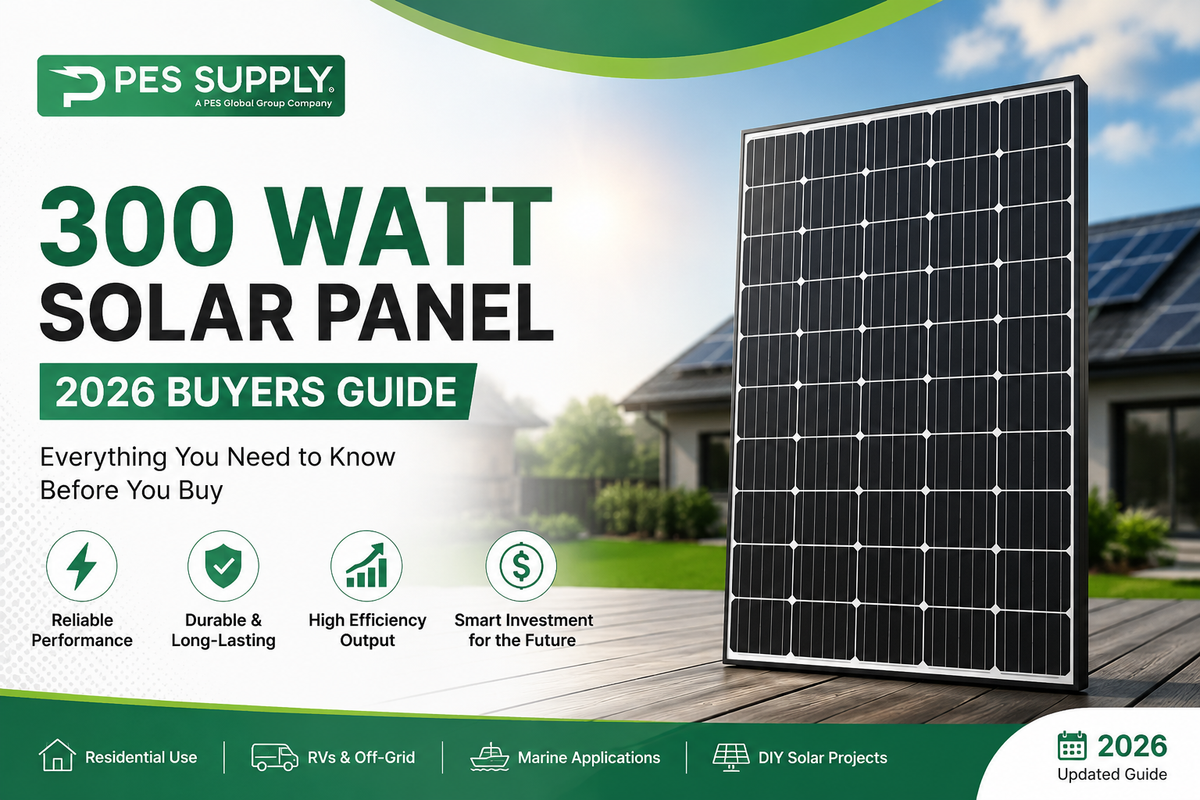
300 Watt Solar Panels in 2026: Legacy Stock Guide, Pricing, and Modern Alternatives
Everything you need to know before buying 300W panels in a 440W+ market — written for homeowners, RVers, and professional installers.
If you are shopping for a 300 watt solar panel in 2026, you are looking at legacy stock. That is not a criticism — it is a market reality. The residential solar industry has moved on from the 300W class, and understanding why will save you money, roof space, and long-term regret.
Step 1: The PERC-to-TOPCon Transition
From roughly 2016 through 2023, the dominant solar cell technology was PERC (Passivated Emitter and Rear Cell), a P-type silicon architecture that pushed module output into the 300-400W range for standard 60-cell formats. PERC peaked at about 21-22% production efficiency for premium modules, with budget PERC panels typically landing at 19-20%.
In 2024, Tier-1 manufacturers began phasing out PERC in favor of TOPCon (Tunnel Oxide Passivated Contact), an N-type cell architecture that delivers higher efficiency, better low-light response, and a superior temperature coefficient. By late 2025, PERC production had effectively ceased among Tier-1 suppliers. As of August 2026, any new 300W rigid panel you find is almost certainly NOS (new old stock), clearance inventory, or produced by second-tier manufacturers who have not yet upgraded lines.
Step 2: Why Manufacturers Stopped Making 300W Rigid Panels
The economics are simple. A modern 60-cell or 66-cell half-cut module using TOPCon cells now delivers 440-520W in the same physical footprint as a legacy 300W PERC panel. Manufacturers can extract 40-70% more wattage per panel without increasing frame size, glass, or shipping cost. The marginal cost of the TOPCon cell upgrade is negligible compared to the revenue gain from selling a 440W+ module.
Consequently, every major manufacturer — Jinko, LONGi, Trina Solar, JA Solar, Canadian Solar, Risen, Aiko — has exited sub-400W residential production. The only 300W-class modules still rolling off new production lines are specialty formats: flexible panels for RVs, portable foldable kits, or custom OEM orders at volumes too small to register in industry shipment data.
Step 3: The 440W+ Standard — What You Get for Marginally More Money
A 500-watt solar panel buyer guide from PES Supply shows value-tier 500W TOPCon modules clustering at roughly $0.175/W wholesale — or about $87 per panel. Legacy 300W PERC panels, by contrast, trade at distress pricing in bulk, often below $0.05/W, while retail listings still show $299-$500 per panel from unsold inventory.
The takeaway: in 2026, paying retail prices for a 300W panel is poor value. You can buy a modern 440W+ module for the same or less money, get 50% more output per panel, and benefit from lower degradation rates (TOPCon at 0.4-0.55%/year vs PERC at ~0.7%/year), a better temperature coefficient (-0.29 to -0.35%/°C for TOPCon vs -0.38%/°C for PERC), and a full 25-30 year warranty backed by a solvent Tier-1 manufacturer.
The following table compares legacy 300W PERC against current-production 400W and 500W TOPCon modules across the dimensions that matter for real-world system design.
| Specification | 300W (Legacy PERC) | 400W (Clearance/Mid) | 500W (Current TOPCon) |
|---|---|---|---|
| Typical Price per Watt (Retail) | $0.90-$1.65/W | $0.35-$0.60/W | $0.17-$0.26/W |
| Typical Price per Watt (Wholesale) | $0.05-$0.15/W (distress) | $0.12-$0.20/W | $0.13-$0.20/W |
| Module Efficiency | 18-20% | 20-21.5% | 21.5-23% |
| Physical Dimensions | ~39" x 65" (60-cell) | ~41" x 73" (66-cell) | ~45" x 88" (72-cell half-cut) |
| Weight | 35-45 lbs | 40-50 lbs | 45-55 lbs |
| Daily Output (5 PSH avg) | 1.0-1.2 kWh | 1.4-1.6 kWh | 1.7-2.0 kWh |
| Temperature Coefficient | ~ -0.38%/°C | ~ -0.34%/°C | ~ -0.29 to -0.32%/°C |
| Degradation Rate | ~0.7%/year | ~0.55%/year | 0.4-0.55%/year |
| Primary Use Case | RV, replacement, hobby | Budget residential | Standard residential / C&I |
| Inverter Compatibility | 12V/24V PWM/MPPT | String (600V/1000V) | String (1000V/1500V), microinverter |
| Tier-1 Warranty (2026) | 10 yr product / 25 yr perf | 12-15 yr product / 25 yr perf | 15 yr product / 30 yr perf |
Pricing sources: PES Supply internal catalog (August 2026), altE Store retail listings, NREL module cost benchmark Q2 2026.
For a deeper wattage-class comparison, see our 400W vs 500W solar panel comparison.
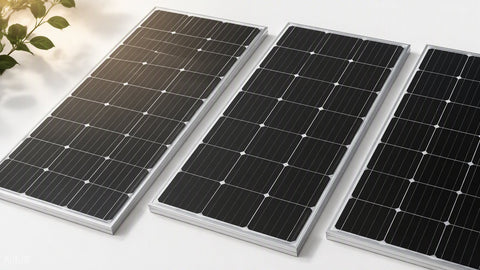
Finding a new 300W rigid panel in 2026 requires knowing where to look — and what to avoid. The models below span legacy clearance stock, current-production specialty units, and modern alternatives you should consider instead.
Legacy Models (Clearance Stock)
Renogy RNG-300D 320W — A 60-cell monocrystalline PERC panel measuring approximately 39.1" x 65.0" and weighing 40.8 lbs. Renogy lists this model at $307-$337 retail, but it is increasingly difficult to find in stock as the company pivots to 500W+ modules. Efficiency is approximately 19.8%. The panel carries a 10-year product warranty and 25-year performance warranty. Source: Renogy product page (fetched 2026-08-26).
Grape Solar GS-M60 300W — A 60-cell monocrystalline panel at roughly 39" x 65" and 40 lbs. Grape Solar historically positioned this as a budget residential module. Retail clearance pricing hovers around $299-$350. The product warranty is 10 years with a 25-year linear performance guarantee. Source: Grape Solar historical spec sheet; current retail listings via Northern Arizona Wind & Sun.
AIMS Power 330W Monocrystalline — A 72-cell format panel delivering slightly more output (330W) in a larger footprint (~39.4" x 77.0"). AIMS Power targets off-grid and backup-power buyers. Retail pricing has been observed at $289-$310. Source: AIMS Power product catalog (August 2026).
Current Production 300W-330W Models
While rigid residential 300W panels are scarce, a few categories still see active production:
Flexible 300W panels — Brands like SunPower Maxeon (formerly) and certain OEM flexible manufacturers continue to produce ~100W-175W flexible modules. True 300W flexible panels are rare; most "300W" flexible listings on marketplaces are either exaggerated claims or custom small-batch orders. Buyer caution is advised.
Portable foldable 300W kits — DOKIO, ACOPOWER, and Jackery offer 200W-300W foldable suitcase kits with integrated charge controllers. These are not rigid roof-mounted panels; they are camping/RV accessories. Pricing ranges from $299-$497 per kit. Source: EcoWatch product roundup (Feb 2025), cross-referenced with Amazon retail (Aug 2026).
Modern 400W+ Alternatives to Consider
If you have the roof space, the racking, and the inverter headroom, these are the panels that should be on your shortlist instead of any 300W unit:
Jinko Tiger Neo N-type 440W — 54-cell half-cut TOPCon module, approximately 22.5% efficiency, 54-cell format at ~69.5" x 46.3". BloombergNEF Tier-1. Typical wholesale pricing: $0.13-$0.18/W. Source: Jinko Solar datasheet Tiger Neo 3.0 (2026).
LONGi Hi-MO X6 450W — BC/ABC cell architecture, ~23% efficiency, 54-cell format. LONGi is a Tier-1 manufacturer per BloombergNEF Q2 2026. Source: LONGi Solar product catalog.
Trina Vertex S 445W — TOPCon N-type, 54-cell format, excellent low-light performance. Trina maintains Tier-1 status. Source: Trina Solar Vertex N Gen 3 datasheet.
Canadian Solar HiKu6 450W — TOPCon N-type, 54-cell format, available through PES Supply distribution channels. Tier-1. Source: Canadian Solar spec sheet.
You can browse solar panels across all wattage classes in the PES Supply catalog.
Real-world output depends on location, season, tilt, shading, and system losses. The figures below use the standard derate formula recommended by the National Renewable Energy Laboratory (NREL).
Daily Output by US Climate Zone
The formula used is: Panel Wattage × Peak Sun Hours × 0.80 System Efficiency Factor = Daily kWh. The 0.80 factor accounts for inverter losses (typically 3-8%), wiring losses (1-3%), soiling, temperature derating, and mismatch.
| US Climate Zone | Peak Sun Hours/Day | Daily Output (kWh) | Annual Output (kWh) |
|---|---|---|---|
| Southwest (AZ, NV, SoCal) | 5.8-6.5 | 1.39-1.56 | 507-569 |
| Southeast (FL, GA, SC) | 5.0-5.5 | 1.20-1.32 | 438-482 |
| Central (TX, OK, KS) | 4.8-5.4 | 1.15-1.30 | 420-475 |
| Mid-Atlantic (VA, NC, MD) | 4.5-5.0 | 1.08-1.20 | 394-438 |
| Northeast (NY, NJ, PA) | 4.0-4.6 | 0.96-1.10 | 350-402 |
| Pacific Northwest (WA, OR) | 3.5-4.2 | 0.84-1.01 | 307-369 |
| Upper Midwest (MN, WI, MI) | 3.8-4.5 | 0.91-1.08 | 332-394 |
| Mountain West (CO, UT, WY) | 5.0-6.0 | 1.20-1.44 | 438-526 |
Source: NREL PVWatts Calculator v5, default parameters (fixed tilt = latitude, 180° azimuth, 14% system losses). PSH values from NREL solar resource maps (annual average).
Seasonal Variance: Summer vs Winter
Winter production can be 40-60% of summer output for fixed-tilt arrays in northern climates. A 300W panel producing 1.5 kWh/day in July may deliver only 0.6-0.8 kWh/day in December due to shorter days, lower sun angles, and increased soiling from rain or snow. In southern climates, seasonal variance is narrower — roughly 70-80% of summer output in winter.
Real-World Factors That Reduce Output
Temperature is the single biggest real-world derating factor. A 300W panel rated at Standard Test Conditions (STC: 25°C cell temperature) will typically operate at 45-65°C on a hot roof. With a PERC temperature coefficient of -0.38%/°C, a 40°C rise above STC reduces output by roughly 15%. TOPCon panels at -0.30%/°C lose only 12% under the same conditions.
Other factors include dust and pollen accumulation (2-8% loss), shading from trees or adjacent structures (can reduce output by 30-100% depending on bypass diode configuration), and inverter clipping if the panel voltage window is mismatched to the inverter.
For precise production modeling at your address, use NREL PVWatts and enter your specific location, tilt, and azimuth.
A single 300W panel produces, on average, 1.0-1.5 kWh per day in the United States. That energy budget must cover both the running wattage of appliances and their surge demands at startup. The table below lists common appliances with running watts, surge/starting watts, estimated runtime on a single 300W panel's daily output, and whether the item fits within a realistic daily energy budget.
| Appliance | Running Watts | Surge Watts | Runtime on 300W Panel | Daily Budget |
|---|---|---|---|---|
| LED Light Bulb (9W) | 9W | 9W | 111-167 hrs | ✓ Fits |
| Wi-Fi Router | 10W | 10W | 100-150 hrs | ✓ Fits |
| Phone Charger (USB) | 5-20W | 5-20W | 50-300 hrs | ✓ Fits |
| Laptop (charging) | 60-100W | 60-100W | 10-25 hrs | ✓ Fits |
| DC Ceiling Fan | 35-60W | 70W | 17-43 hrs | ✓ Fits |
| Tablet Charger | 20-40W | 20-40W | 25-75 hrs | ✓ Fits |
| 12V Water Pump (small) | 60-100W | 150W | 10-25 hrs | ✓ Fits |
| Electric Blanket | 100-200W | 100-200W | 5-15 hrs | ✓ Fits |
| Mini Fridge (DC/AC) | 60-100W | 200W | 10-25 hrs | ✓ Fits |
| 32" LED TV | 50-80W | 80W | 13-30 hrs | ✓ Fits |
| Desktop PC (non-gaming) | 150-250W | 300W | 4-10 hrs | ✓ Fits |
| Box Fan | 60-100W | 150W | 10-25 hrs | ✓ Fits |
| Gaming Console | 150-200W | 200W | 5-10 hrs | ✓ Fits |
| Projector | 200-300W | 300W | 3-7.5 hrs | ✓ Fits |
| Coffee Maker (drip) | 600-900W | 900W | 1.1-2.5 hrs | ✗ Tight |
| Microwave (small) | 700-1,000W | 1,200W | 1.0-2.1 hrs | ✗ No |
| Toaster | 800-1,500W | 1,500W | 0.7-1.9 hrs | ✗ No |
| Hair Dryer | 1,000-1,800W | 1,800W | 0.6-1.5 hrs | ✗ No |
| Space Heater | 1,000-1,500W | 1,500W | 0.7-1.5 hrs | ✗ No |
| Washing Machine | 400-1,400W | 1,400W | 0.7-3.8 hrs | ✗ No |
| Window AC Unit (5,000 BTU) | 400-600W | 1,200W | 1.7-3.8 hrs | ✗ Tight |
| Air Fryer | 1,200-1,700W | 1,700W | 0.6-1.25 hrs | ✗ No |
| Clothes Dryer | 1,800-3,000W | 3,000W | 0.3-0.8 hrs | ✗ No |
| Central AC (3-ton) | 3,500-4,500W | 6,000W | 0.2-0.4 hrs | ✗ No |
Runtime = daily kWh output (1.0-1.5 kWh) ÷ running watts. AC appliances assume 90% inverter efficiency. Surge watts reflect typical startup demand. "Tight" means it will exhaust the entire day's production in 1-2 hours of use. Source: PES Supply engineering estimates; DOE appliance database.
DC-Native Appliances (No Inverter Loss)
If your system is built around a 12V or 24V battery bank, DC-native appliances eliminate inverter conversion losses (typically 5-15%). A 300W panel feeding a 12V battery through an MPPT charge controller at ~95% efficiency can deliver roughly 20-25A at 12V during peak hours. That is enough to run LED lighting, 12V fans, USB charging, small water pumps, and 12V refrigeration directly — all without the energy penalty of inversion to 120V AC.
AC Appliances (With Inverter Efficiency Penalty)
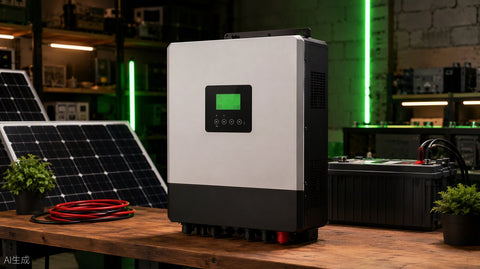
Most household appliances run on 120V AC. To power them from a 300W panel, you need a battery bank and an inverter. A pure sine wave inverter rated at 500-1,000W is the practical minimum for mixed AC loads. Remember: the inverter itself draws 5-20W in idle mode. A 1,000W load running through a 90% efficient inverter effectively draws 1,111W from the battery. Budget accordingly.
What a 300W Panel CANNOT Run — Setting Honest Expectations
A single 300W panel cannot run any of the following in any practical sense: electric water heaters (3,000-4,500W), central air conditioning (3,500W+ running, 6,000W+ surge), electric stoves (2,000-3,000W), clothes dryers (1,800W+), or space heaters (1,000W+). Even a microwave or hair dryer will exhaust a full day's production in under two hours.
For whole-home power, see our guides on how many solar panels you need for 10,000 watts and sizing for 4,000 kWh per month.
Despite their legacy status, 300W panels remain viable — and sometimes optimal — in four specific scenarios.
RV and Marine Applications
RV roofs are space-constrained and weight-sensitive. A 300W panel at ~35-45 lbs is lighter than a 500W half-cut module at ~45-55 lbs, and the smaller 60-cell footprint (39" x 65") fits better around vents, AC shrouds, and roof racks. Many RV electrical systems are built around 12V or 24V battery banks with 30-50A charge controllers, making a single 300W panel (producing ~16-25A practical) a natural match.
For tilt-mount installations, the smaller panel is easier to lift and angle. Series wiring with multiple 300W panels can reach the voltage window of MPPT controllers without overcurrent risk. If your RV has 200-400W of existing solar and you want to add a matching panel, a 300W unit keeps voltage and current in balance.
Replacement and Retrofit Projects
If you have an existing array with failed panels, mixing a 400W+ panel into a string of 300W units is technically possible but electrically problematic. In a string configuration, current is limited by the lowest-current module — so your shiny new 500W panel would be throttled to the 300W panel's current, wasting 40% of its potential. Parallel wiring avoids this but requires matching voltage, which is rarely the case across PERC and TOPCon generations.
The correct approach for replacement is either (a) replace like-with-like using the same model or voltage-current curve, or (b) restring the array using power optimizers or microinverters that allow per-panel maximum power point tracking. In either case, 300W replacement panels are the path of least resistance for legacy arrays.
Off-Grid Cabins and Tiny Homes
For off-grid cabins with modest loads — LED lighting, phone charging, a 12V fridge, a water pump, and occasional laptop use — a 300W panel paired with a 100-200Ah lithium battery and a 30A MPPT controller is a functional baseline. The key constraint is winter: in northern climates, a single 300W panel may produce only 0.3-0.5 kWh/day in December. Plan for 2-3 days of battery autonomy and consider a second panel or a small generator for winter backup.
Charge controller sizing: a 300W panel on a 12V system can deliver ~25A theoretical, ~16-20A practical with MPPT. A 30A MPPT controller provides adequate headroom. On a 24V system, halve the amperage and a 15A controller suffices.
Hobby, DIY, and Educational Projects
A 300W panel is an excellent entry point for learning solar fundamentals without the capital commitment of a 5kW residential array. Hobbyists can experiment with MPPT vs PWM controllers, series vs parallel wiring, battery chemistries (lead-acid vs LiFePO4), and inverter sizing — all at a total system cost under $500. Educational programs and trade schools also favor 300W kits because they are safe to handle, easy to store, and representative of real-world module behavior.
Professional installers and EPCs occasionally encounter 300W legacy stock in procurement — either as distressed inventory from distributors or as replacement panels for existing arrays. Here is how to think about spec'ing them.
When to Spec 300W Panels
Spec 300W panels when (1) the client has an existing array with failed modules and demands voltage-matched replacements, (2) the project is a cost-sensitive off-grid build where labor is minimal and panel cost dominates the budget, or (3) the application is RV/marine with hard physical constraints on weight and dimensions. In all three cases, verify that the panel carries valid UL 61730 and IEC 61215 certifications and that the manufacturer (or distributor) can honor warranty claims.
When to Avoid 300W Panels
Avoid spec'ing 300W panels for any new residential rooftop, commercial installation, or ground-mount project where labor and permitting represent a significant share of total cost. A 10kW system requires 33 panels at 300W but only 20 panels at 500W. The savings in racking, wiring, labor, and roof penetration often exceed the per-watt panel price difference. In new construction, 300W panels are almost never the right choice in 2026.
Mixing 300W with 400W+ Panels
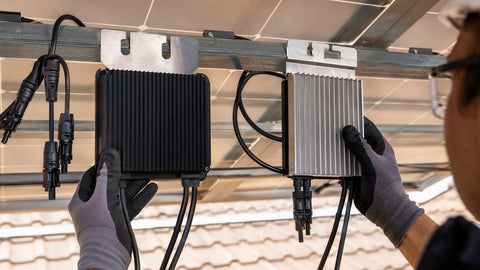
If you must mix wattages on the same inverter, use power optimizers (SolarEdge) or microinverters (Enphase) to ensure each module operates at its own maximum power point. String inverters without optimizers will force all modules to the lowest current, clipping production from the higher-wattage units. In practice, mixing legacy PERC and modern TOPCon on the same string is a design compromise that should be avoided unless the client explicitly accepts the performance penalty.
Warranty and Resale Considerations
Legacy PERC panels often carry 10-year product warranties from manufacturers who may no longer be solvent or who have exited the residential market. Resale value on the secondary market is minimal — typically $0.05-$0.15/W for working pulls. If you are holding 300W inventory, consider it a depreciating asset and price it to move. For buyers, treat any 300W panel purchase as a "no warranty" proposition and discount accordingly.
Pricing for 300W panels in 2026 exists in two parallel universes: wholesale distress and retail residual markup.
Price Per Watt Breakdown
Retail residual inventory: $299-$500 per panel, or roughly $0.90-$1.65/W. This is unsold stock from retailers who have not adjusted pricing to reflect the 2026 market. These listings are poor value.
Wholesale clearance / bulk: $15-$45 per panel, or $0.04-$0.15/W. This is distressed inventory from distributors liquidating PERC stock. At these prices, 300W panels become competitive for hobby projects and budget off-grid builds — but only if the buyer can verify authenticity and certification.
Modern 440W+ TOPCon (wholesale): ~$55-$95 per panel, or $0.13-$0.20/W. Source: PES Supply catalog, August 2026.
Why 300W Panels Are Cheaper Than 440W+
The price difference is driven by three factors. First, efficiency: lower-efficiency PERC cells require more silicon area per watt, and that silicon cost is now uncompetitive. Second, obsolescence: manufacturers and distributors want PERC inventory off their books before it ages out of warranty. Third, tariff positioning: many 300W panels in US inventory are legacy imports subject to older AD/CVD duty structures, while modern TOPCon modules may carry Section 201 or bifacial exclusions that affect landed cost.
Regional Price Variance
US domestic manufactured panels (Silfab, Mission Solar, Q CELLS) command a 15-30% premium over imported modules due to Section 201 tariffs and domestic content incentives. In August 2026, AD/CVD duties on crystalline silicon cells and modules from Southeast Asia remain in effect, though certain manufacturers have secured exclusions. For buyers of legacy 300W stock, verify country of origin — panels from defunct Chinese manufacturers may lack the documentation needed for utility interconnection.
Total System Cost: 300W Array vs 440W+ Array
For a 6kW residential system, 300W panels require 20 modules; 500W panels require 12. The 300W array saves perhaps $200-$400 on panel cost but adds ~$800-$1,200 in extra racking, labor, wiring, and roof penetrations. The 500W array is the cheaper total installed cost in virtually every scenario.
In a market flooded with gray-market and unbranded panels, certification is your primary quality signal.
IEC 61215 and UL 61730 Explained
IEC 61215 is the international standard for crystalline silicon terrestrial photovoltaic modules. It defines performance testing under thermal cycling, humidity freeze, damp heat, and mechanical load. A module certified to IEC 61215 has passed 2,000+ hours of accelerated aging tests.
UL 61730 is the US safety standard covering electrical insulation, fire resistance, and structural integrity. It is required for utility interconnection in virtually all US jurisdictions. Without UL 61730, a panel cannot legally be installed on a grid-tied system in the United States.
Additional relevant standards: IEC 61701 (salt mist resistance, for coastal/marine installs), IEC 62716 (ammonia resistance, for agricultural settings), and PID resistance testing (potential-induced degradation).
Tier-1 Manufacturer List (BloombergNEF Q2 2026)
The BloombergNEF Tier-1 list is the most widely referenced bankability ranking. As of Q2 2026, the following manufacturers hold Tier-1 status for module production: JinkoSolar, LONGi Solar, Trina Solar, JA Solar, Canadian Solar, Risen Energy, Aiko Solar, Tongwei, GCL System Integration, and Chint/Astronergy. Legacy 300W panels from these manufacturers are generally safe buys. Panels from brands not on this list require additional due diligence.
Red Flags: Unbranded Panels and Gray Market Stock
Watch for panels sold without visible manufacturer branding, serial numbers, or spec labels. "B-grade" or "cosmetic seconds" panels may lack full certification. Panels with Chinese-language-only labels and no UL mark are not suitable for US grid-tie installations. If a 300W panel is offered at under $20 with no warranty documentation, treat it as a gamble, not an investment.
How much does a 300W solar panel cost in 2026?
Retail residual inventory lists at $299-$500 per panel. Wholesale clearance pricing is $15-$45 per panel in bulk. For comparison, modern 440W+ TOPCon modules wholesale at $55-$95 per panel. Source: PES Supply catalog, altE Store, Northern Arizona Wind & Sun (August 2026).
How many amps does a 300W solar panel produce?
At 12V: theoretical 25A, practical ~16-20A with MPPT. At 24V: theoretical 12.5A, practical ~8-10A. Charge controller sizing: 30A minimum for 12V systems, 15A for 24V systems. Source: I = P/V with 80-85% practical derate.
What can a 300W solar panel run in an RV?
A single 300W panel can reliably power LED lighting, USB charging, a 12V water pump, a small 12V fridge, a fan, and a laptop for several hours daily. It will not sustain an air conditioner, microwave, or electric heater. Pair with a 100-200Ah lithium battery and a 30A MPPT controller for best results.
Can I mix 300W panels with 400W panels?
Technically possible but generally inadvisable on the same string. String current is limited by the lowest-current module (the 300W unit), clipping the 400W panel's output. Use power optimizers or microinverters to allow each panel to operate at its own maximum power point. Better practice: retire the old array to a secondary application and install a homogeneous new array. Source: shopsolarkits.com mixing guide; Enphase design guidelines.
Are 300W panels still worth buying in 2026?
Yes, but only for niche applications: RV/marine systems with space and weight constraints, replacement panels for existing arrays, budget off-grid cabins, and hobby/DIY projects. For new residential installations, 440W+ TOPCon panels are the unequivocal better value. See our 500-watt solar panel buyer guide for current standards.
What is the best 300W solar panel for off-grid use?
The Renogy RNG-300D 320W and Grape Solar GS-M60 300W are the most commonly available legacy models with documented certifications. For new off-grid builds, however, consider a 400W+ TOPCon panel instead — the price delta is minimal and the performance gain is substantial. Browse options in our solar panel collection.
How many 300W panels do I need for a 2,000 sq ft home?
The average US home uses 10,572 kWh/year (EIA 2024 data). At 1.2 kWh/day per 300W panel, you need approximately 24 panels for 100% offset — more in cloudy climates, fewer in the Southwest. Compare to 15-17 panels at 500W. Use our 10,000-watt sizing guide for detailed calculations.
What is the difference between PERC and TOPCon solar panels?
PERC (Passivated Emitter and Rear Cell) is a P-type silicon technology that dominated from 2016-2023, with efficiency capped around 21-22%. TOPCon (Tunnel Oxide Passivated Contact) is an N-type technology that achieves 22-23.5% in mainstream production, with better low-light response, lower temperature coefficient, and slower degradation. As of 2026, PERC is end-of-life; TOPCon is the residential standard.
Can a 300W panel charge a 12V battery?
Yes. A 300W panel connected to a 12V battery through a 30A MPPT charge controller will charge a 100Ah battery from 50% depth of discharge in approximately 2.5-4 hours of good sun. Use a PWM controller only if budget is extremely constrained; MPPT extracts 20-30% more energy from the same panel. Source: Renogy charge controller sizing guide.
Why are 300W panels cheaper than 400W panels?
Three reasons: (1) PERC cell technology is obsolete and manufacturers are liquidating inventory, (2) lower efficiency means more silicon per watt, which is now economically disadvantageous, and (3) 300W panels often carry shorter remaining warranty periods from manufacturers who have exited that segment. The price discount reflects technological obsolescence, not a bargain.
How long do 300W solar panels last?
Most 300W PERC panels carry a 25-year performance warranty guaranteeing 80% of rated output at year 25. In practice, well-made PERC panels can operate for 30+ years. However, degradation rates of ~0.7%/year mean a 300W panel produces roughly 245W equivalent by year 15. TOPCon panels at 0.4-0.55%/year retain more output over time. Source: NREL degradation study (Jordan et al., 2022).
Can I use 300W panels for grid-tie systems?
Yes, if the panels carry UL 61730 certification and match the voltage window of your string inverter. However, new grid-tie installations in 2026 should use 440W+ modules to minimize racking, labor, and BOS costs. Many AHJs and utility interconnection programs now favor higher-efficiency modules that reduce rooftop footprint.
The 300W solar panel is not dead — it is simply no longer the standard. In 2026, 300W modules occupy a well-defined niche: RV roofs, legacy array replacements, budget off-grid builds, and educational projects. For every other application, the math overwhelmingly favors modern 440W+ TOPCon panels that deliver more wattage per square foot, degrade more slowly, and cost less per watt when total system costs are considered.
If you are holding 300W inventory, price it to move. If you are shopping for panels, verify certifications and warranty backing before buying legacy stock. And if you are planning a new installation, start with our 500-watt solar panel buyer guide — it represents where the market is, not where it was.
Source 300W Legacy Stock or 440W+ TOPCon Modules
Retail buyers: request a custom quote. Installers and contractors: access wholesale pricing through the PES B2B portal.
Request a Retail Quote B2B Installer Portal