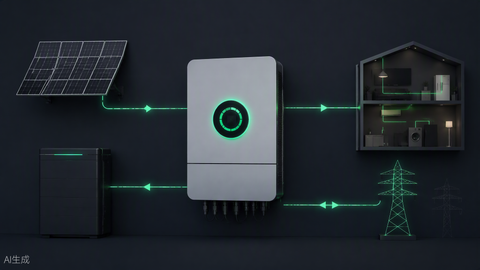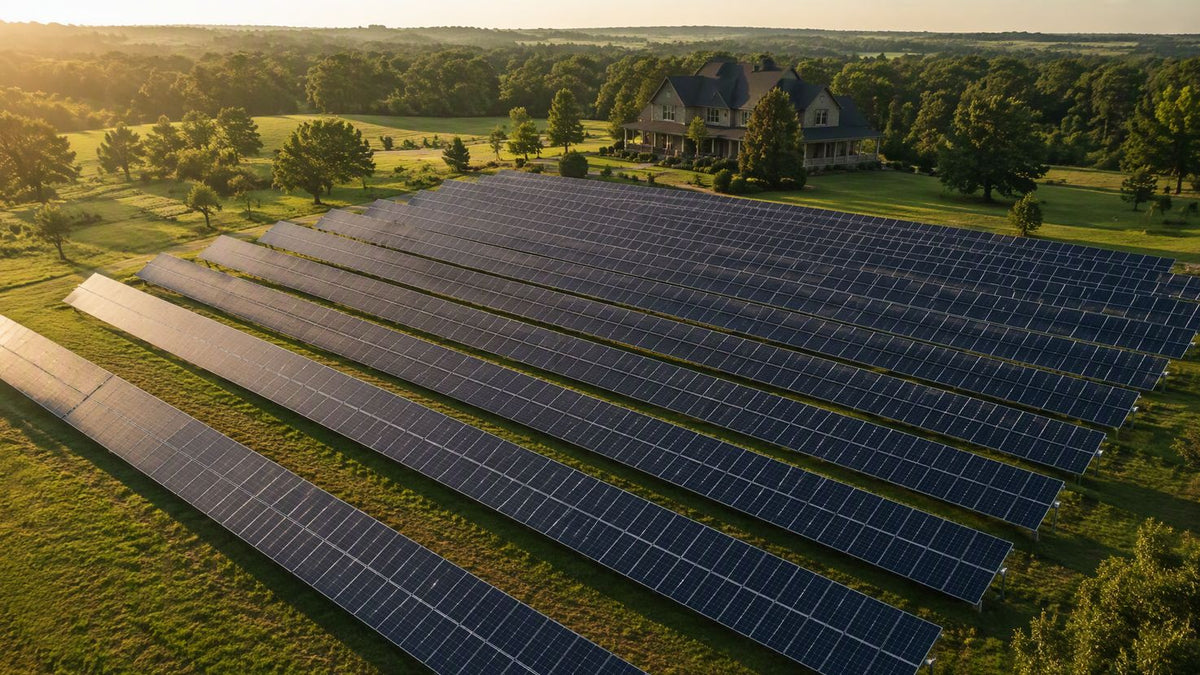
To cover 4,000 kWh per month — 48,000 kWh per year — you need roughly 65 to 100 solar panels, a 27 to 38 kW system depending on your sunlight and build quality. At national-average sun (4.5 peak sun hours) with standard derating, the answer lands near 36.5 kW, or about 80 panels at 450W. That is three times the size of a typical residential array, and it marks the threshold where a project stops being "a big home system" and becomes small-commercial engineering: three-phase service, commercial inverters, structural review, and a utility interconnection study. This guide walks the full calculation, the state-by-state table, the equipment configuration, and the cost picture for a load this size.

Before anything else: if your bill really says 4,000 kWh a month, you are in the top few percent of electricity users — a large all-electric estate, a farm operation, a workshop with serious machinery, or a small business. I have designed several systems at exactly this scale, and every one started with the same question I will ask you: have you checked why the usage is that high? Efficiency at 4,000 kWh/month is worth more than any panel discount.
The Math


System size (kW) = 48,000 kWh ÷ (peak sun hours × 365 × 0.80 system efficiency)
National-average example: 48,000 ÷ (4.5 × 365 × 0.80) = 48,000 ÷ 1,314 = 36.5 kW at a 0.80 derate. Real large systems deliver efficiency in the 0.76–0.85 band — commercial builds with cool rows, generous airflow, and professional O&M run higher; hot-climate or soiling-prone sites run lower — and that assumption alone swings the panel count by about 15%. To keep every table in this article honest, here are the three planning cases side by side so you can see the assumption rather than have it hidden from you:
| Planning Case | System Efficiency | System Size @ 4.5 PSH | Panels @ 450W | Panels @ 550W |
|---|---|---|---|---|
| Conservative (hot climate, some soiling, string inverter) | 0.76 | 38.4 kW | 86 | 70 |
| Standard residential-grade build | 0.80 | 36.5 kW | 82 | 67 |
| Well-engineered commercial build (cool rows, pro O&M) | 0.85 | 34.3 kW | 77 | 63 |
Calculating Number Of Panels
So the honest national-average answer is 34–38 kW, or 63–86 panels depending on wattage and build quality. Anyone who quotes you a single number without stating their derate factor is asking you to sign for their optimism.
Panel Count by Location (4,000 kWh/Month Target, 0.80 Efficiency)
| Location | Avg Peak Sun Hours | System Size | Panels @ 400W | Panels @ 450W | Panels @ 550W | Panels @ 650W (commercial) |
|---|---|---|---|---|---|---|
| Phoenix, AZ | 6.5 | 25.3 kW | 64 | 57 | 46 | 39 |
| Las Vegas, NV | 6.4 | 25.7 kW | 65 | 58 | 47 | 40 |
| Denver, CO | 5.5 | 29.9 kW | 75 | 67 | 55 | 46 |
| Dallas, TX | 5.2 | 31.6 kW | 79 | 71 | 58 | 49 |
| Atlanta, GA | 4.8 | 34.2 kW | 86 | 77 | 63 | 53 |
| Chicago, IL | 4.2 | 39.1 kW | 98 | 87 | 72 | 61 |
| New York, NY | 4.0 | 41.1 kW | 103 | 92 | 75 | 64 |
| Seattle, WA | 3.6 | 45.7 kW | 115 | 102 | 84 | 71 |
Verify one row yourself: Seattle — 48,000 ÷ (3.6 × 365 × 0.80) = 48,000 ÷ 1,051 = 45.7 kW; ÷ 0.55 kW panels = 83 → 84 panels. The Seattle row also illustrates a hard truth: at some latitude the array outgrows the roof, and ground mounts stop being optional.
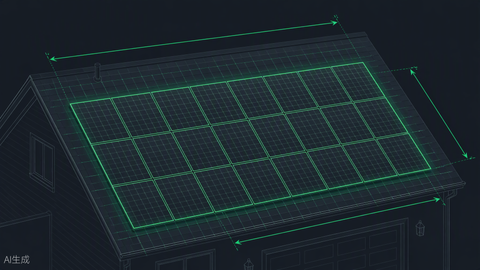
Space Requirements: Where Do 70–90 Panels Go?
| Mounting | Area per kW | Area for 36.5 kW | Notes |
|---|---|---|---|
| Residential roof (flush mount) | ~55–60 sq ft | ~2,000–2,200 sq ft | Exceeds most single roofs; split across structures or downsize target |
| Commercial flat roof (ballasted, tilted) | ~75–90 sq ft (row spacing) | ~2,700–3,300 sq ft | Row shading gaps drive the area; structural load review required |
| Ground mount, fixed tilt | ~90–110 sq ft | ~3,300–4,000 sq ft (~0.09 acre) | The default answer at this scale; see commercial ground-mount kits |
| Pole/carport structures | ~85–100 sq ft | ~3,100–3,700 sq ft | Premium cost, dual-use space |
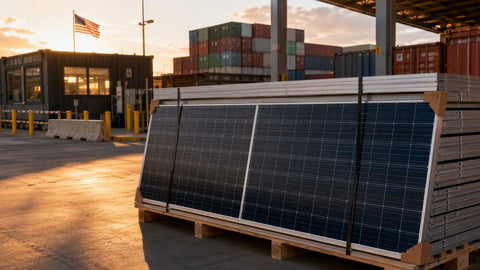
At this size, panel wattage stops being a spec-sheet bragging point and becomes a logistics decision: 550–650W commercial-format modules cut panel count 20–30%, which cuts clamps, wiring home-runs, and labor hours. Browse the 550–709W collection, 650W modules, and commercial panel lineup for the current inventory.
The Electrical Design: Why 30+ kW Is a Different Animal
| Design Element | Residential (≤15 kW) | This Scale (27–45 kW) |
|---|---|---|
| Service | Single-phase 240V, 200A | Often three-phase 208V or 480V; single-phase possible to ~40A backfeed limits |
| Inverters | One string or 15–40 microinverters | 2–4 commercial string inverters (10–25 kW each) or 60–115 microinverters |
| NEC 705.12 busbar rule | 120% rule usually fits on a 200A panel | Exceeds virtually any residential busbar — line-side tap or dedicated service equipment required |
| String voltage (NEC 690.7) | 600V limit, easy strings of 8–12 | 1,000V commercial strings of 15–24 modules; cold-weather Voc check still mandatory |
| Interconnection | Simplified residential net metering | Utility engineering study, possibly witness testing and export controls |
| Permitting | Over-the-counter in many jurisdictions | Structural + electrical plan review; commercial tariff may apply |
Three code items do the most damage when missed. NEC 690.7: a 24-module string of 50Voc panels is 1,200V at STC — illegal on a 1,000V system even before the cold-weather correction; strings of 20–21 are the honest maximum with typical modules, and northern sites must run the record-low-temperature math. NEC 690.8: each string's conductors and fuses size at 156% of Isc (1.25 × 1.25) — a 15A-Isc commercial module needs 23.4A-rated circuits → 10 AWG copper per NEC 310.16 and 25A fuses per NEC 240.6. NEC 705.12: forget backfeeding a panel at this scale; plan the line-side tap in the original design, not as a change order. The NEC 690 protection guide and wire sizing guide carry the full tables, and the grounding guide covers the bonding side that inspectors at this scale actually check.
What Uses 4,000 kWh a Month? (And Should It?)
| Load Profile | Monthly kWh | Reduction Potential Before Sizing Solar |
|---|---|---|
| Large all-electric home + 2 EVs + pool | 3,000–4,500 | 10–25% via envelope, variable-speed pool pump, smart thermostats |
| Farm shop + irrigation pump + residence | 3,500–5,000 | 15–30% via VFDs on pumps, LED retrofits |
| Small business (retail/office, 3,000–6,000 sq ft) | 2,500–5,000 | 10–20% via HVAC economizers, lighting, scheduling |
| Workshop with compressors, welders, CNC | 3,000–6,000 | 15–35% via compressor leak repair and VFDs — the highest-ROI audit I do |
| Indoor agriculture / grow operation | 4,000–15,000+ | 20–40% via LED horticulture lighting and HVAC integration |
Every kWh you eliminate before sizing saves roughly $1,000 of system cost at commercial pricing. On the last 4,200-kWh shop I designed, the pre-solar efficiency pass cut the load to 3,400 kWh — which shrank the array by 14 panels and paid for the audit about nine times over.
Cost and Return at This Scale
| Line Item | Typical Range (36.5 kW) | Notes |
|---|---|---|
| Equipment (panels, inverters, racking, BOS) | $35,000–$55,000 | Commercial-format modules and string inverters keep $/W low; commercial inverters and 30 kW inverter options |
| Installed turnkey (ground mount) | $75,000–$110,000 | $2.00–$3.00/W commercial pricing vs $2.50–$3.50/W residential |
| Annual production value @ $0.17/kWh | ~$8,200/yr | 48,000 kWh × $0.17 |
| Annual value @ $0.25/kWh (CA/Northeast commercial) | ~$12,000/yr | High-rate markets pay back in 6–9 years |
| 30-year production (0.5%/yr degradation) | ~1.34 GWh | ~$228,000 at flat $0.17; more with rate escalation |
Businesses note: commercial systems still access the Section 48/48E investment tax credit with bonus adders (domestic content, energy community) that can stack well above 30% — a very different 2026 incentive picture than the expired residential 25D credit. Run your specifics through the ROI calculator and check state incentives; commercial buyers should also read commercial installation costs for the soft-cost breakdown.
Storage and Backup at 4,000 kWh/Month
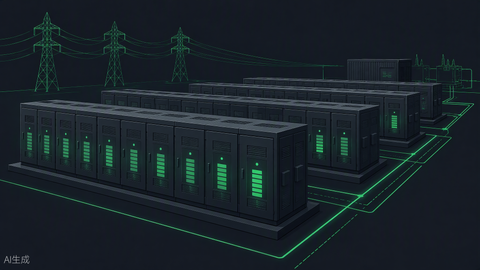
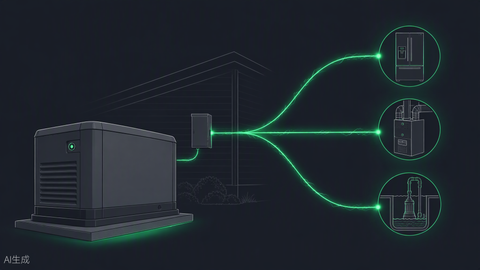
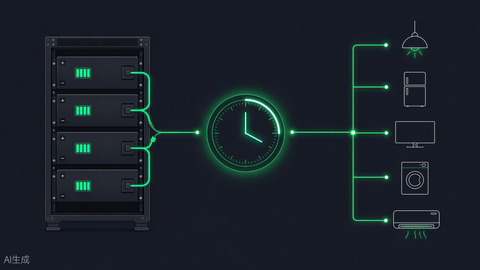
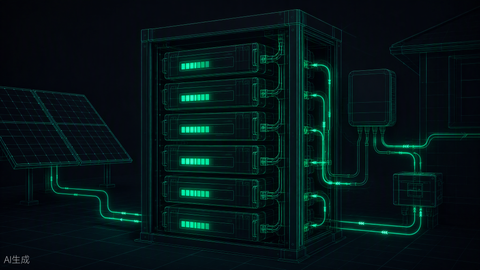
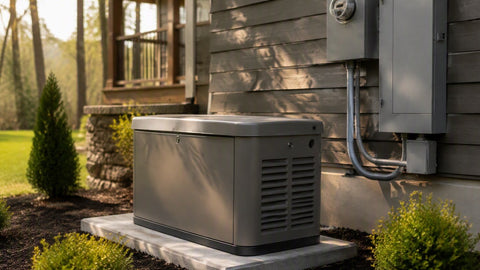
A load this size that needs backup is looking at 100+ kWh of storage and 25–50 kW of inverter power — commercial battery territory. The 100–200 kWh commercial battery collection and the battery sizing guide frame the options. Many operations at this scale pair solar with a standby generator instead of full battery backup — cheaper per protected kWh when outages are rare — and the generator sizing guide plus the commercial standby collection cover that branch of the decision tree.
Field Notes
Three patterns from builds at this scale. First, the utility interconnection timeline drives everything — my last three 30 kW+ projects spent longer waiting on the utility study than on construction, so file the application the week the design freezes, not after equipment lands. Second, panel-count decisions are labor decisions: switching a 36 kW ground mount from 450W to 580W modules cut 22 panels off the BOM, and the install crew finished a day early — at commercial labor rates that is real money. Third, monitoring is not optional at this size: a 5% underperformance that nobody notices for a season is 600+ lost kWh a month, which at commercial rates is a four-figure annual leak. Every system I commission at this scale gets per-string monitoring and an alert threshold, because the array is now a revenue asset and deserves to be watched like one.
Interconnection: The Schedule Driver Nobody Budgets
At 30+ kW, the utility becomes a project partner whether you like it or not. The sequence runs: application with single-line diagram and equipment cut sheets → utility engineering review (screens for transformer capacity, voltage rise, protection coordination) → possible supplemental study → signed interconnection agreement → construction → inspection → witness test → permission to operate (PTO). On straightforward feeders this runs 4–8 weeks; on constrained rural feeders I have seen 6 months and a required transformer upgrade — sometimes at the utility's cost, sometimes at yours, depending on the tariff.
Three practices keep this painless. File the interconnection application at design freeze, not at construction start. Use inverters with current UL 1741 SB / IEEE 1547 certification — utilities now require it, and it unlocks the smart-inverter functions (volt-var, frequency ride-through) that let larger systems onto smaller feeders. And design export flexibility in from the start: a system that can throttle to a capped export level via the inverter's power-control settings can often interconnect on feeders that would reject an uncontrolled one. That one design feature has saved two of my projects from five-figure transformer upgrades.
Roof vs. Ground: The Economics at 36 kW
Roof, Ground, or Both?
| Factor | Commercial Roof Mount | Ground Mount |
|---|---|---|
| Installed cost per watt | $2.00–$2.60 | $2.20–$3.00 (trenching, posts, concrete) |
| Production per kW | Baseline (flat-roof tilt loses a few %) | +3–8% (optimal tilt, better cooling, no obstructions) |
| Roof life interaction | Must coordinate with membrane age; re-roofing under an array is costly | None |
| Maintenance access | Roof access protocols; harder cleaning | Walk-up easy; mowing becomes a line item |
| Expansion | Limited by roof | Limited by land (usually plentiful) |
| Security/vandalism | Excellent | Fencing worth pricing in rural sites |
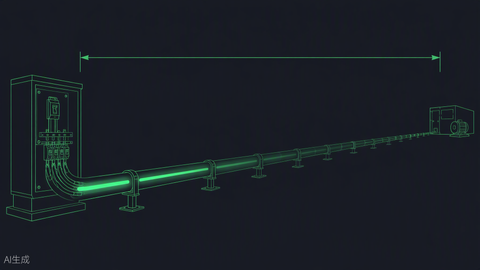
My default recommendation at this scale: ground mount if the land exists within 300 feet of the service, roof mount when land is tight or the roof is a new membrane with 20+ years ahead of it. The production and maintenance advantages of ground mounts compound for three decades; the cost premium pays back in the first five.
Financing a System This Size
| Path | Structure | Best For | Watch Out For |
|---|---|---|---|
| Cash | Full ownership, all incentives, full savings | Businesses with capital and tax appetite | Opportunity cost of capital |
| Loan (10–20 yr) | Ownership with debt service; savings typically exceed payments from year one | Most buyers; preserves incentives | Dealer fees in residential-style solar loans |
| PPA / lease | Third party owns it; you buy the power at a discount | Nonprofits and public entities that cannot use tax credits | Escalators, buyout terms, roof-control clauses |
| C-PACE (commercial) | Assessment financing tied to the property | Commercial buildings; long terms, transferable | Mortgage lender consent required |
For for-profit businesses, cash or loan plus the Section 48/48E credit and MACRS depreciation typically returns 30–50% of system cost through tax channels in year one — the tax treatment alone is why commercial solar economics beat residential even at identical installed costs. Get a CPA who has done energy property before; the depreciation and credit interaction has specific ordering rules.
The O&M Plan for a Revenue-Scale Array
A 36 kW system producing 48,000 kWh a year is a small power plant, and it deserves a one-page maintenance plan rather than good intentions:
- Monitoring with alerts. Per-string or per-module monitoring with an email alert at 10% underperformance. A month of undetected 15% loss at this scale is ~$100 of energy — the alert subscription pays for itself every time it fires.
- Semiannual inspection. Torque spot-checks, wiring and conduit condition, vegetation, drainage under ground-mount rows, inverter filters and fans. Two hours, twice a year.
- Cleaning where soiling justifies it. Near agriculture, quarries, or highways, measure the soiling loss (compare pre/post-rinse output) and clean when it exceeds 3%. In most rain-washed regions, never.
- Annual production audit. Compare actual kWh against the model, normalized for weather. Drift beyond 5% gets a diagnostic visit; degradation alone should cost only ~0.5% per year.
- Inverter lifecycle reserve. Commercial string inverters carry 10-year warranties; budget one replacement event around years 12–15 at roughly $0.08–0.12/W. Boring, predictable, and the only major maintenance cost the system will ever have.
Three Worked Profiles at 4,000 kWh/Month
The estate (single-family, 6,500 sq ft, Oklahoma). Usage: 3,600–4,400 kWh/month across two 200A services — geothermal heat pumps, two EVs, pool, shop building. Answer: 38 kW ground mount — originally drawn as 84 × 450W residential modules, value-engineered to 68 × 560W commercial modules after the labor analysis — line-side tap, 10-month utility timeline including a transformer upgrade the utility funded. The geometry worked because the land was there; on the same house in a subdivision, this project becomes two roof faces plus a carport and a negotiation with the HOA.
The farm shop (Kansas). Usage: 4,100 kWh/month — welders, a 10 HP compressor, grain-handling motors, plus the farmhouse. The pre-solar audit found compressor leaks and a failed unloader valve wasting 480 kWh/month; fixed for $340, the solar target dropped to 3,600 kWh/month and shed 8 panels. Final design: 32 kW on the shop's standing-seam roof with clamp-on (non-penetrating) mounts, three-phase interconnection, demand-charge savings worth more than the energy savings. Farms are where solar audits pay for themselves fastest.
The small business (Oregon retail building). Usage: 3,800 kWh/month, flat commercial roof with a 9-year-old membrane. Decision: re-roof first under the array footprint, then 30 kW ballasted. Skipping the re-roof would have guaranteed a $20,000 remove-and-reinstall at year 10 of a 30-year asset — the single most expensive sequencing error in commercial solar, and entirely avoidable.
The Sequencing Rules for Projects This Size
All three profiles obey the same order of operations: audit the load (months 1–2), freeze the design and file interconnection (month 2), fix the roof or prep the ground site (months 2–4), procure equipment against current lead times (months 3–5), build (weeks), then commission with monitoring verified before the crew leaves. Reverse any two steps and you pay for it — order panels before the interconnection study and you may own 84 modules sized for a transformer the utility refuses to energize; build before the re-roof and you will pay to move the array once. The engineering is the easy part at 4,000 kWh a month; the sequence is the project.
Structural, Insurance, and the Paperwork of a 36 kW Array
A 36 kW array adds roughly 5,000–8,000 lbs of dead load to a roof plus wind uplift forces that double in storms — which is why commercial jurisdictions require a structural engineer's letter and residential inspectors start asking harder questions past 20 kW. Ground mounts trade that for geotechnical and frost-depth requirements: posts in Kansas need different footings than posts in Minnesota. On the insurance side, a system of this value ($80,000+) must be specifically scheduled on the property policy; the standard "other structures" limit will not cover it, and I have seen a hail claim turn adversarial over exactly that gap. Ten minutes with the insurance agent before construction is the cheapest risk management in the entire project.
Demand Charges: The Commercial Bill's Hidden Half
If the 4,000 kWh/month meter is commercial, the bill likely includes demand charges — fees based on the highest 15-minute kW draw of the month, often $10–25 per kW of peak. Solar alone shaves demand charges only when the peak happens in sunny hours; a 5 PM peak barely notices a solar array. This is where the battery-in-storage discussion turns from backup luxury to bill management: 30–50 kWh of storage dispatched against the monthly peak can cut demand charges 30–60%, a savings stream that runs parallel to the energy offset and sometimes exceeds it. Run both analyses — energy offset and demand management — before finalizing whether the battery line item belongs in the project.
The One-Paragraph Bottom Line
Four thousand kWh a month is 48,000 a year, and covering it takes a 27–45 kW array — roughly 60 to 115 panels depending on wattage and ZIP code, about 80 panels of 450W at national-average sun. It is commercial-scale engineering with commercial-scale rewards: $8,000–$12,000 of annual energy value, strong tax treatment for businesses, and a 30-year production total measured in gigawatt-hours. Audit the load first, file interconnection early, fix the roof before the array, schedule the insurance, and pick the mounting that the land makes easy. Do those things in that order and this size of project is routine — skip them and it is expensive education.
A final note on scale. Whatever drives the 4,000 kWh — the estate, the shop, the farm, the business — the load did not appear overnight and the solar does not have to either. Two 18 kW phases built a year apart carry the same panels to the same total, and phasing sometimes matches cash flow and roof schedules better than one heroic project. What phasing should never postpone is the interconnection application and the load audit: both are cheap, both inform everything, and both are the first week of work whether the build is one phase or three. Get those two artifacts in motion this month and every other decision in this guide has a deadline to organize itself around. The panels are the easy purchase; the paperwork is the project — start the paperwork first, and a load this size becomes a sequence of ordinary steps instead of one intimidating leap. The projects that stall are the ones that buy hardware before answers; the projects that glide are the ones that buy answers first and hardware second. At 4,000 kWh a month, you are not buying a gadget — you are commissioning a small power station that will quietly earn its keep for three decades, and it deserves to be commissioned like one — with the same seriousness, the same paperwork discipline, and the same pride of ownership that a working power station earns on any property it serves.
Frequently Asked Questions
How many solar panels do I need for 4,000 kWh per month?
About 65–95 panels depending on location and wattage — a 27 to 45 kW system. At national-average sun with standard derating: 36.5 kW, which is 82 panels at 450W or 67 panels at 550W. Phoenix needs ~57 450W panels; Seattle needs ~102.
How big is a solar system for 4,000 kWh a month?
Roughly 30–37 kW, occupying about 2,000–2,200 sq ft of flush roof or 0.08–0.10 acre of ground mount. That is three times a typical residential system and lands in small-commercial engineering territory for inverters, interconnection, and permitting.
Is 4,000 kWh a month a lot of electricity?
Yes — about 4.6 times the average US home. It typically means a large all-electric estate, a farm or shop operation, or a small commercial building. An energy audit before sizing solar routinely cuts the load 10–30%, which is cheaper than the extra panels.
What does a 4,000 kWh-per-month solar system cost?
About $35,000–$55,000 in equipment for a 36.5 kW build, or $75,000–$110,000 turnkey installed. At $0.17/kWh the production is worth ~$8,200 per year; commercial buyers can often stack the Section 48/48E credit and bonus adders well above 30%.
Can a residential property support a system this big?
Sometimes. The roof usually cannot (you need ~2,100 sq ft of good roof), so ground mounts are common. The bigger constraint is electrical: NEC 705.12's 120% rule rules out backfeeding a standard 200A residential panel, so the design needs a line-side tap, and the utility may require an interconnection study rather than simplified net metering.
Should I use batteries or a generator for backup at this usage level?
Full battery backup for a 4,000 kWh/month load means 100+ kWh of storage and 25–50 kW of inverter power — feasible but expensive. Most operations pair solar with a standby generator for outage protection and add battery capacity sized only for critical loads or demand-charge management.
Related reading: Solar system size calculator · Solar system calculator · Commercial solar · Racking & mounting