Last Updated: August 2026 • Home Solar, Battery Backup & Energy Independence Guide
Residential solar has changed. A few years ago, the typical homeowner question was simply, "How many solar panels do I need?" In 2026, more homeowners are asking a second question: "Should I add a battery?"
Pairing rooftop solar with battery storage can allow a home to save excess daytime solar production and use it later — after sunset, during expensive utility-rate periods, or during a power outage. A properly designed solar-plus-storage system can therefore do something ordinary grid-tied solar usually cannot: keep selected household circuits operating when the utility grid goes down.
But batteries are not automatically the right investment for every house. The best system depends on your electricity use, outage risk, utility rate structure, solar production, backup expectations, electrical service, local incentives and budget. This 2026 guide explains how solar batteries work, how much storage you may need, what they cost, and what homeowners should compare before buying.
⚡ Quick Answer
Solar + battery storage is most valuable in 2026 for homeowners who experience outages, have time-of-use electricity rates, receive limited compensation for exporting solar power, or want greater energy independence. A battery around 10–15 kWh can often cover essential household loads for many hours, but whole-home backup — especially air conditioning, electric heating, EV charging, electric cooking or well pumps — can require substantially more storage and higher battery power output. Battery sizing should therefore be based on both kWh capacity and kW output, not battery capacity alone.
⚠ Important 2026 Federal Tax Credit Change
The federal Residential Clean Energy Credit previously covered qualifying homeowner solar and battery-storage expenditures. Under current federal rules, however, the credit is not available for residential clean-energy property placed in service after December 31, 2025. Homeowners considering a 2026 installation should therefore evaluate current state, local and utility incentives rather than assuming a 30% federal homeowner tax credit is still available.
Key Takeaways for Homeowners
- Solar Alone Usually Does Not Mean Backup: most conventional grid-connected solar systems automatically shut down when the utility grid fails unless they have properly configured backup equipment.
- Battery Capacity Is Measured in kWh: this tells you how much energy the battery stores.
- Battery Power Is Measured in kW: this determines how many appliances and high-demand loads the battery can operate at the same time.
- 10–15 kWh Is a Common Residential Starting Range: but actual requirements depend heavily on household loads and backup goals.
- Whole-Home Backup Requires More Planning: HVAC systems, electric ranges, dryers, pumps and EV chargers can require significant instantaneous power.
- LFP Batteries Are Increasingly Common: lithium iron phosphate chemistry is widely used in modern residential storage systems because of its cycle life and thermal stability.
- Battery Economics Depend on Your Utility: storage becomes more financially attractive where exported solar is poorly compensated or electricity prices vary significantly by time of day.
- Federal Residential Credit Changed: qualifying homeowner installations placed in service after December 31, 2025 no longer receive the previous Residential Clean Energy Credit under current federal rules.
- PES Supply: homeowners, installers and contractors can source solar panels, battery storage, inverters, racking and electrical balance-of-system equipment through PES Supply.
In This Guide
- What Is Solar + Battery Storage?
- Why Homeowners Are Adding Batteries
- What Happens to Solar During a Power Outage?
- How a Solar Battery System Works
- kWh vs kW: The Most Important Battery Sizing Difference
- How Much Battery Storage Do You Need?
- Essential Loads vs Whole-Home Backup
- Popular Home Battery Sizes & Examples
- LFP vs NMC Battery Chemistry
- AC-Coupled vs DC-Coupled Batteries
- What Does Home Battery Storage Cost in 2026?
- Can a Battery Lower Your Electric Bill?
- Solar & Battery Incentives in 2026
- Can You Add a Battery to Existing Solar?
- How Long Can a Battery Power Your Home?
- What to Compare Before Buying
- 2026 Homeowner Decision Framework
- Frequently Asked Questions
- Sources
What Is Solar + Battery Storage?
A conventional rooftop solar system produces electricity when sunlight reaches the panels. Your home uses that electricity first, while excess production is generally exported to the grid.
Adding a battery changes the equation.
Instead of immediately sending all excess solar electricity to the utility, the system can charge a home battery. That stored energy can then be used later when solar production falls.
Typical daytime flow:
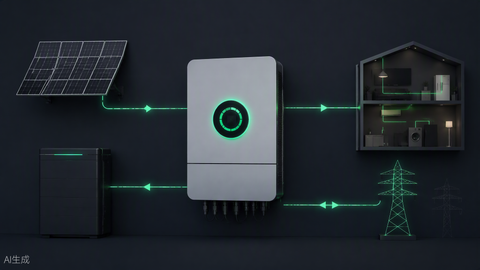
Solar Panels → Home Loads → Battery → Utility Grid
Typical nighttime flow:
Battery → Home Loads → Utility Grid if additional energy is needed
Why Are More Homeowners Adding Batteries?
1. Backup Power
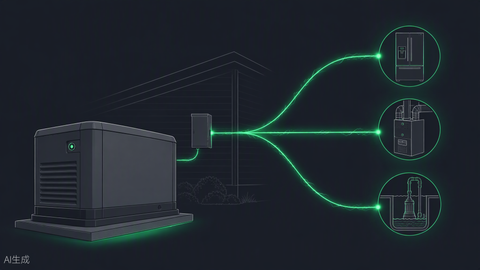
For many homeowners, backup is the primary reason to install storage. During a utility outage, a properly designed battery system can isolate the house from the utility and provide electricity to selected circuits or, if adequately sized, most of the home.
2. Use More of Your Own Solar Energy
Without storage, excess daytime solar production may be exported to the grid. A battery allows that electricity to be saved and used after sunset.
3. Time-of-Use Savings
Some utilities charge considerably more for electricity during afternoon and evening peak periods. A battery can charge when electricity is inexpensive or when solar is abundant and discharge when utility electricity becomes expensive.
4. Reduced Dependence on Export Rates
Net-metering rules differ by utility and state. In some markets, homeowners receive less for exported solar electricity than they pay to buy electricity later. Storage can increase solar self-consumption and reduce that mismatch.
5. Energy Resilience
Storms, wildfires, grid congestion and equipment failures can interrupt utility power. Solar plus storage gives homeowners another source of electricity when the grid is unavailable.
Will Solar Panels Work During a Power Outage?
This surprises many homeowners: ordinary grid-tied solar panels usually shut down during a grid outage.
The reason is safety. Solar equipment must prevent electricity from feeding utility lines while workers may be repairing them.
To provide usable solar electricity during an outage, a home generally needs equipment capable of safely disconnecting the property from the utility grid and maintaining a stable local electrical system.
Having solar panels on your roof does not automatically mean you have backup electricity. Make sure your proposed solar-plus-storage system is explicitly designed and permitted for backup operation.
How a Home Solar Battery System Works
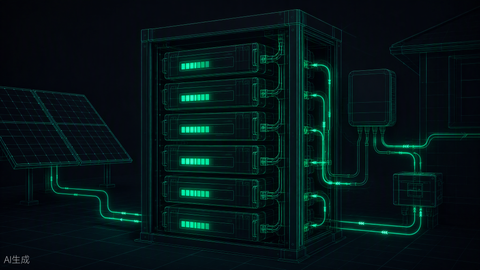
A complete residential solar-plus-storage installation can include:
- Solar panels
- Solar inverter or microinverters
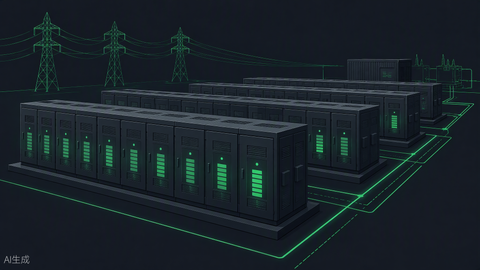
- Home battery modules
- Battery inverter or integrated power electronics
- Automatic transfer or system controller equipment
- Energy monitoring
- Backup load panel when required
- Electrical disconnects and protection equipment
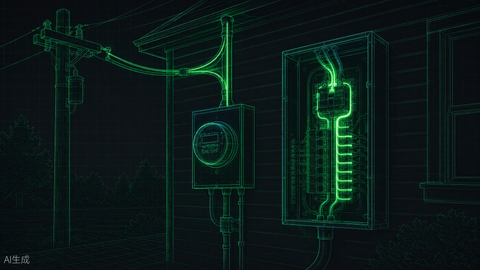
- Utility meter and interconnection equipment
Modern systems continuously monitor solar production, household consumption, battery state of charge and utility-grid status.
kWh vs kW: The Most Important Battery Sizing Difference
Two numbers determine what a battery can actually do:
Battery Capacity — kWh
Kilowatt-hours measure how much energy the battery can store. Think of kWh as the size of the energy tank.
Battery Power — kW
Kilowatts measure how much power the battery can deliver at one time. This determines whether the battery can run demanding appliances such as air conditioners, pumps and electric cooking equipment.
A battery can have plenty of stored energy but still lack enough instantaneous power to start or operate every appliance simultaneously.
How Much Battery Storage Does a Home Need?
There is no universal answer. The correct battery capacity depends on what you expect the system to do.
| Backup Goal | Illustrative Storage Range | Typical Loads |
|---|---|---|
| Minimal Emergency Backup | 5–10 kWh | Lights, Wi-Fi, phone charging, refrigerator, electronics |
| Essential-Loads Backup | 10–15 kWh | Refrigerator, lights, internet, outlets, selected pumps and appliances |
| Extended Essential Backup | 15–30 kWh | Essential loads plus greater overnight reserve and selected larger appliances |
| Whole-Home Backup | 20–40+ kWh | Multiple large household loads, depending on energy consumption and battery output |
| Near Off-Grid Operation | 30–60+ kWh | Highly dependent on weather, solar array size, season and household consumption |
These ranges are planning examples only, not engineering specifications. Actual battery requirements should be calculated from measured household loads, required backup duration and battery power capability.
Essential Loads vs Whole-Home Backup
Essential-Loads Backup
An essential-load system powers only the circuits you consider most important.
Typical backup circuits might include:
- Refrigerator and freezer
- Internet router
- Selected lighting
- Garage door opener
- Phone and laptop charging
- Security equipment
- Medical equipment where applicable
- Selected outlets
- Well or sump pump if appropriately sized
Whole-Home Backup
Whole-home backup gives homeowners considerably more flexibility but increases design requirements.
High-demand loads may include:
- Central air conditioning
- Heat pumps
- Electric water heaters
- Electric ovens and ranges
- Clothes dryers
- Well pumps
- Pool equipment
- EV chargers
Some homeowners choose whole-home backup hardware while configuring energy-management rules that temporarily disable selected high-power appliances during a prolonged outage.
Popular Home Battery Sizes & 2026 Examples
Residential storage platforms are increasingly modular, allowing homeowners to add capacity as backup requirements increase.
| Battery | Usable / Nominal Energy | Continuous Output | Chemistry | Warranty |
|---|---|---|---|---|
| Tesla Powerwall 3 | 13.5 kWh | Up to 11.5 kW on-grid configuration | Lithium-ion | 10 years |
| Enphase IQ Battery 5P | 5.0 kWh per unit | 3.84 kW per North American unit | LFP | 15 years / applicable cycle terms |
| FranklinWH aPower 2 | 15 kWh | 10 kW | LFP | 15 years / applicable throughput terms |
Specifications vary by market, configuration, firmware, system design and model revision. Always verify the current manufacturer datasheet and warranty before purchasing.
LFP vs NMC: Understanding Battery Chemistry
Most modern home batteries use lithium-ion chemistry, but not every lithium-ion battery uses the same cathode material.
Lithium Iron Phosphate — LFP
LFP has become increasingly common in stationary residential storage. Its advantages can include strong cycle life, thermal stability and chemistry that does not rely on nickel or cobalt in the cathode.
Nickel Manganese Cobalt — NMC
NMC lithium-ion batteries can deliver high energy density and have been widely used in batteries and electric vehicles. The correct choice depends on the actual product design, safety certifications, thermal-management system, installation requirements and warranty — not chemistry alone.
AC-Coupled vs DC-Coupled Solar Batteries
AC-Coupled Storage
An AC-coupled battery has its own power electronics and connects on the AC side of the home's solar system.
This architecture can be particularly convenient when adding storage to an existing solar installation.
DC-Coupled Storage
A DC-coupled system can route solar DC energy directly toward storage before conversion to household AC electricity, potentially reducing conversion steps in certain operating modes.
For a new solar-plus-storage installation, an integrated hybrid inverter or DC-coupled architecture can provide a streamlined system design.
How Much Does a Home Battery Cost in 2026?
Residential battery pricing depends on battery capacity, brand, inverter architecture, backup equipment, permitting, electrical-panel modifications and installation complexity.
2026 U.S. Market Benchmark
EnergySage reported in July 2026 that residential battery installations averaged approximately $15,647 before available incentives for around 13.5 kWh of storage. Actual quotes vary substantially by brand, location and installation requirements.
The battery itself is only part of the installed cost. A quote can also include:
- Battery hardware
- Inverter or integrated power electronics
- Backup gateway or system controller
- Electrical equipment
- Backup load panel
- Labor
- Permits
- Utility interconnection
- Commissioning
- Electrical service upgrades
An older electrical panel, complicated installation location or major service upgrade can materially increase total project cost.
Can a Home Battery Lower Your Electric Bill?
Sometimes — but the answer depends almost entirely on your utility rate plan.
Battery economics tend to improve when:
- Electricity prices are significantly higher during peak periods.
- Solar-export compensation is lower than the retail electricity price.
- The utility offers a battery or demand-response incentive.
- The homeowner can charge the battery with surplus solar.
- Peak-demand charges apply.
If your utility provides full retail net metering and charges the same electricity rate at all times, a battery may provide limited direct bill savings. In that situation, backup power and resilience may be the primary value.
Solar & Battery Incentives in 2026
The incentive environment changed substantially for residential clean-energy projects entering service in 2026.
Federal Residential Clean Energy Credit
According to current IRS guidance, the Residential Clean Energy Credit applies to qualifying property installed from 2022 through December 31, 2025. It is not available for residential clean-energy property placed in service after that date.
That does not mean incentives have disappeared entirely.
Depending on location, homeowners may still find:
- State solar incentives
- State battery-storage incentives
- Utility rebates
- Virtual power plant programs
- Demand-response payments
- Property-tax provisions
- Local rebates
- Special utility rate programs
Always verify eligibility directly with the program administrator, utility and qualified tax professional before assuming an incentive will apply.
Can You Add a Battery to Existing Solar Panels?
In many cases, yes.
AC-coupled batteries are particularly useful for retrofits because the battery can often be integrated without replacing the entire existing solar system.
However, compatibility must still be checked.
The installer should evaluate:
- Existing solar inverter
- Solar array capacity
- Main electrical panel
- Utility interconnection requirements
- Available installation space
- Existing equipment warranty
- Backup architecture
- Battery communication requirements
- Local electrical and fire codes
How Long Can a Solar Battery Power Your House?
The simplest rough calculation is:
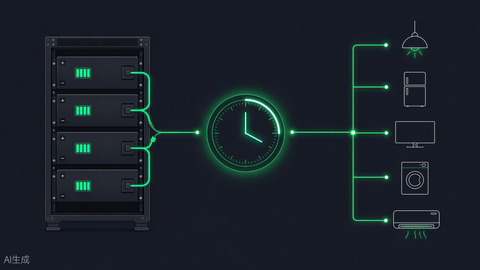
Backup Hours ≈ Usable Battery Capacity ÷ Average Backup Load
For example, suppose a battery has 13.5 kWh available and the home's selected backup circuits average 0.75 kW.
13.5 kWh ÷ 0.75 kW = approximately 18 hours before accounting for system losses, reserve settings and changing loads.
If the same battery were powering a house averaging 3 kW during the outage:
13.5 kWh ÷ 3 kW = approximately 4.5 hours before losses and reserve settings.
If the system supports solar operation while islanded from the grid, daytime solar production can recharge the battery and extend backup duration. Weather, seasonal production and household energy discipline then become extremely important.
What Uses the Most Battery Energy?
| Home Load | Battery Impact |
|---|---|
| LED Lighting | Low |
| Wi-Fi / Electronics | Low |
| Refrigerator | Low to Moderate |
| Well / Sump Pump | Moderate, with potentially high starting power |
| Electric Water Heater | High |
| Central Air Conditioning | High |
| Electric Range / Oven | High |
| EV Charging | Very High |
Battery Safety & Installation
Home batteries are substantial electrical energy-storage systems and should be installed according to manufacturer requirements, electrical codes, fire codes and local permitting rules.
When comparing equipment, look for appropriate certifications and listed system combinations rather than mixing components simply because their electrical ratings appear compatible.
Your installer should also evaluate:
- Indoor versus outdoor installation
- Temperature limits
- Clearances
- Flood exposure
- Garage requirements
- Impact protection where required
- Fire-code requirements
- Utility interconnection
- Manufacturer-approved equipment combinations
What Should Homeowners Compare Before Buying?
The battery brand is only one part of the decision. Compare the complete system.
- Usable energy capacity in kWh
- Continuous power output in kW
- Peak or motor-start capability
- Battery chemistry
- Round-trip efficiency
- Depth of discharge
- Warranty duration
- Cycle or energy-throughput warranty limits
- End-of-warranty capacity guarantee
- Outdoor installation rating
- Operating-temperature range
- Ability to add batteries later
- Solar inverter compatibility
- Generator integration, if desired
- EV integration, if relevant
- Whole-home versus selected-load backup
- Monitoring app and energy controls
- Installer experience
- Manufacturer service network
- Total installed price
7 Common Solar Battery Buying Mistakes
- Buying based only on kWh. Battery power output is just as important as energy capacity.
- Assuming one battery can run everything. HVAC, pumps and other high-power equipment must be included in the electrical design.
- Assuming solar automatically works during an outage. The system must be specifically designed for islanded operation.
- Ignoring utility rates. Battery economics can change dramatically under different export and time-of-use structures.
- Assuming the old 30% federal residential tax credit still applies in 2026.
- Ignoring future loads. Future EV charging, heat pumps or electric water heating can change energy requirements.
- Comparing equipment price instead of complete installed price. Backup equipment, electrical work and permitting can materially change project cost.
The 2026 Homeowner Decision Framework
Solar Only May Be Best When…
- Your utility provides favorable solar-export compensation.
- Outages are extremely rare.
- Your priority is minimizing initial project cost.
- You do not need backup power.
Solar + One Battery May Be Best When…
- You want essential-load backup.
- Typical outages last hours rather than days.
- You want to shift solar energy into the evening.
- You have moderate household electricity consumption.
Multiple Batteries May Be Best When…
- You want whole-home backup.
- You have central HVAC or other large electrical loads.
- Long outages are common.
- Your home has high evening or overnight electricity consumption.
- You want substantial energy independence.
🏆 The 2026 Verdict
Solar + battery storage is no longer only an off-grid or emergency-backup technology. For many homeowners it has become a practical way to control when solar energy is used, protect essential loads and reduce exposure to changing utility rate structures.
But a battery should solve a specific problem. If that problem is short outages, a smaller essential-load system may be enough. If the goal is whole-home resilience, the system must be sized for both energy capacity and appliance power demand.
The best 2026 approach is therefore not simply to buy the biggest battery available. Start with your electricity usage, identify what must operate during an outage, determine how long it must operate, evaluate utility economics and then size the solar array, inverter, battery capacity and backup hardware as one integrated system.
Solar + Storage Equipment from PES Supply
PES Supply supports residential contractors, solar installers, electricians, developers and commercial buyers sourcing complete solar and electrical project equipment.
Equipment categories include:
- High-efficiency solar panels
- N-type and TOPCon modules
- Residential battery storage
- Hybrid inverters
- Microinverters
- String inverters
- Solar racking
- Electrical disconnects
- Combiner equipment
- Load centers and breakers
- EV charging equipment
- Generators
- Switchgear
- Complete electrical project packages
Frequently Asked Questions
Is solar with battery storage worth it in 2026?
It can be particularly valuable for homeowners who experience outages, have time-of-use electricity pricing, receive relatively low compensation for exported solar electricity or place a high value on energy resilience. Where outages are rare and full retail net metering remains available, the financial case for a battery may be weaker.
How much does a home solar battery cost in 2026?
EnergySage reported an average installed residential battery cost of approximately $15,647 before available incentives for around 13.5 kWh of storage in mid-2026. Actual prices vary considerably depending on battery brand, capacity, electrical upgrades, installer and location.
How many batteries do I need for my house?
It depends on household consumption and backup goals. One battery in roughly the 10–15 kWh class may be adequate for selected essential loads, while whole-home or long-duration backup can require 20–40 kWh or considerably more.
Will solar panels work when the power goes out?
Standard grid-connected solar systems generally shut down during utility outages for safety. Solar can support a home during an outage when the system includes properly designed islanding, inverter, control and storage equipment.
Can I install a battery without solar panels?
Technically, many modern storage systems can operate without solar and charge from the utility grid. Whether this makes financial sense depends on utility rates, backup needs, local regulations and the capabilities of the specific battery system.
Can I add a battery to an existing solar system?
Yes, many existing solar systems can be retrofitted with battery storage. AC-coupled storage is commonly used for retrofits, but compatibility with the existing inverter, electrical service and utility interconnection requirements must be verified.
What size battery is best for home backup?
Many essential-load systems begin around 10–15 kWh, but battery capacity should be calculated using the home's actual loads and desired backup duration. Continuous and peak power ratings must also be checked for high-demand appliances.
What is the difference between kW and kWh in a solar battery?
kWh measures how much energy a battery stores, while kW measures how much power it can deliver at one time. Both values are critical when sizing a backup system.
What is the best battery chemistry for home solar storage?
Lithium iron phosphate, or LFP, has become common in residential energy storage because of its strong cycle life and thermal stability. However, homeowners should evaluate the complete certified battery system, warranty and manufacturer rather than selecting equipment based solely on chemistry.
Does the 30% federal solar tax credit apply in 2026?
Under current IRS guidance, the Residential Clean Energy Credit is not available for residential clean-energy property placed in service after December 31, 2025. Homeowners installing systems in 2026 should investigate state, local and utility incentives that may still be available.
Where can installers buy solar panels and battery-storage equipment?
PES Supply provides solar panels, inverters, storage systems, electrical equipment, racking, EV charging hardware and related project equipment for contractors, installers and commercial buyers.
Sources & Technical References
- Internal Revenue Service — Residential Clean Energy Credit guidance and 2026 eligibility information. irs.gov
- U.S. Department of Energy — Homeowner's Guide to Solar and Solar & Resilience Basics. energy.gov
- Tesla — Powerwall 3 technical specifications and warranty information. tesla.com
- Enphase Energy — IQ Battery 5P North American specifications and warranty documentation. enphase.com
- FranklinWH — aPower 2 home energy storage specifications. franklinwh.com
- EnergySage — 2026 residential battery pricing and homeowner storage market data. energysage.com
Planning a Solar + Battery Storage Project?
PES Supply helps solar contractors, electricians, EPCs and project buyers source solar panels, batteries, inverters, racking and electrical balance-of-system equipment. Compare equipment based on capacity, power output, compatibility, warranty, project requirements and availability.
Request a Project Quote Shop Solar PanelsRelated Solar Guides
About PES Supply
PES Supply is a nationwide supplier of solar panels, commercial and residential inverters, battery storage systems, EV charging equipment, racking, switchgear, circuit breakers, generators and complete electrical project packages. PES Supply supports contractors, EPCs, electricians, developers and businesses with wholesale procurement, equipment sourcing and project support.
Location: 1507 Portland Ave, Louisville, KY, United States | Phone: 1 888-876-0007 | Website: www.portlandiaelectric.supply
Article: Solar + Battery Storage: The Complete 2026 Guide for Homeowners
Category: Solar Energy | Battery Storage | Home Backup Power
Last Updated: August 2026
Disclaimer: Battery specifications, electricity rates, incentives, tax rules, equipment availability and installation requirements can change. Battery-sizing examples in this guide are educational estimates rather than project-specific engineering recommendations. Confirm current manufacturer specifications, utility requirements, applicable codes and incentive eligibility before purchasing or installing equipment.