Last Updated: August 2026 • A Practical Guide for Homeowners Combining Solar and EV Charging
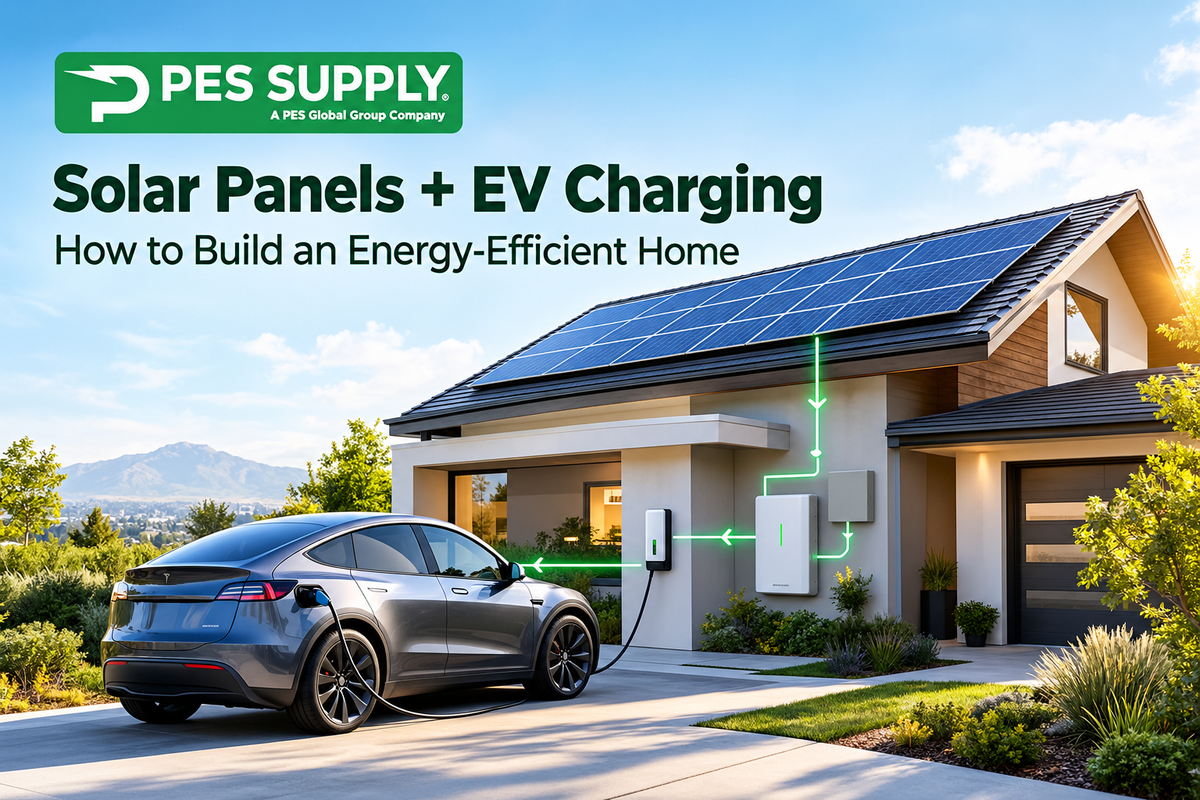
An electric vehicle is, from a home electrical standpoint, one of the largest single loads most households will ever add — often larger than central air conditioning. Pairing that load with solar panels means a homeowner can potentially drive on electricity generated from their own roof rather than the grid, turning what would otherwise be a meaningful increase in the utility bill into a wash or even a net savings. But getting the pairing right takes more than just adding panels and a charger — it means sizing the solar system correctly, understanding how charging timing interacts with production, and in many cases confirming the home's electrical service can support both loads at once.
This guide covers how much solar an EV actually adds to your energy needs, the charger types and installation considerations involved, how to think about charging timing relative to solar production, and the practical steps to building a home that runs efficiently on both.
⚡ Quick Answer
Charging a typical EV (roughly 30–40 miles of range per day, or about 300–400 kWh per month) adds the equivalent of a second small household's worth of electricity demand. Covering that with solar generally requires 2–4 kW of additional panel capacity beyond what the rest of the home needs. A Level 2 (240V) home charger drawing 30–48 amps is the practical standard for solar-paired charging, since Level 1 (120V) charging is too slow to reliably use midday solar surplus. Most homeowners either size the solar system to cover the EV load annually (relying on grid export credits to offset nighttime charging) or add battery storage and smart charging controls to shift charging directly into solar production hours.
Key Takeaways
- An EV Roughly Doubles Typical Household Electricity Use: a daily commute adds 300–400 kWh/month on top of the average U.S. home's 900–1,000 kWh baseline.
- Level 2 Charging Is the Practical Standard: 240V Level 2 chargers (30–48A) charge fast enough to be useful and pair well with solar production windows; Level 1 (120V) is too slow for most daily-driver households.
- Size Solar for Annual Offset, Not Perfect Real-Time Match: unless you have battery storage, most EV charging happens overnight and relies on net metering credits from midday solar export rather than direct solar-to-car power.
- Panel Capacity Is Often the First Constraint: adding a 40-50A EV circuit to an older 100A or 150A electrical panel can require a panel upgrade or a load management device before the charger can be installed.
- Smart and Scheduled Charging Closes the Gap: charging schedules aligned to solar production hours, or a home energy management system that automatically charges from solar surplus, meaningfully increases the share of EV charging that's directly solar-powered.
- Battery Storage Makes True Solar-to-EV Charging Possible: without a battery, "charging from solar" for an overnight charger is really charging from grid credits earned during the day — a battery is what actually lets stored solar power the car after dark.
- PES Supply: Level 2 EV chargers, solar panels, hybrid inverters, and load management equipment in stock, sized and quoted together for homes adding both solar and EV charging.
In This Guide
- How Much Energy Does an EV Actually Add?
- Charger Types: Level 1 vs Level 2
- Sizing Solar for EV Charging
- Electrical Panel Capacity Considerations
- Charging Timing: Solar Direct vs. Overnight Credits
- The Role of Battery Storage
- Smart Charging and Load Management
- Costs and Incentives
- Putting It All Together: A Sample System
- Frequently Asked Questions
How Much Energy Does an EV Actually Add?
Most EVs use roughly 3–4 miles per kWh of electricity, though this varies by vehicle size and efficiency. A household driving the U.S. average of about 30–40 miles per day therefore uses roughly 8–13 kWh per day for driving, or about 250–400 kWh per month — comparable to adding a second, smaller household's worth of electricity demand on top of the existing home load.
Households with longer commutes, multiple EVs, or larger, less efficient electric trucks and SUVs can see monthly EV charging demand well above 500 kWh. Before sizing anything, it's worth estimating your own actual or expected usage based on typical daily mileage rather than assuming a generic average.
Charger Types: Level 1 vs Level 2
| Charger Type | Voltage / Amperage | Typical Charge Rate | Best For |
|---|---|---|---|
| Level 1 | 120V, 12–16A | ~2–5 miles of range per hour | Low-mileage drivers, backup charging, no electrical work needed |
| Level 2 | 240V, 30–48A | ~20–40 miles of range per hour | Daily drivers, overnight charging, solar-paired systems |
Level 1 charging uses a standard household outlet and requires no dedicated circuit, but it's slow enough that it struggles to fully recharge a typical daily commute overnight, let alone take advantage of a shorter midday solar production window. Level 2 charging requires a dedicated 240V circuit — similar to an electric dryer or range — installed by a licensed electrician, but it charges fast enough to be practical for daily use and to meaningfully draw from solar production during the hours the sun is up.
Sizing Solar for EV Charging
The most straightforward approach is to size solar capacity to cover your annual EV charging load in addition to your existing household usage, using the same peak-sun-hours math used for any solar sizing calculation.
📐 Example: Adding Solar Capacity for an EV
A household driving 35 miles/day at 3.5 miles/kWh uses about 10 kWh/day, or 300 kWh/month, for EV charging.
Additional System Size (kW) = Monthly EV kWh ÷ 30 ÷ Peak Sun Hours × 1.2
At 5 peak sun hours: (300 ÷ 30 ÷ 5) × 1.2 = 2.4 kW of additional solar capacity needed just to offset EV charging — on top of whatever the rest of the home requires.
This is an annual-offset calculation, not a real-time match — it assumes that solar surplus exported during the day earns enough net metering credit to offset the cost of charging at night. Where net metering compensation is weaker (some utilities now pay less for exported solar than they charge for imported grid power), the effective value of this offset is lower than a simple kWh-for-kWh comparison suggests, which is one of the reasons battery storage and smart charging have become more attractive alongside EV adoption.
Electrical Panel Capacity Considerations
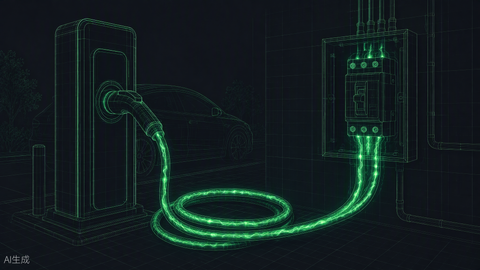
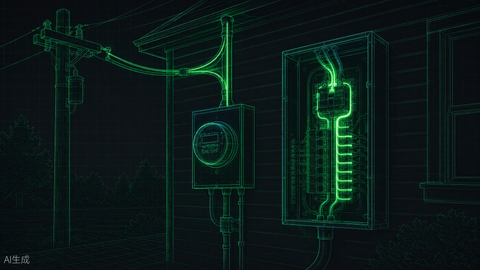
Before ordering a charger, confirm the home's main electrical panel has capacity for the new circuit alongside everything else already installed — including, if applicable, a solar inverter's backfeed breaker. A 40-amp Level 2 charger circuit is a substantial addition to an older 100-amp or 150-amp panel that's already near capacity with existing loads.
- Panel load calculation: a licensed electrician can perform a load calculation per NEC requirements to confirm whether the existing panel has headroom for the new circuit.
- Panel upgrade: if capacity is insufficient, upgrading to a 200-amp (or larger) panel is the traditional solution, though it adds meaningful cost to the project.
- Energy management/load-shedding devices: smart load management devices can allow an EV charger to share circuit capacity with other large loads (like an electric range or dryer) by automatically reducing charging current when other loads are active, sometimes avoiding the need for a full panel upgrade.
Charging Timing: Solar Direct vs. Overnight Credits
There are two fundamentally different ways an EV can be "powered by solar," and it's worth understanding which one a given setup actually achieves.
| Approach | How It Works | Requires |
|---|---|---|
| Direct Solar Charging | Car charges while parked at home during solar production hours (midday), drawing directly from panel output | Being home during the day, or a work schedule with midday charging access |
| Net Metering Offset (Overnight Charging) | Car charges overnight from the grid; daytime solar export earns bill credits that offset the cost | A net metering agreement with reasonable export compensation |
| Battery-Stored Solar Charging | Solar charges a home battery during the day; the battery discharges to the EV charger overnight | Home battery storage sized to cover both household evening load and EV charging |
For most working households, EV charging happens overnight while the car is home and idle, which makes the net metering offset model the default — the car isn't literally running on solar electrons, but the household's net annual electricity purchase reflects the solar offset. Households that work from home, or whose utility has favorable time-of-use rates that reward daytime charging, can shift more charging into the direct-solar window with a scheduled charging setting on the vehicle or charger.
The Role of Battery Storage
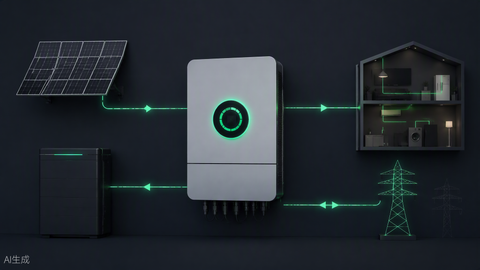
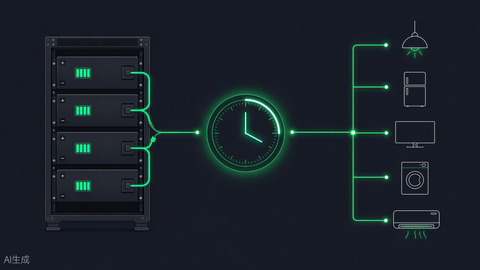
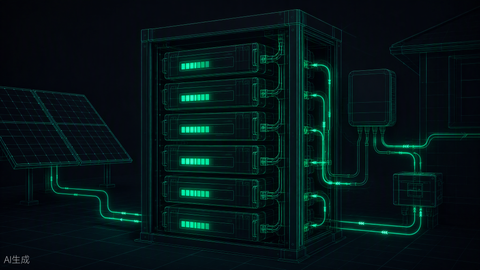
Adding battery storage is what actually closes the loop between daytime solar production and nighttime EV charging without relying on grid net metering credits. A sufficiently sized battery can store midday solar surplus and discharge it to the EV charger in the evening, meaning the car genuinely runs on stored solar power rather than grid electricity offset by an export credit.
This matters most in two situations: utility territories with weak or no net metering (where solar export earns little or no credit, making the overnight-offset model far less attractive), and households that want the resilience benefit of being able to charge an EV even during a grid outage, provided the inverter and battery system are configured to support that load during islanded operation.
Smart Charging and Load Management
Several layers of automation can improve how well EV charging aligns with solar production and household energy goals without requiring the homeowner to manually manage anything day to day:
- Scheduled charging: most EVs and smart chargers allow scheduling charging to specific hours — useful for shifting charging into off-peak utility rate windows or, with a home battery, aligning charging to when stored solar is available.
- Solar-excess charging modes: some smart chargers and home energy management systems can dynamically adjust charging current to consume only the solar surplus currently being produced, effectively following production in real time rather than charging at a fixed rate.
- Utility time-of-use optimization: in territories with steep peak/off-peak rate differences, automated charging scheduled strictly for off-peak hours can produce meaningful savings independent of solar production timing.
- Whole-home energy management integration: higher-end systems coordinate EV charging with battery dispatch, HVAC, and other large loads as part of a single automated strategy rather than treating the EV charger as an isolated circuit.
Costs and Incentives
| Component | Typical Cost Range | Notes |
|---|---|---|
| Level 2 Home Charger (Hardware) | $400–$900 | Varies by amperage, smart features, and brand |
| Charger Installation (Electrician) | $600–$2,000 | Depends on distance from panel, conduit run, and permit requirements |
| Panel Upgrade (If Needed) | $1,500–$4,000 | Only required if existing panel lacks capacity |
| Additional Solar Capacity (2–4 kW) | $4,000–$12,000 | Before incentives; scales with local labor and equipment pricing |
⚠ Check Current EV Charger and Solar Incentives Separately
Federal and state incentive rules for solar, home batteries, and EV chargers have changed independently of each other in recent years and don't always move in sync — a credit that applies to solar equipment doesn't automatically apply to charger hardware or installation labor. Confirm current eligibility for each component separately with a tax advisor or your state's incentive database before assuming a blanket credit applies to the whole project.
Putting It All Together: A Sample System
For a household with typical usage (900 kWh/month) plus one daily-commuter EV (300 kWh/month), a reasonable starting point looks like:
- Solar array: sized to cover 1,200 kWh/month combined household + EV usage — roughly 8–10 kW depending on regional sun hours (see our general solar system sizing calculator for a location-specific estimate).
- Level 2 charger: a 40A smart charger with scheduling capability, installed on a dedicated circuit.
- Electrical panel: confirmed via load calculation to support the combined solar backfeed breaker and EV charging circuit, upgraded if necessary.
- Optional battery storage: 10–15 kWh if the goal is direct solar-to-EV charging rather than relying on net metering credits, or if backup power during outages is a priority.
This is a starting framework, not a one-size-fits-all spec — actual sizing should always be based on your real utility bill history and expected driving patterns rather than these averages alone.
Frequently Asked Questions
How much extra solar do I need for an EV?
Most daily-commuter households need roughly 2–4 kW of additional solar capacity to offset EV charging on an annual basis, depending on driving mileage and local peak sun hours. Longer commutes or larger, less efficient EVs push this higher.
Can I charge my EV directly from solar panels without a battery?
Yes, if the car is parked and charging during daylight hours when solar is actively producing. Without a battery, overnight charging draws from the grid, with daytime solar export earning bill credits that offset the cost rather than powering the car directly.
Do I need to upgrade my electrical panel to add an EV charger?
Not always — it depends on your panel's total capacity and what's already connected. A licensed electrician can perform a load calculation to determine whether your existing panel has headroom for a Level 2 charger circuit, or whether an upgrade or load management device is needed.
Is Level 1 or Level 2 charging better for a solar-paired home?
Level 2 (240V) is generally the better fit. It charges fast enough to meaningfully draw from a midday solar production window and to fully recharge a typical daily commute overnight, while Level 1 (120V) is often too slow to keep up with daily driving needs.
Will adding an EV charger increase my electric bill even with solar?
If your solar system wasn't sized to account for EV charging, yes — the additional load will show up as increased consumption. Sizing the solar system to include EV charging load from the start, or expanding an existing system, is the way to avoid a bill increase from adding a vehicle.
Ready to Size Solar and EV Charging Together?
PES Supply stocks Level 2 EV chargers, Tier 1 solar panels, hybrid inverters, and battery storage — all available on a single quote sized to your household's actual usage and driving patterns. Submit your electric bill and typical daily mileage, and our team will size a complete system.
Get a Free Custom Quote Shop EV ChargersRelated Guides
- Solar + Battery Storage: The Complete 2026 Guide
- Solar System Calculator
- Solar Inverter Buyer's Guide
- Solar Battery Buyer's Guide
- NEC Code Compliance Guide
- EV Charging
- Battery Storage
- Solar Incentives by State
- Request a Quote - Wholesale pricing on solar, storage, and EV charging equipment
About PES Supply
PES Supply is a nationwide distributor of Tier 1 solar panels, commercial inverters, battery storage systems, EV charging hardware, racking, switchgear, circuit breakers, generators, and complete electrical project kits. With 12+ distribution hubs, thousands of in-stock SKUs, NABCEP-certified design support, and a network of 8,500+ solution providers, PES Supply serves homeowners, contractors, and businesses with fast delivery, wholesale pricing, and expert procurement guidance.
Location: 1507 Portland Ave, Louisville, KY, United States | Phone: 1 888-876-0007 | Website: www.portlandiaelectric.supply
Article: Solar Panels + EV Charging: How to Build an Energy-Efficient Home
Category: Solar Energy | EV Charging | Home Energy Efficiency
Last Updated: August 2026
Disclaimer: Cost estimates, sizing guidance, and incentive information in this article reflect general market conditions as of August 2026. Actual costs, panel capacity requirements, and incentive eligibility vary by home, utility, and location. Always consult a licensed electrician and tax advisor before finalizing a system design or purchase.