Once an off-grid or battery-based design outgrows the 60A class, the short list gets short fast. Two names dominate the 100A-class conversation for 48V battery systems: MidNite Solar's Hawke's Bay — built in Arlington, Washington — and Victron's SmartSolar MPPT RS line. They're both excellent. They are not the same tool. Here's the face-off, with prices pulled from the live PES catalog this morning (October 17, 2026).
The contenders
MidNite Hawke's Bay 120A (MNHAWKESBAY120) — $1,319.75 charges a 48V bank at up to 120 amps and accepts a 600VDC PV array — very long series strings, fewer parallel runs, smaller wire, cheaper combiners. It carries full charge-stage management for flooded, AGM, and lithium profiles, and it's made in the USA. Its 90-amp sibling, the MNHAWKESBAY90, is $1,245.88. Both 600V models showed 50 units on hand when we checked this morning.
Victron SmartSolar MPPT RS 450/100-MC4 — $1,241.00 charges at 100 amps from a 450V array. The RS line is Victron's isolated, high-voltage branch of the SmartSolar family — which means it drops straight into the Victron ecosystem: VRM remote monitoring, VE.Can networking, and the same configure-from-your-phone experience installers already know from the smaller SmartSolar units. The terminal-block twin, the 450/100-Tr, lists at $883.70, and if 100A isn't enough the 450/200-MC4 doubles down at $2,173.00.
The price math
Cost per charging amp, computed from today's live prices:
- Hawke's Bay 120A: $1,319.75 ÷ 120A = $11.00 per amp
- Hawke's Bay 90A: $1,245.88 ÷ 90A = $13.84 per amp
- Victron 450/100-MC4: $1,241.00 ÷ 100A = $12.41 per amp
- Victron 450/100-Tr: $883.70 ÷ 100A = $8.84 per amp
- Victron 450/200-MC4: $2,173.00 ÷ 200A = $10.87 per amp
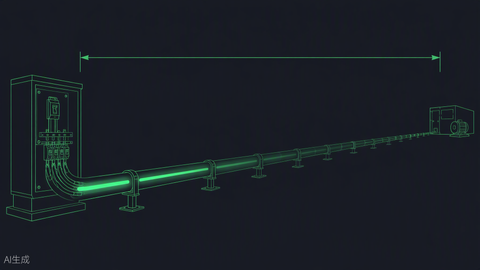
Two things stand out. The 120A Hawke's Bay is the cheapest high-voltage amp in the MC4-terminated class — and the 450/100-Tr undercuts everything if your install is fine with terminal-block wiring. The Hawke's Bay's 600V input rating also beats the RS's 450V ceiling, which matters on long wire runs between a ground array and the power shed: higher string voltage means less current, less copper, and fewer combiner boxes.
Which one for which build
Pick the Hawke's Bay for US-made hardware, domestic service and phone support from the people who designed the board, the highest PV input voltage in the class, and slightly more charging amps per dollar. Off-grid ranches, remote cabins, and designs where a truck roll costs a day — this is MidNite's home turf. Browse the full MidNite Solar line.
Pick the MPPT RS when the system lives in the Victron ecosystem — a Cerbo GX on the wall, VRM alerts on the owner's phone, MultiPlus/Quattro inverters downstream. Mixed-vendor systems work fine, but nothing monitors like an all-Victron stack. See the Victron Energy collection.
Either way, pair the controller with honest surge math on the battery side and the right overcurrent protection — our charge controller collection and the 12V/200W sizing guide cover the smaller end of the same decision tree. Big array, big questions? Send the design to our wholesale desk.
Frequently asked questions
Can I use a 100A controller on a 12V or 24V battery bank?
These high-voltage units are built for 48V banks. On a 48V system, 100A of charge current is over 5 kW of power; on 12V the same amps deliver a quarter of that. If you're on 12/24V, a smaller 30–60A controller is the right tool and far cheaper.
Why does array voltage matter so much?
Power is volts times amps. A 600V string moves the same watts at a fraction of the current of a 150V string — so wire stays smaller, voltage drop stays manageable over long runs, and you need fewer parallel strings and combiners.
Is the Hawke's Bay really made in the USA?
Yes — MidNite Solar builds in Arlington, Washington. The origin claim is on the product listing, and it's one reason parts and service turnaround is fast.
Do these work with lithium batteries?
Both lines support lithium charge profiles (alongside flooded and AGM). Match the profile to your battery's BMS requirements — the battery manufacturer sets the absorption and float targets, the controller follows them.