The Short Answer: Not Alone — You Need a Battery (and Usually an Inverter)
Shop this guide


Can a 200-watt solar panel run a 12-volt system? Yes — and people do it every day in RVs, vans, boats, cabins, and off-grid sheds across the country. But the panel never runs the system directly, and understanding why is the difference between a setup that works for years and one that kills a battery bank in a season.

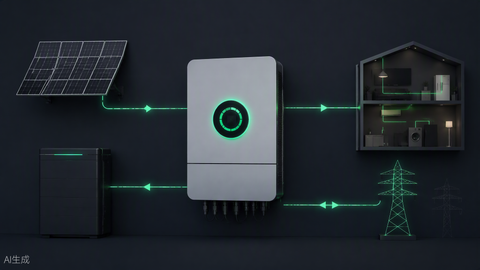
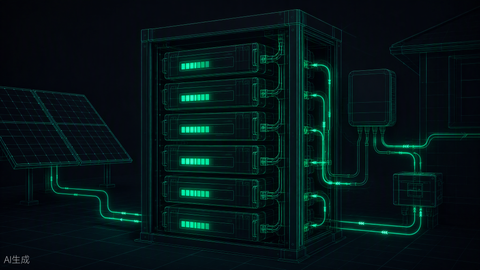
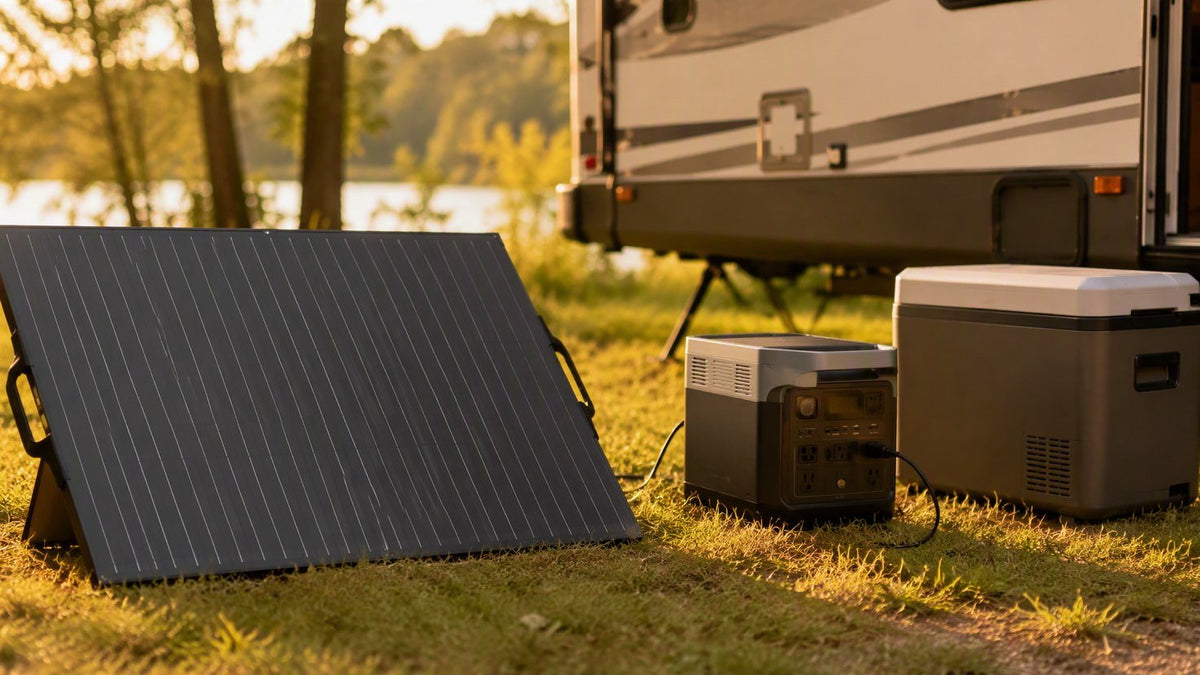
A 200W panel only makes power while the sun shines, and its output swings wildly with clouds, angle, and season. Your 12V loads — the fridge, the lights, the water pump, the CPAP — want power on their own schedule, including at 2 a.m. The battery bank bridges that gap: the panel charges the battery by day, the battery feeds the loads around the clock, and a charge controller sits between them keeping the battery healthy. Panel + controller + battery is the system. The panel alone is just a component. We've helped hundreds of customers size exactly this class of setup, and every failure story started with somebody skipping one of those three pieces.
In this guide
- What a 200W panel actually produces per day, region by region
- What 12V appliances really draw — measured numbers, not nameplate fiction
- How to size the battery and charge controller to match
- Complete worked setups: fridge-only, weekend camper, full van system
- Where 200W is enough, and where you need a second panel
Understanding Wattage, Voltage, and Amp-Hours

Every sizing mistake in 12V solar traces back to confusing three units, so get them straight once. Watts are power — the rate of energy flow at any instant. Watt-hours are energy — power multiplied by time, the thing your battery actually stores and your loads actually consume. Amp-hours are battery capacity expressed in current over time; multiply by system voltage to get watt-hours (12V × 100Ah = 1,200Wh nameplate).
The confusion creeps in because panels are rated in watts, batteries in amp-hours, and fridges in either depending on the manufacturer's mood. Convert everything to watt-hours and the whole system becomes one ledger: the panel deposits, the loads withdraw, the battery holds the balance. A 200W panel producing 850Wh on a decent day, a fridge withdrawing 500Wh, LED lights taking 100Wh — the ledger balances with 250Wh to spare. Do every sizing calculation in watt-hours and the mistakes stop happening. For charging-time math on this exact system class, see our companion piece on charging a 12V 100Ah battery with a 200W panel.
What a 200W Panel Actually Produces Per Day
The nameplate says 200 watts; the sun decides what you get. The math is simple: panel wattage × peak sun hours × system efficiency (use 85% for an MPPT controller and clean wiring). Peak sun hours are the equivalent hours of full-strength sun your location averages — not daylight hours.
| Peak Sun Hours | Daily Energy Production | Typical Location |
|---|---|---|
| 3 hours | 600 watt-hours | Pacific Northwest, UK |
| 4 hours | 800 watt-hours | Midwest, Northeast US |
| 5 hours | 1,000 watt-hours | California, Texas |
| 6 hours | 1,200 watt-hours | Arizona, Nevada |
Apply the 85% efficiency factor and the usable numbers drop to roughly 510, 680, 850, and 1,020 watt-hours respectively. That is your daily energy budget — everything the system runs must fit inside it, with margin for the cloudy days that will absolutely come:
| Peak sun hours | Usable daily energy (85% eff.) | Typical region / season | Runs a small 12V fridge (~500Wh/day)? |
|---|---|---|---|
| 3.0 | ≈ 510 Wh | Pacific Northwest, winter | Barely — no margin for clouds |
| 4.0 | ≈ 680 Wh | Mid-Atlantic, spring/fall | Yes, with modest reserve |
| 5.0 | ≈ 850 Wh | California / Southeast summer | Yes — covers fridge + small extras |
| 6.0 | ≈ 1,020 Wh | Arizona / Southwest | Yes — even a large 12V fridge |
I've run a 200W setup on an Oregon coast trailer through November, and the honest report is this: at 3 sun hours the system keeps a small fridge alive but nothing else, and two consecutive storm days put you on battery reserves. In Arizona the same panel feels oversized. Geography is a component in your system whether you buy it or not.
Power Needs of a 12V Refrigerator and Other Real Loads

The fridge is the anchor load in most 12V systems, and its draw depends on size, insulation, ambient temperature, and how often the lid opens. Modern 12V compressor fridges are impressively efficient — a far cry from the absorption fridges that made RV solar painful a generation ago:
| Refrigerator Size | Running Wattage | Typical Use Case |
|---|---|---|
| Small (20–35 liters) | 40–50 watts | Weekend camping, day trips |
| Medium (35–60 liters) | 50–70 watts | Extended RV trips, van life |
| Large (60–100 liters) | 70–100 watts | Full-time off-grid living |
Energy Use Over Time
Running wattage is only half the story — compressor fridges cycle, typically running 30–50% of the time depending on ambient heat. Daily energy is what drains the battery:
| Running Watts | Hours/Day (effective) | Daily Energy Use |
|---|---|---|
| 40 watts | 10 hours | 400 watt-hours |
| 50 watts | 10 hours | 500 watt-hours |
| 60 watts | 10 hours | 600 watt-hours |
| 80 watts | 10 hours | 800 watt-hours |
Starting Surge Power
One number people forget — and the one that kills more naive designs than any other: starting surge. When the compressor kicks on it pulls 3–7× its running wattage for a fraction of a second. A battery handles this trivially; an undersized inverter feeding an AC fridge may not. This is exactly why the panel-to-load direct connection doesn't work — the panel can't supply surge, and it can't supply anything at night.
Beyond the fridge: the full 12V load menu
Appliance Runtime Off a 100Ah Battery Charged by 200W
| Appliance | Typical draw | Daily energy use | Runtime on 100Ah alone | 200W panel keeps up? |
|---|---|---|---|---|
| 12V compressor fridge (small) | 45W cycling | ~430 Wh | ~2.5 days | ✅ Yes, with reserve |
| 12V compressor fridge (large) | 75W cycling | ~720 Wh | ~1.5 days | ⚠️ Marginal — add a 2nd panel |
| LED lights (4 × 5W, 5 hrs) | 20W | 100 Wh | ~11 days | ✅ Easily |
| Laptop | 60W | 300 Wh (5 hrs) | ~19 hrs runtime | ✅ Yes |
| CPAP machine | 30–60W | 240–480 Wh (8 hrs) | 2–4 nights | ✅ Yes at low settings |
| 12V water pump | 60W intermittent | ~60 Wh (1 hr total) | Weeks | ✅ Easily |
| AC mini-fridge via inverter | 100W cycling + losses | ~900 Wh | ~1.2 days | ❌ Usually not — size up |
The last row deserves emphasis. An AC dorm fridge running through an inverter burns 15–20% of its energy in conversion losses on top of being less efficient than a purpose-built 12V compressor unit in the first place. Customers regularly ask us why their 200W system "can't keep up" with a $90 dorm fridge, and the answer is the fridge, not the solar. A quality 12V compressor fridge is the single best efficiency upgrade in a small off-grid system.
Calculating Your Energy Balance
The whole sizing exercise is one comparison: daily production versus daily consumption. Production side first, then demand, then the verdict:
| Component | Power | Calculation | Daily Energy |
|---|---|---|---|
| Refrigerator Demand | 50 watts | 50W × 10 hours | 500 Wh needed |
| Solar Panel Output | 200 watts | 200W × 5 hours | 1,000 Wh produced |
| Energy Surplus | — | 1,000 − 500 | +500 Wh extra |
That scenario — a modest fridge in a 5-sun-hour climate — works with room for lights and device charging. Now the same fridge class drawing harder in a weaker climate:
Power Your Refrigerator with Confidence
| Component | Power | Calculation | Daily Energy |
|---|---|---|---|
| Refrigerator Demand | 80 watts | 80W × 10 hours | 800 Wh needed |
| Solar Panel Output | 200 watts | 200W × 4 hours | 800 Wh produced |
| Energy Balance | — | 800 − 800 | 0 Wh margin |
Zero margin is a failing grade, not a passing one. Weather, dust, wiring losses, and battery aging all draw against that account, and the first cloudy day puts you in deficit. The rule we size by: production should exceed consumption by at least 30%, and by 50% if you can't tolerate the loads ever going dark. When the numbers don't add up, the fixes are add panel, add battery, cut loads, or change climate — and one of those isn't for sale.
Battery Storage and Its Role

The battery bank does three jobs: it stores daytime production for nighttime loads, it supplies surge currents the panel can't, and it buffers the system through cloudy stretches. Sizing starts from your daily consumption and how many sunless days you want to survive:
| Fridge Power Use | Recommended Battery | Backup Duration |
|---|---|---|
| 40 watts | 100 Ah | 12+ hours |
| 60 watts | 150 Ah | 12+ hours |
| 80 watts | 200 Ah | 12+ hours |
| 100 watts | 250 Ah | 12+ hours |
Why Battery Storage Matters
Chemistry matters as much as capacity. A 12V 100Ah LiFePO4 battery stores about 1,280Wh and lets you use 90% of it — roughly 1,150Wh usable. A 100Ah lead-acid battery stores the same nameplate but should only be discharged to 50%, so 640Wh usable, and it wears out in a fraction of the cycles. In 2026 LiFePO4 is the default choice for any system that cycles daily; lead-acid survives only where upfront cost dominates every other concern. Our battery storage collection and batteries & energy storage catalog carry both, and the 20-80 battery rule explains the charging habits that double LiFePO4 lifespan.
Sizing the Charge Controller for a 200W Panel
The controller's job is to turn the panel's raw output into proper multi-stage battery charging, and its sizing math is one division: 200W ÷ 12V ≈ 16.7 amps. Round up with margin — a 20A controller is the minimum, and a 30A unit costs little more while leaving room for a second panel later. Buy MPPT, not PWM: an MPPT controller converts the panel's higher voltage into additional charging current and extracts 15–30% more energy per day than a PWM unit, especially in cold weather and partial shade. On a system where every watt-hour counts, that difference is the fridge staying cold through a cloudy afternoon.
Panel voltage matters for the wiring: most "12V" panels actually output 18–22V at maximum power, which an MPPT controller happily converts down. Wire the panel to the controller with adequate gauge (10 AWG is comfortable for 200W at 12V over typical RV distances), fuse the battery connection within 7 inches of the positive terminal, and put a disconnect where you can reach it. For a deeper treatment of controller selection, our MPPT vs. PWM guide and charge controller sizing guide cover the full decision tree, and the charge controller collection has current models.
Impact of Sunlight, Weather, and Temperature on Daily Output

Plan your system around the weather table below, not the brochure:
| Weather Condition | Output Level | 200W Panel Produces |
|---|---|---|
| Full sun, clear sky | 100% | ~200 watts |
| Partly cloudy | 50–70% | 100–140 watts |
| Overcast | 10–25% | 20–50 watts |
| Heavy rain/storm | 5–15% | 10–30 watts |
Weather Effects on Production
Temperature cuts the other way than people expect: solar panels produce more voltage in cold weather and lose efficiency as they heat up — roughly 0.3–0.4% per degree Celsius above 25°C cell temperature. A blazing August rooftop panel can run 25% below its nameplate from heat alone. Angle matters just as much: a flat-mounted panel on an RV roof loses 10–20% of annual production versus a properly tilted one, more in winter when the sun rides low. If your mount allows tilt, use it from October through March; that's when the watt-hours are scarcest and the tilt pays best.
Optimizing the System: What Actually Moves the Needle
After the panel, controller, and battery are in, optimization is a short list. Keep the panel clean — a dusted or pollen-filmed panel loses 5–10%, and bird droppings create localized shading that hurts disproportionately. Shade is the silent killer: a shadow across even one cell string can cut panel output by half, so park for the sun, not the view, and trim branches before they cost you amp-hours. Reduce the fridge's workload: pre-chill contents before loading, minimize lid openings, keep ventilation clear around the compressor, and park the fridge away from heat sources. An insulated fridge jacket in hot climates can cut consumption 15%.
Wire losses deserve one sentence — actually two, because this mistake is that common: undersized cables between panel, controller, and battery burn power as heat, and at 12V the amperage is high and the penalty for thin wire is real. Size conductors for under 3% voltage drop at maximum current. We have diagnosed "mysteriously underperforming" systems that were losing 8% of production in a warm cable run. The fix was ten minutes and heavier wire.
Practical Setup Examples

Three configurations cover most of what people build around a 200W panel:
| Fridge Size | Power Use | Battery Size | Solar Panels | Verdict |
|---|---|---|---|---|
| Small | 40–50W | 100 Ah | 1 × 200W | ✓ Excellent match |
| Medium | 60–70W | 150 Ah | 1 × 200W + MPPT | ✓ Good match |
| Large | 80–100W+ | 200+ Ah | 2+ × 200W | ⚠ Needs more solar |
Setup 1 — The weekend cooler keeper. 200W panel, 20A MPPT, 100Ah LiFePO4, small 40W fridge, LED lights, phone charging. Total daily draw ~550Wh; production at 4+ sun hours ~680Wh. This is the classic tailgate-and-campground build, and it works coast to coast from spring through fall.
Setup 2 — The van-life daily driver. 200W panel, 30A MPPT, 200Ah LiFePO4, medium 60W fridge, laptop, lights, fan, water pump. Daily draw runs 900–1,100Wh — beyond one panel in most climates. This is the honest boundary: full-time living wants 300–400W of panel. One 200W panel stretches the battery between drives but doesn't carry the load alone.
Setup 3 — The cabin fridge sentry. 200W panel, MPPT, 200Ah bank, efficient small fridge and nothing else. In a 4-sun-hour climate this holds a fridge indefinitely with days of autonomy in reserve — the battery carries storm stretches while the panel refills at every opportunity, and the oversized bank means deep discharges never happen. Matching one dedicated load to one panel is the most reliable small system there is.
How to Set Up a 200W Panel for a 12V System
The build order matters — batteries first, panel last, and fuses before power. Get the sequence wrong and you'll spend an afternoon wondering why the controller won't wake up; get it right and the whole job takes an hour:
- Mount the panel with a tilt path if your setup allows; south-facing in the northern hemisphere, clear of shadows from vents, racks, and antennas.
- Mount the charge controller as close to the battery as practical, in a ventilated, dry location.
- Wire controller to battery first — fuse the positive within 7 inches of the terminal. The controller needs battery voltage present to initialize correctly.
- Configure the controller for your battery chemistry (LiFePO4 profile: ~14.4V absorption, no equalization) before any solar connects.
- Connect the panel last, and verify charging current on the controller display in full sun — a 200W panel should show 10–15A into a 12V bank via MPPT.
- Connect your loads to the battery through fused circuits or the controller's load terminals, then watch the system through one full day-night cycle before trusting it with the fridge contents.
How Batteries Work With Solar Panels — the Daily Rhythm

The battery's day has three acts. Morning: the sun climbs, the panel's output rises past the loads' draw, and the controller directs the surplus into the battery through bulk charging — maximum safe current while the battery is hungry. Midday: the battery approaches full, the controller tapers into absorption, holding voltage steady while current declines, then floats the bank at maintenance voltage. Evening and night: the panel goes dark, the loads draw entirely from the battery, and the state of charge falls until sunrise resets the cycle.
Understanding this rhythm explains the two golden rules of small solar. First, the battery must be big enough to carry the loads from sunset to sunrise with margin — that's the autonomy calculation. Second, the panel must replace the previous day's total consumption before the next sunset, ideally by early afternoon. A system that reaches float by 1 p.m. is healthy; one that never quite finishes bulk charging is undersized and slowly starving the battery. Watch your controller for a week and it'll tell you which system you own.
Maintaining Battery Health in a 200W System
LiFePO4 batteries are forgiving but not immortal, and small systems stress them in one specific way: chronic undercharging. A battery that ends every day at 70% and never sees a full charge develops imbalance between its cells, and the BMS can't rebalance what it never gets to float. Give the bank a full charge at least weekly — a sunny day with loads minimized, or a plug-in charger when shore power is available. Keep charge current within the battery's rating (0.2–0.5C is the comfortable zone for most LiFePO4), respect low-temperature charging cutoffs (LiFePO4 must not be charged below freezing — quality BMS units block it automatically), and store the bank around 50–60% charge if the system sits unused for a month or more. Our battery life extension guide has the full maintenance protocol.
Seasonal Production Planning

A 200W system that feels generous in July can feel marginal in December, and the difference is geometry: shorter days, lower sun angles, and weather combine to cut winter production to 40–60% of summer in most of the US. Plan with the worst-month number if the system runs year-round. The mitigation toolkit is short and effective: tilt the panel steeply in winter (a steeper angle both captures the low sun and sheds snow), cut discretionary loads from November through February, and let the fridge work less — a 12V fridge in a 40°F garage cycles far less than the same fridge in a 90°F van. Some owners add a folding 100W portable panel as a winter booster, deploying it angled at the morning sun while the roof panel stays flat. Cheap, effective, and it stores flat under the bed the rest of the year.
Troubleshooting an Underperforming 200W System
When a 200W system stops keeping up, the diagnosis follows a fixed order, and we've walked customers through it enough times to know the hit rates. Check the controller display first: what is the panel actually delivering in full sun? If current is near zero, suspect connections — a corroded MC4 connector or a failed inline fuse accounts for more dead systems than dead panels do. If current flows but runs low (under 8A in good sun), look for shading, soiling, or a panel mounted flat when it should tilt. If the panel performs but the battery never fills, the loads grew — something new is drawing power, or the fridge is working harder in hotter weather. And if everything measures fine but runtime collapsed, the battery itself may be tired: lead-acid banks fade noticeably after two to four years of daily cycling, while LiFePO4 banks should still be strong at year five.
One diagnostic everyone skips: measure at the battery, not just at the controller. A system showing healthy charge current at the controller but delivering a volt less at the battery terminals has a wiring or connection problem in between — loose crimp, undersized cable, a fuse holder running hot. Voltage drop under load reveals what voltage at rest hides. Measure before replacing anything. A $30 multimeter has saved more solar systems than any component we've ever sold.
Scaling Up: From 200W to 400W and Beyond

The day will come when 200W isn't enough — the loads grew, the trips got longer, or winter made the decision for you. The upgrade path is graceful if you planned for it: a 30A MPPT controller accepts a second 200W panel wired in parallel (keeping 12V string voltage) without replacing anything else, and the wiring you sized generously on day one carries the doubled current without protest. Series wiring doubles voltage instead — only do this if your controller's input rating allows it; most 30A 12/24V units handle 50–100V input and two 200W panels in series sits comfortably inside that. Beyond 400W, the battery bank usually becomes the next bottleneck: 400W of panel can deliver 25+ amps, and a single 100Ah LiFePO4 battery prefers charge currents under 50A — fine, but autonomy expectations usually grow with production. The pattern repeats at every scale: panel, then controller headroom, then battery. Expand in that order and each dollar lands where it's needed.
Choosing the Right 200W Panel
Not all 200W panels are the same tool. Rigid monocrystalline glass panels are the efficiency and durability king — 20%+ efficiency, 25-year lifespans, hail-rated glass — and the right choice for permanent roof mounts on RVs, cabins, and boats with the deck space. Portable folding panels trade efficiency for deployment flexibility: you park in the shade and put the panel in the sun, which in forested camping is worth more than any spec sheet number. Flexible panels mount flush on curved surfaces but run hot, degrade faster, and should be a last resort rather than a first choice — we see flexible panels needing replacement in three to five years where rigid panels shrug off twenty.
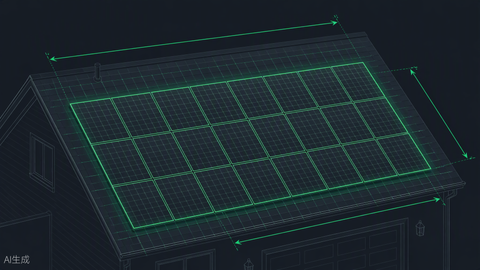
Check two specs beyond wattage. First, the voltage at maximum power (Vmp): a true "12V" panel runs 18–22V Vmp, which any MPPT controller converts cleanly; panels rated much higher are designed for series stringing and pair awkwardly with small 12V controllers. Second, physical size and weight against your mount: a 200W rigid panel runs roughly 58 × 27 inches and 25+ pounds — meaningful sail area on an RV roof. Measure the roof before ordering; roof real estate is the constraint on most vehicles long before budget is.
Inverters in a 12V System: When You Need One

An inverter converts the battery's 12V DC to 120V AC for household-style loads. In a 200W-class system, the honest advice is to avoid needing one: every AC load carries a 10–15% conversion tax plus the inverter's own idle draw (5–15W, which is 120–360Wh per day if left on around the clock — a meaningful slice of a 200W panel's production). Laptop and device charging happens far more efficiently through 12V USB-C PD adapters than through an inverter and wall bricks.
When AC is genuinely needed — a CPAP without a DC option, power tools at a work site, camera chargers with no 12V path — size the inverter honestly. Running watts of the load plus surge headroom, with pure sine wave output for anything containing electronics or a motor; modified sine wave saves money and causes problems. A 300–600W pure sine unit covers most small-system AC needs and idles gently. Wire it with serious conductors (a 600W inverter at 12V pulls 50+ amps — 4 AWG minimum on short runs), fuse at the battery, and turn it off when not in use. The idle draw is a parasite that never sleeps.
Safety and Code Basics for DIY 12V Systems
Twelve volts won't shock you, and that fact makes people careless about the real hazards. The danger in 12V systems is fire, not electrocution: a dead short across a 100Ah battery delivers hundreds of amps instantly, and unfused wiring becomes a heating element. Every positive conductor leaving the battery gets a fuse or breaker within 7 inches of the terminal, sized to protect the wire. That's not a suggestion — it's ABYC and NEC practice, and it's the difference between a tripped fuse and an insurance claim.
Other essentials: size wire for under 3% voltage drop at maximum current (voltage-drop calculators are free online; at 12V the amperage climbs fast), secure conductors against chafe anywhere they pass through panels or bulkheads, vent any compartment housing lead-acid batteries (they off-gas hydrogen when charging — LiFePO4 does not), and bond the negative system ground properly in vehicle installations. Permanent dwellings fall under NEC Article 690 for the PV side; RVs and boats have their own standards bodies but the physics is identical. A tidy, fused, properly-gauged install is the mark of a system that'll still be working in a decade.
Real-World Case: Two Weeks Off-Grid on 200W

Theory meets gravel in a trip report. Last September we outfitted a customer's truck camper for a two-week loop through the intermountain West: one rigid 200W panel on a tilting mount, 30A MPPT, 200Ah LiFePO4, a 45-liter 12V compressor fridge, LED lighting, a vent fan, and device charging. Fourteen days, zero hookups, no generator. The daily ledger: fridge 480Wh (hot afternoons pushed the duty cycle), fan 120Wh, lights and charging 130Wh — call it 730Wh of consumption against production that ranged from 550Wh on a smoke-hazed day in Montana to 1,050Wh in the Utah desert.
The battery absorbed the swings exactly as designed. After the worst two-day stretch — smoke plus rain — the bank bottomed at 31% and recovered to float by the second sunny afternoon. The lessons the customer brought home: tilt mattered more than expected (deploying the tilt legs added a measured 18% on shoulder-season mornings), the fridge's insulation jacket paid for itself in the desert, and the only anxiety came from loads nobody tracked — a laptop left charging overnight, a phone on a 12V adapter running a hotspot all day. Meter everything. The systems that work are the systems their owners can read.
Cost Breakdown: Building the Complete 200W System
Component-level budgeting for a quality build, because "how much does it cost" is always the second question after "will it work": a rigid 200W monocrystalline panel runs $150–$250; a 30A MPPT controller $120–$250 depending on brand and monitoring features; a 100Ah LiFePO4 battery $300–$500 (200Ah doubles that); mounting hardware, wire, fuses, and disconnects $80–$150. A complete fridge-capable system lands at $650–$1,150 for the solar side, plus the fridge itself if you're buying new ($400–$800 for a quality 12V compressor unit). Cheaper paths exist — PWM controllers, lead-acid batteries, flexible panels — and each saves money at the front while costing capacity or lifespan at the back. The LiFePO4-and-MPPT build costs roughly 40% more than the bargain build and delivers close to double the usable daily energy with a service life three to five times longer. In energy delivered per dollar over ten years, it isn't close.
Common Myths About 200W Solar Systems
Five claims we correct weekly. "A 200W panel runs a fridge directly" — no; the battery runs the fridge, the panel runs the battery, and the charge controller referees between them. "You can't solar-power anything in winter" — you can power less, not nothing; tilt and load discipline close most of the gap. "Bigger batteries fix small panels" — they postpone the problem; an undersized panel eventually starves any bank. "PWM is fine, MPPT is marketing" — the 15–30% harvest difference is measured, not marketed, and on a 200W system it's the margin between a working fridge and warm yogurt. And the evergreen: "Solar doesn't work in cloudy climates" — our Pacific Northwest customers would disagree; their systems are sized for 3 sun hours instead of 5, and they work because the sizing matched the climate instead of wishing it otherwise. Every one of these myths persists because it's half-true in the wrong context. Size honestly and none of them apply to you.
200W Solar + 12V Fridge: Quick FAQ
Can a 200 watt solar panel run a refrigerator?
Not by itself. A 200W panel only makes power while the sun shines, and a refrigerator cycles on and off around the clock — including a startup surge of 3–7 times its running wattage. To run a fridge reliably you need the panel plus a battery bank (at least 100Ah of LiFePO4) and, for an AC fridge, an inverter. In that configuration, yes: a 200W setup comfortably runs most small 12V compressor fridges.
How many watt-hours does a 200 watt solar panel produce per day?
Roughly 600–1,000 watt-hours per day depending on peak sun hours. Multiply 200W by your local peak sun hours and a system efficiency of about 85%: 3 sun hours yields about 510Wh, 4 hours about 680Wh, 5 hours about 850Wh, and 6 hours just over 1,000Wh.
How long will a 100Ah battery run a 12V fridge?
A 12V 100Ah LiFePO4 battery stores about 1,280Wh, of which roughly 1,150Wh is usable at 90% depth of discharge. A small 12V fridge drawing 40–60W while cycling about 40% of the time uses 400–600Wh per day, so a full 100Ah battery alone typically carries it 1.5–2.5 days with no solar input — and indefinitely if your 200W panel replaces what the fridge uses each sunny day.
What size charge controller do I need for a 200W panel?
Divide panel watts by system voltage: 200W ÷ 12V ≈ 16.7A, so a 20A controller minimum — though a 30A MPPT unit is the smarter buy for headroom and future expansion. MPPT outperforms PWM by 15–30% in real conditions.
Can I run an AC fridge on a 200W system?
Usually not sustainably. An AC mini-fridge plus inverter losses draws ~900Wh/day, which matches or exceeds one panel's production in most climates before you power anything else. A purpose-built 12V compressor fridge cuts that load by a third to a half and is the correct tool for small solar systems.
Do I need two 200W panels?
Calculating Energy Consumption
Add the second panel when your daily consumption exceeds ~700Wh in a 4-sun-hour climate, when you need meaningful margin through cloudy stretches, or when winter production matters. Panels are the cheapest energy in the system — when in doubt, over-panel the array and let the charge controller manage it.
Power Your 12V System with Confidence
A 200W panel feeding a properly sized battery bank is the most proven small solar system in existence — millions of them are running right now in vehicles and cabins on every continent. Size the battery to the loads, the controller to the panel, and the panel count to the climate, and the system simply works. Browse the components in this guide in our solar panel collection, battery storage, and charge controllers — and for a complete look at scaling beyond 200W, our 12V battery charging guide picks up where this one leaves off.