Last Updated: September 2026 • A Technical Comparison for Installers, Contractors, and System Owners
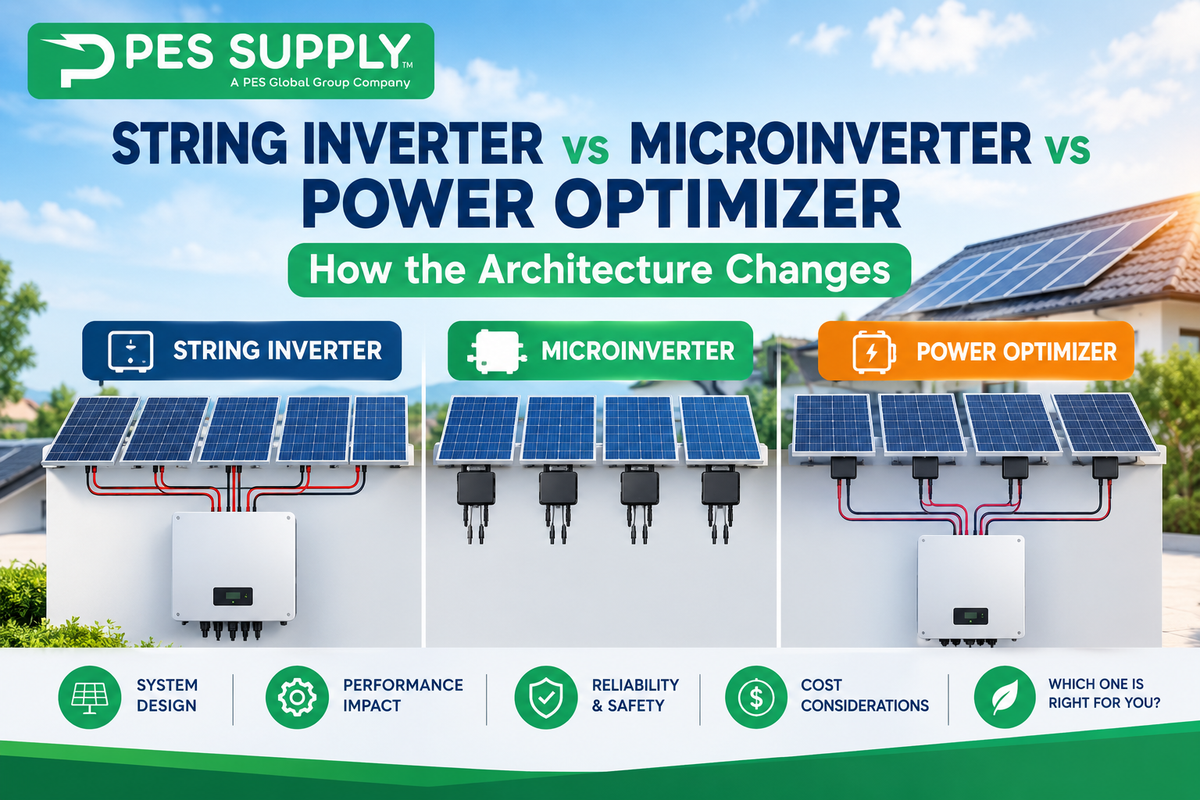
Every grid-tied solar system has to convert DC power from the panels into AC power the home or building can use, and where that conversion happens — and how granularly it's controlled — is one of the most consequential design decisions in the entire system. A string inverter does the conversion once, centrally, for a whole series of panels. A microinverter does it individually, behind every single panel. A power optimizer sits in between: it conditions each panel's DC output individually but still relies on a central string inverter to do the actual DC-to-AC conversion.
These aren't just different products — they're different philosophies about where complexity, cost, and failure risk should live in a system. This guide breaks down how each architecture actually works, where each one wins, and how to decide which fits a given roof, budget, and reliability priority.
⚡ Quick Answer
String inverters are the lowest-cost, simplest architecture and remain the right choice for large, unshaded, uniformly-oriented arrays — typically commercial and utility-scale, and many straightforward residential roofs. Microinverters (led by Enphase) convert power at every panel, eliminating the string inverter as a single point of failure and maximizing output on complex or shaded roofs, at the highest per-watt cost of the three. Power optimizers (led by SolarEdge and Tigo) capture most of microinverters' shading and monitoring benefits while keeping a central string inverter, at a cost point between the other two — Tigo's selective-deployment model in particular lets installers put optimizers only on the shaded modules that need them. There is no universally "best" architecture; the right choice depends on roof complexity, shading, budget, and how much the customer values eliminating a single point of failure.
Key Takeaways
- String Inverters Win on Cost and Simplicity: lowest $/W, fewest components on the roof, and the standard choice for large, uniform, unshaded commercial and utility arrays.
- Microinverters Eliminate the Single Point of Failure: a failed microinverter costs one panel's production; a failed string inverter can zero an entire array until repaired.
- Power Optimizers Split the Difference: module-level optimization and monitoring without replacing the central inverter — a middle cost point with most of the shading-tolerance benefit.
- Shading Tolerance Favors Module-Level Electronics: both microinverters and optimizers let each panel operate independently, so shading on one module doesn't drag down an entire series string the way it can with a basic string inverter.
- Monitoring Granularity Differs by Architecture: microinverters and optimizers both typically provide per-panel monitoring by default; basic string inverter systems often only report string- or array-level production unless additional monitoring hardware is added.
- Rapid Shutdown Compliance Is Achievable With All Three: NEC 690.12 can be met with microinverters (inherently), optimizers (via built-in rapid shutdown function), or string inverters paired with separate rapid shutdown devices.
- PES Supply: string inverters, microinverters, and power optimizers from SMA, Fronius, Sol-Ark, Enphase, SolarEdge, and Tigo Energy — all in stock at contractor pricing.
In This Guide
How String Inverters Work
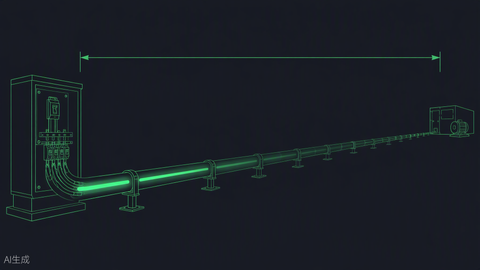
A string inverter connects to a series "string" of panels — commonly 10 to 20+ modules wired in series — and performs maximum power point tracking (MPPT) and DC-to-AC conversion for that entire string at once, usually with a handful of MPPT channels per inverter covering multiple strings. It's the oldest and simplest architecture, with the fewest components exposed to the roof environment and the lowest per-watt equipment cost.
The tradeoff is that MPPT optimization happens at the string level, not the individual panel level. If one panel in a string underperforms — due to shading, soiling, or a developing fault — the entire string's output is constrained to that panel's current-voltage characteristics, a phenomenon sometimes called the "Christmas light effect." Manufacturers like SMA, Fronius, Sol-Ark, and Solis remain the standard names in this category for both residential and commercial-scale string inverters.
How Microinverters Work
A microinverter is a small inverter mounted directly behind (or very near) each individual solar panel, performing DC-to-AC conversion and MPPT right at the module. Rather than one large inverter per string, the system has as many microinverters as panels, with each unit's AC output combined on the roof-level AC wiring before reaching the home's electrical panel.
Because conversion happens at the panel, each module operates completely independently — one shaded, soiled, or failing panel has zero effect on any other panel's output. Enphase is the dominant brand in this category, with its IQ8 series representing the current residential and light-commercial product line.
How Power Optimizers Work
A power optimizer is a DC-to-DC device mounted behind each panel that performs module-level MPPT, "conditioning" each panel's DC output to the best match for the string's electrical conditions — but it doesn't convert DC to AC itself. The conditioned DC power from all the optimizers in a string still runs to a central string inverter, which performs the actual AC conversion for the whole string.
This architecture captures most of the module-level independence and shading tolerance benefit of microinverters, since each panel's output is individually optimized, while keeping a simpler, lower-cost central inverter for the actual power conversion. SolarEdge is the best-known optimizer-plus-inverter ecosystem (a closed system where the SolarEdge inverter and optimizers are designed specifically to work together); Tigo Energy's TS4 line takes a more flexible approach, designed to add to almost any third-party string inverter — including selectively, on only the specific modules that need it.
Side-by-Side Comparison
| Factor | String Inverter | Microinverter | Power Optimizer |
|---|---|---|---|
| DC-to-AC Conversion Location | Central inverter | At each panel | Central inverter (DC conditioning only at panel) |
| Module-Level MPPT | No — string-level only | Yes | Yes |
| Single Point of Failure | Yes — inverter failure can zero the array | No — one unit failure costs one panel | String inverter remains a single point of failure |
| Shading Tolerance | Weakest — shaded panel constrains whole string | Best — each panel fully independent | Strong — each panel optimized independently |
| Per-Panel Monitoring | Not standard — requires add-on hardware | Standard, by default | Standard, by default |
| Typical Equipment Cost | Lowest $/W | Highest $/W | Mid-range; selective deployment (Tigo) can lower this further |
| Roof-Mounted Electronics Count | None beyond panels/racking | One microinverter per panel | One optimizer per panel (or per shaded panel, with Tigo's model) |
| Best Fit | Large, uniform, unshaded commercial/utility arrays | Complex or shaded residential roofs; reliability-focused buyers | Moderate shading; retrofits adding monitoring/RSD to an existing string inverter |
| Representative Brands | SMA, Fronius, Sol-Ark, Solis | Enphase | SolarEdge, Tigo Energy |
Shading Tolerance: Where Architecture Matters Most
Shading is the single factor most likely to push a design away from a basic string inverter. In a series string, panels behave somewhat like old-style Christmas lights — the string's current is constrained by its weakest-performing module. A single shaded panel in an otherwise unshaded string of 15 can meaningfully reduce the output of the entire string, not just that one panel's proportional share.
Both microinverters and power optimizers solve this by letting each panel operate at its own optimal point independent of its neighbors. The practical difference between the two for shading purposes is modest — both recover the vast majority of shading-related losses. The deciding factor between them in a shaded-roof scenario is usually cost and reliability philosophy rather than shading performance specifically, since both architectures handle shading well.
Failure Modes and Reliability
A string inverter failure is a significant event — depending on the system's MPPT channel configuration, it can take down an entire string or the whole array until repaired or replaced, often requiring a truck roll and a part that may need to be ordered. A microinverter failure, by contrast, costs exactly one panel's production until it's addressed — the rest of the array keeps producing normally, and the fault is easy to pinpoint from per-panel monitoring data.
Power optimizer systems sit in between: an optimizer failure typically affects only its panel (similar to a microinverter fault), but the central string inverter itself remains a single point of failure for the whole string or array, just as in a pure string inverter system. For buyers who prioritize eliminating single points of failure above all else, full microinverter deployment is the only architecture of the three that removes this risk entirely.
Cost Comparison
String inverters consistently carry the lowest equipment cost per watt of the three architectures, which is why they remain the default for large commercial and utility-scale projects where the array is uniform and unshaded — the cost of module-level electronics simply isn't justified when there's no shading problem to solve and the array is large enough that a redundant inverter configuration can manage reliability concerns more cost-effectively than per-panel hardware.
Full microinverter deployment carries the highest per-watt cost, since every single panel requires its own conversion hardware. Power optimizer systems land in between — and Tigo's selective-deployment approach in particular allows installers to deploy optimizers only on the specific modules affected by shading, capturing much of the benefit at a cost closer to (though still above) a pure string inverter system.
Rapid Shutdown and Code Compliance
NEC 690.12 requires module-level rapid shutdown for rooftop PV systems, limiting conductor voltage within the array boundary to a safe level within seconds of a shutdown initiation — a requirement meant to protect firefighters and emergency responders. All three architectures can meet this requirement, but the compliance path differs:
- Microinverters comply inherently, since no DC conductors carrying array voltage leave the module in the first place — the system is already AC at the panel.
- Power optimizers typically include a built-in rapid shutdown function (such as SolarEdge's architecture or Tigo's TS4-A-F devices) that drops module output to a safe voltage on command.
- String inverter-only systems require a separate rapid shutdown device or transmitter to meet the requirement, since the base string inverter architecture alone doesn't provide module-level shutdown.
Which Architecture Fits Your Project
Choose a String Inverter If:
- The array is large, uniform in orientation, and unshaded
- The project is commercial or utility-scale, where cost per watt is the dominant driver
- Budget is the primary constraint and shading/reliability concerns are minimal
Choose Microinverters If:
- The roof is complex or broadly shaded
- Eliminating any single point of failure is a priority
- The customer wants per-panel monitoring on every module by default
- Battery-free outage backup (where supported) or AC-coupled storage simplicity matters
Choose Power Optimizers If:
- Shading is present but localized to specific modules (favors Tigo's selective model)
- Per-panel monitoring matters but full microinverter cost isn't justified
- The job is a retrofit adding rapid shutdown and monitoring to an existing string inverter (Tigo)
- A closed, factory-matched inverter-plus-optimizer ecosystem is preferred (SolarEdge)
Not sure which architecture fits your roof? We stock SolarEdge, Tigo Energy, Enphase, and string inverters from Sol-Ark and other major brands — or get a system quote comparing architectures side by side.
Frequently Asked Questions
Are microinverters always better than string inverters?
Not universally — microinverters offer better shading tolerance, reliability, and monitoring, but at a meaningfully higher cost per watt. For large, unshaded, uniformly-oriented commercial and utility-scale arrays, string inverters remain the more cost-effective and widely used choice.
What's the real difference between a power optimizer and a microinverter?
A microinverter converts DC to AC right at the panel; a power optimizer only conditions the panel's DC output, with actual AC conversion still happening at a central string inverter. This means a power optimizer system still has a central inverter as a potential single point of failure, while a microinverter system does not.
Can I mix power optimizers with any string inverter?
It depends on the brand. Tigo's TS4 line is designed to work with most major third-party string inverters (SMA, Fronius, Sol-Ark, and others) via SunSpec or Tigo's own rapid shutdown transmitter. SolarEdge is a closed ecosystem — its optimizers require a SolarEdge inverter and are not compatible with other brands' string inverters.
Do I need module-level electronics if my roof has no shading at all?
Not necessarily. If an array is genuinely unshaded and uniformly oriented, a string inverter captures nearly all the available production without the added cost of module-level electronics. Module-level systems earn their premium primarily through shading recovery, monitoring granularity, and reliability — benefits that matter less on a clean, unshaded roof.
Which architecture is best for a system with battery storage?
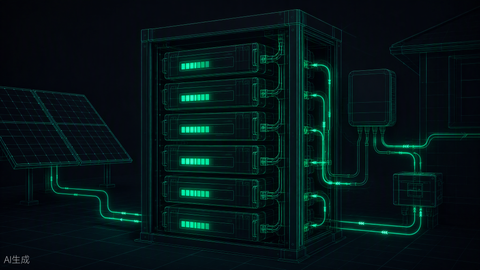
All three can pair with battery storage, but the integration approach differs. Microinverter systems (like Enphase) typically use AC-coupled storage designed for their ecosystem. Hybrid string inverters (common with Sol-Ark and similar brands) often integrate storage directly at the DC side for a single coordinated system. The right choice depends on whether storage is planned from the outset or added later as a retrofit.
Ready to Spec the Right Inverter Architecture?
PES Supply stocks string inverters, microinverters, and power optimizers from all the major brands at contractor pricing. Tell us about the roof — shading, orientation, and scale — and our team can help you compare architectures on the same quote.
Get a Free System Quote Shop All InvertersRelated Guides
- Enphase vs Tigo Energy: Full-Density vs Selective MLPE Deployment
- Enphase vs SolarEdge
- Solar Inverter Buyer's Guide
- Enphase
- SolarEdge
- Tigo Energy
- Sol-Ark Inverters
- Microinverters
- Power Optimizers
- Request a Quote - Wholesale pricing on all inverter architectures
About PES Supply
PES Supply is a nationwide distributor of Tier 1 solar panels, commercial inverters, battery storage systems, EV charging hardware, racking, switchgear, circuit breakers, generators, and complete electrical project kits. With 12+ distribution hubs, thousands of in-stock SKUs, NABCEP-certified design support, and a network of 8,500+ solution providers, PES Supply serves contractors, EPCs, developers, and businesses with fast delivery, wholesale pricing, and expert procurement guidance.
Location: 1507 Portland Ave, Louisville, KY, United States | Phone: 1 888-876-0007 | Website: www.portlandiaelectric.supply
Article: String Inverter vs Microinverter vs Power Optimizer: How the Architecture Changes Your System
Category: Inverters | System Architecture | Product Comparison
Last Updated: September 2026
Disclaimer: Specifications and code references in this guide are based on manufacturer datasheets and NEC 690.12 as of September 2026. Always confirm current datasheet specs and your local AHJ requirements before finalizing a design.