The Safe Harbor Deadline Passed. Here's What Actually Happened.
July 4, 2026 was the commence-construction cliff for the full 30% ITC. A post-mortem on who made it, who didn't, and what the December 31, 2027 placed-in-service window still offers.
July 4, 2026 came and went. If your project didn't commence construction by then, you're not getting the full 30% Investment Tax Credit. You're getting 60% of it — 18% effective — unless you can get the project in service by December 31, 2027. And good luck with that.
We've been watching this deadline for months from the supply side, and the view from a distributor's quote desk is different from the view in the trade press. We saw who panic-bought in March, who got caught by the transformer queue, and who misread "commence construction" entirely. Here's what actually happened in the run-up, and what it means for the projects still in your pipeline.
Under the tax package signed July 4, 2025, solar and wind projects lost the gentle ITC phase-down everyone had modeled. In its place: a hard commence-construction deadline of July 4, 2026 for the full 30% credit, a reduced credit for projects that start later, and one remaining door — full 30% for anything placed in service by December 31, 2027.
| Project Situation | ITC Rate | Conditions |
|---|---|---|
| Commenced construction by July 4, 2026 | 30% | Must satisfy continuity requirements through placed-in-service |
| Commenced after July 4, 2026; placed in service after Dec 31, 2027 | 18% (60% of 30%) | Reduced-credit tier under the new schedule |
| Commenced after July 4, 2026; placed in service by Dec 31, 2027 | 30% | Full credit preserved via the placed-in-service exception |
| Commenced by July 4, 2026 but continuity lapses | At risk | IRS continuity safe harbor is four years; facts-and-circumstances beyond that |
"Commence construction" is a term of art, and the two IRS tests mattered enormously this spring. Under the Physical Work Test, work of a significant nature must begin — for solar, that typically means racking posts torqued, trenches cut, or module mounting started on site. Under the Five Percent Safe Harbor, the taxpayer must incur at least 5% of total project cost — usually by taking title to equipment. Most of our safe-harbor customers used the 5% test, which is precisely why module and inverter procurement went vertical in Q1 2026.
| Safe Harbor Test | What Counts | What Doesn't | Where Projects Failed |
|---|---|---|---|
| Physical Work Test | Site work of a significant nature: racking installation, foundation pours, trenching | Permitting, engineering drawings, site clearing alone | Developers who assumed a signed permit "started" construction |
| 5% Cost Safe Harbor | Taking title or delivery of equipment ≥5% of total cost | Deposits without title transfer; equipment not specific to the project | POs signed but title never passed before July 4 |
| Continuity requirement (both tests) | Continuous construction or continuous efforts toward completion | Long procurement gaps with no documented activity | 18-month waits for transformers with no interim work |
The developers who safe harbored successfully had three things in common:
- They started early. The smart money broke ground in Q1 or Q2 2025. By the time the tax bill passed in July 2025, they were already under construction. The July 4, 2026 deadline was always going to be a scramble for latecomers.
- They had their equipment procured. Safe harboring requires "continuous construction" or "continuous efforts." You can't commence construction and then wait 18 months for modules. The developers who made it had purchase orders signed and deposits paid before the deadline.
- They weren't relying on transformers. Utility-scale transformer lead times are currently 18–24 months. If your project needed a new transformer and you hadn't ordered it by early 2025, you weren't going to make the July 4 deadline regardless of what else you had in place.
We talked to four developers in June who were "pretty sure" they could make the deadline. Two of them didn't. The reasons were predictable:
- Interconnection delays: One developer had a fully permitted project but couldn't get the interconnection agreement signed by July 4. The queue at his utility was 14 months.
- Module delivery delays: Another had a signed PPA and financing, but his module shipment from Southeast Asia got delayed at customs. The modules arrived July 12. Too late.
- Financing fell through: A third had everything ready except the tax equity partner, who pulled out at the last minute over FEOC uncertainty.
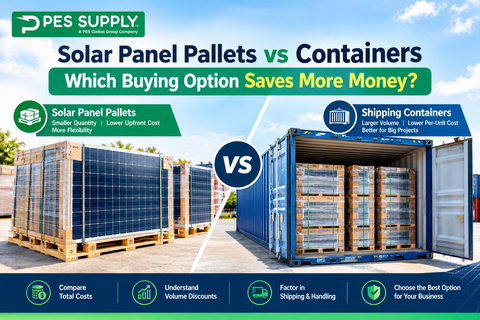
I've had that customs-delay phone call twice in my career, and it never gets easier. A project with $40 million of financing lined up, dead over a container sitting at the Port of Long Beach for eleven days. That is why we now tell every developer the same thing: take title early, take delivery stateside, and don't let your safe harbor ride on a vessel schedule.
For projects commencing construction after July 4, 2026, the ITC drops to 18% (60% of 30%). That changes project economics significantly, and the table below is the version our customers' finance teams are actually running:
| 100 MW Project Line Item | At 30% ITC | At 18% ITC |
|---|---|---|
| Installed cost (at $1.00/W) | $100M | $100M |
| Tax equity raised against credit | $30M | $18M |
| Capital gap to fill | — | $12M |
| Gap per watt | — | $0.12/W |
| Likely outcome | Financeable | Higher PPA price, thinner developer margin, or shelved |
A 100 MW project that needed $30M in tax equity at 30% ITC now needs $18M. The $12M gap has to come from somewhere — usually higher PPA prices or lower developer returns. Projects that were marginal at 30% are likely dead at 18%; we've already seen two projects in our own pipeline get shelved for exactly this reason. Projects with strong offtakers — corporate PPAs, municipal contracts — can absorb the hit. Projects selling into merchant markets probably can't.
There is a narrow door still open. If your project is placed in service by December 31, 2027, you can still claim the full 30% ITC even if you didn't commence construction by July 4, 2026. But "placed in service" means fully operational, interconnected, and generating. For a utility-scale solar project, that's a 12–18 month timeline from groundbreaking — and that's assuming no permitting delays, no interconnection queue issues, and no equipment shortages.
In other words: if you haven't started construction yet and you want the full ITC, you need to be breaking ground in the next 3–6 months. And you need every other piece of the puzzle — permits, interconnection, financing, equipment — already locked. This is where procurement discipline decides outcomes: modules from verified U.S. production lines or stateside warehouse stock, inverters with confirmed delivery slots, and racking that isn't riding the same container ship as your deadline.
From the distributor chair, here's the lead-time picture that decided who made the deadline — and what we're quoting now for Q4 2026/Q1 2027 deliveries:
| Equipment | Lead Time (mid-2026) | Deadline Impact |
|---|---|---|
| Utility power transformers | 18–24 months | Fatal for anyone who ordered after early 2025 |
| MV switchgear | 10–14 months | Killed several Q2 commence-construction plans |
| Modules (imported) | 8–16 weeks plus customs | Manageable, but customs delays burned two projects we know |
| Modules (domestic / U.S. warehouse) | 2–6 weeks from stock | The safe-harbor workhorse of Q2 2026 |
| String & central inverters | 6–12 weeks | Mostly on time; firmware/grid-study paperwork was the slower risk |
| Racking / trackers | 8–14 weeks | Steel tariffs kept prices firm; availability was adequate |
The safe harbor rush created a module buying frenzy in Q2 2026. We moved more megawatts in April–June than in the previous two quarters combined. The post-deadline lull has been noticeable — Q3 orders are down from Q2, though not as much as we expected. Developers who missed the deadline are still buying, but they're being more selective on SKU and more aggressive on price.
Our prediction: Q4 2026 will see a second wave of procurement as developers position for the December 31, 2027 placed-in-service deadline. The projects that start construction in Q4 2026 and Q1 2027 are the ones that can still make it. We're stocking accordingly — deeper on Qcells, Silfab, and other lines with U.S. warehouse availability, plus the transformers and inverters that gate the placed-in-service date.
One more field note: the developers moving fastest right now are the ones who read the tariff calendar alongside the tax calendar. The Section 232 polysilicon tariffs and the December 4, 2026 minimum import price regime hit the same procurement window. A project that safe harbors cheap imported modules in October may pay that discount back at entry in December. Model both calendars or model neither — half-pricing this is how projects go sideways. The credit math that started all of this traces back to the 45X manufacturing buildout, which is also why domestic module supply is deeper now than in any prior crunch.
If you're targeting the December 31, 2027 placed-in-service window, your next 90 days:
- Lock equipment with title transfer now. Warehouse stock beats vessel schedules; confirm certificates of origin for tariff exposure.
- Order long-lead electrical gear this quarter. Transformers and switchgear are the pacing items, not modules.
- Re-run economics at both 18% and 30%. If the project only works at 30%, the placed-in-service date is your whole business case — staff it accordingly.
- Document continuity. If you commenced before July 4, keep the paper trail of continuous efforts alive: invoices, delivery receipts, progress photos, inspection records.
- Check state incentives while you're at it. The state incentive stack is increasingly where marginal projects find their last two points of return.
Nothing explains this deadline like two near-identical projects we supplied this year. Both were 5 MW community solar, both in the same ISO territory, both financed by the same bank. The difference was a calendar.
| Project A | Project B | |
|---|---|---|
| Commence-construction method | 5% safe harbor: took title to modules Q2 2026 | Planned physical work start, August 2026 |
| Module sourcing | U.S. warehouse stock, delivered April 2026 | Imported containers, cleared customs July 12, 2026 |
| ITC outcome | 30% — $4.5M credit on $15M cost | 18% unless in service by Dec 31, 2027 |
| Capital impact | None | $1.8M gap at 18% (12 points × $15M) |
| Financing status | Closed | Tax equity re-traded; PPA reopened |
Project A's developer spent an extra $0.02/W on warehouse stock instead of waiting for the cheapest container price — about $100,000 on 5 MW — and bought certainty with it. Project B saved that $0.02/W on paper and lost twelve points of tax credit chasing it. We watched both closings. Only one of those developers is returning our calls quickly these days.
Underneath the deadline mechanics runs a slower, harder problem: foreign-entity-of-concern restrictions. Tax equity got conservative in Q2 2026 because the FEOC guidance wasn't final, and "conservative" in tax equity means term sheets died over BOM documentation that would have passed a year earlier. The third developer in our June calls didn't miss the deadline because of modules or interconnection — he missed it because his tax equity partner pulled out over FEOC exposure in his supply chain.
The practical takeaway for procurement: origin documentation is no longer a customs exercise. It's a financing document. Certificates of origin, cost breakdowns, and manufacturer attestations now live in the data room next to the PPA. Projects that treat them as afterthoughts will keep discovering that the hard way.
Here's the counterintuitive opportunity. The Q2 frenzy pulled demand forward, which means Q3 and early Q4 2026 are buyer's markets for spot equipment — manufacturers held production plans through the summer and inventory is deep. If your project is safely on the 30% side of the line (or realistically chasing the December 31, 2027 window), this is the best negotiating position buyers have had all year on utility-scale panels and inverters.
The catch is the tariff calendar. The December 4 minimum import price regime closes the cheap-import door at the same time the tax window narrows. The spread between stateside stock and new imports is about to become structural rather than cyclical. Buy the dip while the dip exists — and confirm what you're buying entered the country before you count the savings.
Safe harboring isn't a one-time event — it's a promise. Both commencement tests carry a continuity obligation: once you commence, you must maintain continuous construction (physical work) or continuous efforts (5% test) through placed-in-service. The IRS continuity safe harbor gives you four calendar years from the end of the commencement year. Miss that and you're in facts-and-circumstances territory, where the IRS looks at everything: permitting pauses, supply gaps, financing stalls.
The equipment angle is where continuity bites hardest. A developer who safe harbored with modules in Q2 2026 but can't energize until 2028 because of the transformer queue is exactly who the continuity doctrine was written to stress-test. Our advice to those buyers has been blunt: keep documented activity alive — inspection records, delivery receipts, interconnection milestones, even storage invoices for warehoused equipment. The paper trail is the continuity argument.
Most of this post-mortem is utility-scale, because that's where the drama was. But the residential and commercial rooftop market felt the deadline too — just through different plumbing. Sub-1 MW projects don't safe harbor with gigawatt procurement; they ride the placed-in-service calendar and the residential credit timeline. What changed for them in 2026 was pricing behavior: the Q2 module frenzy tightened residential-format supply for about six weeks, and two national installers we supply shifted to domestic residential panels mid-quarter purely for availability.
For C&I projects in the 1–5 MW band — too small for utility procurement muscle, too big for distributor stock to cover casually — the lesson was the same as the big projects, just cheaper to learn: the timeline lives or dies on long-lead electrical gear and interconnection, and modules are the easy part when you buy from inventory. The ones still chasing December 31, 2027 should be ordering switchgear today and panels next quarter, in that order.
One nuance the headline coverage missed: the reduced credit doesn't hit all revenue models equally. A project with a contracted PPA absorbs the 18% rate as thinner margin. A merchant project — selling into the spot market — takes the reduced credit on top of merchant price risk, and the combination is what kills deals. Of the shelved projects in our pipeline, both were merchant-heavy. If you're evaluating a late-start project, the first diligence question isn't the equipment quote; it's the offtake. Contracted revenue can carry an 18% ITC. Merchant tails, at current forward curves, mostly cannot.
One last observation from the quote desk: the developers who navigated this deadline best shared a habit that had nothing to do with tax law — they made decisions early and in writing. Equipment locked in Q1, financing committed in Q2, interconnection paperwork filed before anyone asked for it. The deadline didn't reward the cleverest structuring; it rewarded the least procrastination. That's the free lesson from July 4, and it applies to every deadline still on the calendar. The window is narrow, the math is unforgiving, and the teams that treat procurement as a financing function — not an afterthought — are the ones still standing. That was true before July 4 and it's twice as true after it.
What was the July 4, 2026 safe harbor deadline?
It was the last day to "commence construction" — under the IRS Physical Work Test or the 5% Cost Safe Harbor — and remain eligible for the full 30% Investment Tax Credit under the tax law signed July 4, 2025. Projects starting later face a reduced 18% credit unless placed in service by December 31, 2027.
Does buying equipment count as commencing construction?
It can, under the 5% Cost Safe Harbor — but only if you actually incur the cost, generally by taking title or delivery of equipment equal to at least 5% of total project cost. A signed PO with a deposit, without title transfer, is not enough.
What happens to projects that commenced by July 4, 2026 but finish slowly?
They must satisfy IRS continuity requirements — continuous construction or continuous efforts. The continuity safe harbor allows four years from commencement to placed-in-service; beyond that, it's a facts-and-circumstances test. Long, undocumented procurement gaps are where projects lose the credit.
Is the 18% rate permanent for late projects?
For projects that commence construction after July 4, 2026 and are placed in service after December 31, 2027, yes — 18% (60% of 30%) is the applicable tier under the new schedule. The placed-in-service exception is the only route back to 30%.
How do the 2026 tariffs interact with safe harbor procurement?
Section 232 minimum import prices take effect December 4, 2026 — $0.38/W on modules and $0.22/W on cells at entry. Modules safe-harbored cheaply in Q3 can lose that discount at customs in Q4. Model the tax credit and the tariff calendar together.
What equipment should I lock first for a 2027 placed-in-service date?
Transformers and medium-voltage switchgear — lead times run 10–24 months and they gate energization. Modules and inverters from U.S. warehouse stock are the fast-moving items; long-lead electrical gear is the schedule risk.
Need Modules With Guaranteed Q4 Delivery?
We have domestic-content and standard modules in U.S. warehouses with confirmed availability — plus the transformers and inverters that gate your placed-in-service date.
Browse In-Stock Solar PanelsRequest a quote or call (502) 790-0600 — we'll hold pricing on in-stock inventory and flag any SKU subject to tariff repricing.