BABA Build America Buy America Compliance Guide for Electrical & Solar Equipment
A distributor's field manual for infrastructure contractors and public agencies: how the Build America Buy America Act's 55% domestic-content test applies to solar modules, inverters, batteries, racking, wire, conduit and switchgear -with sourcing tables, waiver mechanics, and stackable Buy American / Domestic Content ITC bonus rules through 2029.

The Build America, Buy America Act (BABA) is Sections 70911–70917 of the Infrastructure Investment and Jobs Act of 2021. It applies to any federally assisted infrastructure project -grants, cooperative agreements, loans, loan guarantees, insurance, and any other form of federal financial assistance. BABA took effect May 14, 2022, and its OMB-final rule (2 CFR Part 184) has been in effect since October 23, 2023.
Under EPA's official BABA overview, agencies may not obligate funds for an infrastructure project unless all of the iron, steel, manufactured products, and construction materials used in the project are produced in the United States. Three product categories, three separate tests:
- Iron and steel products -All manufacturing processes, from the initial melting stage through the application of coatings, must occur in the United States. This is a "100% domestic" process test with no cost threshold. Per Delaware DNREC guidance, "iron or steel products" means items that consist wholly or predominantly of iron and steel -with "predominantly" defined as the cost of iron and steel content exceeding 50% of the total component cost.
- Manufactured products -Two conjunctive requirements: (1) final manufacture in the United States, and (2) the cost of components mined, produced, or manufactured in the U.S. exceeds 55% of the total cost of all components. That's the 2 CFR 184.5 formula that governs solar modules, inverters, batteries, and virtually every electrical assembly.
- Construction materials -All manufacturing processes for the material must occur in the United States. This category was added specifically to close a loophole where things like non-ferrous piping and lumber weren't clearly assigned. Under the HUD BABA Quick Guide, construction materials include non-ferrous metals (aluminum, copper -critical for electrical), plastic and polymer-based products (PVC conduit, insulation), glass, drywall, lumber, and engineered wood.
The test that trips up 80% of electrical contractors is the second one -the 55% cost-of-components rule for manufactured products. It's not about final assembly location alone. It's about the bill of materials. A solar inverter assembled in Texas from a Chinese IGBT module, Taiwanese capacitors, Mexican housing, and U.S. firmware may fail the 55% test even though it says "Made in USA" on the label. BABA compliance is a cost accounting exercise, not a marketing claim.
Key phase-in dates to know: The general BABA framework has been in force since May 2022. For FHWA-funded highway projects specifically, all manufactured products incorporated into a project must be manufactured in the United States for funding obligated on or after October 1, 2025, and must meet BABA's 55% cost-of-components test for funds obligated after October 1, 2026. Contractors bidding infrastructure work in 2026 and later should assume both prongs apply.
PES field note: BABA is separate from the Federal Acquisition Regulation's Buy American Act (FAR 52.225-1), and separate from the Inflation Reduction Act's Domestic Content Bonus Credit. A single solar project can trigger all three. See the compliance matrix in section 6 below.
BABA applies to infrastructure projects that receive federal financial assistance. The statute defines "infrastructure" broadly and the OMB final rule expands it further. The Blue Green Alliance BABA user guide inventories the covered project categories agencies have designated:
- Roads, highways, bridges, transit, rail, ports, airports
- Water and wastewater systems (drinking water, stormwater, sewer, treatment plants)
- Electricity generation, transmission, and distribution -including utility-scale and community solar, energy storage, EV charging infrastructure, microgrids, and grid modernization
- Broadband and cybersecurity infrastructure
- Buildings and structures paid for with federal funds (K-12 schools, community centers, hospitals receiving USDA rural loans, public housing rehabilitation)
- Environmental remediation infrastructure (drainage, resilience, brownfield redevelopment)
Federal programs that flow BABA down to contractors include:
| Agency | Program | Common uses for electrical contractors |
|---|---|---|
| USDA Rural Development | REAP, ReConnect, WEP, RES | Rural solar, backup power at coops, ag electrification |
| DOE | Grid Resilience & Innovation Partnerships (GRIP), SEP, EECBG | Utility grid work, municipal solar+storage, school retrofits |
| EPA | Solar for All, GGRF, WIFIA, DWSRF, CWSRF | Community solar, water treatment plant electrification |
| HUD | CDBG, CDBG-DR, HOME, Section 108 | Public housing solar/battery, disaster recovery generation |
| FHWA / FTA | NEVI, CFI, formula and discretionary grants | EV charging deployment, transit facility power |
| DOT | PIDP, RAISE, MPDG, INFRA | Port electrification, airport power, freight corridors |
| Reclamation / Corps | BIL Sec. 40103, WIFIA | Dam electrification, pumping station retrofits |
What BABA does not cover:
- Federal direct procurement contracts governed by FAR -those follow Buy American Act (FAR 52.225-1), not BABA
- Purely private commercial projects with no federal financial assistance
- Investment Tax Credit (ITC) claims -the IRA §45/§48 Domestic Content Bonus is a separate framework with different cost tests (see section 6)
- De minimis miscellaneous minor components under agency-specific tolerances
- Projects with an approved waiver (public interest, non-availability, or unreasonable cost -see section 5)
Bottom line: if federal money is flowing to the project's infrastructure line items -even indirectly, even as a partial match -assume BABA applies until a written waiver or explicit exemption says otherwise.
This is the section every superintendent, purchasing manager and estimator needs to internalize. Per 2 CFR 184.5 and the USDA manufacturer FAQ, a manufactured product is "produced in the United States" only if two conditions are met simultaneously:
- The final product is manufactured in the United States, and
- The cost of components mined, produced, or manufactured in the United States exceeds 55% of the total cost of all components of the manufactured product.
Per ConsensusDocs' guidance on the OMB final rule, determining domestic status is a four-step process:
- Determine the components manufactured in the United States.
- Determine the cost of those components manufactured in the United States.
- Determine the cost of all components.
- Divide the cost determined in step 2 by the cost determined in step 3. If the fraction exceeds 55%, the manufactured product complies.
Here is what that math looks like for a hypothetical 5 kW hybrid inverter assembled in Texas. Numbers are illustrative but proportional to real BOMs we see from residential and light commercial inverter OEMs.
| Component | Country of origin | Cost ($) | Domestic? |
|---|---|---|---|
| Enclosure (steel + coatings) | USA (Texas) | 85 | Yes |
| Aluminum heat sink | USA (Ohio) | 62 | Yes |
| Toroidal transformer | USA (Pennsylvania) | 145 | Yes |
| DSP control board (assembled) | USA (Texas) | 110 | Yes |
| IGBT power modules | Germany | 140 | No |
| DC film capacitors | Taiwan | 48 | No |
| AC output contactors | Mexico | 36 | No |
| Fans, connectors, misc. | China | 29 | No |
| Total component cost | 655 | ||
| Domestic component cost | 402 | ||
| Domestic ratio | 402 / 655 = 61.4% -PASSES BABA | ||
Swap the U.S. toroidal transformer for a Chinese one (typical $85 landed vs. $145 domestic) and the same product fails: 257 / 595 = 43.2%. The takeaway is that a single high-cost component sourcing decision -transformer, DSP board, or heat sink for inverters; cell/wafer/glass for modules; steel racking components -determines pass/fail. Contractors who force their OEMs to publish per-project BABA declarations avoid the mid-project rejection surprise.
What counts as a "component." Per 2 CFR 184.5, components are the constituent parts that are physically incorporated into the manufactured product. Sub-components (parts of components) are not analyzed. If a domestically assembled inverter uses a domestically manufactured DSP control board, the DSP board counts as a domestic component even if some of the surface-mount ICs on that board were foreign -as long as the board itself qualifies as manufactured in the U.S. This "component vs. sub-component" line is where OEMs earn their BABA declarations.
Per CBH's compliance analysis, the domestic content threshold is scheduled to escalate under some agency implementations -potentially climbing to 65% and then 75% by 2029. Contractors bidding multi-year projects should confirm the applicable threshold with the awarding agency and lock that number into subcontractor flowdowns.
PES stocks BABA-compliant and BABA-adjacent product lines across every layer of a federally funded solar or grid project. Here's how each category maps to the three BABA tests.
Solar modules (manufactured products)
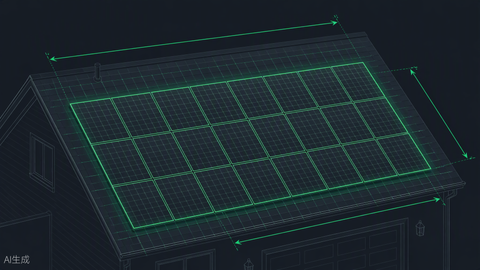
Modules are manufactured products. The final-assembly test is straightforward -the module must be laminated in a U.S. plant. The 55% component-cost test is where it gets granular. Cells, wafers, glass, backsheet, junction box, frame, and encapsulant are all components. Because most U.S. module assembly still imports cells or wafers, the domestic content ratio for a U.S.-assembled module built with imported cells lands in the 30–45% range on cost -below the BABA threshold. Contractors need modules whose OEM has moved cell or wafer production onshore. Vendors we stock with U.S. cell or wafer manufacturing pathways include Silfab (U.S. assembled from onshore cells for its ELITE line), First Solar (fully domestic thin-film), and select Solarever USA SKUs. Ask for the module-level BABA declaration on OEM letterhead before submitting a bid.
Inverters (manufactured products)
Same test as modules. Assembly plus 55% domestic components. String inverters, microinverters, hybrid inverters, and central inverters all fall in the same regulatory bucket. Sol-Ark assembles in Texas; OutBack Power (a PES stocking brand) assembles in Arlington, Washington; MidNite Solar assembles in Idaho; Enphase does significant U.S. assembly of microinverters. Domestic content ratios vary by SKU -always request the declaration.
Battery cells and packs (manufactured products)
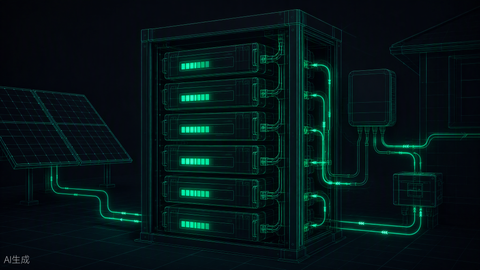
Lithium cells are the dominant cost driver in an ESS. Cell-of-origin is where BABA compliance lives or dies. Domestic cell production is growing but not yet dominant -cells manufactured in Asia and assembled into U.S. packs will fail the 55% test unless the pack integrator has extremely high-value domestic BMS, enclosure, and cabling components. This is a category where contractors should insist on cell-level provenance letters.
Racking and mounting (iron/steel products)
Rails, clamps, brackets, and post structures are almost always iron/steel products under BABA. Because iron/steel is a process test with no cost fraction, compliance is simpler: every manufacturing process from initial melting through coatings must occur in the U.S. IronRidge (California), Unirac (New Mexico), and K2 Systems (some U.S. lines) manufacture domestically. S-5! Metal Roof Innovations manufactures in Colorado. Non-U.S.-melted steel disqualifies the racking regardless of assembly location.
Wire, cable, and conduit (construction materials)
Copper wire, aluminum feeders, PV wire, THHN/THWN building wire, and MC cable are typically construction materials -the manufacturing-process test applies. Non-ferrous metal drawing must happen in the U.S. Southwire, Encore, and Cerro Wire have domestic manufacturing. Rigid steel conduit is an iron/steel product (melt-through-coatings in U.S.). PVC and HDPE conduit are construction materials (all manufacturing processes in U.S.).
Switchgear, panelboards, transformers, disconnects (manufactured products)
These assemblies are manufactured products subject to the 55% test. Domestic assembly is common for major OEMs (Schneider Electric, Eaton, ABB, Siemens, Square D), but component ratios vary widely by SKU family. Request the domestic content declaration by catalog number, not by brand.
Small parts and hardware (mixed categories)
Bolts, nuts, washers, cable ties, wire nuts, terminals -these get treated variably by agency. HUD, EPA, and USDA sometimes issue product-specific waivers or de minimis policies. Always check the agency's public interest waiver docket before assuming a small-parts exemption exists.
For our full BABA-declaration matrix by SKU, contractors should register for the PES Axis distributor portal -declarations are attached to product records and pulled into BABA-project quotes automatically.
BABA is not absolute. Per the DOE BABA compliance discussion, agencies may waive the requirement under three grounds:
- Public interest waiver -Applying the requirement would be inconsistent with the public interest. Rare for standard commodities; more common for research equipment, humanitarian projects, and disaster recovery on tight timelines.
- Non-availability waiver -Iron, steel, manufactured products, or construction materials are not produced in the U.S. in sufficient and reasonably available quantities or of a satisfactory quality. Common for specialty items (certain grades of transformer steel, specific microelectronic components, some inverter subassemblies during supply disruptions).
- Unreasonable cost waiver -Including domestic content would increase the cost of the overall project by more than 25%. This is a project-level test, not a line-item test.
Waiver process -Waivers are requested by the awarding agency (not by the contractor directly), posted for public comment on MadeInAmerica.gov, and finalized after Made in America Office review. General applicability waivers exist for entire product categories or programs; project-specific waivers apply to a single award.
Contractors bidding a job where they know a critical BABA-non-compliant component is unavoidable should raise the issue with the awarding agency during the pre-bid period, not after award. Post-award waiver requests slow projects by 60–120 days routinely, and some agencies (notably DOE) require documented evidence of a domestic supplier search before granting non-availability relief.
Do not confuse general applicability waivers with de minimis rules. Agencies like HUD's Community Planning and Development office have narrow de minimis policies (typically 5% of total project cost for miscellaneous materials). These are exceptions carved out in the compliance framework, not blanket exemptions. Read the agency implementation guidance for the specific program funding your project.
Three regulatory frameworks touch domestic-content in electrical and solar work, and they get confused constantly. Here's how to tell them apart.
| BABA | Buy American Act (FAR) | IRA Domestic Content Bonus | |
|---|---|---|---|
| Statute / rule | IIJA §70914; 2 CFR 184 | 41 U.S.C. Ch. 83; FAR 52.225-1 | IRC §45(b)(9) and §48(a)(12); IRS Notice 2023-38, 2024-41 |
| Applies to | Federally assisted infrastructure projects | Federal direct-procurement contracts for supplies | Solar, wind, storage projects claiming enhanced ITC/PTC |
| Test type | 3-part: iron/steel process, mfg. product 55% cost, construction material process | Component cost test: 60%/65%/75% escalator | Manufactured product cost fractions + steel/iron process; "Applicable Percentage" (40% projects starting pre-2025, 45% for projects starting 2025, 50% for 2026) |
| Waiver mechanism | Agency waivers (public interest, non-availability, unreasonable cost) | Trade agreements exception; nonavailability; unreasonable cost; commercial off-the-shelf carve-out | None. Meet the threshold or forfeit the 10-percentage-point bonus. |
| Enforced against | Grant recipient (flowed to contractor) | Prime contractor | Taxpayer claiming credit |
| Consequences of failure | Cost disallowance, potential FCA exposure | Bid rejection or contract cost adjustment | Loss of 10-point ITC adder |
Practical stacking: A community solar project funded by EPA's Solar for All program that also plans to monetize the IRA §48 ITC will simultaneously trigger BABA and the Domestic Content Bonus. Contractors need to satisfy both frameworks -which have different math. The IRA rules use a manufactured-product cost fraction plus a separate steel/iron process test; BABA uses the 55% test for manufactured products. A project can pass BABA and fail the Domestic Content bonus, or vice versa. Track both.
Federal direct procurement (e.g., a General Services Administration Schedule buy or a DoD supply contract for facility upgrades) does not trigger BABA -it triggers the Buy American Act. If you are selling electrical equipment to a federal agency directly, follow FAR 52.225-1. If you are installing the same equipment on a federally assisted state or municipal infrastructure project, follow BABA. Two different frameworks, two different declarations, one confused specifier if you don't correct them upfront.
For contractors selling through PES to federal agencies directly, see our companion guide, Federal Contractor Buy-American Electrical Requirements.
-
1
Read the funding source, not just the specification
Every RFP funded by federal financial assistance must state the funding source and BABA applicability. Search the solicitation for 'Build America', 'BABA', '2 CFR 184', 'domestic content preference'. If any of those appear, treat every material submittal as a BABA declaration exercise.
-
2
Extract the BOM early and categorize each line
Every item on the bill of materials is either (a) iron/steel product, (b) manufactured product, or (c) construction material. Categorize each line before pricing. The three categories have three different tests -mis-categorization is the #1 cause of late-stage rejections.
-
3
Request BABA declarations by SKU, not by brand
Ask each OEM for a signed BABA declaration referencing the specific catalog number, the 2 CFR 184.5 test, and the domestic content ratio. A generic 'Made in USA' brochure page is not a declaration. PES maintains a BABA declaration library in Axis portal for stocked SKUs.
-
4
Flag missing declarations and pursue substitutions or waivers early
For any line item where no BABA-compliant option exists at the required specification, raise a substitution request or waiver inquiry with the specifying engineer during the RFI period. Late substitution requests get rejected.
-
5
Bake domestic-content premium into the bid
Domestic content typically carries a 10–35% cost premium over the imported equivalent, varying by category. Model it explicitly in the bid, don't absorb it as project risk. On multi-million-dollar projects, unbudgeted domestic premium can wipe out the entire margin line.
-
6
Preserve documentation for the audit trail
Store the OEM declaration, mill test reports for iron/steel, and country-of-origin certifications for construction materials in the project file. Audits happen post-completion, sometimes years later. Missing documents equal disallowed costs.
-
7
Flow BABA down to subcontractors in the sub-agreement
BABA obligations flow down. Every subcontract must incorporate the domestic-content requirement, and the prime is responsible for sub compliance. Use standard flow-down language from FAR 52.244-6 as a starting point and add the specific BABA clause the awarding agency requires.
-
8
Manage change orders as new BABA exposures
Every change order that adds new materials is a new BABA question. Don't ambush yourself mid-project by ordering non-compliant materials because 'the CO didn't say BABA' -if the base contract triggers BABA, changes generally do too.
- Confusing "Made in USA" marketing with BABA compliance. The FTC standard for "Made in USA" is all or virtually all -different from BABA's 55% cost-of-components test. A product can meet BABA without meeting FTC's "Made in USA" and vice versa. PES cross-references both claims and only publishes BABA declarations that reference 2 CFR 184.5 or FAR 52.225-1 explicitly.
- Assuming a domestic-assembly certificate is enough. Assembly location alone doesn't satisfy the 55% component-cost test. Contractors who submit an assembly certificate as their BABA proof get bounced. PES declarations always cite the domestic content ratio and the components counted.
- Missing the iron/steel process test on racking. "Made in USA" rails whose steel was melted in Vietnam fail BABA. We verify the melt-through-coatings chain for every stocking iron/steel SKU and store mill test reports in the Axis portal.
- Overlooking construction materials. PVC conduit, wire insulation, aluminum bus bar -these are construction materials with a manufacturing-process test. Contractors sometimes treat them as consumables and skip the check. Every construction material line on a BABA project needs a certificate of origin.
- Not flowing BABA down to subcontractors. When the mechanical sub buys a rooftop unit without the BABA lens, the prime absorbs the disallowance. PES's project intake form captures which subs will be sourcing which materials so the flow-down clauses are baked into every sub-agreement.
- Waiting until closeout to assemble the documentation. Auditors want file-by-file traceability. Every material shipment on a BABA project needs the OEM declaration, packing slip with lot number, and delivery ticket linked together. PES ships BABA-project orders with a pre-assembled documentation packet.
| Category | Vendor | Domestic pathway | Common SKU family | Declaration on file |
|---|---|---|---|---|
| Solar module (crystalline) | Silfab Solar | US-assembled, ELITE line uses domestic cells | Silfab Elite 440W N-Type TOPCon | By SKU on request |
| Solar module (bifacial) | Solarever USA | US-assembled bifacial | Solarever HC 108M 410W BoB Mono | Yes |
| String / hybrid inverter | Sol-Ark | Texas assembly | Sol-Ark 15K, 12K, 8K, 5K | By SKU |
| Off-grid inverter | OutBack Power | Arlington, WA assembly | FLEXpower ONE, Radian | Yes |
| Off-grid inverter / charge controller | MidNite Solar | Idaho assembly | MidNite Classic 200, MNPV combiners | Yes |
| Racking (rooftop) | IronRidge | US steel & aluminum, California mfg. | XR100, XR1000, FlashFoot 2 | Yes |
| Racking (rooftop) | Unirac | New Mexico mfg. | SolarMount, RM DT | Yes |
| Metal-roof attachment | S-5! | Colorado mfg. | S-5! clamps, PVKIT 2.0 | Yes |
| Ground-mount racking | IronRidge | US steel | GameChange (adapters), IronRidge post-and-rail | By SKU |
| Battery (LFP) | Fortress Power | US pack assembly | Avalon HV Pro, eFlex, eVault Max | By SKU (cell of origin varies) |
| Battery (LFP legacy) | Discover Battery | US operations | AES 48V LiFePO4 | By SKU |
| PV wire / MC / building wire | Southwire (via PES) | US mfg. | PV Wire, THHN, MC Cable | By reel with mill cert |
| Combiner / disconnect | MidNite Solar / OutBack | US assembly | MNPV6-HV, FLEXware ICS Plus | Yes |
The most common estimator mistake is treating BABA compliance as a paperwork exercise with zero cost impact. It isn't. Domestic content carries a premium in most categories, and lead times run longer for BABA-compliant SKUs. Here's what to budget.
| Category | Typical BABA premium vs. non-compliant equivalent | Typical lead time delta |
|---|---|---|
| Solar modules (crystalline) | +18–35% | +4–12 weeks for high-demand SKUs |
| String / hybrid inverters | +12–22% | +2–6 weeks |
| Battery ESS (residential-scale) | +15–30% | +6–14 weeks; cell-of-origin drives everything |
| Racking (rooftop) | +8–15% | +1–3 weeks |
| Ground-mount posts and rails | +10–20% | +3–6 weeks |
| Wire and cable | +5–12% | +1–4 weeks on large reel orders |
| Switchgear, panelboards | +8–20% | +6–20 weeks (all switchgear is long lead) |
| PVC conduit / fittings | +3–8% | +1–2 weeks |
Contractors bidding fixed-price BABA-covered work should build a domestic content contingency of 8–15% of the equipment line, on top of normal contingency. Lead times matter as much as cost -losing a critical-path inverter delivery to a foreign-content-only stock position kills schedules on public-agency jobs where liquidated damages can hit $2,500–$10,000 per day.
PES's freight calculator models pallet freight from Louisville, Portland, and our satellite yards for BABA-tagged pallets. The lead time estimator models BABA-compliant SKU lead times against non-compliant equivalents so estimators can quantify the delta before bid submission.
Every BABA project audit -whether by the awarding agency, the DOE Inspector General, or the OMB Made in America Office -asks for the same documentation packet. Assemble it as you build, not at the end.
| Document | What it proves | Where to get it |
|---|---|---|
| OEM BABA declaration by SKU | Manufactured-product 55% test satisfied | OEM on letterhead, referencing 2 CFR 184.5 |
| Mill test report (MTR) | Iron/steel melt & manufacture in U.S. | Steel mill, provided with each shipment |
| Certificate of origin (construction materials) | Manufacturing-process test satisfied | Manufacturer, per shipment |
| Packing slip with lot number | Ties physical delivery to declaration | Distributor (PES) at delivery |
| Invoice cross-referenced to declaration | Audit trail from payment to product | Distributor accounts receivable file |
| Subcontract BABA flow-down clause | Prime flowed obligation to subs | Executed sub-agreement |
| Sub-tier declaration (as applicable) | Subcontractor materials also compliant | Sub, at material delivery |
| Waiver approval, if any | Legitimate deviation authorized | Awarding agency, posted on MadeInAmerica.gov |
PES ships BABA-project orders with a pre-assembled documentation packet PDF -declarations, MTRs, and country-of-origin certificates for every line -attached to the order confirmation and mirrored in the Axis portal for the project record.
Does BABA apply to private commercial solar projects?
Is BABA the same as the Buy American Act?
What is the current domestic content threshold under BABA?
Can I claim BABA compliance based on final-assembly location alone?
How do I request a waiver?
Does BABA apply to individual replacement parts on an existing federally funded system?
How does BABA interact with the IRA Domestic Content Bonus?
Can I use foreign-content components under a de minimis rule?
What happens if BABA-non-compliant materials are installed?
Where can I find the list of BABA-compliant SKUs PES stocks?
Selling to a BABA-Covered Project? Register for the Axis Portal
Filter catalog to BABA-declared SKUs, pull OEM declarations by catalog number, and get closeout documentation packets shipped with every order.
Register Now