Last Updated: August 2026 • An Industry Overview for Installers, Contractors, and Property Owners
Solar system design used to mean a designer manually pulling satellite imagery, estimating roof pitch by eye, and sizing a system off a rule-of-thumb sun-hours table. That process still exists at the margins, but across the industry it has been steadily replaced by software that models a roof in 3D from a single address, predicts production down to the hour, flags underperforming panels before a truck roll is needed, and adjusts battery dispatch in real time based on weather and utility rate forecasts.
None of this is speculative — it is deployed today across design software, monitoring platforms, and energy management systems that installers and homeowners already use. This guide walks through where artificial intelligence and machine learning are actually changing solar system design and operation in 2026, and where the marketing gets ahead of what the technology reliably does.
⚡ Quick Answer
AI is changing solar system design in four concrete areas today: automated site modeling (satellite/LIDAR-based roof and shading analysis that replaces manual site surveys for preliminary design), production and consumption forecasting (machine learning models that predict solar output and household load to optimize battery dispatch and grid interaction), fault detection and predictive maintenance (pattern recognition across monitoring data that flags underperforming strings or panels before a technician is dispatched), and energy management (smart inverters and home energy management systems that make real-time charge/discharge decisions based on weather, rates, and usage patterns). None of this replaces a licensed designer's structural and electrical judgment — it accelerates the parts of the workflow that are pattern-matching and data-heavy.
Key Takeaways
- Remote Site Modeling Is Now Standard: most major design platforms generate a 3D roof model with shading analysis from satellite and aerial imagery before an installer ever visits the property.
- Forecasting Has Gotten Genuinely Good: machine learning models combining weather forecasts with historical production data now predict next-day solar output closely enough to drive automated battery dispatch decisions.
- Fault Detection Catches Problems Before Bills Show It: pattern recognition across string- and panel-level monitoring data can flag a failing panel, loose connection, or soiling issue weeks before a homeowner would notice a production drop.
- Energy Management Systems Are the Fastest-Moving Category: AI-driven EMS platforms now make automated decisions about when to charge from solar, discharge to the home, or export to the grid based on real-time rate signals.
- Drone and Robotic Inspection Uses Computer Vision: thermal imaging combined with image recognition identifies hot spots, cracked cells, and delamination faster and more consistently than manual visual inspection.
- AI Sizing Tools Still Need a Human Check: automated design tools are excellent at generating a fast, defensible starting layout — but structural loading, code compliance, and utility interconnection details still require a qualified designer's sign-off.
- PES Supply: smart hybrid inverters, monitoring-equipped battery systems, and MLPE with panel-level analytics in stock, all compatible with the AI-driven monitoring and energy management platforms covered in this guide.
In This Guide
- Automated Site Modeling and Shading Analysis
- Production and Consumption Forecasting
- Fault Detection and Predictive Maintenance
- AI-Driven Energy Management Systems
- Drone and Robotic Inspection
- What AI Design Tools Actually Do (and Don't)
- Where AI Still Falls Short
- What's Coming Next
- Frequently Asked Questions
Automated Site Modeling and Shading Analysis
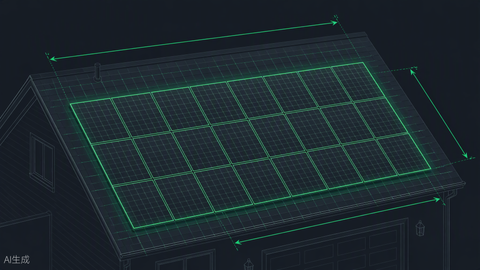
The most mature application of AI in solar today is automated site modeling. Design platforms like Aurora Solar and OpenSolar use machine learning to interpret satellite and aerial imagery — and increasingly LIDAR point-cloud data — to generate a 3D model of a roof, including pitch, orientation, obstructions, and nearby shading sources like trees and neighboring structures, often within minutes of entering an address.
This model feeds directly into shading and production simulations, letting a designer produce a defensible preliminary layout and production estimate before ever visiting the property. The technology doesn't eliminate the site visit — panel condition, structural details, electrical panel capacity, and exact obstruction placement still need field verification — but it dramatically shortens the front end of the sales and design cycle, and it standardizes shading analysis in a way that used to depend heavily on individual designer skill.
💡 What This Means for Homeowners
A remote design or quote that arrives quickly isn't a shortcut being taken with your project — it typically reflects this modeling technology doing the heavy lifting on shading and layout. It's still worth confirming a licensed installer performs an on-site electrical and structural assessment before signing a contract.
Production and Consumption Forecasting
Solar production forecasting used to rely on simple historical averages — take last year's production for a given day and assume this year will be similar. Modern forecasting models instead combine short-term weather forecasts (cloud cover, temperature, humidity) with a system's own historical production data using machine learning techniques that continuously improve as more data accumulates.
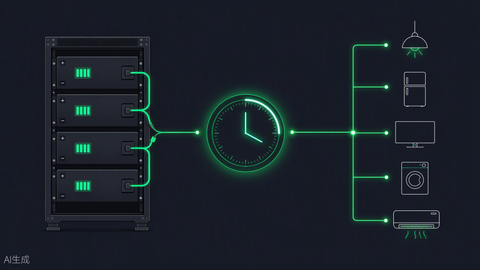
The practical value shows up most clearly in systems with battery storage. A battery management system that knows tomorrow is likely to be cloudy can choose to reserve more charge tonight rather than exporting surplus to the grid; one that forecasts a sunny day can discharge more aggressively during this evening's peak rate window, confident the battery will refill quickly in the morning. This kind of forward-looking dispatch decision was impractical with static, rule-based battery logic and is now standard in higher-end hybrid inverter and EMS platforms.
Consumption Forecasting
The same forecasting approach applies to household consumption. Systems that learn a home's usage patterns — when the AC typically cycles on, when an EV usually charges, when the household is away — can anticipate demand rather than simply reacting to it, further improving how efficiently a battery is dispatched.
Fault Detection and Predictive Maintenance
A commercial or residential solar system that is not actively monitored can quietly underperform for months without anyone noticing — a single failed bypass diode, a loose MC4 connector, or a soiling pattern on one section of the array can each shave a meaningful percentage off total production without triggering any obvious alarm.
Machine learning models trained on production data from large fleets of systems can identify these anomalies far more reliably than a human reviewing a dashboard. Rather than comparing a system only against its own historical baseline, fleet-trained models can distinguish a genuine equipment fault from a normal weather-driven dip by comparing performance against similar systems in similar conditions nearby. This is the difference between "production dropped 8% today" (which could be a cloud) and "this specific string has underperformed its expected output relative to comparable strings for the last 12 days" (which is a real signal worth a service call).
| Detection Method | What It Catches | Typical Lead Time |
|---|---|---|
| String-Level Anomaly Detection | Failed diodes, connector faults, wiring issues | Days to weeks before a noticeable bill impact |
| Panel-Level Monitoring (MLPE) | Individual module underperformance, shading changes | Near real-time |
| Fleet-Comparative Modeling | Underperformance relative to peer systems in similar conditions | Weeks — filters weather noise from genuine faults |
| Inverter Diagnostic Codes + ML Triage | Fault codes prioritized by likely severity and urgency | Immediate on fault occurrence |
AI-Driven Energy Management Systems
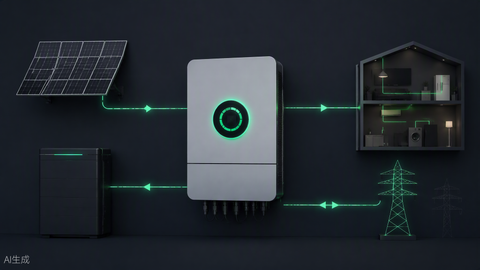
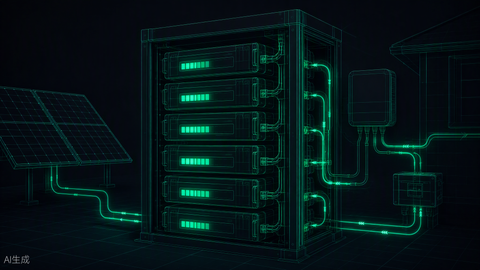
Home and commercial energy management systems (EMS) are where forecasting and fault detection combine into an operational decision-making layer. Rather than a battery following a fixed schedule (charge during the day, discharge during a defined evening window), an AI-driven EMS continuously adjusts its strategy based on live utility rate signals, weather forecasts, historical usage patterns, and — where available — real-time grid conditions.
This matters most in regions with dynamic or real-time pricing, where the difference between a static schedule and an adaptive one can be a meaningful percentage of the annual electricity bill. It also matters for grid services: some utility and aggregator programs now pay homeowners for allowing their battery to participate in demand-response events, which requires exactly the kind of real-time, automated decision-making these systems provide.
Drone and Robotic Inspection
For commercial and utility-scale arrays, thermal drone inspection paired with computer vision has largely replaced manual visual inspection as the standard for periodic maintenance checks. A drone flight captures thermal and visual imagery across an entire array in a fraction of the time a ground-based inspection would take, and image recognition models trained to identify hot spots, cracked cells, delamination, and connector faults flag issues for human review far more consistently than a technician scanning hundreds of panels by eye.
Robotic cleaning systems are following a similar pattern in utility-scale and desert installations, where soiling models — predicting dust accumulation based on local conditions — can trigger automated cleaning cycles only when needed, rather than on a fixed calendar schedule that either over-cleans (wasting water and labor) or under-cleans (losing production).
What AI Design Tools Actually Do (and Don't)
It's worth being precise about what "AI-powered solar design" actually means in current commercial software, since the term gets applied loosely.
| Task | AI Reliably Handles This | Still Needs Human Review |
|---|---|---|
| Roof geometry and shading modeling | Yes — mature and widely deployed | Field verification of obstructions and roof condition |
| Preliminary panel layout | Yes — generates fast, reasonable starting layouts | Fire setback compliance, walkway paths, aesthetic preferences |
| Production estimates | Yes — well-validated against real-world performance | Site-specific factors like unusual microclimates |
| Structural load calculations | Assists with data gathering | Stamped engineering review required in most jurisdictions |
| Electrical code compliance | Flags common issues, suggests compliant configurations | Final sign-off by a licensed electrician/designer |
| Utility interconnection requirements | Surfaces relevant utility-specific rules | Application submission and utility-specific negotiation |
Where AI Still Falls Short
It's worth being honest about the limits, since overclaiming here leads to bad outcomes on real installations.
- Structural engineering still requires a stamped, human-reviewed calculation in nearly every jurisdiction — AI can gather inputs but does not replace a licensed PE's sign-off on roof loading.
- Satellite and aerial imagery can be outdated or miss recent changes — a tree removed last year or a new addition to the home may not be reflected in the model until the next imagery update.
- Fault detection models need a baseline of clean data to work well — a system with only a few weeks of history won't benefit from fleet-comparative anomaly detection the way an established system will.
- AI forecasting is probabilistic, not certain — a battery dispatch decision made on a forecasted cloudy day that turns out sunny represents lost optimization, not a system failure, but it's a real limitation homeowners should understand.
- Permitting and interconnection remain fundamentally bureaucratic processes that AI tools can streamline documentation for but cannot shortcut with any given AHJ or utility.
What's Coming Next
The near-term direction of AI in solar is less about flashier design tools and more about deeper integration between forecasting, storage dispatch, EV charging, and grid participation programs — treating the home's entire energy profile (solar, battery, EV, HVAC) as a single system to optimize rather than separate components each running their own logic. Virtual power plant (VPP) programs, which aggregate thousands of home batteries into a coordinated grid resource, depend entirely on this kind of automated, forecast-driven coordination and are expanding in availability across more utility territories each year.
Frequently Asked Questions
Does AI actually make solar systems more efficient?
Indirectly, yes. AI doesn't change how many watts a panel produces from a given amount of sunlight, but it improves how effectively a system uses what it produces — through better battery dispatch timing, faster fault detection that reduces downtime, and more accurate sizing that avoids over- or under-building a system in the first place.
Can AI design a complete solar system without a human designer?
AI tools can generate a strong preliminary design — roof model, shading analysis, panel layout, and production estimate — very quickly. However, structural engineering sign-off, electrical code compliance review, and utility interconnection submission still require a licensed professional in virtually every U.S. jurisdiction.
How does AI help detect solar panel problems?
Machine learning models compare a system's production against expected output based on weather conditions and, in fleet-based platforms, against similar systems nearby. This lets the software distinguish a genuine equipment fault from a normal weather-driven production dip, often flagging real problems weeks before a homeowner would notice from their utility bill.
What is a virtual power plant (VPP) and how does AI enable it?
A virtual power plant aggregates many distributed home batteries into a coordinated resource that a utility or grid operator can call on during high-demand periods. This requires automated, forecast-driven decision-making across thousands of individual systems simultaneously — a coordination problem that depends on the same forecasting and energy management technology covered in this guide.
Do I need special equipment to get AI-driven monitoring and energy management?
Most modern hybrid inverters, smart battery systems, and MLPE (microinverters and power optimizers) include the monitoring and connectivity needed to support AI-driven forecasting, fault detection, and energy management out of the box. Older, non-connected systems generally cannot participate without a monitoring retrofit.
Ready to Build a Smart, Connected Solar System?
PES Supply stocks hybrid inverters, MLPE, and battery systems from Enphase, SolarEdge, Sol-Ark, EG4, and more — all built for the monitoring, forecasting, and energy management platforms covered in this guide. Our team can help you spec a system ready for today's AI-driven tools and tomorrow's grid programs.
Get a Free Custom Quote Shop Smart InvertersRelated Guides
- Solar Inverter Buyer's Guide
- Solar Battery Buyer's Guide
- How Many Solar Panels Do I Need? Sizing Guide
- Microinverters
- Power Optimizers
- Battery Storage
- Solar Maintenance Guide
- Request a Quote - Wholesale pricing on connected, monitoring-ready equipment
About PES Supply
PES Supply is a nationwide distributor of Tier 1 solar panels, commercial inverters, battery storage systems, EV charging hardware, racking, switchgear, circuit breakers, generators, and complete electrical project kits. With 12+ distribution hubs, thousands of in-stock SKUs, NABCEP-certified design support, and a network of 8,500+ solution providers, PES Supply serves contractors, EPCs, developers, and businesses with fast delivery, wholesale pricing, and expert procurement guidance.
Location: 1507 Portland Ave, Louisville, KY, United States | Phone: 1 888-876-0007 | Website: www.portlandiaelectric.supply
Article: AI + Solar Energy: How Artificial Intelligence Is Changing Solar System Design
Category: Solar Technology | Industry Trends | System Design
Last Updated: August 2026
Disclaimer: This article describes general industry trends and commercially available technology categories as of August 2026. Specific product capabilities vary by manufacturer and platform — confirm feature availability directly with the equipment or software provider before making a purchase decision based on AI-related claims.
Shop the products mentioned in this guide and get everything you need for your project.