Last Updated: August 2026 • A Practical Overview for Municipalities, Campuses, and Community Organizers
A single home with solar and a battery can keep the lights on during an outage. A microgrid does the same thing at the scale of a neighborhood, campus, hospital, or critical facility cluster — generating, storing, and distributing power locally, with the ability to disconnect from the main grid and keep running independently when the wider grid goes down. As extreme weather events, wildfire-driven public safety power shutoffs, and aging grid infrastructure make multi-day outages more common in many parts of the country, community-scale microgrids have moved from a niche resilience concept to a mainstream infrastructure investment.
This guide covers what a solar microgrid actually is, how it differs from a simple solar-plus-storage system, the core components involved, common ownership and financing models, and the practical steps a community, campus, or municipality takes to get one built.
⚡ Quick Answer
A solar microgrid is a local power system — solar generation, battery storage, and often backup generation — connected to a defined group of buildings or a section of the distribution grid, with control systems that let it island (disconnect and operate independently) during a utility outage. Unlike a single-home battery backup system, a microgrid typically serves multiple buildings or an entire critical facility campus, requires more sophisticated control and protection equipment, and often involves a mix of public, utility, and private financing. Community microgrid projects commonly range from $1 million to $20+ million depending on scale, with per-facility resilience programs and state grants increasingly covering a significant share of the cost.
Key Takeaways
- A Microgrid Is Defined by Its Boundary and Its Islanding Capability — a clear point of common coupling with the main grid, and the ability to disconnect and self-manage during an outage.
- Scale Distinguishes It From Home Battery Backup: microgrids typically serve multiple buildings, a campus, or a neighborhood — not a single household.
- Solar + Storage Is the Generation Core, But Rarely the Whole Story: most resilient community microgrids pair solar and batteries with backup generators for extended, multi-day outages.
- Controls Are the Hardest Engineering Problem: the microgrid controller — not the solar panels or batteries — is usually the most complex and highest-risk component of the project.
- Critical Facilities Anchor Most Community Projects: fire stations, water treatment plants, emergency shelters, and hospitals are the most common anchor loads that justify the upfront investment.
- Financing Is Rarely a Single Source: most community microgrids blend state resilience grants, utility programs, municipal bonds, and in some cases private investment or power purchase agreements.
- PES Supply: commercial-scale inverters, battery storage, switchgear, and generator integration equipment in stock, supporting the multi-building electrical infrastructure microgrid projects require.
In This Guide
- What Is a Solar Microgrid?
- Microgrid vs. Single-Building Solar + Storage
- Core Components of a Community Microgrid
- Choosing Anchor Loads and Facilities
- Ownership and Financing Models
- Technical and Regulatory Considerations
- Steps to Getting a Community Microgrid Built
- Costs and Funding Sources
- Common Project Patterns
- Frequently Asked Questions
What Is a Solar Microgrid?
A microgrid is a local energy system with three defining characteristics: it has a clearly defined electrical boundary, it includes its own generation and typically storage within that boundary, and it can operate connected to the main utility grid or disconnected from it (islanded) without interruption to the loads it serves. A solar microgrid uses solar panels — usually paired with battery storage and often backup generation — as its primary local generation source.
The islanding capability is what separates a microgrid from a simple on-site solar array. A conventional grid-tied commercial solar system, even a large one, is required to shut down during a utility outage as a safety measure to protect line workers from backfeed. A microgrid is specifically engineered with the protection relays, transfer switches, and control logic needed to safely disconnect from the grid, continue serving its internal loads, and then safely reconnect once utility power is restored.
Microgrid vs. Single-Building Solar + Storage
The underlying technology — solar panels, batteries, inverters — is the same at both scales. What changes is complexity, coordination, and who's involved.
| Factor | Home/Single-Building Solar + Storage | Community Microgrid |
|---|---|---|
| Scope | One building or home | Multiple buildings, a campus, or a neighborhood-scale grid section |
| Ownership | Single homeowner or property owner | Often municipal, utility, campus, or a multi-party agreement |
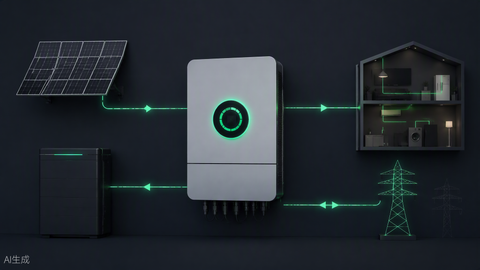
| Control Complexity | Single hybrid inverter's built-in transfer logic | Dedicated microgrid controller coordinating multiple generation and storage assets |
| Interconnection | Standard residential/commercial interconnection agreement | Often requires a specific microgrid interconnection tariff or agreement with the utility |
| Typical Cost Range | $25,000–$45,000 | $1 million–$20+ million |
Core Components of a Community Microgrid
Solar Generation
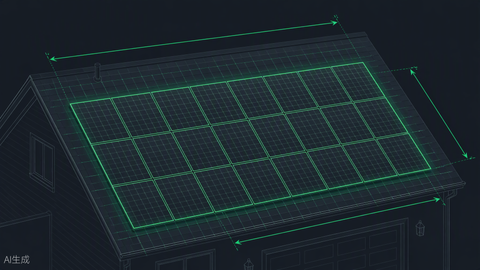
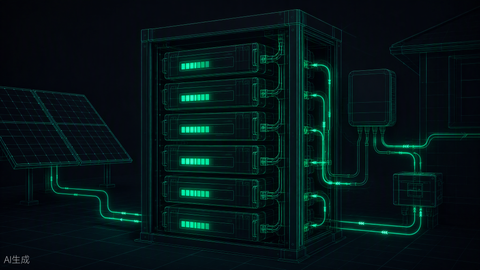
Rooftop arrays across participating buildings, a dedicated ground-mount or carport array, or a combination — typically sized to meaningfully offset the anchor facilities' daytime load, not necessarily to cover 100% of demand during an island event.
Battery Storage
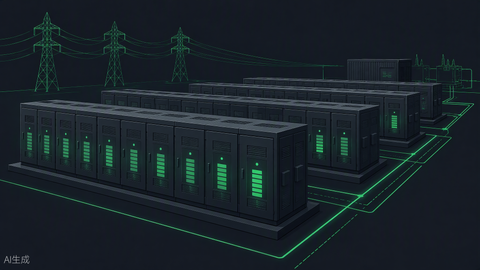
Commercial-scale LiFePO4 storage, often sized in the hundreds of kWh to multiple MWh range depending on the number and criticality of facilities served, providing both daily load-shifting value and outage bridging capacity.
Backup Generation
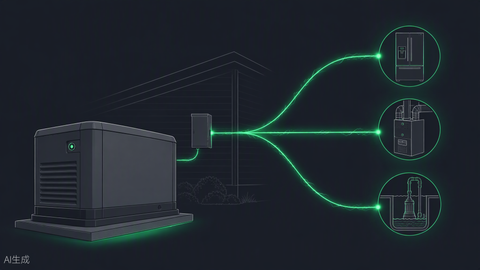
Diesel, natural gas, or propane generators are still common as a backstop for extended outages beyond what solar and storage alone can bridge — particularly for winter or extended cloudy-weather islanding scenarios.
Microgrid Controller
The coordination brain of the system — monitoring grid status, managing the point of common coupling, dispatching generation and storage assets, and executing the islanding and resynchronization sequence safely.
Protection and Switchgear
Relays, breakers, and automatic transfer switches engineered to prevent backfeed onto the main grid during an island event and to protect personnel and equipment during both islanding and resynchronization.
Distribution Infrastructure
In some projects, dedicated distribution lines or conductors connecting participating buildings; in utility-partnered projects, this may leverage existing distribution infrastructure with added switching capability.
Choosing Anchor Loads and Facilities
Most successful community microgrid projects start with one or two critical anchor facilities that justify the investment on their own, then expand the served area from there. Common anchor facilities include:
- Fire and police stations — must remain operational during any emergency, including the events most likely to cause a grid outage.
- Water and wastewater treatment facilities — extended outages create public health risks well beyond inconvenience.
- Emergency shelters and community centers — become critical gathering and refuge points precisely when the grid is down.
- Hospitals and medical facilities — already have backup power requirements; a microgrid can improve reliability and reduce fuel dependency versus generator-only backup.
- Schools — often serve as emergency shelters and have large roof areas suited to solar generation.
Once an anchor load justifies the core infrastructure, expanding the microgrid's served area to include adjacent homes or businesses becomes an incremental cost rather than the full project cost, which is how many "community" microgrids grow beyond their original critical-facility footprint over time.
Ownership and Financing Models
| Model | How It Works | Best For |
|---|---|---|
| Municipal Ownership | City or county owns and operates the microgrid, often funded through bonds or municipal capital budgets | Municipalities with public facility anchor loads (fire, water, shelters) |
| Utility-Owned Microgrid | The local utility builds and operates the microgrid as part of its distribution infrastructure, often to serve a defined high-risk area | Wildfire-prone or storm-prone service territories under utility resilience mandates |
| Campus/Institutional Ownership | A university, hospital system, or large institution builds and owns its own microgrid serving its campus | Institutions with existing central plant infrastructure and capital budgets |
| Third-Party Developer/PPA | A private developer builds, owns, and operates the microgrid, selling power and resilience services to participants under long-term agreements | Communities without upfront capital but with strong anchor-tenant creditworthiness |
| Public-Private Partnership | Blended structure combining public grant funding, utility involvement, and private capital or operations expertise | Larger, multi-facility projects where no single entity can fund or operate alone |
Technical and Regulatory Considerations
Community microgrids sit at the intersection of several regulatory frameworks that don't always neatly anticipate multi-building, multi-owner generation and storage systems.
- Interconnection agreements: many utilities have standard interconnection tariffs for single-facility solar but not for a microgrid serving multiple meters — early utility engagement is essential to avoid late-stage surprises.
- Franchise and distribution rights: in some states, only the incumbent utility may legally distribute power across public rights-of-way, which shapes whether a microgrid can serve multiple separately-owned buildings or must limit itself to a single property or campus.
- Protection coordination: islanding and resynchronization require careful protection relay coordination to prevent damage to equipment or hazards to utility line workers — this is typically the most engineering-intensive part of the design.
- Building and fire code compliance: battery storage at commercial scale triggers fire code requirements around enclosure type, separation distances, and suppression systems that vary significantly by jurisdiction.
- Cybersecurity: networked microgrid controllers, particularly those serving critical public infrastructure, increasingly require formal cybersecurity review as part of project approval.
Steps to Getting a Community Microgrid Built
Step 1: Identify Anchor Loads and Resilience Goals
Determine which facilities absolutely need to stay powered during an outage and for how long, which shapes the entire scope and budget of the project from the outset.
Step 2: Conduct a Feasibility Study
A technical and financial feasibility study evaluates available solar resource, load profiles, existing electrical infrastructure, and a preliminary cost estimate before committing significant capital to design.
Step 3: Engage the Utility Early
Utility interconnection and, in many states, franchise rights considerations can reshape a project's design significantly — early conversations prevent costly redesigns later.
Step 4: Identify Funding Sources
Layer state resilience grants, utility programs, municipal bonds, and potentially private financing — most projects of meaningful scale use more than one funding source.
Step 5: Engineering Design and Permitting
Detailed engineering, including protection coordination studies, structural assessments for solar and battery installations, and permitting across every jurisdiction the project touches.
Step 6: Construction, Commissioning, and Islanding Tests
Physical installation followed by extensive commissioning, including controlled islanding and resynchronization tests to verify the system behaves correctly before relying on it during a real emergency.
Costs and Funding Sources
Community microgrid costs vary enormously based on scope — a single-facility microgrid at a fire station looks nothing like a multi-building neighborhood-scale system.
| Project Scale | Typical Cost Range | Example |
|---|---|---|
| Single Critical Facility | $1M–$3M | A fire station or water treatment plant with solar, storage, and islanding capability |
| Multi-Facility Municipal Campus | $3M–$10M | City hall, emergency services, and a shelter connected on a shared microgrid |
| Neighborhood/Community-Scale | $10M–$20M+ | A defined residential and commercial area with utility partnership |
Funding typically comes from a combination of state energy office resilience grants, FEMA hazard mitigation funding for projects tied to disaster preparedness, utility resilience program funding (particularly in wildfire- and storm-prone states), municipal capital budgets or bonds, and in some cases private investment through a developer-owned model with a long-term service agreement.
Common Project Patterns
While every microgrid is shaped by its specific community and facilities, most successful projects fall into one of a few recognizable patterns:
- The single-anchor starter project: one critical facility (often a fire station) gets solar, storage, and islanding capability as a proof of concept, with the electrical and control infrastructure designed to expand later.
- The campus microgrid: a university, hospital system, or large corporate campus builds a microgrid primarily for cost savings and reliability, with community resilience as a secondary benefit if the campus can serve as a public refuge during emergencies.
- The utility-driven resilience zone: a utility identifies a high-wildfire-risk or storm-prone circuit and builds a microgrid to reduce the impact of public safety power shutoffs on that specific area.
- The multi-year phased build: a municipality starts with one facility, secures a grant to add a second, and gradually expands the served footprint over several years rather than attempting the full vision in a single capital project.
Frequently Asked Questions
What's the difference between a microgrid and a backup generator?
A backup generator simply provides power to a facility when the grid is down — it doesn't generate power during normal operation. A microgrid includes ongoing generation (typically solar), storage, and sophisticated controls that let it operate connected to the grid most of the time while retaining the ability to island during an outage, often serving multiple buildings rather than just one.
How long can a solar microgrid run during an outage?
It depends on battery capacity, solar recharging conditions, backup generation, and how much load is served during the island event. Well-designed microgrids with battery storage and solar recharging can sustain critical loads indefinitely in good weather; most also include backup generation to bridge extended cloudy periods or higher-than-planned demand.
Who owns and operates a community microgrid?
Ownership varies by project — common models include municipal ownership, utility ownership as part of distribution infrastructure, institutional ownership by a campus or hospital system, or third-party developer ownership under long-term service agreements with the served facilities.
Do community microgrids require special permission from the utility?
Generally, yes. Interconnecting a system capable of islanding and serving multiple buildings typically requires specific agreements beyond standard net-metering interconnection, and in many states only the incumbent utility may legally distribute power across public rights-of-way, which shapes what a non-utility-owned microgrid can serve.
What funding is available for community microgrid projects?
Common sources include state energy office resilience grants, FEMA hazard mitigation funding, utility-administered resilience programs (especially in wildfire- and storm-prone states), municipal bonds, and private capital through developer-owned models. Most projects combine multiple funding sources rather than relying on one.
Planning a Community or Campus Microgrid?
PES Supply supplies commercial-scale solar panels, hybrid and grid-forming inverters, battery storage, switchgear, and generator integration equipment for multi-building resilience projects. Our NABCEP-certified team can support project scoping and equipment specification alongside your engineering partners.
Request a Project Consultation Shop Commercial Battery StorageRelated Guides
- Solar Battery Buyer's Guide
- Solar Inverter Buyer's Guide
- How to Successfully Implement Solar Energy in Your Business
- Battery Storage
- Generators
- Solar Incentives by State
- Request a Quote - Wholesale pricing on commercial and multi-facility resilience equipment
About PES Supply
PES Supply is a nationwide distributor of Tier 1 solar panels, commercial inverters, battery storage systems, EV charging hardware, racking, switchgear, circuit breakers, generators, and complete electrical project kits. With 12+ distribution hubs, thousands of in-stock SKUs, NABCEP-certified design support, and a network of 8,500+ solution providers, PES Supply serves municipalities, contractors, EPCs, developers, and businesses with fast delivery, wholesale pricing, and expert procurement guidance.
Location: 1507 Portland Ave, Louisville, KY, United States | Phone: 1 888-876-0007 | Website: www.portlandiaelectric.supply
Article: Solar Microgrids: How Communities Can Build More Resilient Energy Systems
Category: Microgrids | Community Resilience | Commercial Solar
Last Updated: August 2026
Disclaimer: Cost estimates, funding sources, and regulatory information in this guide reflect general industry patterns as of August 2026. Microgrid regulations, utility tariffs, and available funding vary significantly by state and utility territory. Always consult with your utility, a qualified engineering firm, and local counsel before finalizing a project structure.