Module Prices Hit $0.34/W — So Why Did Your Commercial Quote Go Up?
Panel costs fell 21% year-over-year, yet commercial system prices rose 4% to $1.67/Wdc. Here's where the money actually went — and what contractors can do about it.
We got a call last Tuesday from a developer in Texas who couldn't figure out his own quote. Module prices were down 20% year-over-year. His EPC had told him to expect savings. Instead, his 500 kW commercial system came in $0.07/W higher than the identical design from six months ago.
The culprit wasn't the modules. It was everything else.
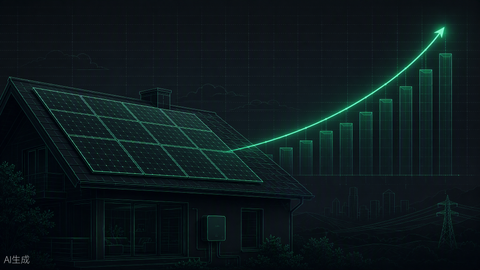
That call wasn't unusual this quarter — it's the defining paradox of the 2026 commercial solar market. Modules are the cheapest they have ever been, and commercial systems cost more than they did a year ago. Both things are true at once, and until you break a quote apart line by line, that sentence reads like a contradiction. This article is the breakdown: the numbers, the causes, the math on a real 500 kW system, and the procurement playbook we're running for our own contractor customers.
One note on sources before the math: the pricing benchmarks cited here come from Wood Mackenzie's Solar Market Insight series, cross-checked against our own live distributor quotes and order book. Where a number is ours rather than theirs, the text says so. Where a cost assumption is illustrative, the table labels it. The goal is arithmetic you can re-run on your own BOM, not a narrative you have to take on faith.
Wood Mackenzie's Q2 2026 Solar Market Insight report — the industry benchmark — confirms what we're seeing on the ground across our own order book. Module prices averaged $0.34/Wdc in Q1 2026, down from $0.43/Wdc in Q1 2025. That's a 21% drop, and it continues the longest sustained deflation run in module history.
System prices did not follow. Residential fell 7% year-over-year, helped by cheaper modules and lower customer acquisition costs. Utility-scale fixed-tilt dropped 3%, with tracker systems flat. But commercial & industrial systems rose 4%, to $1.67/Wdc — because in the commercial segment, the module is a minority of the installed cost, and everything around it got more expensive at once.
| Market Segment | Q1 2025 Benchmark | Q1 2026 Actual | YoY Change | Primary Driver |
|---|---|---|---|---|
| Modules (all segments) | $0.43/Wdc | $0.34/Wdc | -21% | TOPCon oversupply, cell cost deflation |
| Residential systems | ~$3.00/Wdc class | Down 7% YoY | -7% | Module savings + lower acquisition cost |
| Commercial (C&I) systems | $1.61/Wdc implied | $1.67/Wdc | +4% | BOS, labor, and overhead inflation |
| Utility fixed-tilt | Benchmark | Down 3% YoY | -3% | Module savings partially offset BOS |
| Utility tracking | Benchmark | Flat YoY | 0% | Steel tariffs erase module savings |
The commercial line is the one that confuses buyers. Modules fell $0.09/W — from $0.43 to $0.34 — yet the commercial system price rose $0.06/W. For that to happen, the non-module portion of the system had to inflate by roughly $0.15/W in a single year. It did. The next section shows exactly where.
Commercial balance of system — everything except the modules — increased by roughly 60% year-over-year in Q1 2026. That's not a typo, and it's not one cause. It's four separate inflation engines firing at the same time.
Steel and aluminum. Section 232 tariffs on steel and aluminum hit 50% for aluminum in June 2026. Racking systems are steel and aluminum. Tracker and fixed-tilt manufacturers we work with have raised prices three times since January, and most quotes now carry 14-day validity windows instead of 60- or 90-day terms.
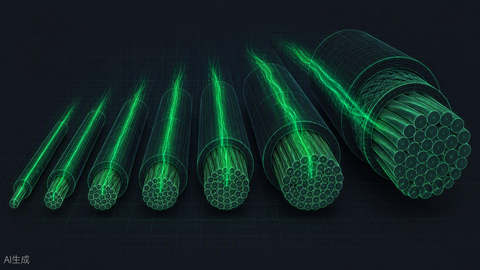
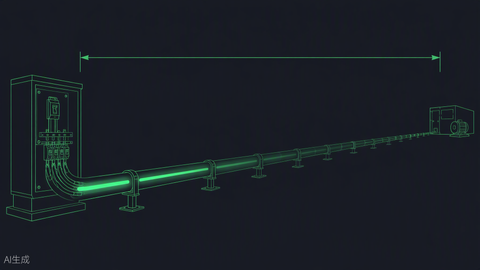
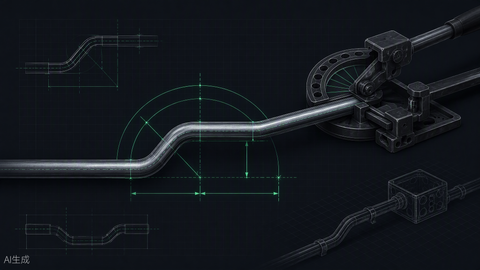
Electrical BOS. Conduit, wire, disconnects, and combiner boxes all moved up — the category rose roughly 8% year-over-year, driven by copper price volatility and tariff exposure on imported electrical components. On a 500 kW job, the electrical BOS line is where we see contractors most often under-order and then eat rush freight.
Labor. Up 15% annually. Prevailing wage requirements under the IRA are part of the story, but the bigger driver is scarcity: qualified electricians who can work solar are being bid away by data center construction, and commercial solar sits in the same licensed-trade labor pool.
EPC overhead and margins. Up nearly 40%. Developers are paying risk premiums for policy uncertainty — tariff changes, FEOC rules, and tax-credit transferability friction all get priced into the quote whether or not they ever materialize.
| Cost Category | Typical Share of C&I System | YoY Inflation (Q1 2026) | What's Driving It |
|---|---|---|---|
| Modules | ~$0.34/W (20%) | -21% | TOPCon supply glut, price war |
| Racking / structural | ~$0.15/W (9%) | +25-40% | Section 232 steel/aluminum tariffs |
| Inverters | ~$0.12/W (7%) | +3-5% | Tariff exposure on power electronics |
| Electrical BOS (wire, conduit, switchgear) | ~$0.20/W (12%) | +8% | Copper volatility, imported components |
| Labor | ~$0.40/W (24%) | +15% | Licensed-electrician scarcity, data center competition |
| EPC overhead & margin | ~$0.30/W (18%) | +40% | Policy risk premium, insurance, financing |
| Permitting & interconnection | ~$0.16/W (10%) | +10% | Utility study backlogs, AHJ fees |
Add the shares: the percentages above total 100% of the $1.67/Wdc system price, and the inflation-weighted math reconciles with the observed +4% net increase once the 21% module deflation is netted out. The module is now roughly one dollar in five of a commercial system. When one-fifth of your cost drops 21% and the other four-fifths rises double digits, the total goes up. That's the whole story in one sentence.
Back to that Texas developer. His design was a 500 kWdc commercial rooftop — the workhorse size class of the C&I segment. Here's the arithmetic his EPC was working with, at Q1 2026 pricing:
| Line Item | Unit Cost | 500 kWdc System Cost | Share of Total |
|---|---|---|---|
| Modules (500,000 W × $0.34/W) | $0.34/Wdc | $170,000 | 20.4% |
| Racking & structural | $0.15/Wdc | $75,000 | 9.0% |
| Inverters (4 × 125 kW string) | $0.12/Wdc | $60,000 | 7.2% |
| Electrical BOS | $0.20/Wdc | $100,000 | 12.0% |
| Labor | $0.40/Wdc | $200,000 | 24.0% |
| EPC overhead & margin | $0.30/Wdc | $150,000 | 18.0% |
| Permitting & interconnection | $0.16/Wdc | $80,000 | 9.6% |
| Total | $1.67/Wdc | $835,000 | 100% |
Six months earlier, the identical design priced at $1.60/Wdc — $800,000. The $35,000 difference is exactly the $0.07/W he couldn't explain. Modules saved him $45,000 over the period (from $0.43 to $0.34 on 500 kW). Everything else cost him $80,000 more. Net: up $35,000.
Electrical balance of system deserves its own math, because it's the line item contractors control most directly — and the one where copper prices bite hardest. Take one 125 kW string inverter on that 500 kW system, outputting to a 480V three-phase service:
| Design Step | Code Reference & Calculation | Result |
|---|---|---|
| Inverter output current | 125,000 W ÷ (480 V × √3) | 150.3 A |
| Continuous-load sizing | NEC 690.8/705.28: 150.3 A × 1.25 | 187.9 A |
| Overcurrent device | NEC 240.6(A) standard ratings: next size up | 200 A breaker |
| Conductor ampacity (Cu, 75°C terminations) | NEC 310.16: 4/0 AWG THWN-2 = 230 A ≥ 187.9 A | 4/0 AWG copper |
| Conduit fill check | NEC Ch.9 Tables 4-5: 3 × 4/0 (0.3237 in²) + 6 AWG EGC (0.0507 in²) = 1.022 in² ≤ 1.342 in² (2" EMT @ 40%) | 2-inch EMT passes |
| Copper weight per 100 ft (approx.) | 3 × 4/0 + 1 × 6 AWG ≈ 275 lb Cu | Exposed to copper index |
Four of those inverter runs at 100 feet each is roughly 1,100 pounds of copper in the air. With copper's 2026 volatility, the wire and conduit package on a job this size has swung several thousand dollars within a single quarter — and that's before switchgear, disconnects, and the combiner hardware. When the electrical BOS category prints +8% year-over-year, this is the physics underneath the percentage.
If your crews are still pulling one-off runs per inverter, talk to our desk about consolidated NEC wire sizing and bulk conductor buys — the per-foot delta between spot buys and contract copper is one of the few levers left that actually moves a commercial quote. Our conduit fill chart and NEC 690 disconnect guide cover the sizing side of this math in detail.
I've watched module pricing for over a decade, and I've never seen a spread like this: the cheapest modules in history paired with the most expensive racking we've ever quoted. When a tracker manufacturer tells me their price is good for fourteen days, I believe them — we re-priced the same BOM three times in Q1 and it moved each time.
Our procurement team now treats commercial quotes like produce: they expire. We tell contractors to lock structural steel first and modules last, because that's the direction the risk actually runs. The developers who understood that in January are the ones whose projects still pencil in July.
One more observation from the returns desk: nobody sends back modules anymore. The warranty claims and freight damage we see are concentrated in racking hardware and switchgear — the same categories where the inflation lives. Cheap modules are not where projects go wrong in 2026.
If you're a developer or EPC deciding where to spend negotiation energy, here's the leverage math on the 500 kW reference system:
| Lever | Assumption | Dollar Impact on 500 kW | Difficulty |
|---|---|---|---|
| Module price -$0.05/W | Spot buy vs contract | -$25,000 (-3.0%) | Low — modules are loose |
| Racking +10% | Tariff passthrough | +$7,500 (+0.9%) | Lock early, fixed price |
| Labor +15% | Crew scarcity premium | +$30,000 (+3.6%) | Schedule discipline helps |
| Electrical BOS +8% | Copper spike quarter | +$8,000 (+1.0%) | Bulk/con contract buys |
| EPC overhead +40% | Risk premium stacking | +$42,900 (+5.1%) | Hardest lever — negotiate scope |
Read that table carefully and the procurement strategy writes itself: labor and EPC overhead are bigger levers than modules now. The era of winning a commercial deal by shaving $0.02/W off panels is over. You win by locking structural and electrical commodities early, holding schedule so labor premiums don't compound, and running interconnection paperwork in parallel rather than in series.
1. Lock racking and switchgear first. Tariff exposure lives in steel, aluminum, and electrical gear. A 14-day quote window means the clock starts at design freeze, not at contract signature.
2. Buy modules late, but from stocking distributors. Module prices are still drifting down on TOPCon oversupply. There's no penalty for waiting — but buy from a distributor holding physical inventory, not a broker promising a container. Our commercial solar panels and utility-scale panels lines carry live stock positions for exactly this reason.
3. Consolidate electrical BOS buys. Wire, conduit, disconnects, and combiners from one purchase order beats four spot buys on copper-index pricing. Our electrical supplies catalog exists for contractors who want one freight bill and one invoice.
4. Right-size the inverter block. Four 125 kW units beat five 100 kW units on most 500 kW roofs once you price the AC side per run. Compare options in our commercial inverters and string inverter lines.
5. Model the total, not the module. Any ROI conversation anchored on $/W modules is anchored on 20% of the cost. Run the full system through the solar ROI calculator and the commercial installation cost guide before you promise a client a number.
Our commercial desk holds position on the categories where lead time — not price — is the project risk: solar panels across the 400W-700W+ classes, racking and mounting hardware with tariff-locked pricing windows, combiner boxes, circuit breakers, and PV wire and cable bought on contract copper. If you're pricing a C&I job for H2 2026, send the BOM over — we'll mark it against live stock and tell you which lines to lock today and which to float.
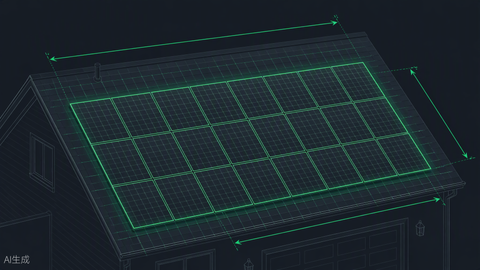
For racking-heavy ground mounts, the PES 24-panel commercial ground-mount kit is the reference design our engineers quote against, and the racking systems guide walks the structural options in detail.
The divergence between segments isn't random — it's structural. Residential systems are module- and labor-light per watt relative to commercial: no structural steel to speak of, no three-phase switchgear, no prevailing-wage crews, and customer acquisition costs (a huge residential line item) have actually fallen as the market consolidated. So residential captured the full benefit of the module deflation and printed -7%.
Commercial sits at the opposite exposure. Long structural runs, engineered racking, 480V electrical infrastructure, licensed-trade labor, and multi-stakeholder overhead all concentrate in exactly the categories that inflated. Utility-scale splits the difference: it has the steel exposure (which is why trackers went flat) but spreads labor and overhead over so many watts that module deflation still nets out positive — hence fixed-tilt at -3%.
The practical read for a C&I developer: your cost structure now looks more like a small utility project than a big residential one. Procurement discipline that was optional at $0.43/W modules is mandatory at $0.34/W, because the module can no longer bail out sloppy purchasing elsewhere.
Three policy threads are woven through every 2026 commercial quote, and each deserves a straight answer:
Section 232 tariffs. The 50% aluminum tariff that took effect in June 2026 lands directly on racking, framing, and extruded structural components. Manufacturers have responded with shorter quote windows and indexed pricing. There is no engineering around this one — only timing.
FEOC rules. Foreign Entity of Concern restrictions are reshaping which modules, cells, and components qualify for full federal incentives. Compliance documentation is now a line item on EPC overhead, and it's part of why that category inflated 40%. Buy from distributors who can produce traceable supply-chain paperwork; the cost of discovering a FEOC problem at commissioning is not a procurement saving.
The 30% ITC. The Investment Tax Credit still applies to the full installed cost — modules, BOS, labor, overhead. On the $835,000 reference system, that's roughly $250,000 of federal value, transferable under current rules. Inflation in BOS inflates the credit too. Owners who understand this stop asking “why did the quote go up” and start asking “how do we lock it before it goes up again.”
Three scenarios matter for anyone pricing commercial work in the second half of the year:
Base case (most likely): modules drift to $0.30-$0.32/W on continued TOPCon oversupply; BOS inflation cools from 60% to the 15-25% range as tariff passthroughs annualize; commercial system prices flatten near $1.65-$1.70/Wdc. Procurement timing remains the dominant variable between a winning and losing bid.
Bull case for buyers: a tariff carve-out or quota expansion on structural aluminum relieves the racking line, and copper stabilizes. Commercial prices retrace to the high $1.50s. Possible, but not a planning assumption — no manufacturer we buy from is quoting on it.
Bear case: a second tariff round hits power electronics or cells, and the FEOC compliance burden pushes more supply out of the qualified pool. Commercial prints $1.75+/Wdc. In this scenario, every unlocked BOM from Q1 becomes a five-figure problem.
The honest summary: module deflation is real, structural inflation is real, and the two forces are not done fighting. Contractors who treat procurement as a discipline — lock steel early, float modules, consolidate copper, hold schedule — will keep winning work at margins the wait-and-see crowd can't match. That's been the pattern all year, and nothing in the Q2 data suggests it changes by Q4.
If modules are only 20% of a commercial system, why do module prices dominate the news?
Because modules are the most commoditized and most traded component, so their price is the easiest to track and compare. Wood Mackenzie, PVInsights, and InfoLink all publish module spot prices weekly. Racking, labor, and EPC overhead have no equivalent ticker — but on a $1.67/Wdc commercial system, they represent the other 80% of the cost, which is why system prices can rise while module prices fall.
Will commercial solar prices come back down in late 2026?
Partially, at best. Module deflation may continue on TOPCon oversupply, but the structural drivers of the increase — Section 232 tariffs at 50% on aluminum, copper volatility, 15% labor inflation, and policy risk premiums — don't reverse on a calendar. The realistic play is procurement timing and locking commodity-exposed line items early, not waiting for a cheaper market.
How much did the 2026 tariffs add to a typical commercial project?
On the 500 kW reference system in this article, racking and structural is roughly $75,000 of the cost. With steel and aluminum tariffs at 50% and manufacturers raising prices three times since January, the tariff-exposed structural line is up 25-40% year-over-year — on the order of $15,000-$21,000 on a single 500 kW job, before counting tariff exposure in electrical components.
Is it still worth building commercial solar with prices up 4%?
For most sites with meaningful load, yes — because the alternative (utility retail power) is also inflating, and the 30% Investment Tax Credit with transferability still applies to the full installed cost, including the inflated BOS. A $835,000 system generates a roughly $250,000 ITC benefit. Higher system prices raise the credit alongside the cost; the projects that fail are the ones with stale procurement assumptions, not the ones facing today's prices.
What's the single biggest procurement mistake contractors are making in 2026?
Treating quote validity as a formality. Structural and electrical suppliers are issuing 14-day price windows in a market where developers are accustomed to 60-90 days. A BOM priced in January and purchased in April can move five figures. Lock tariff-exposed categories at design freeze, float the modules, and put the quote-expiry date in the project schedule as a real milestone.
About PES Supply: Portlandia Electric Supply is a national wholesale distributor of solar, storage, generator, and electrical equipment. We stock what we sell, quote from live inventory, and our technical desk answers NEC sizing questions from real installs every day. Browse the commercial solar catalog or start from the PES Supply homepage.
- Commercial Solar Installation Costs: Full Breakdown
- NEC Wire Sizing Guide & Ampacity Charts
- Conduit Fill Chart (NEC Chapter 9)
- Solar Disconnect & OCPD Guide: NEC 690 Explained
- Solar Panel Racking Systems Compared
- NEC Code Compliance Guide
- Solar ROI Calculator
- Commercial Solar Panels
- Commercial Solar Inverters