Whether you're an installer planning a residential project, a homeowner exploring energy independence, or a business owner looking to reduce overhead, understanding exactly what a 3,000-watt solar system can power is the first step toward a smart investment. A 3 kW system is one of the most popular sizes for small homes, off-grid cabins, RVs, and supplemental residential setups — and with the right equipment, it delivers reliable daily power for essential loads. Browse our full lineup of Tier 1 solar panels, inverters, and battery storage systems to build your 3 kW system today.
At Portlandia Electric Supply, we've helped thousands of solar professionals and property owners across the country select the right equipment — from Tier 1 certified panels to advanced hybrid inverters and lithium battery banks. This guide breaks down the real-world capabilities of a 3 kW solar setup: daily energy production by region, appliance-by-appliance load analysis, battery sizing for overnight coverage, efficiency strategies to stretch every kilowatt-hour, and clear guidance on when to scale up.
⚡ Key Takeaways
- Daily Output: A 3 kW system produces 12–15 kWh/day in average U.S. conditions (5 peak sun hours), after accounting for real-world losses.
- What It Runs: Refrigerator, LED lighting, laptop, Wi-Fi, TV, phone charging, ceiling fans, and small appliances — comfortably within budget.
- What It Won't Run: Central HVAC, electric dryers, ovens, or multiple high-draw appliances simultaneously.
- Battery Sizing: A 10–15 kWh lithium battery bank provides solid overnight coverage and multi-day resilience for a 3 kW system.
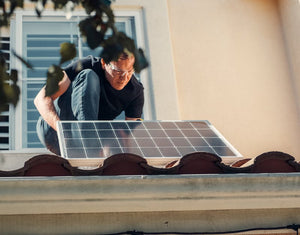
- Panel Count: Just 5–7 high-efficiency panels (410–550W) create a complete 3 kW array using minimal roof space (~150–200 sq ft).
In This Guide:
- Understanding a 3,000 Watt Solar System
- Daily Energy Production: What to Expect
- What Can a 3 kW System Actually Run?
- Battery Storage: Powering Through the Night
- Maximizing Your 3 kW System: Energy Efficiency Tips
- Limitations to Keep in Mind
- When to Scale Up: Growing Beyond 3 kW
- Frequently Asked Questions
Understanding a 3,000 Watt Solar System
A 3,000-watt (3 kW) solar system refers to the peak DC output of the solar panel array under standard test conditions (STC). This is the total rated wattage of all panels combined — not the amount of power available at any given moment, which varies with sunlight, temperature, and system efficiency. A 3 kW system is ideal for small homes, off-grid cabins, RVs, supplemental residential setups, and as a starter system that can be expanded over time.
Key System Components
Every 3 kW system requires four core components working together. Portlandia Electric Supply stocks all of these from leading manufacturers with nationwide delivery in 1–3 business days.
| Component | Function | Brands We Carry |
|---|---|---|
| Solar Panels | The engine of your system. A 3 kW array typically uses 5–7 high-efficiency modules (410–550W each), including bifacial and TOPCon technology for maximum yield. | JA Solar, Jinko, Canadian Solar, SEG Solar, Bluesun, Philadelphia Solar |
| Inverter | Converts DC power from panels into usable AC power. Options include string inverters, hybrid inverters with battery integration, and microinverters for panel-level optimization. | Sungrow, SMA, Sol-Ark, EG4, SolarEdge |
| Battery Storage | Stores excess daytime energy for nighttime use, cloudy days, and grid outages. Lithium-ion (LFP) is the current standard for residential and off-grid systems. | SimpliPhi, Fortress Power, Growatt, EG4 |
| Charge Controller / BMS | Regulates charging to protect battery life. MPPT controllers extract up to 30% more energy than PWM. Sol-Ark and EG4 hybrid inverters include integrated MPPT charge management. | Sol-Ark (integrated), EG4 (integrated), standalone MPPT options |
Daily Energy Production: What to Expect
The energy a 3 kW system generates depends on your location, panel orientation, shading, and seasonal sunlight. The core production formula is straightforward:
📐 The Production Formula:
System Size (kW) × Peak Sun Hours = Daily Energy (kWh)
Example: 3 kW × 5 peak sun hours = 15 kWh raw production. After 10–15% system losses (inverter conversion, wiring, temperature derating), real-world output is 12–14 kWh/day.
| Sunlight Conditions | Peak Sun Hours | Estimated Daily Output | Typical Regions |
|---|---|---|---|
| Overcast / Short Days | 3–4 hours | 9–12 kWh | Pacific Northwest winter, Northeast, rainy climates |
| Average Sunny Day | 5 hours | 13–15 kWh | Most U.S. regions, spring/fall baseline |
| Clear / Optimal | 6–7 hours | 16–18 kWh ⭐ | Southwest summer, ideal tilt angle, AZ/NV/TX |
💡 Pro Tip: Boost Output with Bifacial Panels
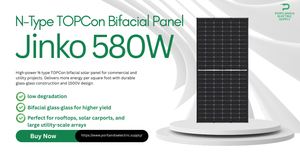
Using bifacial panels — like the JA Solar 545W or SEG Solar 550W bifacial modules available from Portlandia Electric Supply — can boost output by 5–25% by capturing reflected light from the ground. This is especially effective on light-colored surfaces (white gravel, concrete, sand) or ground-mount installations where the rear side has clear exposure.
What Can a 3 kW Solar System Actually Run?
With 12–15 kWh of daily production, a 3 kW system can comfortably power a range of household essentials. The key is understanding each appliance's wattage draw and managing simultaneous loads so you don't exceed 3,000 watts at any given moment. Below is a detailed breakdown by appliance category.
Kitchen Appliances
| Appliance | Power Draw (Watts) | Typical Daily Use | Daily Energy (Wh) |
|---|---|---|---|
| Refrigerator | 150–300 | 24 hrs (cycles on/off) | 1,200–2,000 |
| Microwave | 800–1,200 | 15–30 min | 200–600 |
| Toaster | 800–1,500 | 5–10 min | 65–250 |
| Electric Kettle | 1,200–1,500 | 5–10 min | 100–250 |
| Coffee Maker | 600–1,200 | 10–20 min | 100–400 |
Your refrigerator is the baseline load in most homes and runs efficiently on solar, cycling on and off throughout the day. Higher-draw devices like microwaves and electric kettles are fine for short bursts, but avoid stacking them simultaneously with other large loads — running a microwave and kettle at the same time pulls 2,000–2,700W, leaving little headroom.
Entertainment & Electronics
| Device | Power Draw (Watts) | Typical Daily Use | Daily Energy (Wh) |
|---|---|---|---|
| LED TV (55") | 50–150 | 4–6 hours | 200–900 |
| Sound System | 100–300 | 2–4 hours | 200–600 |
| Gaming Console | 120–200 | 2–3 hours | 240–600 |
| Laptop | 40–70 | 6–8 hours | 240–560 |
| Phone / Tablet Charger | 5–15 | 2–3 hours | 10–45 |
| Wi-Fi Router | 10–20 | 24 hours | 240–480 |
Entertainment devices are generally low-draw and solar-friendly. A 3 kW system can keep your TV, laptop, Wi-Fi, and sound system running throughout the day without issue. These loads combined typically total just 300–700W — well within the system's capacity even while other appliances are running.
Heating, Cooling & Climate Control
| Appliance | Power Draw (Watts) | Solar Compatibility | Recommendation |
|---|---|---|---|
| Ceiling Fan | 30–75 | ✅ Excellent | Run several simultaneously, no issues |
| Electric Blanket | 60–100 | ✅ Excellent | Low draw, ideal for overnight use with battery |
| Window AC Unit | 500–1,500 | ⚠️ Moderate | Best during peak sun hours; pair with battery for extended use |
| Portable Heater | 1,000–1,500 | ⚠️ Limited | Use one at a time; stagger with other high-draw loads |
⚠️ Central HVAC Is Beyond 3 kW Capacity
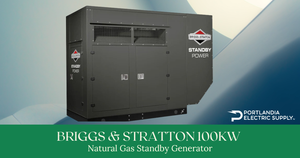
Climate control is the biggest energy consumer in most homes. A 3 kW system handles ceiling fans and small, efficient cooling or heating units, but central HVAC systems draw 3,000–5,000+ watts and are beyond this system's capacity. For whole-home heating and cooling, consider scaling up to a larger array or pairing solar with a Generac, Cummins, or Briggs & Stratton standby generator for seamless backup.
LED Lighting
Ten LED bulbs at 10 watts each draw only 100 watts total. Running them for 6–8 hours per day uses just 600–800 Wh — a fraction of your daily energy budget. LED lighting is one of the best returns on any solar investment, and a 3 kW system can power your entire home's lighting with energy to spare.
Battery Storage: Powering Through the Night
A 3 kW solar system generates power only when the sun is shining. Battery storage bridges the gap, storing surplus daytime energy for evening use, cloudy days, and grid outages. Choosing the right battery bank is just as important as choosing the right panels — undersizing your storage means losing excess production, while oversizing adds unnecessary cost.
Battery Options from Portlandia Electric Supply
| Battery Type | Key Brands We Carry | Depth of Discharge | Best For |
|---|---|---|---|
| Lithium-Ion (LFP) | SimpliPhi, Fortress Power, EG4, Growatt | 80–90% | Most residential & off-grid systems; long lifespan, low maintenance ⭐ |
| Lead-Acid (AGM/Flooded) | Various | ~50% | Budget-sensitive projects; requires maintenance and more frequent replacement |
| All-in-One Storage | SimpliPhi AccESS, EG4 PowerPro | 80–90% | Turnkey solutions with integrated inverter and BMS — plug and play |
How Long Will Your Battery Last?
| Battery Capacity | Runtime at 500W Load | Runtime at 1,000W Load | Runtime at 3,000W Load |
|---|---|---|---|
| 5 kWh | ~8 hours | ~4 hours | ~1.5 hours |
| 10 kWh | ~16 hours | ~8 hours | ~3 hours |
| 15 kWh | ~24 hours ⭐ | ~12 hours | ~4.5 hours |
🔋 Our Recommendation
"For a 3 kW system, a 10–15 kWh lithium battery bank provides the best balance of overnight coverage and multi-day resilience. The SimpliPhi AccESS 15.2 is one of our top-selling all-in-one solutions — code-compliant, maintenance-free, and built for reliability. At 500W overnight load (fridge, Wi-Fi, LED lighting), a 15 kWh bank runs through the entire night with capacity to spare."
Maximizing Your 3 kW System: Energy Efficiency Tips
Getting the most from a 3 kW solar system isn't just about equipment — it's about smart energy management. With a smaller system, every watt counts. Here are six strategies to stretch every kilowatt-hour further.
✅ Six Ways to Maximize a 3 kW Solar System:
- Run High-Draw Appliances During Peak Sun (10 AM – 3 PM): Operate your washing machine, dishwasher, and microwave during peak production hours to use solar power directly rather than draining your battery bank.
- Choose ENERGY STAR Appliances: Replacing older appliances with energy-efficient models can cut consumption by up to 30%, effectively extending the reach of your 3 kW system.
- Invest in LED Lighting Throughout Your Home: LEDs use up to 80% less energy than incandescent bulbs and last significantly longer — one of the highest-ROI upgrades for any solar household.
- Improve Home Insulation: Sealing drafts and adding thermal curtains reduces heating and cooling loads — the single largest energy demand in most homes and the factor most likely to exceed a 3 kW system's capacity.
- Monitor Performance with Smart Tools: Use monitoring apps from Growatt (ShineTools), SolarEdge, or Sol-Ark to track daily production and consumption in real time. Spotting waste early lets you adjust load scheduling.
- Use MPPT Technology: MPPT charge controllers extract up to 30% more energy from your panels compared to PWM controllers. Sol-Ark and EG4 hybrid inverters include built-in MPPT tracking — no separate controller needed.
Limitations to Keep in Mind
A 3 kW solar system is a capable and cost-effective solution, but it's not a whole-home powerhouse. Knowing its boundaries upfront helps you design a system that performs reliably and set realistic expectations for daily use.
| Limitation | What It Means | How to Address It |
|---|---|---|
| 3,000W Peak Capacity | Can't run multiple high-draw devices simultaneously (e.g., AC + oven + dryer) | Stagger loads; use smart plugs or timers to avoid simultaneous peaks |
| Limited Battery Backup | Smaller battery banks may only cover 3–6 hours overnight | Size battery to 10–15 kWh; consider SimpliPhi AccESS or Fortress Power |
| Weather Dependency | Cloudy, rainy, or short winter days significantly reduce output | Pair with a standby generator for uninterrupted power |
| Roof / Space Requirements | A 3 kW array needs approximately 150–200 sq ft of unshaded space | Use high-wattage panels (545W+) to reduce panel count; consider ground mounts |
| High-Startup Appliances | Pumps and compressors have surge wattage that may exceed 3 kW momentarily | Choose inverters with high surge ratings; Sol-Ark handles up to 2× rated capacity |
When to Scale Up: Growing Beyond 3 kW
If your energy needs exceed what a 3 kW system can deliver, scaling up is straightforward — especially when you start with quality components from Portlandia Electric Supply. Here are the four most common upgrade paths.
| Upgrade Path | What It Does | Key Considerations |
|---|---|---|
| Add Panels | Increases total array wattage and daily kWh production | Verify your inverter's max PV input rating first. We carry 410W–550W panels, so fewer modules deliver more power. |
| Upgrade Battery Storage | Extends overnight backup and energy independence | Lithium-ion systems from Fortress Power and Growatt are modular — start small and add capacity as budget allows. |
| Add Backup Generator | Provides seamless, all-weather power for mission-critical reliability | Generac Protector, Cummins RS Series, or Briggs & Stratton standby units integrate with solar + storage systems. |
| Hybrid Inverter Upgrade | Adds battery integration, backup capability, and smart energy management | Sol-Ark or EG4 hybrid inverters turn a simple grid-tied system into a resilient, self-sufficient power platform. |
💡 Pro Tip: Start with the Right Inverter
If you're starting with 3 kW but plan to expand, choose a hybrid inverter rated for your eventual target system size from day one. The Sol-Ark 12K or EG4 18kPV can manage a 3 kW array today and scale seamlessly to 12–18 kW without an inverter swap — saving thousands in future retrofit costs. Ask our NABCEP-certified staff to spec your inverter for growth.
Related Products


Trina Solar Vertex S Series -PALLET 385Watt 120 1/2 Cells Bifacial Clear Monocrystalline (1 Pallet) Solar Panel - TSM-DE09C.07
ViewReady to Build Your 3 kW Solar System?
Portlandia Electric Supply stocks everything you need — Tier 1 panels, advanced inverters, lithium battery banks, and backup generators — with 3,800+ SKUs in stock, 1–3 day nationwide delivery, free shipping, and NABCEP-certified staff for expert guidance.
Get a Custom System Quote Shop Solar PanelsFrequently Asked Questions
Can a 3,000-watt solar system run an air conditioner?
A small, energy-efficient window unit (500–900W) can run during peak sun hours when the system is producing at full capacity. Larger central AC systems draw 3,000–5,000+ watts and will exceed a 3 kW system's capacity. For the best solar-compatible cooling, pair an efficient mini-split unit with battery storage to extend runtime into the evening hours.
How many solar panels do I need for a 3 kW system?
The panel count depends on individual panel wattage. Using 545W bifacial panels from JA Solar, you'd need just 6 panels. With 410W modules, plan for 7–8 panels. Higher-wattage panels reduce the total panel count and roof space required while delivering the same 3 kW system output. Portlandia Electric Supply carries all major wattages from Tier 1 manufacturers with free nationwide shipping.
Is 3 kW enough to go off-grid?
For a small home or cabin with energy-efficient appliances, yes — a 3 kW system can support off-grid living. You'll need adequate battery storage (10–15 kWh minimum) and a hybrid inverter to manage loads intelligently. For added reliability during extended cloudy periods or winter, consider pairing the system with a portable or standby generator as backup. Smart load management and efficient appliances are essential to staying within the system's daily energy budget.
What inverter should I use with a 3 kW solar system?
For grid-tied systems, a Sungrow or SMA string inverter offers excellent efficiency and reliability at the 3 kW scale. For hybrid or off-grid setups, the Sol-Ark 12K or EG4 18kPV provides battery integration, backup power capability, built-in MPPT charge management, and smart monitoring in a single unit — and both are sized to accommodate future system expansion without needing replacement.
How much does a 3 kW solar system cost?
Equipment costs for a 3 kW system (panels, inverter, racking, and wiring) typically range from $3,000 to $6,000, depending on panel quality, inverter type, and whether battery storage is included. Adding a 10–15 kWh lithium battery bank adds $4,000–$8,000. Professional installation typically adds $2,000–$4,000. Contact Portlandia Electric Supply for competitive equipment pricing and pre-configured system kits that simplify ordering.
What can I run on a 3 kW solar system at the same time?
A typical simultaneous load within 3 kW capacity includes a refrigerator (200W), LED lighting (100W), Wi-Fi router (15W), laptop (60W), TV (100W), and phone charger (10W) — totaling about 485W, which leaves 2,500W of headroom for additional appliances like a microwave or washing machine. The key is avoiding multiple high-draw devices (heater + microwave + kettle) at the same time, which would exceed 3,000W and trip your inverter's overload protection.
Does Portlandia Electric Supply offer 3 kW system kits?
Yes. Portlandia Electric Supply offers pre-configured solar panel power system kits for residential and commercial applications, including 3 kW configurations. Our NABCEP-certified staff can also help you spec a custom solution tailored to your specific energy needs, roof layout, and budget. Browse our kits at portlandiaelectric.supply or contact our team directly at (888) 876-0007 for a personalized recommendation.
How much roof space does a 3 kW solar system require?
A 3 kW array requires approximately 150–200 sq ft of unshaded roof space, depending on panel wattage. Using high-wattage 545W panels, you need just 6 panels occupying roughly 120 sq ft. With standard 410W panels, you'll need 7–8 panels occupying approximately 150–160 sq ft. If roof space is limited, high-wattage bifacial panels or ground-mount installations are effective alternatives.
About Portlandia Electric Supply
Portlandia Electric Supply is a nationwide electrical supply distributor offering premium Tier 1 solar panels, standby generators, inverters, and related electrical equipment. With 3,800+ in-stock SKUs, 12+ distribution hubs, and a network of 8,500+ solution providers, we deliver turnkey power solutions with live support and fast nationwide delivery.
📍 Location: 1507 Portland Ave, Louisville, KY, United States 📞 Phone: +1 888-876-0007 🌐 Website: www.portlandiaelectric.supply
Article: What Can a 3000 Watt Solar System Run? — Your Complete 2026 Guide
Category: Solar Energy / System Sizing
Last Updated: February 2026
Related Articles: How Many Solar Panels Do I Need for a 3,000 Sq Ft Home? | Why Modern Solar Panels Are Shifting to N-Type Silicon | Backup Power Solutions: The Complete Generator Buyer's Guide
Related Resources:
- Best Solar Panels 2026 — Buyer's Guide
- EG4 vs Tesla Powerwall
- Qcells vs Trina vs JA
- Solar Inverter Buyer's Guide
- Solar Battery Buyer's Guide
- 5kW Solar Kit
- 10kW Solar + Battery Kit
- Off-Grid Cabin Kit
- EG4 Batteries
- Qcells Solar Panels
- Trina Solar
- JA Solar
- REC Solar
- Mission Solar
- Sol-Ark Inverters
- SolarEdge Inverters
- Generac PWRcell
Calculate how much storage you need with our battery sizing calculator.
Check solar incentives available in your state.
Use our free solar system calculator to size your array.
Check out our Solar Panel Comparison Tool. Check out our Inverter Sizing Calculator.
Calculate your solar payback and 25-year savings with our Solar ROI Calculator. Follow our complete DIY solar installation guide for step-by-step instructions. Keep your system running at peak performance with our Solar Maintenance Guide.
Related Resources
- Solar System Calculator
- Battery Sizing Calculator
- Solar Panel Comparison Tool
- Inverter Sizing Calculator
- Solar ROI Calculator
- Solar Installation Guide
- Solar Maintenance Guide
- Solar Permitting Guide
- Battery Installation Guide
- NEC Code Compliance Guide
- Solar Panel Mounting Guide
- Grounding & Bonding Guide
- Solar Incentives by State
- Pro Account — Wholesale Pricing
- PowerLink Network — Contractor Program
Frequently Asked Questions
How long do solar batteries last?
Most lithium-ion solar batteries last 10-15 years or 6,000+ cycles. The 20-80% charging rule extends battery life significantly.
What size battery do I need?
Battery sizing depends on your backup power needs. A typical home needs 10-15kWh of storage for overnight backup. Calculate your critical loads first.
Are batteries BABA-compliant?
PES Supply provides BABA documentation for qualifying products. Contact us for specific compliance documentation.
Shop Related Products
PES Supply carries 80,000+ products from 300+ manufacturers. One PO, one invoice, every trade covered.
Need help sizing? Our team can calculate loads, select equipment, and source everything from one PO.
Call (502) 790-0600