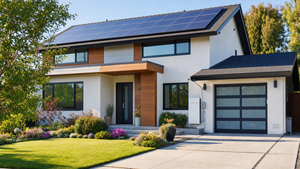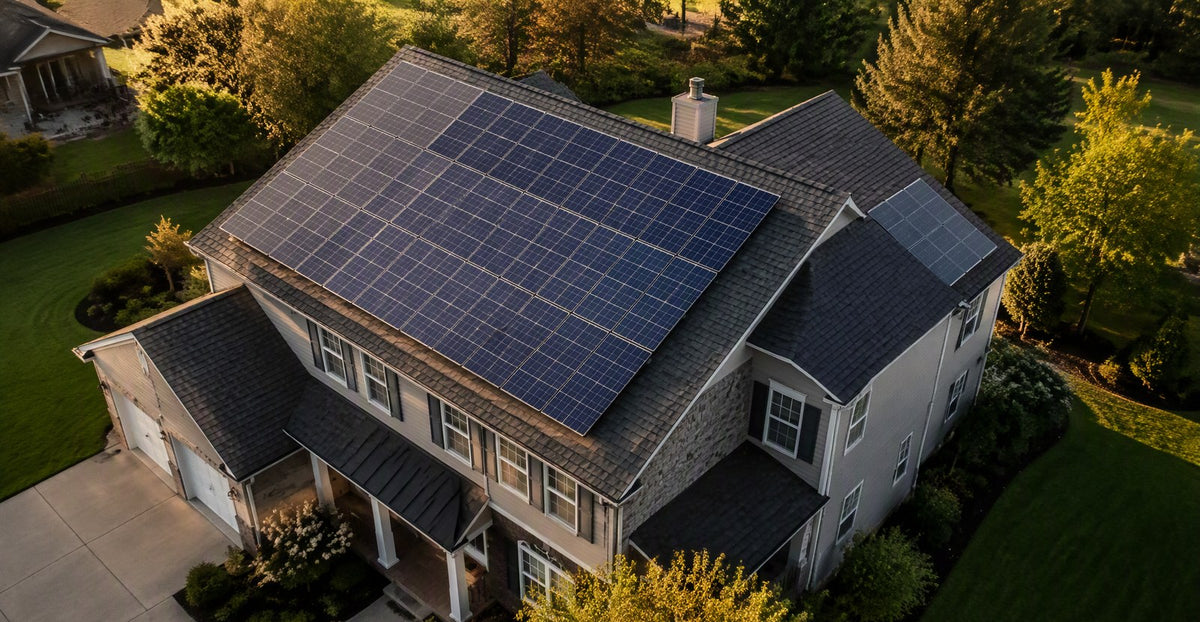
Thinking about powering your 3,000 sq ft home with solar energy? The answer to "how many panels do I need?" depends on several factors — your energy consumption, available roof space, local sunlight hours, and the quality of the panels you choose. This guide walks you through the entire sizing process step by step, with real calculations and comparison tables, so you can make a confident, informed decision. Browse our full lineup of Tier 1 solar panels to see what's available for your project.
Explore the Solar Hub → panel sizing guides, brand comparisons, and in-stock kits in one place.
Whether you're a homeowner planning your first system or a contractor sizing a residential project, this guide covers everything from reading your utility bills to choosing between panel technologies, accounting for seasonal variation, and future-proofing your investment with battery storage. At PES Supply, we back every project with Tier 1 panels, inverters, batteries, and complete balance-of-system components — all shipped nationwide with live technical support.
⚡ Key Takeaways
- Panel Count: Most 3,000 sq ft homes need 20–30 solar panels to cover 100% of electricity usage.
- Sizing Formula: Daily kWh ÷ (Panel Wattage × Peak Sun Hours) = Number of Panels. A 40 kWh/day home with 350W panels and 5 sun hours needs ~23 panels.
- Panel Choice Matters: Higher-efficiency Tier 1 monocrystalline panels (400–450W) reduce total panel count and balance-of-system costs.
- Build in a Buffer: Add 10–20% extra capacity for seasonal peaks, future EV charging, and system losses.
- Efficiency First: Reducing consumption before going solar (LED lighting, insulation, smart thermostats) lowers panel count and upfront cost.
In This Guide:
- Step 1: Calculate Your Energy Consumption
- Step 2: Assess Your Roof Space
- Step 3: Choose the Right Panel Type
- Step 4: Estimate Panel Output
- Step 5: Consider Sunlight Availability
- Step 6: Maximize Your Home's Energy Efficiency
- Step 7: Plan for Future Energy Needs
- Putting It All Together: Your Panel Calculation
- Key Factors That Affect Your Panel Count
- Frequently Asked Questions
Step 1: Calculate Your Energy Consumption
Understanding your home's energy usage is the foundation of any solar project. Before selecting panels or requesting quotes, you need a clear picture of how much electricity you actually consume — and when you consume it. Here's how to determine your baseline.
Estimate Your Monthly Electricity Use
Pull your electricity bills for the past 12 months and find your average monthly usage in kilowatt-hours (kWh). A typical 3,000 sq ft home consumes between 1,000 and 1,500 kWh per month, though this varies significantly based on climate zone, household size, appliance efficiency, and heating/cooling type. Your utility bill will list monthly kWh usage — look for a 12-month summary or usage history chart.
Identify High-Energy Appliances
HVAC systems, electric water heaters, refrigerators, pool pumps, and EV chargers are among the biggest energy consumers in a 3,000 sq ft home. Identifying these loads helps your installer design a system that genuinely covers your needs — not just an estimate based on square footage. If you're running a home office with multiple monitors and networking equipment, or operating a hot tub or heated pool, those loads should be factored in separately.
Calculate Daily Energy Use
Divide your average monthly kWh by 30 to get your daily energy consumption. For example, 1,200 kWh/month ÷ 30 = 40 kWh/day. This daily number is the critical input for the solar sizing formula you'll use in Step 4.
Account for Seasonal Variation
Energy use fluctuates with the seasons — cooling demands spike in summer, while heating increases winter consumption. Reviewing your bills across the full year identifies these peaks. Most solar sizing should target your annual average rather than your peak month, but if you live in a climate with extreme summer or winter loads, designing for 80–90% of your peak month ensures year-round coverage.
| Month | Usage (kWh) | Daily Avg (kWh) | Seasonal Note |
|---|---|---|---|
| January | 1,100 | 36.7 | Heating load |
| February | 1,050 | 35.0 | Heating load |
| March | 1,200 | 40.0 | Transitional |
| April | 900 | 30.0 | Low season |
| May | 950 | 31.7 | Low season |
| June | 1,300 | 43.3 | Cooling ramp-up |
| July | 1,400 | 46.7 | ⚡ Peak cooling |
| August | 1,350 | 45.0 | ⚡ Peak cooling |
| September | 1,100 | 36.7 | Transitional |
| October | 1,000 | 33.3 | Low season |
| November | 1,150 | 38.3 | Heating starts |
| December | 1,250 | 41.7 | Heating + holidays |
Pricing a system like this? Get a free solar system quote — PES designs and ships complete kits nationwide.
📊 Reading the Table Above
"This sample home averages 1,146 kWh/month (38.2 kWh/day) across the year, but peak summer months hit 1,400 kWh (46.7 kWh/day). Sizing your system to the annual average of ~40 kWh/day covers roughly 95% of annual consumption. Sizing to the July peak covers 100% but adds 3–5 more panels and higher upfront cost."
Step 2: Assess Your Roof Space
A 3,000 sq ft home typically has ample roof area for solar, but usable space depends on roof shape, pitch, orientation, and obstructions. South-facing roof sections receive the most sunlight in the Northern Hemisphere, meaning you may need fewer panels if your primary array faces south. East- and west-facing sections produce roughly 80–85% of south-facing output, while north-facing sections are generally unsuitable.
Calculate Available Roof Area
Start with your total roof area and subtract space occupied by chimneys, plumbing vents, skylights, HVAC equipment, and required fire code setbacks (typically 3 feet from ridge and eaves in most jurisdictions). Here's a typical calculation for a 3,000 sq ft home:
| Roof Feature | Area (sq ft) | Notes |
|---|---|---|
| Total Roof Area | 3,000 | Typical for this home size |
| Chimneys & Vents | −150 | ~5% reduction |
| Skylights | −100 | ~3% reduction |
| Usable Roof Space | 2,750 | Available for panels (before setbacks) |
Panel Size & Spacing Requirements
Standard residential solar panels measure approximately 17.5 sq ft each (roughly 65" × 39"). With required spacing of about 2.5 sq ft between panels for airflow, maintenance access, and wiring, each panel occupies roughly 20 sq ft of roof space. For 2,750 sq ft of usable area, that yields a maximum capacity of approximately 137 panels — well more than any residential system will need. Even after accounting for fire setbacks and optimal orientation, most 3,000 sq ft homes have space for 30–50 panels comfortably.
💡 Pro Tip: Don't Forget Fire Code Setbacks
Most jurisdictions require 3-foot setbacks from the roof ridge and eaves for firefighter access. Some California jurisdictions require additional pathways. Check your local fire code before finalizing panel placement — setbacks can reduce usable area by 15–25% more than you'd expect from obstructions alone. Your installer should account for this in their site survey.
Step 3: Choose the Right Panel Type
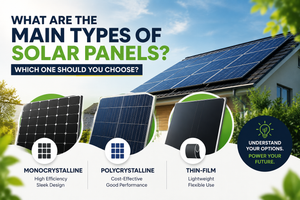
The type of solar panel you select directly impacts your system's performance, panel count, and total cost. At PES Supply, we carry Tier 1 solar panels from trusted manufacturers including Aptos Solar, Trina, Canadian Solar, and more. Here's how the three main panel technologies compare for residential installations in 2026:
| Panel Type | Efficiency | Cost | Roof Space Needed | Best For |
|---|---|---|---|---|
| Monocrystalline (N-Type) | 20–26% | Higher | Low | Limited roof space, hot climates, max performance ⭐ |
| Polycrystalline | 13–16% | Medium | Medium | Budget-conscious, ample roof space |
| Thin-Film | 10–12% | Lower | High | Large flat commercial roofs |
💡 Pro Tip: Monocrystalline Is the 2026 Residential Standard
Monocrystalline panels — particularly N-type TOPCon and HJT variants — dominate the residential market in 2026 because they deliver the highest output per square foot, the lowest degradation rates, and the longest warranties. The cost gap with polycrystalline has narrowed to the point where monocrystalline offers better lifetime value for nearly every residential project. Our team can help you compare specific models based on your roof and budget.
Step 4: Estimate Panel Output
Modern residential solar panels produce between 300 and 450 watts each. The actual energy a panel generates daily depends on its wattage rating and the number of peak sunlight hours your location receives — typically 4–6 hours for most of the continental U.S.
The Solar Sizing Formula
📐 The Core Sizing Equation:
Number of Panels = Daily Energy Use (kWh) ÷ (Panel Wattage in kW × Peak Sun Hours)
Example: A home using 40 kWh/day with 350W panels and 5 peak sun hours: 40 ÷ (0.35 × 5) = 40 ÷ 1.75 = 23 panels.
The table below shows how panel wattage and sunlight hours interact to determine panel count for a home using 40 kWh/day. Higher-wattage panels and more sun hours both reduce the total number of panels required.
| Panel Wattage | Peak Sun Hours | Daily Output per Panel (kWh) | Panels Needed for 40 kWh/day |
|---|---|---|---|
| 300W | 4 | 1.20 | 34 |
| 350W | 5 | 1.75 | 23 |
| 400W | 5 | 2.00 | 20 |
| 450W | 6 | 2.70 | 15 ⭐ |
⚠️ Don't Forget System Losses
The formula above uses ideal output. Real-world systems experience 10–15% losses from inverter conversion, wiring resistance, soiling, temperature derating, and shading. A professional installer using PVsyst, Helioscope, or Aurora will model these losses for your specific site. When doing your own rough estimate, add a 15% buffer to your panel count to account for these real-world factors.
Step 5: Consider Sunlight Availability
Your geographic location plays a major role in system sizing. Homes in the Southwest (Arizona, Nevada, Southern California, West Texas) enjoy 6+ peak sun hours daily, while the Pacific Northwest and Northeast may see only 3–4 hours. PES Supply serves customers nationwide and understands these regional differences.
| Peak Sunlight Hours/Day | Impact on System Size | Example Regions |
|---|---|---|
| 3–4 hours | More panels needed; prioritize high-efficiency 440–520W+ panels | Seattle, Portland, Buffalo, Cleveland |
| 5–6 hours | Moderate panel count; good for most system designs | Louisville, Dallas, Atlanta, Denver, Sacramento |
| 6+ hours | Fewer panels needed; excellent solar potential ⭐ | Phoenix, Las Vegas, Tucson, El Paso, Bakersfield |
⚠️ Watch for Shading
Shading from trees, neighboring buildings, or rooftop obstructions can significantly reduce panel output. Even partial shade on a single panel can drag down an entire string in a traditional string inverter setup. If your roof has shading issues, ask your installer about microinverters or power optimizers — technologies from manufacturers like Enphase and APsystems that allow each panel to operate independently, minimizing shading losses across the array.
Step 6: Maximize Your Home's Energy Efficiency
Before finalizing your solar system size, consider reducing your energy consumption first. An efficient home needs fewer panels, which lowers your upfront investment and improves your payback timeline. Even modest efficiency improvements can eliminate 2–5 panels from your system — saving $1,000–$3,000 in equipment and installation costs.
✅ Efficiency Checklist — Do Before You Size Your Solar System:
- LED Lighting: Replace all incandescent and CFL bulbs with LEDs — reduces lighting energy use by 75%.
- ENERGY STAR Appliances: Upgrade refrigerator, dishwasher, washer, and dryer to ENERGY STAR-rated models.
- Air Sealing & Insulation: Seal drafts around windows, doors, and attic access. Add attic insulation to R-38 or higher.
- Smart Thermostat: Install a programmable or smart thermostat (Nest, Ecobee) to optimize HVAC scheduling and setbacks.
- Heat Pump: Consider upgrading to a high-efficiency heat pump for heating and cooling — COP of 3.0+ delivers 3× the energy per kWh compared to electric resistance heating.
Step 7: Plan for Future Energy Needs
Solar panels last 25–30+ years, so it's wise to plan ahead. Consider whether you'll be adding an electric vehicle (EV charging can add 300–500 kWh/month), a home office, a hot tub, expanding your living space, or switching from gas to electric appliances. Building in 10–20% extra capacity now is far more cost-effective than adding panels later — additional panels require new permitting, potential inverter upgrades, and a second installation crew visit.
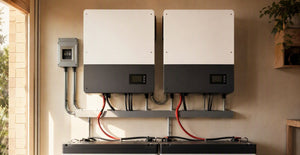
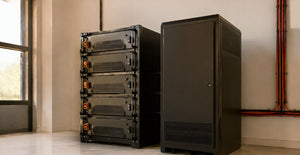
PES Supply also offers battery storage and hybrid inverter kits that let you store excess solar energy for nighttime use or backup power during grid outages — future-proofing your investment against rising utility rates and increasing grid instability.
💡 Pro Tip: Size for the EV You'll Buy in 3 Years
The average American EV driver adds 300–500 kWh/month to their home's electricity consumption. If an EV purchase is on your 2–5 year horizon, adding 3–5 extra panels now (roughly $1,500–$3,000 in additional cost) can save $5,000–$8,000 versus retrofitting later. Ask your installer to size your inverter for the expanded array from day one.
Putting It All Together: Your Panel Calculation
Here's a complete worked example for a typical 3,000 sq ft home, pulling together every step from this guide. This assumes a home with average energy consumption, moderate sunlight, and 350W monocrystalline panels — a common real-world scenario.
| Step | Calculation | Result |
|---|---|---|
| 1. Monthly Energy Use | Average from 12 months of utility bills | 1,200 kWh/month |
| 2. Daily Energy Use | 1,200 ÷ 30 days | 40 kWh/day |
| 3. Panel Daily Output | 350W × 5 peak sun hours | 1.75 kWh/panel/day |
| 4. Base Panel Count | 40 ÷ 1.75 | 23 panels |
| 5. With 15% Buffer | 23 × 1.15 (system losses + future needs) | ~27 panels |
The Bottom Line on Panel Count
"For most 3,000 sq ft homes, 20 to 30 panels will cover energy needs. The exact number depends on your specific consumption, geographic location, panel efficiency, and whether you want to offset 100% of your electricity or a portion of it. Higher-wattage Tier 1 panels (400–450W) can bring the count to the lower end of that range while delivering superior long-term performance."
Key Factors That Affect Your Panel Count
Every solar installation is unique. Here's a summary of the variables that move your panel count up or down — use this as a quick reference when comparing quotes from installers or sizing your own system.
| Factor | Fewer Panels Needed | More Panels Needed |
|---|---|---|
| Roof Orientation | South-facing (100% output) | East/West-facing (80–85% output) |
| Peak Sunlight Hours | 6+ hours (Southwest) | 3–4 hours (Pacific NW, Northeast) |
| Panel Efficiency | High-efficiency 400–450W Tier 1 | Budget 300W panels |
| Home Efficiency | Efficient home (LED, insulation, heat pump) | Older home, electric resistance heating |
| Climate | Mild year-round climate | Extreme summers or winters |
| Future Loads | No major additions planned | EV, hot tub, home office, expansion |
Related Products


Ready to Size Your Solar System?
Whether you're a homeowner planning your first system or a contractor building your next project, PES Supply provides technical support, fast nationwide shipping, and competitive pricing on Tier 1 panels, inverters, batteries, and complete balance-of-system components.
Get a Free System Quote Shop Solar PanelsSquare Footage Is a Proxy — Your Usage Is What Matters
The honest caveat: nobody sells solar by the square foot. Panel count is driven by kilowatt-hours consumed, and two 3,000 sq ft homes can differ by 2–3× in usage depending on HVAC, insulation, pools, hot tubs, and EV charging.
Rule of thumb: the average 3,000 sq ft US home uses 1,200–1,600 kWh per month (40–53 kWh/day). Pull 12 months of utility bills, find your real monthly kWh, and size from that number — then use the tables below for a fast cross-check.
Sizing Table by Monthly Usage Band
Using 4.5 peak sun hours (US average) and an 80% system derate for inverter, wiring, temperature, and soiling losses:
| Monthly usage | Daily usage | Recommended system size | 400W panels | 550W panels | Roof area needed |
|---|---|---|---|---|---|
| 900 kWh | 30 kWh | ~7 kW | 17–18 | 12–13 | ~310–390 sq ft |
| 1,200 kWh | 40 kWh | ~9–10 kW | 23 | 17 | ~415–510 sq ft |
| 1,600 kWh | 53 kWh | ~12–13 kW | 30 | 22 | ~540–660 sq ft |
| 2,000 kWh | 67 kWh | ~15 kW | 37–38 | 27–28 | ~670–840 sq ft |
If your bills land near the middle band, our walkthrough on how many solar panels you need for 1,500 kWh per month goes deeper on that exact scenario. When you're ready to price a complete package, browse our solar panel power system kits with matched panels, inverters, and racking.
Panel Count by Wattage Class
Higher-wattage panels shrink the count — and the racking, wiring, and labor that come with each module:

Panels needed by usage band and panel wattage (4.5 peak sun hours, 80% derate)
Roof Area Check: 3,000 Sq Ft Homes Usually Fit 8–12 kW
Modern residential panels measure about 75–80 × 40 inches (~21 sq ft) and, with code-required setbacks and inter-row spacing, budget 18–22 sq ft of roof per panel. That puts an 8 kW system at roughly 360–440 sq ft and a 12 kW system at 540–660 sq ft of usable, mostly-unshaded roof.
- A 3,000 sq ft two-story home typically presents 1,500–2,000+ sq ft of roof surface — so a full-offset 8–12 kW array fits comfortably on one good plane in most layouts.
- Orientation matters more than area: south-facing planes produce the most per panel in the northern hemisphere; west-facing runs ~10–15% less but matches afternoon peak rates better.
- Subtract obstructions: chimneys, skylights, vent stacks, and tree shade each knock out panel positions. A quick satellite assessment (or a photo of your roof) usually settles feasibility in minutes — call us at (502) 790-0600 if you want a second set of eyes.
3,000 Sq Ft Solar Sizing: Quick FAQ
How many solar panels do I need for a 3,000 sq ft home?
Most 3,000 sq ft US homes use 1,200–1,600 kWh per month, which typically translates to a 8–12 kW system — roughly 20–30 panels at 440–520W each, or 15–22 panels at 580–615W (72-cell). The exact count depends on your actual kWh usage, local peak sun hours, and panel wattage, not the square footage itself.
Is square footage a good way to size a solar system?
It's only a rough proxy. Two identical 3,000 sq ft homes can differ by 2–3× in electricity use depending on HVAC type, insulation, pool equipment, EV charging, and occupancy. Always size from 12 months of actual utility bills in kWh; use square footage only for a first-pass estimate and a roof-area sanity check.
How many kWh does a 3,000 sq ft home use per month?
A typical 3,000 sq ft American home uses between 1,200 and 1,600 kWh per month — about 40–53 kWh per day. Homes with electric resistance heat, pools, or multiple EVs can exceed 2,000 kWh; efficient gas-heated homes may stay under 1,000 kWh.
How many 400-watt solar panels do I need for 1,500 kWh per month?
About 28 panels. The math: 1,500 kWh/month ÷ (0.4 kW × 4.5 peak sun hours × 30 days × 0.8 system derate) ≈ 27.8. In sunnier regions (5.5+ sun hours) you might need only 23; in cloudier areas (3.5 hours) closer to 36.
Will an 8–12 kW solar system fit on a 3,000 sq ft home's roof?
Almost always yes. An 8–12 kW array needs roughly 400–700 sq ft of usable roof area at modern panel sizes (~18–22 sq ft per panel including setbacks). A 3,000 sq ft home typically has 1,500–2,000+ sq ft of roof, so even after chimneys, vents, and shading exclusions there's usually ample space on a south- or west-facing plane.
How many solar panels for 2,000 kWh per month?
Plan on a 13–15 kW system: about 33–37 panels at 400W or 24–27 panels at 550W in average US sun (4.5 peak hours). That's common for large all-electric homes with EVs — and usually still fits a 3,000 sq ft home's roof.
Frequently Asked Questions
How many solar panels does a 3,000 sq ft home typically need?
Most 3,000 sq ft homes require between 20 and 30 solar panels to offset 100% of their electricity usage, depending on monthly energy consumption (typically 1,000–1,500 kWh), panel wattage (300–450W), and available peak sunlight hours (3–6 hours depending on location). A home using the national average of ~40 kWh/day with 350W panels and 5 peak sun hours needs approximately 23 panels, plus a 15% buffer for system losses, bringing the total to roughly 27 panels.
Can solar panels fully power a large home?
Yes. With a properly sized system and battery storage, solar can cover 100% of a large home's electricity needs. The key is accurate sizing based on your actual utility bills (not just square footage), selecting high-efficiency panels to maximize production per square foot, and pairing the array with a battery and hybrid inverter system for nighttime and outage coverage. PES Supply offers complete hybrid kits that combine panels, inverters, and battery storage for whole-home solar power.
What size solar system do I need for a 3,000 sq ft house?
A 3,000 sq ft home typically needs a 7–12 kW solar system, depending on energy consumption and location. The sizing formula is straightforward: take your daily kWh usage, divide by (panel wattage × peak sun hours), and add a 15% buffer. For example, a home using 1,200 kWh/month in a region with 5 peak sun hours would need approximately a 9.5 kW system (about 27 panels at 350W each). Higher-wattage 400–450W panels can achieve the same system size with fewer physical panels.
How much roof space do I need for solar panels?
Each standard residential solar panel requires approximately 20 sq ft of roof space (17.5 sq ft for the panel plus 2.5 sq ft for spacing and airflow). For a typical 20–30 panel system, you'll need 400–600 sq ft of usable, unobstructed roof area — ideally south-facing. A 3,000 sq ft home generally has far more available roof space than needed, even after accounting for chimneys, vents, skylights, and fire code setbacks.
Does the direction my roof faces matter for solar?
Yes, roof orientation significantly impacts solar production. In the Northern Hemisphere, south-facing roofs receive the most direct sunlight and produce the maximum energy output. East- and west-facing roof sections produce roughly 80–85% of what a south-facing array generates, which can be compensated with a few additional panels. North-facing sections are generally unsuitable for solar. If your roof has multiple orientations, a professional site survey will identify the optimal panel placement for your specific layout.
Should I reduce my energy consumption before going solar?
Absolutely. Reducing your home's energy consumption before sizing your solar system means you need fewer panels, which directly lowers your upfront investment. Simple upgrades like LED lighting, air sealing, insulation, smart thermostats, and ENERGY STAR appliances can reduce electricity usage by 10–25%. Even cutting 200 kWh/month from your consumption eliminates 2–4 panels from your system — saving $1,000–$3,000 in equipment and installation costs while improving your payback timeline.
What brands does PES Supply carry?
PES Supply partners with industry-leading manufacturers including Aptos Solar, Trina Solar, Canadian Solar, Enphase, Fronius, GoodWe, Generac, Delta, CPS, Chilicon Power, APsystems, and more. All panels we carry are Tier 1 certified for performance and bankability. Our product lineup spans complete solar systems — panels, string and microinverters, battery storage/ESS solutions, and full balance-of-system components — all available with nationwide shipping and live technical support.
How much does a solar system cost for a 3,000 sq ft home?
Total system cost varies by panel selection, inverter type, battery inclusion, and installation complexity, but a 7–12 kW residential system for a 3,000 sq ft home typically ranges from $15,000 to $35,000 before incentives for equipment and installation combined. Higher-efficiency panels cost more per watt but require fewer panels and less labor, often resulting in comparable or lower total project cost. Contact PES Supply for competitive equipment pricing and let us help you build a system that fits your budget.
About PES Supply
PES Supply is a nationwide electrical supply distributor offering premium Tier 1 solar panels, standby generators, inverters, and related electrical equipment. With 3,800+ in-stock SKUs, 12+ distribution hubs, and a network of 8,500+ solution providers, we deliver turnkey power solutions with live support and fast nationwide delivery.
📍 Location: 1507 Portland Ave, Louisville, KY, United States 📞 Phone: +1 888-876-0007 🌐 Website: www.portlandiaelectric.supply
Article: How Many Solar Panels Do I Need for a 3,000 Sq Ft Home? — The Complete 2026 Sizing Guide
Category: Solar Energy / Sizing Guides
Last Updated: February 2026
Related Articles: Why Modern Solar Panels Are Shifting to N-Type Silicon | Backup Power Solutions: The Complete Generator Buyer's Guide | Solar Energy: Smarter Power for Your Home & Business
Related Resources:
- Best Solar Panels 2026 — Buyer's Guide
- EG4 vs Tesla Powerwall
- Qcells vs Trina vs JA
- Solar Inverter Buyer's Guide
- Solar Battery Buyer's Guide
- 5kW Solar Kit
- 10kW Solar + Battery Kit
- Off-Grid Cabin Kit
- EG4 Batteries
- Qcells Solar Panels
- Trina Solar
- JA Solar
- REC Solar
- Mission Solar
- Sol-Ark Inverters
- SolarEdge Inverters
- Generac PWRcell
Calculate how much storage you need with our battery sizing calculator.
Check solar incentives available in your state.
Use our free solar system calculator to size your array.
Check out our Solar Panel Comparison Tool. Check out our Inverter Sizing Calculator.
Calculate your solar payback and 25-year savings with our Solar ROI Calculator. Follow our complete DIY solar installation guide for step-by-step instructions. Keep your system running at peak performance with our Solar Maintenance Guide.
Sources & Standards
- NEC Article 690 — Solar Photovoltaic (PV) Systems (nfpa.org)
- NEC Article 705 — Interconnected Electric Power Production Sources (nfpa.org)
- PVEL Module Reliability Scorecard 2025 (pvel.com)
- BloombergNEF Tier 1 module manufacturer list (bankability note — cited by name)
- California Energy Commission (CEC) PV module performance listing (cited by name)
- SEIA / Wood Mackenzie U.S. Solar Market Insight (market data — cited by name)
Related Resources
- Quote My System — free project pricing from PES
- Solar System Calculator
- Battery Sizing Calculator
- Solar Panel Comparison Tool
- Inverter Sizing Calculator
- Solar ROI Calculator
- Solar Installation Guide
- Solar Maintenance Guide
- Solar Permitting Guide
- Battery Installation Guide
- NEC Code Compliance Guide
- Solar Panel Mounting Guide
- Grounding & Bonding Guide
- Solar Incentives by State
- Pro Account — Wholesale Pricing
- PowerLink Network — Contractor Program
Frequently Asked Questions
What size wire do I need?
Wire sizing follows NEC Table 310.16 based on ampacity. A 20A circuit needs 12 AWG copper, a 30A circuit needs 10 AWG, and a 50A circuit needs 6 AWG.
Do I need a permit for electrical work?
Most electrical work requires a permit. Check with your local AHJ (Authority Having Jurisdiction). PES Supply provides spec sheets for permit submittals.
What is the NEC 125% rule?
NEC 210.19(A)(1) requires continuous loads (3+ hours) to be sized at 125% of the rated load. A 16A continuous load needs a 20A breaker (16 x 1.25 = 20A).
Shop Related Products
PES Supply carries 80,000+ products from 300+ manufacturers. One PO, one invoice, every trade covered.
Need help sizing? Our team can calculate loads, select equipment, and source everything from one PO.
Call (502) 790-0600