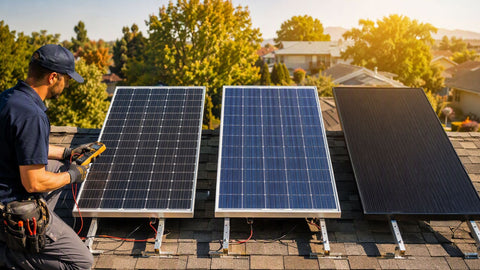
If you're shopping the top shelf of residential solar in 2026, this is the final: REC Alpha Pure-RX out of Singapore versus Qcells Q.TRON out of Dalton, Georgia. Both are N-type premium panels with 25-year product warranties, all-black residential aesthetics, and efficiency numbers north of 22%. We've kitted hundreds of systems with each, and the honest answer is that both are excellent — which is exactly why the details decide it. Temperature coefficients, degradation schedules, warranty labor terms, and roof geometry separate these two, not slogans.
What follows is the distributor-level teardown: verified spec classes, hot-roof math, NEC design tables, 25-year yield projections, and the field notes from our own installs and warranty claims. Specs reflect the current residential classes — REC Alpha Pure-RX and Qcells Q.TRON BLK M-G2 — but always confirm the exact SKU datasheet before you stamp a permit set.
Why This Matchup Matters in 2026
The premium residential tier thinned out recently. Maxeon — the old efficiency king — entered judicial management in Singapore in April 2026, leaving its famous 40-year warranty in genuine doubt. That collapse pushed REC and Qcells into the spotlight as the two premium panels with unquestionable counterparties: REC backed by Reliance Industries, one of the largest companies in India, and Qcells backed by Hanwha, a South Korean major with the largest module fab in the Western Hemisphere. If you're spending premium money on a 25-year asset, counterparty strength isn't a footnote — it's the product.
The 2026 tariff environment adds another wrinkle. Qcells' Georgia assembly sidesteps the Section 232 import price floor entirely and keeps lead times short. REC's Singapore origin faces the import floor, but premium pricing absorbs it — when a panel already sells well above $0.38/W, the floor doesn't bite. What matters more for REC buyers is supply timing: ocean freight from Singapore means ordering earlier in the project cycle. We'll come back to that.
Side-by-Side Specification Table
| Specification | REC Alpha Pure-RX | Qcells Q.TRON (G2 residential class) |
|---|---|---|
| Cell Architecture | HJT (heterojunction), lead-free | N-type TOPCon (Q.ANTUM NEO) |
| Residential Wattage Class | ~450–470 W | ~400–440 W (commercial siblings to ~500 W+) |
| Max Module Efficiency | Up to ~22.6% | Up to ~22.5% |
| Temperature Coefficient (Pmax) | ~−0.24%/°C (class-leading) | ~−0.30%/°C |
| First-Year Degradation | ≤1% | ≤1% class |
| Annual Degradation Thereafter | ~0.25%/yr | ~0.33–0.40%/yr class |
| Guaranteed Output at Year 25 | ≥92% | ≥90.5% |
| Product Warranty | 25 years (REC ProTrust installer registration) | 25 years |
| Manufacturing Origin | Singapore | Assembled in Dalton, Georgia, USA |
| Frame / Aesthetic | All-black, gapless cell layout, high-rigidity frame | All-black residential variants |
| Typical Price Premium Over Commodity | +$0.25–0.40/W | +$0.15–0.30/W |
Scan down to the two rows that actually move 25-year outcomes: temperature coefficient and annual degradation. REC wins both. Qcells answers with a lower price premium, US assembly, and a labor reimbursement program that more installers can actually access. Everything else on the sheet — the efficiency rounding, the frame profiles, the aesthetics — is noise between these two. Buy on the rows that compound.
Technology: HJT vs TOPCon at the Top of the Market
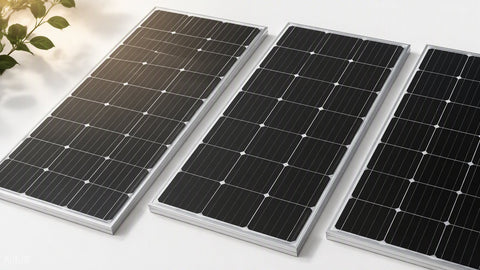
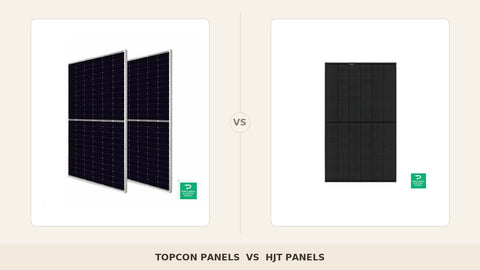
REC's heterojunction cells sandwich a crystalline N-type wafer between amorphous silicon layers, passivating the surface so effectively that recombination losses drop to the lowest levels in mass production. Three practical results follow: the highest residential efficiency class we stock, the best temperature coefficient in the business, and no light-induced degradation mechanism. The Pure-RX is also lead-free — a genuine differentiator as materials regulations tighten globally — and its gapless cell layout with a two-piece high-rigidity frame makes it the stiffest, best-looking residential module in our warehouse.
Qcells' Q.ANTUM NEO is TOPCon executed at massive scale: passivating-contact N-type cells with tight binning, strong low-light behavior, and degradation figures that sit a class below HJT but a class above the value tier. The engineering achievement here isn't exotic physics — it's consistency. Q.TRON modules arrive in bins so tight that our kitting crew stopped spot-checking flash reports. When you install forty panels across three roof faces, that uniformity is worth real production.
The efficiency race between them is a tie for practical purposes — 22.6% versus 22.5% is panel-measurement noise. The durability race is not a tie. REC's 0.25%/yr degradation class versus a 0.33–0.40%/yr class means the Pure-RX pulls further ahead every single year after commissioning. Run that compounding over two and a half decades and the "expensive" panel ends up producing meaningfully more energy per warranted year.
System Design Math: An 8 kW Residential Array
| Design Figure | REC Alpha Pure-RX 470 W | Qcells Q.TRON 430 W |
|---|---|---|
| Panels for ~8 kW DC | 17 × 470 W = 7,990 W | 19 × 430 W = 8,170 W |
| Approx. roof area @ ~1.95 m²/panel | ~33.2 m² (~357 ft²) | ~37.1 m² (~399 ft²) |
| Roof area saved | ~3.9 m² (~42 ft²) | — |
| Strings of 10 (Voc ~49–50 V class) | 2 strings (9 + 8) | 2 strings (10 + 9) |
| Attachment / flashing count | 17 sets | 19 sets (+2, ~$60–100 BOS) |
Forty-two square feet of saved roof is the difference between "fits on the south face" and "we have to wrap onto the west face and lose afternoon production." On the tight urban roofs where premium panels earn their keep, REC's density rescues layouts. On big suburban roofs with a clean south face, both fit and the premium buys durability instead of space.
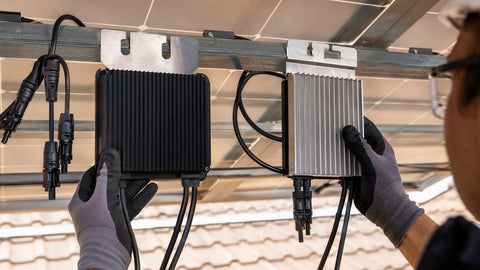
Both brands pair with every module-level electronics option in our microinverter collection and drop straight into our complete solar kits and grid-tied systems. Neither requires proprietary hardware, and both report through standard monitoring gateways.
NEC Wire and Breaker Sizing Reference
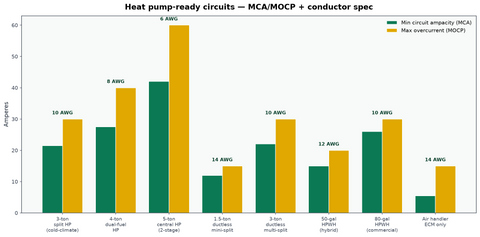
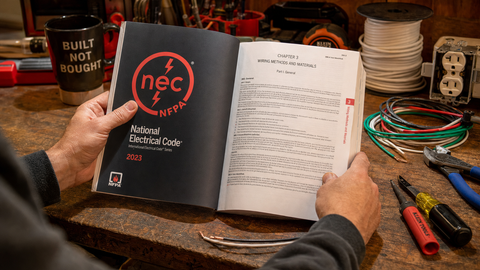
The AC side of premium residential systems, sized per NEC 690.8's 125% continuous rule against NEC 240.6(A) standard breaker ratings and 75 °C copper ampacities from Table 310.16. Match the row to your inverter's nameplate maximum continuous output current.
| Inverter Class | Max Continuous @ 240 V | × 1.25 | Breaker (240.6(A)) | Copper, 75 °C (310.16) |
|---|---|---|---|---|
| 3.8 kW | 15.8 A | 19.8 A | 20 A | 12 AWG (240.4(D) cap 20 A) |
| 5.0 kW | 20.8 A | 26.0 A | 30 A | 10 AWG (240.4(D) cap 30 A) |
| 7.7 kW | 32.1 A | 40.1 A | 45 A | 8 AWG (50 A @ 75 °C) |
| 11.4 kW | 47.5 A | 59.4 A | 60 A | 6 AWG (65 A @ 75 °C) |
The 120%-rule trap applies here exactly as everywhere: a 45 A backfeed from a 7.7 kW inverter exceeds the 40 A allowance on a standard 200 A/200 A panel, so plan a 175 A main derate or a line-side tap. And remember NEC 240.4(D): 12 AWG caps at a 20 A breaker even though Table 310.16 lists it at 25 A. Full conductor charts are in our NEC wire sizing guide.
Hot-Roof Output: Where REC Earns the Premium
Cell temperature on a dark comp roof runs 30–35 °C above ambient on still summer afternoons. At a 32 °C delta, REC's −0.24%/°C gives up ~7.7% of nameplate; Qcells' −0.30%/°C gives up ~9.6%. On an 8 kW array that's roughly 150 W of extra peak power for REC every hot afternoon. Annualized: a few hundred kWh in Texas, perhaps a hundred in Seattle. If your quote comparison ignores temperature coefficient — and most homeowner quotes do — you're comparing nameplates, not production.
25-Year Energy Yield Math
Planning assumptions: 8 kW DC, 1,400 kWh/kWp year one, warranted degradation applied linearly. REC: ≤1% first year, 0.25%/yr after, ≥92% at year 25. Qcells: ≤1% class first year, ~0.33–0.40%/yr class after, ≥90.5% warranted at year 25 on current lines.
| Metric | REC Alpha Pure-RX | Qcells Q.TRON |
|---|---|---|
| Year-1 production | ~11,200 kWh | ~11,200 kWh |
| Year-25 warranted output | ≥92% → ~10,300 kWh | ≥90.5% → ~10,140 kWh |
| 25-yr cumulative (approx.) | ~268 MWh | ~265 MWh |
| Cumulative difference | ~3 MWh ≈ $450 @ $0.15/kWh, plus REC's hot-climate tempco bonus where applicable | |
The yield gap alone doesn't pay for REC's price premium — let's be honest about that. What closes the business case is everything that rides along: the labor-inclusive ProTrust warranty, the lead-free build, the stiffest frame in the class, and a degradation schedule that keeps the array young deep into its third decade. If the quote gap is under ~$1,000 on 8 kW, we steer to REC. Above that, Qcells is the rational premium choice and nobody should feel like they settled. Check current class pricing in the 450 W and 430 W collections, or get firm numbers on the quote page.
Warranty Structures, Read Carefully
REC's path to 25/25/25 — product, performance, and labor — runs through installer registration in the ProTrust program. That labor coverage is the clause competitors omit: a dead panel in year 14 costs a truck roll, a lift, and two hours of labor before anyone talks about the module itself, and REC covers it. We've run these claims; the process is documented and it pays.
Qcells counters with 25-year product and 25-year performance as standard, plus Q.PARTNER labor reimbursement up to $250 per claim on systems ≤25 kW. The dollar cap is lower than REC's full labor coverage, but the program is broader — more installers carry Q.PARTNER status than ProTrust certification, which means easier service logistics in rural markets. Both programs require the installer to register the job; neither applies automatically. Confirm your installer's program status in writing before signing, and keep the registration confirmation with your closing documents.
Climate and Site Fit
Hot climates belong to REC. Phoenix, San Antonio, Bakersfield — anywhere cell temperatures live above 60 °C for months — the combined tempco and degradation advantage compounds into the biggest real-world yield gap in residential solar. We modeled a Scottsdale roof where REC's lifetime projection beat the value tier by nearly 9%; against Qcells the margin is smaller but consistent.
Mild climates flatten everything. In our own Pacific Northwest backyard, the production difference between these two over 25 years buys maybe a year of electric bills — real, but not decisive. The decision there swings on warranty preference, aesthetics (both are handsome all-black panels; REC's gapless layout edges it), and lead time. Cold northern roofs favor both equally; spend the difference on snow-rated rail from the racking collection or mounting systems before spending it on panel brand.
Field Notes: Installs and Claims
I've pulled both of these panels out of their boxes hundreds of times. REC's packaging is the best in the business — corner protection that actually protects, panels that arrive flat and stay flat. Qcells' Georgia logistics mean replacement panels arrive in days, not weeks; when we had a forklift fork meet a Q.TRON pallet corner last fall (warehouse life), the replacement was on a truck before the damage claim paperwork finished printing.
On roofs, both torque down normally with standard clamps and neither frame oil-cans under a careless boot. REC's gapless face sheds pine needles slightly better in our experience — the gaps between cells on conventional layouts trap debris lines — but that's a marginal note, not a decision factor. What is a decision factor: both brands' serial-number and registration paperwork flows cleanly, which keeps warranty coverage intact. We've seen gray-market premium panels with no valid registration path; buy through a stocking distributor and this problem never exists. And a handling reminder for both: these are 45-plus-pound panels with premium glass. Two-person sets on anything above single-story, every time. The one damaged panel we see most is the one somebody carried solo to save ninety seconds.
Availability and the 2026 Supply Picture
Qcells is the availability champion of the premium tier: Georgia assembly, domestic freight, 1–3 week restock cycles to our dock. REC runs 4–8 weeks from Singapore and occasionally allocates in peak season. The scheduling rule we give contractors: on REC jobs, order panels at contract signing; on Qcells jobs, permit approval is early enough. Either beats the import value brands, where 2026's tariff chaos has turned lead times into a lottery. For commercial buyers, both manufacturers publish domestic-content and FEOC documentation packets — request them with the PO, not after the design is stamped.
Permitting and Inspection Notes
Both brands carry UL 61730 and current California CEC listings, so the module itself never stalls a plan check. What stalls premium residential jobs is the same trio every time: the rapid-shutdown declaration under NEC 690.12, the 690.56(C) placards, and a load-side interconnection that violates 705.12. Solve those three on paper before the roof date and either of these panels glides through final inspection. We've never had an AHJ question either manufacturer's documentation — both maintain US-accessible engineering support that answers certification-letter requests within days.
How These Two Stack Against the Field
Zoom out for a second. Below this tier sit the value TOPCon imports — good panels, thinner warranties, 2026 tariff exposure. Beside this tier sits Silfab, the North American craft option with mid-range pricing and a 5400 Pa snow rating. Above it, since Maxeon's collapse, sits essentially nothing: REC and Qcells are the premium residential market now. Aiko's back-contact modules are nibbling at the efficiency crown from the ultra-premium corner, but US distribution remains thin and pricing lands well above both of these.
That consolidation is worth remembering when a salesperson pitches an exotic alternative. A 25-year panel is only as good as the company answering the phone in year 18, and the list of companies we're confident will answer has exactly these names at the top. Both also anchor our complete kit configurations for homeowners who want the premium tier without piecing together a BOM.
Battery Pairing and Future-Proofing
Neither panel cares what battery you buy — modules are dumb DC generators and that's a virtue — but the inverter decision underneath them decides your storage path. If you're pairing this premium array with storage, both brands work identically well with the hybrid inverters and AC-coupled batteries in our battery storage collection and energy storage lineup. The sizing question is separate: our battery sizing guide and backup runtime calculator handle the math once the array size is set.
One future-proofing note specific to this premium tier: because REC's degradation is slower, an REC array retains more headroom against a future battery or EV-charger addition than an equal-nameplate array from a faster-fading line. On year-15 retrofit math, that 3–4% of extra retained capacity occasionally covers exactly the new load the homeowner wants to add. It's a small thing. It's also the kind of small thing that justifies a premium panel to an engineer.
Choose REC If / Choose Qcells If
Two premium panels, two genuinely good answers. After years of selling, kitting, and servicing both, we've learned the wrong choice here is rare — but the right choice still saves real money over 25 years. The final call comes down to which set of strengths matches your roof, your climate, and your installer.
Choose REC if: the roof is small or complex and 470 W density rescues the layout; you're in a hot climate where −0.24%/°C compounds for decades; you want the strongest year-25 warranty number in the business (92%) with labor included via ProTrust; or lead-free construction and the best-looking panel face matter to you. Browse the REC collection and the HJT class.
Choose Qcells if: you want 95% of the premium experience at a lower price premium; US assembly and short lead times matter to the schedule; your installer is Q.PARTNER-registered and can attach labor reimbursement; or the job is commercial and Georgia content helps the domestic-content math. See the Qcells collection.
For the adjacent fights: Qcells vs Silfab covers the all-North-American matchup, REC vs Silfab prices premium against mid-range, and the REC vs Qcells page plus the best panels of 2026 roundup rank the full field. Size the system with the system size calculator and build the BOM with the kits buyer's guide.
Frequently Asked Questions
Is REC better than Qcells?
On durability metrics, yes: REC's HJT cells carry a better temperature coefficient (~−0.24%/°C vs ~−0.30%/°C), slower degradation (~0.25%/yr class vs ~0.33–0.40%/yr class), and a higher year-25 output guarantee (92% vs 90.5%). Qcells answers with a lower price premium, US assembly, and broader service program coverage. Both are legitimate top-shelf panels.
Which has the better warranty?
Both offer 25-year product and performance terms. REC extends to 25/25/25 including labor through certified ProTrust installers. Qcells offers Q.PARTNER labor reimbursement up to $250 per claim on systems ≤25 kW. REC's labor term is deeper; Qcells' program is available through more installers.
Which panel makes more power over 25 years?
On an 8 kW array at 1,400 kWh/kWp first-year yield, REC's warranted curve produces roughly 3 MWh more over 25 years (~268 vs ~265 MWh), before counting REC's hot-climate temperature advantage. The gap is real but modest — warranty terms and roof fit usually decide this matchup first.
Are both panels made in the USA?
No. Qcells Q.TRON modules for the US market are assembled in Dalton, Georgia — the largest module fab in the Western Hemisphere. REC Alpha Pure-RX panels are manufactured in Singapore. Both avoid the worst of the 2026 tariff stack: Qcells by US assembly, REC because premium pricing sits above the import price floor.
What happened to Maxeon, and does it matter here?
Maxeon entered judicial management in Singapore in April 2026, casting doubt on its 40-year warranty backing and pulling it off the BNEF Tier-1 list. Its exit from the premium residential tier pushed REC and Qcells into the top two slots for buyers who want premium panels with unquestionable corporate backing.
Can I mix REC and Qcells on the same array?
Not on the same string or MPPT — different voltage curves and temperature coefficients drag the string to its weakest panel. Across separate MPPT inputs or on microinverters, mixing is electrically fine, and we do it on phased expansions. For aesthetics, the all-black faces are close enough that most homeowners never notice.
Sources & Standards
- REC Alpha Pure-RX datasheet and ProTrust warranty terms (recgroup.com)
- Qcells Q.TRON BLK M-G2 datasheet and limited warranty (us.qcells.com)
- NEC 2023 Articles 690.8, 705.12, 240.4(D), 240.6(A) and Table 310.16
- US Section 232 proclamation and MIP program (August 2026)
- BloombergNEF Tier-1 module manufacturer list (Q2 2026)
- Kiwa PVEL PV Module Reliability Scorecard (2026 edition)