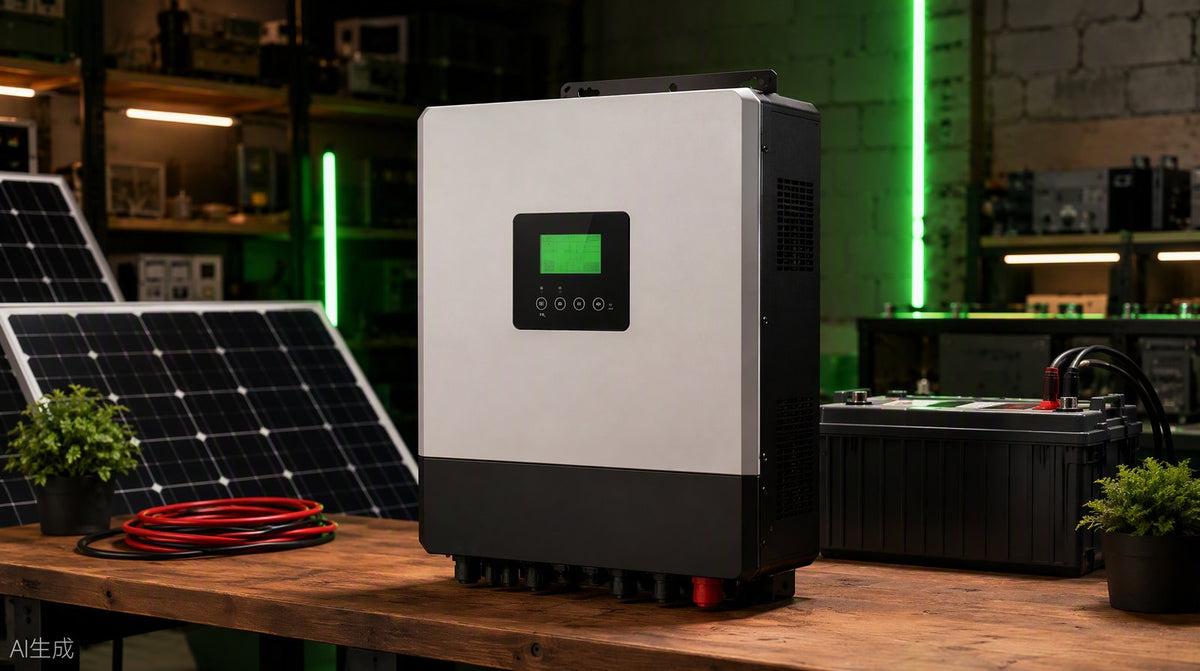
The inverter is the component your appliances actually talk to. Get the waveform wrong and the symptoms show up everywhere else: a refrigerator compressor that runs hot, a microwave that sounds angry, a CPAP machine that faults at 2 a.m., an audio amp with a buzz you cannot chase out. We sell hundreds of inverters a year across off-grid cabins, vans, backup systems, and grid-tied hybrids, and the pure-sine-versus-modified question is where every one of those conversations starts. This is the 2026 answer, with the sizing math and the certification details that separate a solid install from a callback.
What Is a Pure Sine Wave Inverter?
A pure sine wave inverter converts DC from a battery bank into AC that matches the utility grid's waveform — a smooth sinusoid at 60 Hz (120/240V in North America), with total harmonic distortion typically under 3–5%. That waveform is what every appliance in your home was designed and tested against. A modified sine wave inverter, by contrast, outputs a stepped blocky approximation — cheaper to build, fine for resistive loads and universal-motor tools, and quietly hostile to anything with a motor, a transformer, or a switched-mode power supply that expects clean input.
How a Pure Sine Wave Inverter Works
The modern architecture is a two-stage conversion. First, a high-frequency DC-DC stage steps battery voltage (12, 24, or 48V nominal) up to a high-voltage DC bus, typically around 170V for 120VAC output. Second, an H-bridge switches that bus at high frequency with pulse-width modulation — the pulse widths vary sinusoidally, and an output filter smooths the result into a clean sine wave. Higher-end units add active power factor correction behavior on the AC side, transformer isolation for safety and surge handling, and DSP control that holds voltage and frequency regulation within a few percent across the load range. Low-frequency transformer-based designs (the heavy iron units) handle motor-starting surges more gracefully; high-frequency designs win on weight, cost, and efficiency. Both are legitimate — match the architecture to the load list.
Pure Sine Wave vs. Modified Sine Wave
| Property | Pure Sine Wave | Modified Sine Wave |
|---|---|---|
| Output waveform | Smooth sinusoid, THD typically <3–5% | Stepped square-wave approximation, THD often 20–40% |
| Inductive loads (fridge compressors, pumps, fans) | Run cool and at rated efficiency | Run hot, buzz, lose ~20% efficiency, shortened life |
| Electronics with SMPS (laptops, TVs) | Normal operation | Usually work; some fault, run hot, or emit audible noise |
| Medical devices (CPAP, oxygen concentrators) | Required by most manufacturers | Often prohibited — check the device manual |
| Microwaves | Full power, normal sound | Reduced power, loud transformer hum |
| Audio equipment | Silent background | Audible buzz/hum |
| Motors with speed control / VFDs | Compatible | Frequently incompatible or damaging |
| Laser printers, some battery chargers | Compatible | Can fault or overheat |
| Efficiency | 88–95% typical | Slightly higher at some loads, but loads run less efficiently |
| Cost (3,000W class) | $400–$1,500 depending on features | $150–$400 |
| 2026 verdict | Default choice for any permanent installation | Legacy option for occasional tool use only |
The price gap that once justified modified sine has collapsed. A decade ago pure sine cost three times as much; today the premium over a comparable modified unit is often under $150 in the 2–3 kW class. Against even one prematurely failed refrigerator compressor, that premium pays for itself many times over. I've replaced exactly one pure sine inverter under warranty for waveform issues and lost count of the modified-sine casualties — burned-out furnace boards, dead CPAPs, a very unhappy owner of a high-end espresso machine. Buy the sine wave.
Types of Pure Sine Wave Inverters (2026)
| Type | Best For | Current Standard | Key Brands We Stock | Efficiency |
|---|---|---|---|---|
| Standalone off-grid (12/24/48V) | Cabins, vans, boats, RVs | 2–5 kW, low idle draw, remote switch | Victron, Magnum, Samlex, Renogy | 88–93% |
| Inverter/chargers | Off-grid with generator or shore input | Built-in transfer switch + multi-stage charger | Victron MultiPlus/Quattro, Xantrex, Outback | 90–94% |
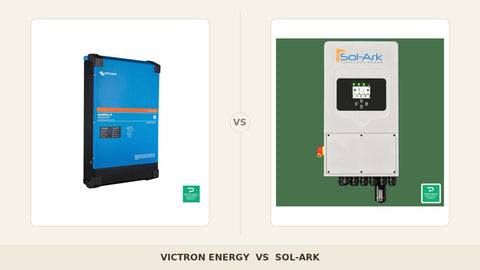
| Hybrid (grid-interactive with battery) | Whole-home backup + solar self-consumption | UL 1741 SB, 7.6–15 kW, generator input | Sol-Ark, EG4, Growatt, Schneider XW | 94–97.5% |
| Grid-tie string (solar-only) | Utility-interactive solar, no battery | UL 1741 SB, rapid shutdown, per NEC 690.12 | SolarEdge, Fronius, SMA | 96–99% |
| Microinverters | Module-level grid-tie, shade-prone roofs | Per-module MPPT, 25-year warranties | Enphase, APsystems, Hoymiles | 96–97% |
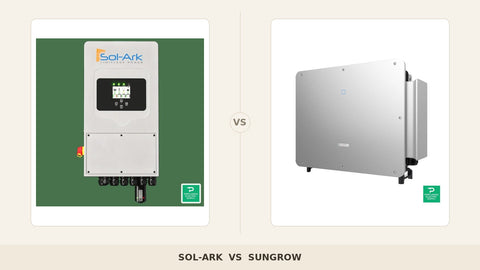
Two picks illustrate the current market. For off-grid and DIY battery builds, the MidNite MN3024DIY class of 3 kW 24V units packs inverter, charger, and MPPT into a serviceable box. For whole-home hybrid duty, the Sol-Ark 8K and EG4 FlexBOSS21 class deliver 8–16 kW of split-phase output, generator inputs, and UL 1741 SB listings that pass inspection. Our inverter top-picks roundup and the inverter buyer's guide track the current field.
How to Size a Pure Sine Wave Inverter
Sizing is two numbers: continuous watts and surge watts. The process:
- List every load that can run simultaneously. Use nameplate running watts, not guesses.
- Add them up. That total is your minimum continuous rating.
- Find the largest motor or compressor on the list. Its starting surge — typically 3–7× running watts — added to the other running loads sets your surge requirement.
- Add 20–25% headroom. Inverters live longer and run cooler at 60–80% of rating.
- Check the battery side. A 3,000W inverter on a 12V bank pulls 250+ amps at full load — cable, fuse, and battery capacity must support it. This is why anything over ~2 kW belongs on 24V or 48V.
| Common Load | Running Watts (typical) | Starting Surge (typical) |
|---|---|---|
| Refrigerator (modern, 18–22 cu ft) | 150–400W | 1,200–2,200W |
| Chest freezer | 100–350W | 900–1,800W |
| Window AC (8,000 BTU) | 700–900W | 1,800–2,800W |
| Mini-split (12,000 BTU, inverter-driven) | 500–1,200W | Minimal — soft-start by design |
| Well pump (1/2 HP, 240V) | 900–1,100W | 2,300–3,300W |
| Microwave (1,000W cooking) | 1,400–1,600W input | None significant |
| CPAP machine | 30–90W | None |
| LED lighting (whole cabin) | 60–200W | None |
| Laptop + router + TV | 150–350W | Minor |
| Electric kettle / coffee maker | 1,000–1,500W | None (resistive) |
Worked example — an off-grid cabin: refrigerator (300W running), lights and electronics (300W), a microwave used occasionally (1,500W), and a 1/2 HP well pump (1,000W running, 2,800W surge). Simultaneous running load: about 2,100W with everything on. Add the pump surge against the running base: 1,100W of other loads plus 2,800W surge ≈ 3,900W. With headroom, that is a 4,000–5,000W inverter with a surge rating of 8,000W+ — a 48V unit, because at 4 kW a 24V bank is already pushing 170 amps. Run your own list through our inverter sizing calculator before you buy.
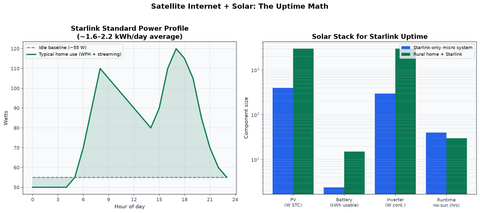
One more sizing truth from the field: idle draw matters as much as nameplate watts. An inverter that burns 40W at idle consumes nearly 1 kWh a day just being switched on — a meaningful tax on a small battery bank. Look for idle draw under 15W or an adjustable search/eco mode, and check the spec sheet, because this number varies enormously between models that otherwise look identical.
Certifications and Code Compliance
Any inverter connected to a building's wiring — and absolutely any inverter interconnected with the utility — must carry the right listings. This table is the 2026 checklist:
| Standard | Covers | When You Need It |
|---|---|---|
| UL 1741 (incl. SB supplement) | Inverter safety and grid-interactive function, IEEE 1547 alignment | Any grid-interactive or hybrid inverter in the U.S.; AHJs ask for it by number |
| UL 458 | Power converters for land/marine vehicles | RV, van, and marine installations |
| IEEE 1547 / 1547.1 | Interconnection and interoperability with the grid | Utility permission to operate; demonstrated via UL 1741 SB certification |
| California Rule 21 / HECO | State-specific grid codes | Installations in CA, HI, and other Rule-21-type jurisdictions — check the CEC approved equipment list |
| NEC 690 / 705 / 710 | PV systems, interconnection, standalone systems | Every install; 705.12 governs the interconnection math, 710 covers off-grid premises wiring |
| UL 9540 / 9540A | Energy storage system safety, thermal runaway testing | Battery-integrated systems; many AHJs now require the ESS listing, not just the inverter's |
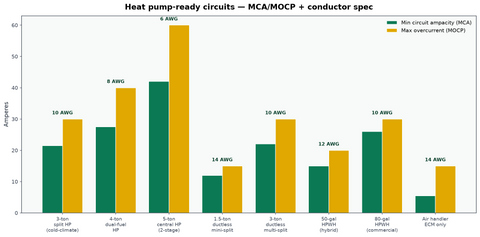
Conductor and overcurrent sizing on both sides of the inverter follows the usual NEC discipline — battery cables fused within 7 inches of the bank, DC cable sized for full-load current with margin, AC output landed on correctly rated breakers. The NEC wire sizing guide has the ampacity tables, and our code compliance guide maps the inspection sequence. For charge control upstream of the battery, the charge controller sizing guide and the MPPT vs. PWM comparison complete the picture.
What This Means for Your Project
Three decision rules close most quotes on our desk. First, any load with a motor, compressor, or medical purpose gets pure sine — no exceptions, no "it worked on the test bench." Second, size from the surge, not the nameplate; an inverter that cannot start the well pump is an expensive battery warmer. Third, buy the voltage class that keeps battery-side current sane: 12V to about 1.5 kW, 24V to about 3 kW, 48V beyond that. Browse the full range in pure sine inverters, off-grid, hybrid, and 48V inverters, and if the system includes solar and storage together, the hybrid inverter explainer is the right next read.
System Voltage: Why 48V Wins Above 2 kW
The battery-side voltage is the least glamorous and most consequential choice in an inverter system. Current is what heats cables, arcs across loose lugs, and sizes fuses — and current is watts divided by volts. A 3,000W load draws 250 amps from a 12V bank, 125 amps from 24V, and 62 amps from 48V. At 250 amps you are into 4/0 cable, hydraulic crimpers, and Class T fusing territory, with every connection a potential hot spot; at 62 amps, standard 2 AWG cable and ordinary torque discipline suffice. The working rules our shop uses: 12V up to about 1,500W of inverter, 24V to roughly 3,000W, and 48V for anything beyond — including every whole-home and serious off-grid build. Higher voltage also improves inverter efficiency by a point or two and lets the same battery bank support a larger inverter later. The only places 12V still makes sense are vans, boats, and small RVs where the alternator and chassis systems are already 12V and the inverter rarely exceeds 2 kW.
Installation Essentials That Decide Reliability
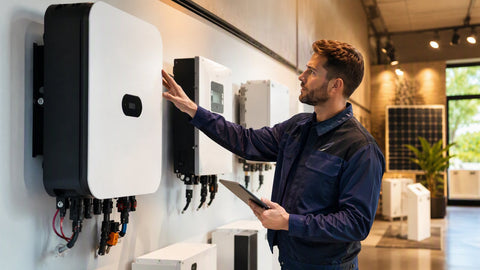
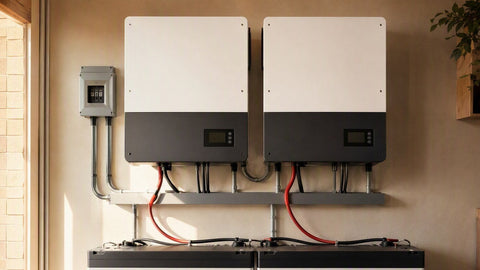
Most inverter failures we see in the field trace to installation, not hardware. The checklist that prevents them: mount the unit vertically in its specified orientation with the manufacturer's clearance for airflow — fan-cooled inverters suffocate in sealed cabinets; keep battery cable runs short, paired, and equal-length on parallel banks, fused with a Class T or equivalent within inches of the positive terminal; torque every lug to spec and witness-mark it — a loose DC lug under 100+ amps is an arc event waiting for a bump; give the AC side real overcurrent protection and correct breaker sizing per NEC, not "whatever fit the panel"; and ground the chassis per the manual, because the grounding scheme differs between mobile and fixed installations and getting it wrong creates shock hazards and GFCI nuisance trips. Ventilation deserves emphasis: a 3 kW inverter at 90% efficiency dissipates 300W of heat at full load, roughly a small space heater's worth, and an inverter that thermal-derates every summer afternoon is an inverter that was installed in the wrong spot. Cool, dry, ventilated, and accessible — those four words cover most of it.
Efficiency, Idle Draw, and the Hidden Daily Tax
Nameplate efficiency — 92%, 94%, 97% — describes the inverter at its best operating point, usually 30–70% of rated load. Real systems live at partial load, where efficiency curves droop, and they idle all night, where the inverter's self-consumption runs the meter continuously. The arithmetic is worth doing once: an inverter drawing 30W at idle consumes 0.72 kWh per day — over 260 kWh a year, more than some refrigerators. On a small off-grid bank, that can be a tenth of daily capacity spent powering nothing. Search or eco modes drop idle draw to single digits by sleeping the output stage and waking on load detection, but verify your loads tolerate it — some electronics with soft-start buttons never draw enough to wake the inverter, which makes for a confusing morning. The practical guidance: for always-on homes, prioritize low idle draw over search modes; for weekend cabins, a hard remote switch or search mode saves real battery. And check efficiency at your actual load range on the datasheet curve, not just the headline number.
Inverter/Charger vs. Separate Components
Off-grid builders face one more architectural fork: a combined inverter/charger, or a separate inverter plus charge controller(s) and a standalone charger. The combined unit wins on simplicity — one box, one display, an automatic transfer switch that flips to generator or shore power in milliseconds and starts charging seamlessly. Separate components win on redundancy and upgrade flexibility: a failed charge controller does not take your AC down with it, and each piece can be sized and replaced independently. Our shop default has shifted over the years toward combined units for cabins and homes (the transfer-switch behavior alone justifies it) and toward separates for mission-critical or very large banks where serviceability beats elegance. Both are correct answers; what matters is deciding consciously rather than letting a kit listing decide for you.
Common Failure Modes and How to Avoid Them
After years of warranty intake, the patterns are consistent. Undersized battery cables and loose lugs cause the majority of DC-side failures — heat, voltage drop, nuisance low-voltage cutoffs, and occasionally worse. Overloading from ignored surge math is second: the inverter faults every time the pump starts, and the owner concludes the unit is defective. Poor ventilation drives thermal shutdowns and shortens capacitor life — an inverter in a sealed cabinet or a hot RV bay lives a hard life. And moisture intrusion, especially in marine and unconditioned spaces, corrodes boards silently. None of these are exotic. Size the cables, respect the surge numbers, ventilate the box, keep it dry, and a quality pure sine inverter is a 10–15 year appliance. And when a unit does fault, read the error code before power-cycling — modern inverters log the fault history, and that log is the difference between a five-minute diagnosis and a week of parts-swapping. The reset button erases the evidence; the manual decodes it. Keep a photo of the fault screen in the system folder, note the loads running when it tripped, and hand both to tech support on the first call — you will skip the entire scripted troubleshooting tree and get to the real answer in one conversation instead of three. Good support lines are busy; arriving with evidence is the fastest way to the front of the queue and the cheapest way back to a running system.
Reading a Datasheet Like an Installer
Inverter datasheets bury the numbers that matter, so here is where our team looks first. Continuous rating at temperature: many units advertise a rating measured at 25°C and derate steeply at 40°C — the garage-in-August number is the real one. Surge rating with a duration: "2× surge" means nothing without seconds attached; 20 milliseconds covers a switching spike, while 5–20 seconds is what actually starts motors. Idle draw and search-mode threshold, for the reasons covered above. Peak efficiency and the efficiency curve at 10–20% load, where off-grid systems spend their nights. DC input voltage window, which decides battery compatibility — a "48V" inverter with a narrow window may not tolerate a lithium bank's full charge range. And the listings block: UL 1741 SB, UL 458, or neither. An inverter with no listing is a paperweight on any permitted job, no matter how good the price. Ten minutes with these six lines filters a catalog page down to the two or three units worth quoting. And if the datasheet omits any of them — no surge duration, no idle draw, no listing block — treat the omission itself as a specification: it is telling you the manufacturer does not expect the question, which tells you who the product is really built for.
Frequently Asked Questions
What is the difference between pure sine wave and modified sine wave?
Pure sine wave output matches the utility grid's smooth sinusoid (typically under 3–5% THD); modified sine is a stepped approximation with 20–40% THD. Motors, compressors, medical devices, microwaves, and audio equipment all run correctly only on pure sine.
Do I need a pure sine wave inverter for my solar system?
For any permanent installation powering household loads — yes. The cost premium over modified sine has shrunk to the point where the only defensible use of modified sine in 2026 is occasional power-tool duty on a job site.
What THD percentage is considered pure sine wave?
Industry practice treats under 5% total harmonic distortion as pure sine wave; quality units measure under 3% at rated load. The utility grid itself typically runs 2–5% THD.
Can a pure sine wave inverter run a refrigerator?
Yes — that is precisely what it is for. Size for the compressor's starting surge (typically 3–7× running watts, so 1,200–2,200W for a modern fridge) plus whatever else runs concurrently, with 20–25% headroom.
What size pure sine wave inverter do I need?
Add the running watts of everything that can operate simultaneously, add the single largest motor starting surge, then add 20–25%. A cabin with a fridge, lights, and electronics usually lands at 2,000–3,000W; add a well pump or window AC and you are in 4,000–5,000W territory on a 48V bank.
Are all grid-tied inverters pure sine wave?
Effectively yes — UL 1741-listed grid-interactive inverters produce utility-grade sine output by design; they could not pass certification otherwise. The pure-vs-modified question only exists on the battery/off-grid side of the market.
Is a pure sine wave inverter worth the extra cost?
At today's prices the premium is often under $150 in the 2–3 kW class — less than one replacement CPAP power supply or one service call for a damaged appliance control board. It is the cheapest insurance in the system.
What appliances will not run on modified sine wave?
Anything with an induction motor or sensitive electronics risks problems: refrigerators and freezers, furnace blowers, CPAP and oxygen equipment, microwaves, variable-speed tools, some laptop and tool-battery chargers, laser printers, and audio equipment all misbehave or degrade on modified sine.