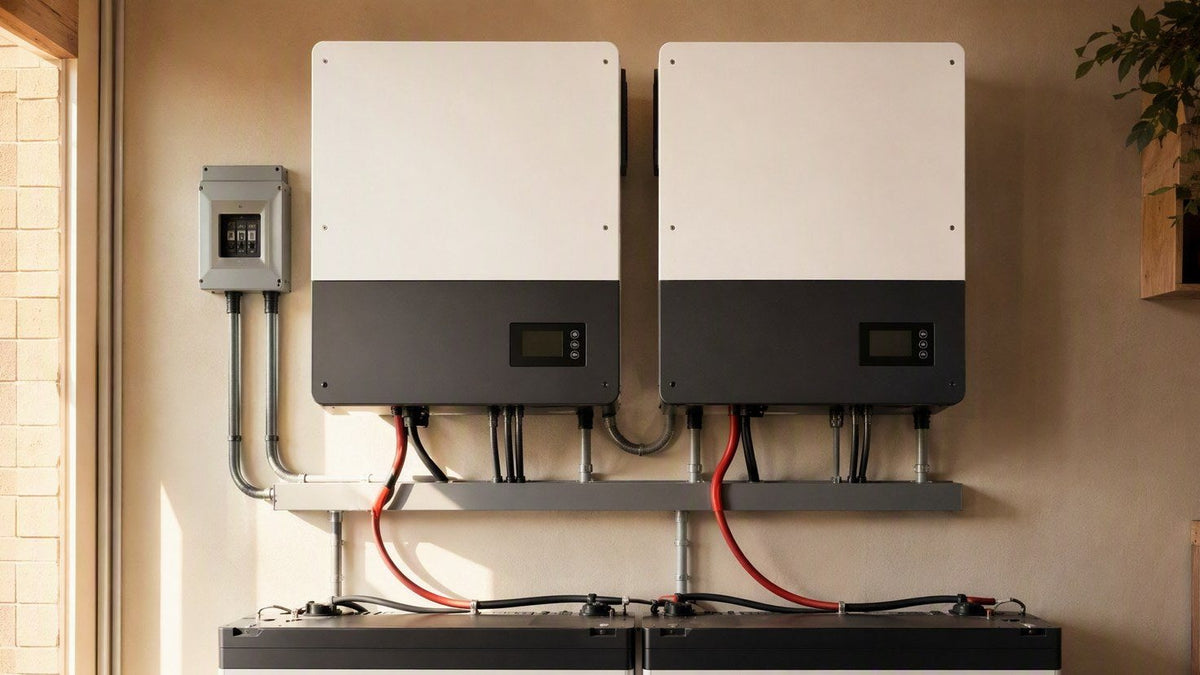
Sol-Ark vs EG4 Hybrid Inverters: 12K/15K vs 12KPV/18KPV
The two most-quoted 48 V hybrid inverters in American off-grid and backup builds, compared the way we compare them across the counter: nameplate math, battery behavior, surge reality, and service life.
Every week somebody walks in or calls with the same question: "Sol-Ark 15K or EG4 18KPV?" Both are 48 V split-phase hybrid inverters. Both will run a whole house, sell back to the grid, charge from a generator, and parrot a spec sheet that reads 80% identical. The 20% that differs is where installations succeed or become service calls. We stock both lines — Sol-Ark and EG4 — and we've commissioned enough of each to have opinions backed by truck rolls.
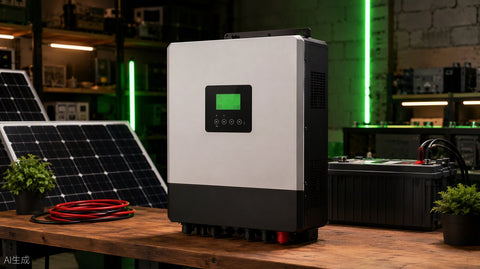
The honest framing: Sol-Ark is the premium, dealer-channel, made-for-installers platform with the deepest grid-interactive feature set and the price to match. EG4 is the value disruptor — same job description, roughly 60% of the price, with a DIY-friendly channel and a spec sheet that has closed most of the gap. Neither is "better." They answer different questions. This article walks the whole comparison, then gives you the math tables to size either one against your loads.
If you're earlier in the process, start with the inverter buyer's guide and our hybrid inverter explainer, then come back.
| Specification | Sol-Ark 12K-2P | Sol-Ark 15K-2P | EG4 12KPV | EG4 18KPV |
|---|---|---|---|---|
| Continuous AC output | 9.6 kW | 12 kW (15 kVA class) | 8 kW | 12 kW |
| Max PV input | ~13 kW | ~19.5 kW | 12 kW | 18 kW |
| Surge (motor starting) | ~16 kVA / 10 s | ~20 kVA / 10 s | ~13 kVA class | ~15.5 kVA class |
| Battery voltage / chemistry | 48 V, closed-loop w/ major Li brands + lead-acid | 48 V, same | 48 V, EG4 closed-loop + open-loop lead/lithium | 48 V, same |
| MPPTs | 2 | 3–4 | 2 | 3 |
| Grid sell / net metering | Yes, full | Yes, full | Yes | Yes |
| Generator input | Yes, with gen-charge control | Yes | Yes | Yes |
| Parallel stacking | Up to 12 units | Up to 12 units | Up to 10 units | Up to 10 units |
| Transfer switch rating (whole-home pass-through) | 200 A | 200 A | 200 A | 200 A |
| Typical street price (inverter only) | ~$5,500–$6,500 | ~$7,000–$8,500 | ~$3,000–$3,600 | ~$4,200–$5,000 |
Numbers above are manufacturer-published ratings current at writing — always confirm against the datasheet revision in the box, because both companies revise hardware more often than they update the brochure. Prices are street, not MSRP, and they move; check the live listings in our hybrid inverters collection and the 48 V inverter shelf.
Here's the first thing I tell every customer comparing these two: the continuous rating is not the number that runs your house. Your house runs on the surge curve, the pass-through rating, and the charge rate. A well pump that locks-rotor pulls 3–4× its running amps for half a second. A 15K that claims 12 kW continuous but stumbles on a 5-ton compressor is a worse whole-home inverter than an 18KPV with a softer peak but a cleaner overload algorithm — or vice versa, depending on firmware revision that month. We've seen both brands fix surge behavior in firmware, which tells you how much of "inverter quality" is actually software.
Second thing: the 200 A pass-through is what makes either of these a true whole-home backup. It means the inverter sits between your meter and your main panel and the whole house rides through grid failures without a critical-loads subpanel. That's a big deal for install cost — no subpanel, no circuit triage, no arguing with the homeowner about which freezer matters. But it also means the inverter is now a single point of failure for the entire service, so the transfer-time and bypass behavior matter enormously. Both brands transfer fast enough (under 20 ms) that computers don't reboot. Both have full bypass so a dead inverter doesn't mean a dark house. We've tested both, deliberately, by killing grid power with a fridge, a server rack, and a CPAP on the line. Nothing blinked on either.
Third: efficiency curves. Sol-Ark posts a peak CEC-weighted efficiency around 96.5%; EG4's 18KPV is in the same neighborhood, within a percent. At the 10 kW continuous scale, one percent is 100 W of heat — measurable, not decisive. The standby draw matters more for off-grid: both idle under 100 W, and both have search/ECO modes that cut it further. For a cabin that sits empty five days a week, the off-grid inverter idle draw is a battery-sizing input, not a footnote.
Sol-Ark's battery story is open with an asterisk: it talks closed-loop CAN/RS485 to a long approved list — Pytes, Fortress, EG4's own batteries, Discover, Simpliphi, and more — and it runs open-loop voltage-based charge control for anything else, including lead-acid. EG4's inverters are tuned first for EG4 batteries (their closed-loop integration with the LifePower4 and LL-S lines is genuinely excellent), and open-loop for the rest. In practice both will run any sane 48 V lithium bank. The difference is polish: Sol-Ark exposes more charge-parameter granularity, and its battery screens are the ones our service techs prefer when we're diagnosing a bank at 9 p.m. from a laptop.
Battery sizing math doesn't care about the logo, though. Run it before you pick the inverter:
| Whole-home backup scenario | Load math | Battery needed (usable kWh) | EG4 rack (5.12 kWh ea.) |
|---|---|---|---|
| Essentials only: fridge, lights, internet, furnace blower (~800 W avg × 24 h) | 0.8 × 24 = 19.2 kWh/day | ~20 kWh @ 1 day autonomy | 4 × EG4 5.12 kWh = 20.5 kWh |
| Normal life, no AC: ~1.5 kW avg × 24 h | 36 kWh/day | ~36 kWh @ 1 day; 72 kWh @ 2 days | 7–14 batteries |
| Off-grid with AC, efficient home: ~2.5 kW avg, 3-day autonomy | 2.5 × 24 × 3 = 180 kWh | 180 kWh usable — this is a commercial-scale bank | 35+ batteries → reconsider autonomy target or add generator |
| Cabin, weekend use: 400 W avg × 48 h | 19.2 kWh per weekend | ~20 kWh | 4 batteries, solar recharges during the week |
The third row is why we talk people out of "three days of autonomy with central air" — the battery bank costs more than the inverter by an order of magnitude. Two days plus a generator input (both platforms have one) is the rational design. Our home battery bank sizing guide and the battery sizing calculator run this math interactively; for runtime estimates see the backup runtime calculator.
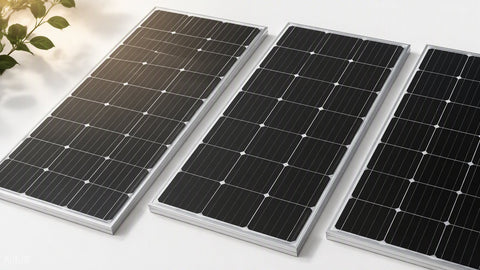
On the DC side, both brands give you a genuine 500–600 V-class MPPT window, and both oversize PV input roughly 1.3–1.6× against AC output, which is correct practice for cloudy climates. The Sol-Ark 15K's ~19.5 kW PV ceiling and the 18KPV's 18 kW ceiling both swallow a big residential array; the 12K-class units top out around 12–13 kW, which still covers most roofs at 30 × 400 W or 26 × 460 W modules from our panel catalog.
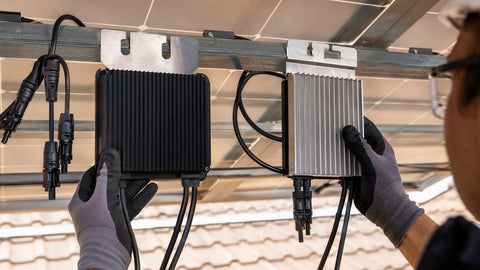
Watch the per-MPPT current limits — that is where array design actually binds. Modern 550 W+ modules push Imp past 13 A per string; two strings paralleled into one MPPT input needs that input rated for 26+ A continuous or you're clipping on every cool bright day. Both brands publish per-input current specs on the datasheet, and both have raised them in recent hardware revisions. If you paralleled strings, also check the series-fuse requirement in the module datasheet and our panel wiring basics before you order combiner hardware.
This is the table we sketch on the back of a napkin at the counter, cleaned up. Sum your simultaneous loads honestly — the water heater and the dryer and the well pump do not run at the same time in a managed home, and both inverters have smart-load outputs that shed the water heater when the battery gets low.
| Load profile | Simultaneous draw | Minimum inverter | Our pick |
|---|---|---|---|
| Cabin / small off-grid: lights, fridge, well pump (1/2 hp, LRA ~20 A @ 240 V) | ~4 kW run, ~5 kW surge | EG4 12KPV or Sol-Ark 12K | EG4 12KPV — money saved buys batteries |
| Average home, gas heat, no central AC | ~6–8 kW peaks | Either 12K class | Toss-up; decide on battery ecosystem |
| All-electric home, 3–4 ton heat pump (LRA can hit 80+ A without soft start) | ~10 kW run, ~15+ kW surge w/ soft start | Sol-Ark 15K or EG4 18KPV + soft starter | 15K if budget allows; 18KPV + soft start is the value play |
| Large home or small commercial, dual HVAC | 15+ kW | Parallel two units, either brand | Two 15Ks for redundancy; two 18KPVs on budget |
One hard-won note on heat pumps: put a soft starter on the compressor and the surge argument mostly evaporates. We've watched a 4-ton unit that spiked an 18KPV into overload start politely at 22 A after a $300 soft-start retrofit. Cheapest performance upgrade in the whole business. The inverter sizing calculator handles the steady-state side; surge you verify with a clamp meter or the compressor's LRA on the nameplate.
A 12 kW inverter at 240 V draws 50 A continuous; by NEC's 125% continuous-load rule you size conductors and OCPD at 62.5 A, which means 6 AWG copper (65 A at 75°C per Table 310.16) is marginal and 4 AWG (85 A) is the right pull, on a 70 A breaker per NEC 240.6. The battery side is the serious one: 12 kW at 48 V is 250 A DC before losses — that's 4/0 copper or dual 2/0 runs, 300 A class fusing, and torque specs that actually matter. I have personally re-torqued more loose 48 V lugs than any other single service item; a warm battery lug is a future failure with a date on it.
| Segment | Current | Conductor (Cu, 75°C) | OCPD |
|---|---|---|---|
| AC output, 12 kW continuous | 50 A × 1.25 = 62.5 A | 4 AWG THHN-2 (85 A) | 70 A / 2-pole |
| AC output, 8 kW (12KPV) | 33.3 A × 1.25 = 41.7 A | 8 AWG (50 A) | 50 A / 2-pole |
| Battery DC, 12 kW @ 48 V, ~92% eff. | ~272 A | 4/0 (230 A @ 75°C) → parallel 2/0 or 90°C terminations as listed | 300 A class-T fuse at battery |
| Generator input, 12 kW gen | 50 A | 6 AWG (65 A) | 60 A per gen breaker |
Cross-check every ampacity against our NEC ampacity chart and the wire sizing guide; conduit pulls go through the conduit fill chart. Grounding and bonding on hybrid systems — especially the neutral-ground bond switching during grid-loss — follows our grounding guide, and the disconnect requirements are in the NEC 690 disconnect guide.
Sol-Ark's monitoring is polished and installer-oriented; their support answers with technicians who have commissioned the gear. EG4's monitoring has improved release over release and their support is high-volume but responsive — and their user community is the deepest DIY knowledge base in the 48 V world. Warranty: both carry long coverage on the current revisions (confirm the term on the specific SKU you buy; it has changed over time on both brands). Failures we've seen in the field, honestly: a few EG4 relay boards on early revisions, a few Sol-Ark fans and display boards. Both companies shipped parts. Neither left a customer dark because of the 200 A bypass — which is why we insist that bypass exists and works before we call an install finished.
If you want the component-built alternative instead of an all-in-one box, our Victron MultiPlus vs Sol-Ark comparison covers that fork. If you want ecosystem storage instead of an open hybrid, see Sol-Ark vs Generac PWRcell. And if Sungrow is on your shortlist, Sol-Ark vs Sungrow is the companion read.
Both platforms accept a generator input, and both will charge the batteries while carrying the house. The behavior that differs is charge-rate control. Sol-Ark lets you dial generator charge current in fine steps and sequences the gen-start signal against battery state of charge with real granularity — our off-grid customers set a 45% start / 85% stop band and the generator only ever runs in its efficient load window. EG4 covers the same function with slightly coarser controls, and it works fine; the difference is tuning depth, not capability. Either way, size the generator at roughly 1.25–1.5× your intended charge rate so it runs loaded: a 12 kW diesel or propane unit feeding a 60 A charge setting is a happy generator that sips fuel instead of wet-stacking. Our home backup generator and generator backup shelves carry the units we pair most often, and the Generac 26 kW Guardian is the workhorse for customers who want the generator to be the primary winter source.
Fuel math, because everyone asks: a 12 kW propane generator at 50% load burns roughly 1.5–2.0 gallons per hour. Charging a 20 kWh battery bank from 30% to 90% (12 kWh delivered, ~14 kWh at the generator after charge losses) takes about two hours at 60 A charge — call it three to four gallons of propane to refill a day's autonomy. Against an all-night run at light load, the hybrid strategy cuts fuel burn by 60–70%. That is the number that sells the battery bank.
Physically, both units are wall-mount, both are heavy enough to want two people and a ledger board, and both want clear working space per NEC 110.26 in front of the disconnects. The wiring compartments are where the platforms diverge for the installer: Sol-Ark's layout has been refined across a decade of installer feedback — big landings, sane knockout placement, a wiring diagram that matches the terminal labels. EG4's compartment is workable but tighter, and we budget an extra half hour of land-and-dress time. Both units need PV, battery, grid, generator, and load conductors in separated raceways per their manuals; the conduit type guide covers what we run where.
The commissioning mistakes we see, in order of frequency: battery comms cable on the wrong CAN port (both brands, weekly), grid and load conductors swapped (do the live test with a small load before you walk away), firmware not updated before first start (update first, always), and CT clamps pointing the wrong direction on export-limited installs. None of these are brand problems. All of them are checklists. Write yours down and use it on every job, including your hundredth — especially your hundredth.
Final counter advice, free with the article: pick the inverter last. Size the loads, size the battery, size the array, sort the interconnection — then the inverter choice usually makes itself. Customers who start with the box and backfill the system around it are the ones calling us in February asking why the well pump won't start. When you're ready, the live inventory is in our inverter catalog, and the system calculator will check your arithmetic before you spend a dollar.
One more scenario we price weekly: grid-tied customers adding backup retroactively. If your existing string-inverter solar is on the roof already, either hybrid can AC-couple that array — the legacy inverter wakes up when the hybrid forms its microgrid, and your solar keeps producing through an outage instead of going dark with the grid. That single capability is why hybrids ate the AC-coupled battery market, and it works with both brands here. Confirm your legacy inverter is on the manufacturer's AC-coupling compatibility notes, set the frequency-shift parameters during commissioning, and test the transition once with the family watching so nobody panics the first time the lights stay on.
Is the EG4 18KPV as good as the Sol-Ark 15K?
On paper the 18KPV matches or beats the 15K in PV input (18 kW vs ~19.5 kW is a wash), continuous output (both 12 kW class), and pass-through (both 200 A). Sol-Ark's edge is firmware maturity, charge-parameter depth, support channel, and longer installer track record. EG4's edge is price — typically $2,500–$3,500 less per unit. For a straightforward whole-home backup, the 18KPV is legitimate. For complex grid-interactive programming, Sol-Ark still leads.
Can I use EG4 batteries with a Sol-Ark inverter?
Yes — Sol-Ark's approved-battery list includes EG4's server-rack batteries with closed-loop communications, and it's one of the most common pairings we build. You get Sol-Ark's inverter firmware with EG4's battery value. The reverse (EG4 inverter with third-party batteries) also works open-loop, but EG4's closed-loop integration is smoothest with their own racks.
How many batteries do I need for whole-home backup?
Multiply your average load by hours of autonomy. A typical efficient home averages 1–1.5 kW, so one day of autonomy is 24–36 kWh usable — roughly 5–7 EG4 5.12 kWh rack batteries. Two days doubles it. Most customers land at one day plus generator input, which both inverters support natively. Run your numbers with our battery sizing calculator before buying.
Will either inverter run central air conditioning?
A 12 kW-class inverter will run a 3–4 ton heat pump or AC if you fit a soft starter to tame locked-rotor surge, which can exceed 80 A on older compressors. Without a soft start, a 4-ton conventional compressor is right at the edge of either platform's surge curve. We fit soft starters on essentially every whole-home job with central air — it is the cheapest reliability upgrade available.
Can these inverters sell power back to the grid?
Yes, both are true grid-interactive hybrids with full export capability, net-metering compatible in most jurisdictions. Both also support zero-export and peak-shaving modes. Utility pre-approval lists vary by state — check your utility's approved equipment list before purchase, as interconnection paperwork is the slowest part of most projects.
What size wire do I need for the battery connection?
For a 12 kW draw at 48 V, budget ~250–275 A DC: 4/0 copper minimum, or parallel 2/0 runs, with a 300 A class-T fuse within 7 inches of the battery terminal per ABYC/NEC practice. Keep runs under 10 feet round-trip where possible, torque lugs to the manufacturer's spec, and re-check them at the one-year service visit. Warm lugs are the most common failure precursor we find in the field.