Last Updated: July 2026 • Based on U.S. EIA Short-Term Energy Outlook, IEA Data, and Reuters Reporting.
U.S. electricity demand is on track for its strongest four-year growth streak since 2000, driven overwhelmingly by AI data center buildout, and the grid infrastructure and policy framework built for a flat-demand era are struggling to keep pace. This surge is forcing utilities, regulators, and homeowners alike to confront a power system that was never designed for this rate of change.
This guide breaks down exactly how much demand is growing, why data centers are the dominant driver, what's straining the grid as a result, and why policy reform, from permitting to interconnection rules, has become urgent rather than optional.
⚡ Quick Answer
U.S. electricity demand hit record highs in both 2025 and 2026, and the EIA projects consumption will rise to 4,244 billion kWh in 2026 and 4,381 billion kWh in 2027, marking the strongest four-year growth streak since 2000. Data centers account for roughly half of all U.S. electricity demand growth, a trend the IEA expects to continue through 2030, straining grid capacity and reviving fossil fuel generation in regions like ERCOT (Texas) and PJM.
Key Takeaways
- Demand Growth Is the Strongest in Two Decades: The EIA forecasts electricity use rising for four consecutive years, the longest such streak since 2000.
- Data Centers Drive Roughly Half of All Growth: The IEA attributes about 50% of U.S. electricity demand growth to data centers, a share expected to persist through 2030.
- Global Data Center Consumption Could Double by 2030: The IEA projects global data center electricity use will grow from 415 TWh to around 945 TWh, roughly 15% annual growth, more than four times faster than overall electricity demand.
- Grid Strain Is Reviving Fossil Fuel Generation: The EIA warns that surging data center demand could push fossil fuel generation higher over the next two years as power supplies tighten.
- Growth Is Regionally Concentrated: ERCOT (Texas) and PJM (mid-Atlantic/Midwest) are expected to see the fastest demand growth, creating localized capacity bottlenecks.
- Household Bills Could Rise Significantly: One Carnegie Mellon study estimates data centers and crypto mining could push average U.S. electricity bills up 8% by 2030, exceeding 25% in high-demand markets like Virginia.
- This Is a Structural Shift, Not a Temporary Spike: Electricity consumption grew at an annualized pace of roughly 1.7% in 2026 after more than a decade of stagnant growth, signaling a lasting change in trajectory.
In This Guide
The Demand Numbers Behind the Headlines
U.S. power consumption hit a record high for the second consecutive year in 2025, and the EIA's Short-Term Energy Outlook projects consumption will climb from that record to 4,244 billion kilowatt-hours in 2026 and 4,381 billion kilowatt-hours in 2027. The agency now expects electricity use to grow roughly 1% this year and 3% in 2027, marking the first time since 2007 that demand has risen for four consecutive years, and the strongest four-year growth period since 2000.
U.S. Electricity Demand Trajectory (EIA Projections)
2025: Record high (second consecutive year)
2026: ~4,244 billion kWh
2027: ~4,381 billion kWh
Growth rate: Annualized pace of roughly 1.7% in 2026, a sharp reversal after over a decade of near-flat demand
Why Data Centers Are the Dominant Driver
Data centers accounted for around 50% of all U.S. electricity demand growth last year, according to IEA figures, far outpacing growth in the residential, industrial, and transport sectors combined. U.S. data centers consumed 183 terawatt-hours of electricity in 2024, roughly 4% of total national consumption and comparable to the entire annual electricity demand of Pakistan, and that figure is projected to grow 133% to 426 TWh by 2030.
Globally, the pattern is even starker: data center electricity consumption is growing at roughly 15% per year, more than four times faster than total electricity demand growth from every other sector combined, and is projected to roughly double from 415 TWh to 945 TWh by 2030. Economic growth and colder winters requiring more heating have added to demand, but the IEA identifies the AI-driven data center buildout as the single largest contributor.
How This Is Straining the Grid
The EIA's own analysis warns that this surge in demand is likely to push fossil fuel generation higher over the next two years as tightening power supplies force grid operators to lean on the most readily available capacity. Growth is not evenly distributed: the ERCOT grid in Texas and the PJM Interconnection serving the mid-Atlantic and Midwest are expected to see the fastest demand growth, concentrating strain in specific regions rather than spreading it evenly across the national grid.
This regional concentration matters because transmission infrastructure, interconnection queues, and generation capacity all take years to build, while data center campuses can be sited and energized far faster, creating a persistent mismatch between where demand appears and where supply can realistically follow.
Why Policy Reform Is Now Urgent
Power and utilities companies are now navigating a fundamental tension between rapid demand growth and delivery constraints built into decades-old regulatory and permitting frameworks. The EIA forecasts demand growth of 1% to 2% annually across the U.S. and Canada through the coming years, but the rate varies widely by region depending on whether large computing facilities and industrial activity are present, meaning some grid operators face far more acute pressure than national averages suggest.
The political dimension has intensified as well: the AI infrastructure boom has become a genuine flashpoint, with state-level moratoriums on new data center construction and community opposition emerging in multiple markets as residents grapple with rising bills and local grid strain tied directly to nearby facilities.
Key Areas Needing Reform
- Interconnection queue reform: Streamlining how new generation and large loads connect to the grid to match the pace of demand growth
- Transmission buildout acceleration: Cutting permitting timelines for new transmission lines needed to move power to fast-growing regions like ERCOT and PJM
- Cost allocation frameworks: Determining how much of the infrastructure cost tied to data center growth should be borne by data center operators versus residential ratepayers.
- Generation capacity planning: Balancing near-term reliance on fossil fuel generation against longer-term renewable and storage buildout.
- Demand flexibility incentives: Encouraging large loads like data centers to shift or curtail usage during peak periods to ease strain
What This Means for Homeowners
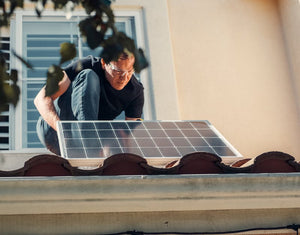
A Carnegie Mellon University study estimates that data center and cryptocurrency mining electricity demand could push the average U.S. household's electricity bill up by 8% by 2030, with that figure potentially exceeding 25% in the highest-demand markets, particularly central and northern Virginia where data center density is greatest. This dynamic is accelerating homeowner interest in on-site generation and storage, since a home producing and storing its own power is more insulated from both rising utility rates and localized grid strain than one relying entirely on grid-supplied electricity.
⚠ Rising Rates Aren't Evenly Distributed
If you live in or near a region with heavy data center concentration, such as Northern Virginia, Texas, or parts of the PJM footprint, your exposure to demand-driven rate increases is likely to be significantly higher than the national average. It's worth checking whether your utility has announced infrastructure cost recovery charges tied to large-load growth in your specific service territory.
Frequently Asked Questions
How much is U.S. electricity demand actually growing?
The EIA projects U.S. electricity consumption will rise to roughly 4,244 billion kWh in 2026 and 4,381 billion kWh in 2027, following back-to-back record highs in 2025. This represents the strongest four-year growth streak since 2000, a sharp reversal from over a decade of relatively flat demand.
Why are data centers such a large share of new demand?
Data centers accounted for roughly 50% of all U.S. electricity demand growth last year according to IEA figures, driven by the rapid buildout of AI training infrastructure, and this share is expected to persist through 2030. Global data center electricity use is growing around 15% annually, more than four times faster than overall electricity demand growth.
Which regions are seeing the fastest electricity demand growth?
The EIA identifies ERCOT (the Texas grid) and PJM (serving the mid-Atlantic and Midwest) as the regions expected to see the most rapid demand growth, driven by concentrated data center development in those areas. This regional concentration is creating localized capacity bottlenecks even as national-level demand growth remains more moderate.
Will rising electricity demand mean higher fossil fuel use?
The EIA's own analysis suggests fossil fuel generation could increase over the next two years as surging data center demand tightens power supplies faster than new clean generation can be built and connected. This is one of the central tensions driving urgency around permitting and interconnection reform, since slow buildout timelines for renewables and transmission push grid operators toward faster-to-deploy fossil generation.
How much could electricity bills rise because of data center growth?
A Carnegie Mellon University study estimates data centers and cryptocurrency mining could increase the average U.S. household electricity bill by roughly 8% by 2030, with increases potentially exceeding 25% in the highest-demand markets like central and northern Virginia. The impact varies enormously by region depending on local data center concentration and how utility regulators allocate infrastructure costs.
Reduce Your Exposure to Rising Grid Costs
As electricity demand and rates climb, Portlandia Electric Supply helps homeowners and contractors build on-site solar, battery storage, and backup power systems that reduce reliance on an increasingly strained grid. Nationwide delivery from 12+ distribution hubs with NABCEP-certified design support.
Shop Solar & Storage Request a Project QuoteRelated Guides
- 12kW vs 16kW vs 20kW vs 24kW Standby Generator - Which size does your home actually need
- Natural Gas vs Propane vs Diesel Standby Generators - Fuel type comparison for home backup power
- How Much Can I Save With Solar Panels? - Calculate your annual and lifetime savings
- Newest Solar Panels in 2026 - Latest models from leading U.S. solar brands
- Request a Quote - Get pricing on solar, storage, and backup power systems
About Portlandia Electric Supply
Portlandia Electric Supply is a nationwide distributor of Tier 1 solar panels, inverters, battery storage systems, standby and portable generators, EV charging hardware, racking, circuit breakers, and complete electrical project kits. With 12+ distribution hubs, 3,800+ in-stock SKUs, NABCEP-certified design support, and a network of 8,500+ solution providers, Portlandia serves contractors, EPCs, developers, and homeowners with fast delivery and expert procurement guidance.
Location: 1507 Portland Ave, Louisville, KY, United States | Phone: 1 888-876-0007 | Website: www.portlandiaelectric.supply
Article: Growing Electricity Demand: Why Energy Policy Reform Is More Urgent Than Ever
Category: Energy Policy | Electricity Demand | Grid Infrastructure | Data Centers
Last Updated: July 2026 - Based on U.S. EIA Short-Term Energy Outlook, IEA Data, and Reuters Reporting
Disclaimer: Demand forecasts, growth rates, and cost projections are based on EIA, IEA, and third-party research current as of mid-2026 and are subject to revision as new data becomes available. Regional impacts vary significantly; consult your local utility for specific rate and capacity information.
Frequently Asked Questions
What amp circuit do I need for an EV charger?
Level 2 EV chargers typically require a 40-60A dedicated circuit on a 240V breaker. A 48A charger needs a 60A breaker (48 x 1.25 = 60A per NEC 125% rule).
Can I charge my EV with solar?
Yes. Size your solar array to cover both household loads and EV charging. A typical EV needs 3-5 additional panels (400W each) for daily charging.
Are EV chargers BABA-compliant?
PES Supply provides BABA documentation for qualifying EV charging products. Contact us for compliance documentation.
Shop Related Products
PES Supply carries 80,000+ products from 300+ manufacturers. One PO, one invoice, every trade covered.
Need help sizing? Our team can calculate loads, select equipment, and source everything from one PO.
Call (502) 790-0600