Last Updated: July 2026 • Based on Cummins, Eaton, and Generac Technical Guidance [web:639]
An automatic transfer switch (ATS) is the device that detects a power outage, starts your standby generator, and switches your home's electrical load from the utility grid to generator power, all without you touching a switch . When utility power returns, it reverses the process automatically and shuts the generator down.
This guide explains exactly how an ATS works step by step, breaks down the difference between managed and whole-house switches, and covers sizing and cost so you know what to expect when pairing one with a standby generator.
⚡ Quick Answer
An ATS continuously monitors utility voltage, and when it detects a failure, it signals the generator to start, waits for stable voltage and frequency, then switches your home's load to generator power, usually within 10 to 30 seconds tota. It automatically switches back and shuts the generator down once utility power is confirmed stable again [web:650].
Key Takeaways
- The internal switch operates in under 100 milliseconds, though total transfer including generator startup takes 10 to 30 seconds.
- A brief delay (0-2 minutes) after detecting an outage avoids unnecessary transfers from momentary blips.
- Sized to your generator's full output, it powers your entire home's electrical panel with no circuit prioritization needed.
- Smart load management sequences power-hungry appliances so a smaller generator can still cover a large home without overloading.
- Transfer switches typically start at 50 amps for smaller residential generators and scale up from there [web:643][web:646].
- Some switches check both voltage and frequency stability before completing a transfer in either direction [web:647].
- The ATS confirms grid power is stable, switches back, then shuts down the generator, all without operator involvement [web:641][web:650].
In This Guide
What an Automatic Transfer Switch Does
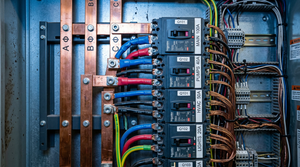
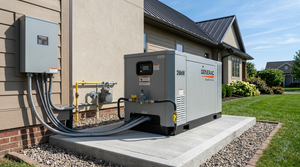
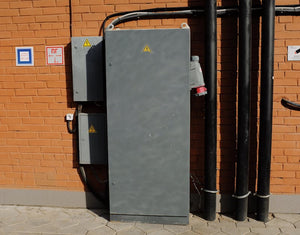
An automatic transfer switch is an intelligent switching device installed between your electrical panel, the utility grid, and your standby generator .[web:650]. Its microprocessor-based control logic constantly monitors the voltage and frequency of the incoming utility power, and the moment it detects a failure or instability, it takes over the entire process of starting the generator and rerouting your home's electrical load without any action from you [web:650][web:641].

How It Works: Step by Step
Step 1. The ATS continuously monitors incoming utility voltage and frequency .[web:650]
Step 2. When voltage drops or disappears, a countdown timer (typically 0-2 minutes) begins to rule out momentary blips [web:647]
Step 3. If power hasn't returned, the ATS sends a start signal to the standby generator [web:641][web:644]
Step 4. The generator starts and stabilizes, typically within a few seconds, reaching correct voltage and frequency [web:641]
Step 5. The ATS disconnects the home from the utility line and connects the generator, completing the switch in under 100 milliseconds [web:642][web:650]
Step 6. On managed systems, load-management modules sequence power-hungry appliances rather than turning everything on at once [web:640]
Step 7. The ATS keeps monitoring utility power even while the generator runs [web:641]
Step 8. When stable utility power returns, a countdown confirms it's steady, then the ATS switches back and shuts down the generator [web:641][web:647]
Managed vs Whole-House Switches
A whole-house ATS is sized to match your generator's full output and simply energizes your entire panel with no prioritization needed, making it the simplest option when your generator is large enough to run everything simultaneously [web:642]. A managed or load-shedding ATS instead uses smart controllers to sequence which circuits get power first, letting a smaller, less expensive generator still back up a larger home by staggering demand instead of hitting the generator with every load at once [web:640].
| Type | Best For | Tradeoff |
|---|---|---|
| Whole-house ATS | Homes with a generator sized for full-load backup [web:642] | Requires a larger, costlier generator |
| Managed/load-shedding ATS | Homes wanting to pair a smaller generator with essential-circuit coverage [web:640] | Non-essential circuits may cycle off during peak demand |
Sizing Your Transfer Switch
Transfer switches are rated in amps rather than kilowatts, typically starting around 50 amps for smaller residential generators and scaling up to 200 amps or more for whole-house systems, with industrial applications going into the thousands [web:643][web:646]. The switch's amp rating needs to match or exceed both your home's main electrical service size and your generator's maximum output to avoid becoming the bottleneck in the system [web:649].
Common Residential ATS Amp Ratings
50-100 amps: Smaller generators covering essential circuits [web:643]
150-200 amps: Standard for most whole-house residential setups matching common main service sizes [web:646]
Beyond 200 amps: Larger homes or homes with heavier electrical service [web:646]
ATS vs Manual Transfer Switch
The core difference is human involvement: a manual transfer switch requires you to physically flip the switch over to generator power, while an ATS removes the person from the equation entirely and completes the whole sequence on its own [web:645][web:647]. Manual switches are considerably more cost-effective for occasional residential use, but an ATS is essential if you want power restored automatically while you're away from home or asleep during an outage [web:642][web:651].
⚠ A Manual Switch Only Helps If You're Home
If you travel frequently, have a home that's sometimes unoccupied, or simply don't want to manage switching during a stressful outage, pairing your standby generator with an automatic transfer switch is worth the added cost. A manual switch sitting unused because no one was home to operate it defeats the purpose of a standby generator [web:651].
Frequently Asked Questions
How fast does an automatic transfer switch actually work?
The switching mechanism itself operates in under 100 milliseconds, but the total time from power loss to your home receiving generator power is typically 10 to 30 seconds, since the generator needs time to start and reach stable voltage and frequency first [web:642][web:641].
Why does the ATS wait before switching to the generator?
A countdown timer, usually 0 to 2 minutes, prevents the system from switching over during brief, harmless power blips that resolve on their own [web:647]. Without this delay, minor grid fluctuations would trigger unnecessary generator startups and wear on the system.
Can an automatic transfer switch overload a smaller generator?
With a whole-house ATS, yes, if the generator isn't sized to handle every circuit turning on simultaneously, which is why proper sizing per NEC 110.3(B) guidelines matters [web:649]. A managed or load-shedding ATS avoids this by sequencing power-hungry appliances so they don't all demand power from the generator at once [web:640].
Does the transfer switch need to match my generator's exact size?
The transfer switch's amp rating should match or exceed both your home's main electrical service and your generator's maximum output amperage [web:643][web:649]. Undersizing the switch relative to either creates a bottleneck, even if the generator itself is properly sized for your home's load.
What happens if utility power flickers on and off repeatedly?
The ATS's countdown timers on both the transfer and retransfer sides are specifically designed to prevent rapid, repeated switching during unstable grid conditions [web:647][web:650]. It waits for confirmed stability in both directions before completing a transfer, which protects both the generator and your home's electrical system from unnecessary cycling.
Pair the Right Transfer Switch With Your Generator
Portlandia Electric Supply stocks whole-house and managed automatic transfer switches sized from 50 to 400+ amps, matched to standby generators from leading manufacturers. Our team can help you size the right switch for your generator and electrical service. Nationwide delivery from 12+ distribution hubs.
Shop Transfer Switches Request a Sizing ConsultationRelated Guides
- - Which size does your home actually need
- - Fuel type comparison for home backup power
- - Compare solar-plus-battery vs generator backup
- - TOPCon, HJT, bifacial, and thin-film comparison
- - Get pricing on generators and transfer switches
About Portlandia Electric Supply
Portlandia Electric Supply is a nationwide distributor of Tier 1 solar panels, inverters, battery storage systems, standby and portable generators, automatic transfer switches, EV charging hardware, racking, circuit breakers, and complete electrical project kits. With 12+ distribution hubs, 3,800+ in-stock SKUs, NABCEP-certified design support, and a network of 8,500+ solution providers, Portlandia serves contractors, EPCs, developers, and homeowners with fast delivery and expert procurement guidance.
Location: 1507 Portland Ave, Louisville, KY, United States | Phone: 1 888-876-0007 | Website: www.portlandiaelectric.supply
Article: How Automatic Transfer Switches Work: Managed vs Whole-House Options
Category: Standby Generators | Home Backup Power | Transfer Switches | Electrical Systems
Last Updated: July 2026 - Based on Cummins, Eaton, and Generac Technical Guidance
Disclaimer: Technical descriptions, sizing figures, and timing estimates are approximations based on industry sources and manufacturer documentation. Actual specifications vary by brand and model. Always consult a licensed electrician for a site-specific transfer switch recommendation before purchase.
Frequently Asked Questions
What size solar panel do I need?
Sizing depends on your daily energy consumption, available roof space, and peak sun hours in your area. A typical home uses 15-25 panels (400W each) for full offset. Call (502) 790-0600 for a free sizing consultation.
How much do solar panels cost in 2026?
PES Supply distributes panels from major manufacturers including Jinko, Mission Solar, and more. Pricing varies by wattage and quantity. Request a quote for current pricing.
Do you offer BABA-compliant solar panels?
Yes. PES Supply provides BABA documentation at no extra charge. All our solar products meet Build America, Buy America requirements.
Shop Related Products
PES Supply carries 80,000+ products from 300+ manufacturers. One PO, one invoice, every trade covered.
Need help sizing? Our team can calculate loads, select equipment, and source everything from one PO.
Call (502) 790-0600