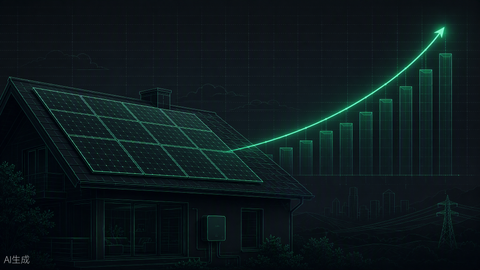
Producing 10,000 kWh of electricity every month is a serious energy target - roughly ten times the average U.S. household. Whether you're powering a large home with EV charging and pool equipment, a multi-family building, or a small commercial operation, getting the panel count right is critical. At PES Supply, we help homeowners, contractors, and businesses size their solar systems accurately using Tier 1 certified panels, hybrid inverters, and energy storage solutions from brands you can trust.
This guide walks you through the full calculation process - from understanding your energy consumption to choosing the right panel wattage, accounting for regional sunlight, selecting system components, and planning your budget. By the end, you'll know exactly how many panels you need, how much roof space to set aside, and which equipment to pair with your array.
Field note: We sized a 10,000 kWh/month system last spring for a dairy farm outside Lexington — 140 panels of 550W on EG4 BrightMount ground racks. The math works, but only if you account for the 18% soiling loss we see on ground mounts in cattle country.
Key Takeaways
- Panel count: Expect 97–192 panels depending on wattage (400W–800W) after a 15% system loss buffer
- Core formula: Monthly kWh Target ÷ Monthly Output per Panel = Number of Panels (+ 15% buffer)
- Sunlight matters: Properties in Phoenix (7 sun hours) need far fewer panels than Portland, OR (3.5 sun hours)
- Roof space: Plan for 1,940–3,580 sq ft depending on panel wattage and layout
- Complete system: Panels alone aren't enough - you'll need inverters, battery storage, racking, and potentially backup generators
In This Guide:
- Step 1: Understand Your Monthly Energy Consumption
- Step 2: Know Your Panel Output
- Step 3: Calculate the Number of Panels
- Step 4: Account for Site-Specific Variables
- Step 5: Evaluate Your Available Space
- Step 6: Select Your System Components
- Step 7: Plan Your Budget
- Bottom Line: Your 10,000 kWh Solar Roadmap
- Frequently Asked Questions
Step 1: Understand Your Monthly Energy Consumption

Every solar system design starts with one number: your average monthly electricity consumption. A usage level of 10,000 kWh per month is substantial - roughly equivalent to a 5,000+ square foot home with central HVAC running year-round, multiple EV chargers, pool and spa equipment, or a small commercial facility with lighting, refrigeration, and machinery. Pull your most recent 12 months of utility statements and calculate your average. Seasonal swings matter: if summer cooling pushes your July bill to 14,000 kWh but winter drops to 6,000 kWh, your system should be sized to your annual average rather than a single peak month.
💡 Pro Tip: Let Us Do the Math
If you're a PES Supply customer, you can submit your electric bill directly through our Quote My System tool and our in-house engineering team will deliver a detailed equipment quote within 24 hours - including panel count, inverter sizing, battery recommendation, and total project cost.
Solar panels are rated by their peak wattage under standard test conditions (STC). The panels available through PES Supply range from 400W residential modules to 800W commercial-grade Tier 1 panels. Higher-wattage panels generate more energy per unit, which means fewer panels on your roof and lower installation labor costs. The table below shows estimated daily and monthly output for panels at different wattage levels, assuming an average of 5 peak sun hours per day - a common benchmark for moderate-sun regions across the U.S.
Field note: I've walked too many jobs where the homeowner bought 200 panels online and then realized their 2,200 sq ft roof only fits 80. Roof area is the hard constraint; panel wattage is how you solve it.
| Panel Wattage | Avg. Sun Hours | Daily Output (kWh) | Monthly Output (kWh) |
|---|---|---|---|
| 400W | 5 | 2.0 | 60 |
| 430W | 5 | 2.15 | 64.5 |
| 550W ⭐ Popular | 5 | 2.75 | 82.5 |
| 600W | 5 | 3.0 | 90 |
| 800W ⭐ Commercial | 5 | 4.0 | 120 |
For reference, our Hyundai 410W Bifacial HiS-S410YH and Mission Solar 430W Mono PERC panels are among the most popular choices for residential and commercial projects. Bifacial panels like the Hyundai capture reflected light from the ground surface as well, boosting real-world output by 5–25% depending on mounting conditions.
The core formula is straightforward: divide your monthly energy target by the monthly output of a single panel, then add a 15% loss buffer to account for real-world efficiency reductions from wiring, inverter conversion, soiling, and temperature. Here is what the math looks like for several panel wattages available from PES Supply:
📐 The Sizing Formula
Monthly kWh Target ÷ Monthly Output per Panel = Base Panel Count
Field note: Our Louisville warehouse ships 400W–800W panels nationwide, and I can tell you from freight bills: the per-watt shipping cost on 800W commercial modules is about 40% lower than shipping the same wattage in 400W units. Fewer pallets, less labor.
Base Panel Count × 1.15 = Final Panel Count (with 15% loss buffer)
| Panel Wattage | Monthly kWh/Panel | Panels Needed (Raw) | With 15% Loss Buffer |
|---|---|---|---|
| 400W | 60 | 167 | 192 |
| 430W | 64.5 | 155 | 179 |
| 550W ⭐ Popular | 82.5 | 122 | 140 |
| 600W | 90 | 112 | 129 |
| 800W ⭐ Commercial | 120 | 84 | 97 |
⚠️ Never Skip the Loss Buffer
The 15% loss buffer accounts for real-world efficiency reductions from wiring resistance, inverter DC-to-AC conversion losses, panel soiling, and high-temperature derating. Every professional system design includes this adjustment. Installing without the buffer means falling short of your energy target from day one.
The calculations above use 5 peak sun hours as a national average. But your actual panel count depends heavily on where you're located, how your roof faces, and whether shading is a factor. PES Supply ships nationwide and designs systems for every climate zone - here's how regional and site-specific variables change the equation.
Sunlight Hours by Region
The number of peak sun hours your property receives directly affects how many panels you need. Properties in lower-sun areas need more panels or higher-wattage modules to hit the same 10,000 kWh target.
| Region Example | Avg. Sun Hours/Day | Monthly kWh per 1 kW | 430W Panels Needed* |
|---|---|---|---|
| Phoenix, AZ (High Sun) | 7 | 210 | 128 |
| Louisville, KY (Moderate) | 5 | 150 | 179 |
| Portland, OR (Lower Sun) | 3.5 | 105 | 255 |
*With 15% loss buffer, using 430W panels. Our in-house engineering team adjusts for local irradiance data when building your custom quote.
Panel Orientation and Tilt
In the Northern Hemisphere, south-facing panels capture the most sunlight over the course of a year. East- or west-facing arrays typically produce 10–20% less energy, and north-facing installations can lose 30–40%. The tilt angle should approximate your latitude for optimal annual production.
| Roof Orientation | Relative Energy Production | Impact on Panel Count |
|---|---|---|
| South-Facing | 100% ✅ | Baseline - no extra panels needed |
| East or West-Facing | 80–90% ⚠️ | Add 10–20% more panels |
| North-Facing | 60–70% ❌ | Add 30–40% more panels - avoid if possible |
💡 Pro Tip: Adjustable Racking Maximizes Output
We supply Unirac roof-mount racking and EG4 BrightMount ground mounts that allow precise angle adjustment to maximize output on any site. Ground mounts are especially useful when your roof faces east/west or has limited unshaded area - you can orient the array due south at the optimal tilt regardless of roof geometry.
Shading and Obstructions
Even partial shading on a single panel can reduce the output of an entire string. Trees, chimneys, neighboring structures, and utility poles are common culprits. Heavy shading can cut production by 50% or more. This is one reason we recommend microinverters or module-level power electronics from SolarEdge for installations with complex shade profiles - they allow each panel to operate independently so one shaded module doesn't drag down the rest of the string.
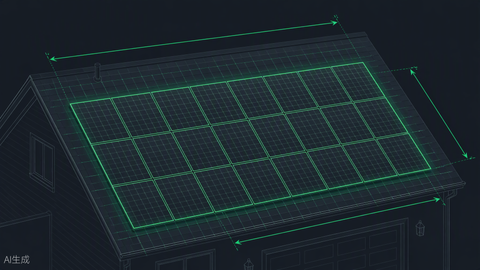
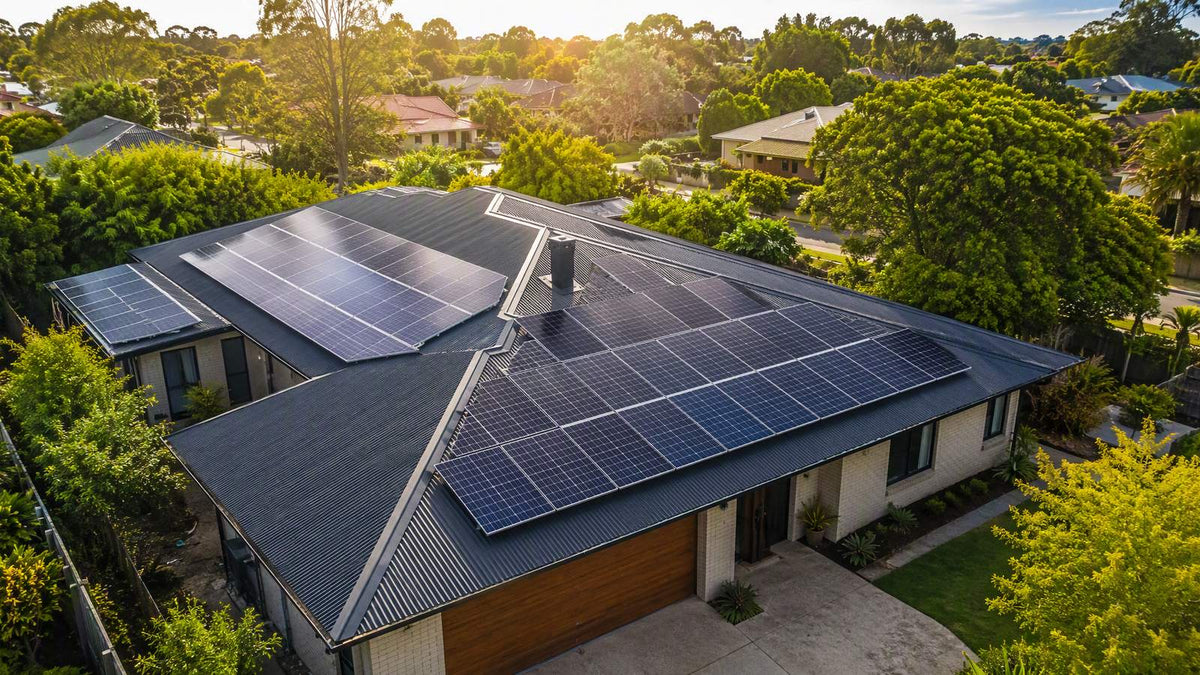
A standard residential solar panel measures roughly 1.7 m × 1.1 m - about 20 square feet including mounting clearances. For a 10,000 kWh/month system, the roof (or ground) area you need depends entirely on which panel wattage you select. Here's how the numbers break down:
| Panel Wattage | Panels (w/ Buffer) | Space per Panel | Total Roof Area Needed |
|---|---|---|---|
| 430W | 179 | ~20 sq ft | ~3,580 sq ft |
| 550W | 140 | ~20 sq ft | ~2,800 sq ft |
| 800W | 97 | ~20 sq ft | ~1,940 sq ft |
If roof space is limited, ground-mounted systems using EG4 BrightMount racking or Unirac structures can be deployed across open land. Commercial sites may also benefit from tracking systems that follow the sun throughout the day, squeezing maximum annual yield from each panel.
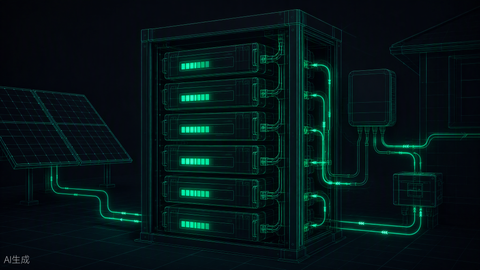
Solar panels are only one part of a complete energy system. PES Supply offers every component you need under one roof, with nationwide shipping and in-house design support.
Inverters
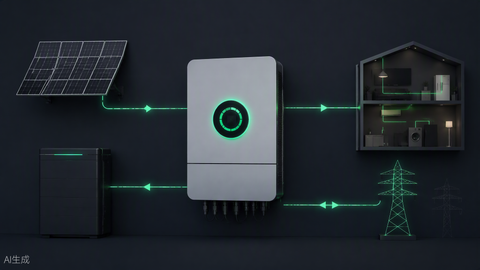
Inverters convert the DC electricity generated by your panels into AC power your home or business can use. We carry string inverters from GoodWe, SMA Solar, and Fronius for straightforward installations, as well as hybrid inverters from Sol-Ark, SolarEdge, Generac, and Outback Power that integrate battery storage and grid management in a single unit. Hybrid inverters are especially valuable for large systems because they allow you to store excess daytime production for nighttime use or grid outages.
Batteries and Energy Storage
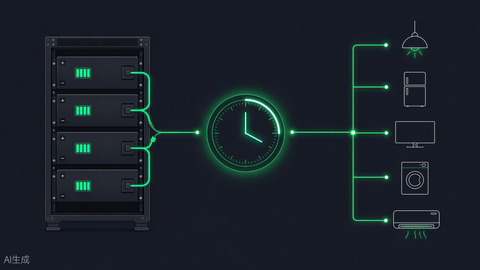
For a 10,000 kWh monthly system, battery storage transforms your investment by capturing surplus daytime production for evening and overnight use. We supply lithium-ion battery systems from EG4 (including the Chargeverter and LifePower4 series), Generac PWRcell, and other leading storage platforms. Your storage capacity should be sized to your self-consumption goals and local utility rate structure. Our engineering team can model the optimal battery bank for your specific project.
Racking, Mounting, and Balance of System
Racking hardware secures your panels and determines their tilt and orientation. We supply Unirac roof-mount systems for residential projects, EG4 BrightMount ground mounts for open-land installations, and tracking systems for commercial sites seeking maximum annual yield. All mounting hardware is engineered for corrosion resistance and rated for regional wind and snow loads.
Generators and Backup Power
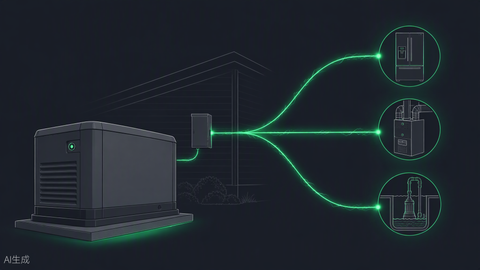
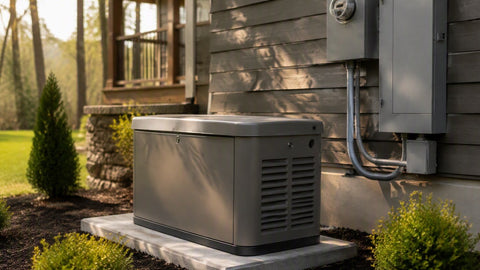
For sites that require uninterrupted power regardless of weather or grid conditions, PES Supply carries Generac standby generators ranging from 22 kW residential units to 125 kW commercial systems. Pairing solar, battery storage, and a backup generator provides the ultimate resilience for high-consumption properties.
💡 Pro Tip: One Supplier, One Order, One Shipment
Ordering panels, inverters, batteries, racking, and generators from a single distributor eliminates compatibility headaches, reduces shipping costs, and gives you a single point of contact for design support. PES Supply bundles complete system kits with free nationwide freight - contact us for a turnkey quote.
A 10,000 kWh/month system is a substantial investment, and equipment costs vary based on panel wattage, inverter type, storage capacity, and installation complexity. The federal Investment Tax Credit (ITC) currently offers a significant deduction on qualifying solar installations, and many states and utilities offer additional rebates and incentives. PES Supply helps you control costs by offering competitive wholesale pricing on Tier 1 equipment, free nationwide freight, and turnkey system kits that bundle everything into a single order.
📋 Budget Planning Checklist
- ✅ Submit your electric bill through our Quote My System tool for a detailed, itemized quote within 24 hours
- ✅ Compare multiple quotes - PES Supply provides transparent pricing against any competitor
- ✅ Check for federal, state, and local incentives before finalizing your budget (the ITC alone can save thousands)
- ✅ Consider phased installation if cash flow is a concern - start with a partial system and expand as needed
- ✅ Factor in long-term savings: Tier 1 panels carry 25–30 year performance warranties and typically pay for themselves many times over
Related Products


Ready to Size Your 10,000 kWh System?
Submit your electric bill and our in-house engineering team will deliver a complete system design - panel count, inverter sizing, battery recommendation, racking plan, and total project cost - within 24 hours.
Quote My System Shop Solar PanelsGenerating 10,000 kWh per month with solar is absolutely achievable - but it requires careful planning, the right equipment, and a system design that accounts for your specific location, roof conditions, and energy goals. Whether you're a homeowner with a high-consumption property, a contractor designing for a commercial client, or a facility manager looking to slash utility costs, the math is clear: Tier 1 panels paired with the right inverters and storage will deliver reliable, long-term energy production.
🎯 The Bottom Line
To produce 10,000 kWh per month at 5 peak sun hours, you'll need between 97 panels (800W commercial) and 192 panels (400W residential) after accounting for 15% system losses. Most projects in moderate-sun regions land in the 140–179 panel range using popular 430W–550W modules. Pair your array with hybrid inverters, lithium battery storage, and professional racking for a system that performs for 25–30 years.
Next step: Submit your electric bill or call (888) 876-0007 and let our team do the heavy lifting.
How many solar panels does it take to generate 10,000 kWh per month?
With Tier 1 panels in the 400–430W range and 5 peak sun hours per day, expect to need between 155 and 192 panels after accounting for a 15% system loss buffer. Using higher-wattage 800W commercial panels can bring the count as low as 84–97. Your exact number depends on your location's sunlight hours, roof orientation, and shading conditions.
What factors most affect my panel count?
Your geographic location (sunlight hours), panel wattage, roof orientation, shading conditions, and system losses from wiring and inverter efficiency are the biggest variables. A south-facing roof in Phoenix with 7 sun hours needs far fewer panels than a west-facing roof in Portland with 3.5 sun hours. Our in-house engineering team accounts for all of these when designing your system.
Can higher-wattage panels reduce the total number I need?
Absolutely. A 400W panel produces roughly 60 kWh/month at 5 sun hours, while an 800W panel produces about 120 kWh/month - cutting the required panel count nearly in half. Higher-wattage panels also mean fewer roof penetrations, less racking hardware, and lower installation labor costs. PES Supply carries Tier 1 panels up to 800W for commercial applications.
Do solar panels work on cloudy days?
Yes. Solar panels continue generating electricity under overcast skies, though at reduced output - typically 10–25% of their rated capacity depending on cloud density. Bifacial panels like the Hyundai HiS-S410YH capture reflected light from the ground as well, improving performance in diffuse-light conditions. This is why the 15% loss buffer in your sizing calculation is so important.
How long do solar panels last?
Most Tier 1 solar panels carry performance warranties of 25–30 years and typically continue producing at 80–85% of their original rated output even at the end of that warranty period. They require only periodic cleaning and visual inspection. Solar panels are one of the most durable pieces of electrical equipment you can install - with no moving parts, the maintenance burden is minimal.
How much roof space do I need for a 10,000 kWh/month system?
Using 430W panels, you'll need approximately 3,580 sq ft of unobstructed roof area (179 panels × ~20 sq ft each). Switching to 800W commercial panels reduces that footprint to roughly 1,940 sq ft with only 97 panels. If roof space is limited, ground-mounted systems using EG4 BrightMount racking can be deployed across open land.
What inverter do I need for a system this large?
A 10,000 kWh/month system typically requires multiple string inverters or a large hybrid inverter setup to handle the array's total DC capacity. PES Supply carries hybrid inverters from Sol-Ark, SolarEdge, Generac, and Outback Power that can be paralleled for high-capacity systems. Our engineering team will match the inverter configuration to your specific panel layout and storage goals.
Does PES Supply offer complete system kits?
Yes. We bundle panels, inverters, racking, battery storage, and optional backup generators into turnkey system kits with free nationwide shipping. Submit your electric bill through our Quote My System tool at portlandiaelectric.supply and our in-house team will deliver a complete, itemized equipment quote within 24 hours - including design drawings and a wiring diagram.
About PES Supply
PES Supply is a nationwide electrical supply distributor offering premium Tier 1 solar panels, standby generators, inverters, battery storage systems, and related electrical equipment. With a catalog of 50,000+ SKUs across 169 authorized brands and nationwide LTL freight delivery from our Louisville, Kentucky supply house, we deliver turnkey power solutions with live support and fast nationwide delivery.
📍 Location: 1507 Portland Ave, Louisville, KY, United States 📞 Phone: +1 888-876-0007 🌐 Website: www.portlandiaelectric.supply
Article: How Many Solar Panels Do I Need for 10,000 kWh Per Month? - Your Complete 2026 Sizing Guide
Related Articles: How Many Solar Panels for a 3,000 Sq Ft Home? | What Can a 3000 Watt Solar System Run? | N-Type Solar Panels: The Complete 2026 Guide
Related Resources:
- Best Solar Panels 2026 - Buyer's Guide
- EG4 vs Tesla Powerwall
- Qcells vs Trina vs JA
- Solar Inverter Buyer's Guide
- Solar Battery Buyer's Guide
- 5kW Solar Kit
- 10kW Solar + Battery Kit
- Off-Grid Cabin Kit
- EG4 Batteries
- Qcells Solar Panels
- Trina Solar
- JA Solar
- REC Solar
- Mission Solar
- Sol-Ark Inverters
- SolarEdge Inverters
- Generac PWRcell
Calculate how much storage you need with our battery sizing calculator.
Check solar incentives available in your state.
Use our free solar system calculator to size your array.
Check out our Solar Panel Comparison Tool. Check out our Inverter Sizing Calculator.
Calculate your solar payback and 25-year savings with our Solar ROI Calculator. Follow our complete DIY solar installation guide for step-by-step instructions. Keep your system running at peak performance with our Solar Maintenance Guide.
Related Resources
- Solar System Calculator
- Battery Sizing Calculator
- Solar Panel Comparison Tool
- Inverter Sizing Calculator
- Solar ROI Calculator
- Solar Installation Guide
- Solar Maintenance Guide
- Solar Permitting Guide
- Battery Installation Guide
- NEC Code Compliance Guide
- Solar Panel Mounting Guide
- Grounding & Bonding Guide
- Solar Incentives by State
- Pro Account - Wholesale Pricing
- PowerLink Network - Contractor Program
What size wire do I need?
Wire sizing follows NEC Table 310.16 based on ampacity. A 20A circuit needs 12 AWG copper, a 30A circuit needs 10 AWG, and a 50A circuit needs 6 AWG.
Do I need a permit for electrical work?
Most electrical work requires a permit. Check with your local AHJ (Authority Having Jurisdiction). PES Supply provides spec sheets for permit submittals.
What is the NEC 125% rule?
NEC 210.19(A)(1) requires continuous loads (3+ hours) to be sized at 125% of the rated load. A 16A continuous load needs a 20A breaker (16 x 1.25 = 20A).
PES Supply carries a catalog of 50,000+ SKUs from 169 authorized brands. One PO, one invoice, every trade covered.
Need help sizing? Our team can calculate loads, select equipment, and source everything from one PO.
Call (502) 790-0600