Last Updated: June 2026 • Based on Lawrence Berkeley National Laboratory Tracking the Sun Report, NREL Cost Data, and EnergySage Market Intelligence
If you have started getting quotes for solar panels, you have probably already noticed that prices vary a lot. One installer quotes $18,000. Another quotes $28,000. A third quotes $24,000. They all claim to be competitive. So what should you actually pay for solar panels in 2026?
The honest answer is that a fair price depends on where you live, how big your system needs to be, which panel brand you choose, and who installs it. This guide gives you the actual numbers, explains every line item in a solar quote, and shows you exactly how to tell whether a price is fair or inflated.
⚡ Quick Answer
The average cost of a residential solar panel system in 2026 is $2.80 to $3.20 per watt installed, before incentives. For a typical 8 kW home system, that works out to $22,400 to $25,600 gross, or $15,680 to $17,920 after the 30% federal tax credit. Panels themselves represent only about 30% of the total cost. Labor, inverter, racking, permits, and wiring make up the rest.
Key Takeaways
National Average:- $2.80 to $3.20 per watt installed before incentives. After the 30% federal ITC, the effective cost drops to $1.96 to $2.24 per watt.
- A 6 kW system costs $16,800 to $19,200 gross. An 8 kW system costs $22,400 to $25,600 gross. A 10 kW system costs $28,000 to $32,000 gross.
- Solar panels account for only about 25 to 30% of total installed cost. Labor, inverter, racking, permits, and electrical work make up the rest. >
- The Inflation Reduction Act's 30% Investment Tax Credit applies to the full installed system cost, including labor and permits.
- Solar prices vary by 20 to 40% between installers for the same system. Getting multiple quotes is the single most effective way to avoid overpaying.
- A very low quote often means lower-tier panels, an undersized inverter, or an inexperienced installer. The cheapest system rarely delivers the best value over 25 years.
- Adding a Powerwall or similar battery adds $8,000 to $15,000 installed, but qualifies for the same 30% federal tax credit when co-installed with solar.
In This Guide
Average Solar Panel System Cost in 2026

The benchmark price for residential solar in 2026 is between $2.80 and $3.20 per watt for a fully installed system. This figure covers everything: the panels, inverter, racking, wiring, permits, utility interconnection fees, and installation labor. It is the number installers use to quote and the number you should use to evaluate whether a bid is reasonable.
This per-watt figure has dropped sharply over the past decade. In 2015, the average installed cost was around $4.50 per watt. In 2020 it was $3.40 per watt. Today it sits near $3.00 per watt nationally. The trend is driven by falling panel prices, better inverter technology, and installers becoming more efficient. Prices are expected to continue declining gradually through 2028 as manufacturing scale increases.
2026 National Average: At a Glance
Cost per watt (installed, before incentives):- $2.80 to $3.20
- $1.96 to $2.24
- $22,400 to $25,600
- $15,680 to $17,920
- 6 to 10 years
- $25,000 to $75,000 depending on location
What You Are Actually Paying For
Most homeowners assume solar panels are the biggest cost. They are not. When you pay $25,000 for a solar system, only about $7,000 of that goes toward the panels themselves. Here is where the rest goes.
| Cost Component | Typical Share of Total Cost | What It Covers | Rough Cost (8 kW system) |
|---|---|---|---|
| Solar Panels | 25 to 30% | The photovoltaic modules themselves | $6,000 to $7,500 |
| Inverter | 10 to 15% | Converts DC solar power to usable AC electricity | $2,500 to $3,500 |
| Racking and Mounting | 8 to 12% | Rails, clamps, and roof attachments that hold panels in place | $1,800 to $2,800 |
| Electrical and Wiring | 8 to 12% | Conduit, wiring, disconnect switches, breakers, and panel upgrades if needed | $1,800 to $2,800 |
| Installation Labor | 15 to 20% | Crew time for rooftop work, wiring, and commissioning | $3,500 to $5,000 |
| Permits and Inspections | 3 to 6% | Building permits, electrical permits, utility interconnection fees | $700 to $1,500 |
| Installer Overhead and Margin | 15 to 25% | Sales, design, project management, warranty support, company profit | $3,500 to $6,000 |
The installer overhead and margin line is where the biggest price differences between quotes tend to appear. A large national installer with heavy marketing costs may have margins of 30 to 40%. A local installer with lower overhead may work at 15 to 20% margin. Both can install a reliable system, but the price difference can be $4,000 to $8,000 on the same hardware.
Cost by System Size: 4 kW to 15 kW

System size is the most direct driver of total cost. Here are realistic price ranges for common residential system sizes in 2026, before and after the 30% federal tax credit.
| System Size | Panels Needed (400W) | Gross Cost | After 30% ITC | Typical Home Size |
|---|---|---|---|---|
| 4 kW | 10 panels | $11,200 to $12,800 | $7,840 to $8,960 | Small home, 1,000 to 1,500 sq ft |
| 6 kW | 15 panels | $16,800 to $19,200 | $11,760 to $13,440 | Average home, 1,500 to 2,000 sq ft |
| 8 kW | 20 panels | $22,400 to $25,600 | $15,680 to $17,920 | Larger home, 2,000 to 2,800 sq ft |
| 10 kW | 25 panels | $28,000 to $32,000 | $19,600 to $22,400 | Large home, 2,800 to 3,500 sq ft, or EV charging |
| 12 kW | 30 panels | $33,600 to $38,400 | $23,520 to $26,880 | Very large home or small business |
| 15 kW | 38 panels | $42,000 to $48,000 | $29,400 to $33,600 | Large estate, multiple EVs, pool, home office |
How to Size Your System: Divide your annual electricity usage (in kWh, found on your utility bill) by the number of peak sun hours per day in your area, then divide by 365 days. That gives you an approximate system size in kW. For example, a home using 10,800 kWh per year in a location with 4.5 peak sun hours per day needs roughly a 6.6 kW system.
Cost by State: Why Prices Vary So Much

The same 8 kW system can cost $19,000 in one state and $28,000 in another. Several factors drive these differences: local labor rates, permit costs, competition among installers, roof type and complexity, and state-specific electrical code requirements.
| State | Avg Cost per Watt | 8 kW Gross Cost | 8 kW After ITC | Why It Is High or Low |
|---|---|---|---|---|
| Arizona | $2.60/W | $20,800 | $14,560 | High installer competition, simple flat roofs, mature market |
| Texas | $2.70/W | $21,600 | $15,120 | Low labor costs, growing competition, minimal permit complexity |
| Florida | $2.75/W | $22,000 | $15,400 | Large installer base, hurricane-rated racking adds some cost |
| Colorado | $3.00/W | $24,000 | $16,800 | Moderate competition, snow load racking requirements |
| California | $3.10/W | $24,800 | $17,360 | High labor costs, strict permitting, Title 24 compliance requirements |
| New York | $3.20/W | $25,600 | $17,920 | High labor and permit costs, older housing stock is complex to work on |
| Massachusetts | $3.30/W | $26,400 | $18,480 | Highest labor costs in the country, old homes require extra work |
| Hawaii | $3.50/W | $28,000 | $19,600 | High shipping costs, limited competition, premium labor market |
Panel Brand Cost Comparison
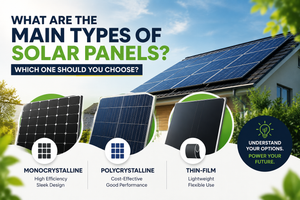
The panel brand you choose affects both the cost and the quality of your system. Budget panels from lower-tier brands can cut your upfront cost by $1,500 to $3,000, but they may degrade faster and have weaker warranty support over 25 years. Premium panels cost more upfront but deliver more energy per square foot and typically come with stronger performance guarantees.
| Panel Tier | Example Brands | Efficiency Range | Panel Cost (per watt) | Best For |
|---|---|---|---|---|
| Budget | Generic / off-brand | 17 to 19% | $0.25 to $0.35 | Large roofs where space is not a constraint |
| Standard Tier 1 | LONGi, JA Solar, Trina, Canadian Solar | 19 to 21% | $0.35 to $0.50 | Most residential and commercial systems |
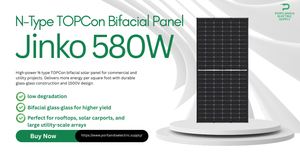
| Premium Tier 1 | REC, Hanwha Q CELLS, Jinko N-type | 21 to 22% | $0.50 to $0.65 | Space-constrained roofs, high-performance systems |
| Ultra Premium | SunPower Maxeon, Panasonic EverVolt | 22 to 24% | $0.70 to $0.90 | Very small roofs, maximum output priority, premium aesthetics |
⚠ Do Not Overpay for Ultra-Premium Panels on a Standard Roof
For most homes with adequate roof space, the extra cost of ultra-premium panels does not pay off fast enough to justify the price. A standard Tier 1 panel from LONGi, Canadian Solar, or JA Solar delivers excellent performance and a 25-year warranty at a significantly lower cost. Save the premium panel budget for situations where roof space is genuinely tight.
What You Actually Pay After Incentives
Before you accept any quote as the final number, apply the incentives available to you. For most homeowners in 2026, the federal ITC alone cuts the gross cost by 30%. Stack state tax credits and utility rebates on top and the effective cost can drop by 40 to 55% in the best markets.
Incentive Stacking Example: $25,000 System in New York
- $25,000
- $7,500
- $5,000
- $1,500
- $800
Not every state offers this level of incentives. In states like Texas and Florida with no state income tax credit, the federal ITC alone brings you to 70% of the gross cost. But even the baseline 30% reduction is substantial. A $24,000 system becomes $16,800 after the ITC with no other incentives applied.
How to Spot an Overpriced Quote
Solar is a large purchase and some installers count on homeowners not knowing what a fair price looks like. Here are the clearest warning signs that a quote is inflated.
| Red Flag | What It Often Means | What to Do |
|---|---|---|
| Price above $3.50 per watt | High installer margin, inflated overhead, or a complex site being used to justify a higher price | Get two more quotes from local installers. National brands often cost 20 to 30% more than locals. |
| No itemized breakdown | Hiding markup on hardware or labor behind a single lump sum price | Always ask for a line-item quote showing panel model, inverter model, wattage, and labor cost separately. |
| Pressure to sign same day | High-pressure sales tactics designed to prevent you from comparing prices | Any reputable installer will hold a quote for 30 days. Walk away from same-day pressure. |
| No mention of panel brand or model | Room to swap specified panels for cheaper ones after signing | Require the specific panel model number and wattage to be written into the contract. |
| Oversized system for your bill | Upselling more capacity than you will actually use to increase total sale value | Check: system output (kWh per year) should be close to your actual annual usage, not 30 to 50% above it. |
What a Good Solar Quote Should Include
A professional, trustworthy solar quote should give you everything you need to compare it fairly against other bids. Here is what to look for before signing anything.
✅ System Details
Panel brand, model number, quantity, and wattage each
Inverter brand, model, and size (kW)
Racking system brand and mounting type (roof attachment method)
✅ Energy Production Estimate
Estimated annual kWh output specific to your roof orientation and location
Year 1 and Year 25 production figures (accounting for degradation)
✅ Cost Breakdown
Gross system cost (total before incentives)
Itemized or at minimum separated by panels, inverter, install labor, permits
Net cost after federal ITC and any state incentives applied
✅ Warranties
Panel product warranty (minimum 12 years, ideally 25 years)
Panel performance warranty (25 years minimum)
Inverter warranty (10 years standard, 25 years with microinverters)
Workmanship warranty from the installer (minimum 10 years)
✅ Project Timeline
Expected installation date
Permit timeline
Utility interconnection timeline
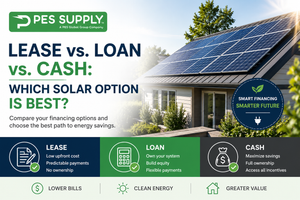
Cash, Loan, or Lease: Which Actually Costs Less?
The way you pay for solar affects the total amount you spend and the total amount you save over time. Here is a straightforward comparison.
| Option | Upfront Cost | Do You Get the ITC? | Total Cost Over 25 Years | Best For |
|---|---|---|---|---|
| Cash Purchase | Full system cost | Yes, full 30% | Lowest total cost. No interest paid. | Homeowners with savings available who want maximum lifetime savings |
| Solar Loan | $0 down in most cases | Yes, full 30% (use refund to pay down loan principal) | Moderate. Interest paid over loan term reduces net savings by $3,000 to $7,000 depending on rate. | Homeowners who want ownership but prefer not to pay upfront |
| Lease or PPA | $0 down | No. The solar company keeps the ITC. | Highest total cost over time. You pay for the electricity produced but never own the asset. | Renters or homeowners who cannot qualify for a loan and want some bill reduction without any upfront commitment |
Bottom Line on Leases: If you can qualify for a solar loan, you will almost always come out ahead financially compared to a lease or PPA. The federal tax credit alone is worth $6,000 to $9,000 on a typical system. That money goes to you when you own the system and goes to the leasing company when you do not.
Frequently Asked Questions
What is a fair price per watt for solar panels in 2026?
A fair price for a fully installed residential solar system in 2026 is $2.80 to $3.20 per watt before incentives. Anything above $3.50 per watt should prompt you to get additional quotes. Simple, unshaded rooftop systems in competitive markets like Arizona and Texas often come in closer to $2.60 to $2.80 per watt.
How much does an average home solar system cost in total?
For a typical US home using 10,000 to 12,000 kWh per year, an 8 to 10 kW system is common. At $3.00 per watt that works out to $24,000 to $30,000 gross, or $16,800 to $21,000 after the 30% federal tax credit. In high-incentive states like New York the effective cost after all incentives can drop to $10,000 to $14,000 for the same system.
Does a more expensive panel always mean better performance?
Not necessarily. The most important thing is choosing a reputable Tier 1 manufacturer with a strong warranty and a proven track record. A standard LONGi or Canadian Solar panel at $0.40 per watt will outperform a no-name panel at $0.30 per watt. An ultra-premium SunPower panel at $0.85 per watt will produce slightly more energy per square foot, but on most standard roofs the extra cost takes many years to recover in additional production.
How do I know if a solar quote is too high?
Compare the per-watt price to the national average of $2.80 to $3.20. Ask for an itemized breakdown so you can see where the cost is. Get at least two more quotes for the same system size. Check the panel and inverter brands against the prices in this guide. If the quote does not include a specific panel model number, ask for it before proceeding.
Is it worth paying more for a premium installer?
A certified, experienced installer is worth paying a reasonable premium for. Poor installation quality causes panel underperformance, roof leaks, and voided warranties. But a premium price does not always mean a premium installer. Verify NABCEP certification, check Google and BBB reviews, confirm the company has been operating for at least five years, and ask for local references before signing.
Ready to Get the Best Price on Solar?
Whether you are sourcing Tier 1 panels for a residential project or building out a commercial system, PES Supply offers competitive pricing on solar panels, inverters, racking, battery storage, and complete system kits. Nationwide delivery from 12+ distribution hubs. 3,800+ in-stock SKUs. NABCEP-certified design support.
Shop Solar Panels Request a System QuoteRelated Guides
- Calculate your annual and lifetime savings
- How to estimate annual kWh production by location
- Step-by-step installation walkthrough for professionals
- Size solar backfeed breakers correctly
- Get competitive pricing on Tier 1 panels and complete system kits
About PES Supply
PES Supply is a nationwide distributor of Tier 1 solar panels, inverters, battery storage systems, EV charging hardware, racking, circuit breakers, generators, and complete electrical project kits. With 12+ distribution hubs, 3,800+ in-stock SKUs, NABCEP-certified design support, and a network of 8,500+ solution providers, PES Supply serves contractors, EPCs, developers, and homeowners with fast delivery and expert procurement guidance.
Location: 1507 Portland Ave, Louisville, KY, United States | Phone: 1 888-876-0007 | Website: www.portlandiaelectric.supply
Article: Solar Panel Cost: What Should I Actually Pay? Complete 2026 Pricing Guide for Homeowners
Category: Solar Energy | Solar Cost | Solar Pricing | Residential Solar | Home Energy
Last Updated: June 2026 - Based on Lawrence Berkeley National Laboratory Tracking the Sun Report, NREL Cost Data, and EnergySage Market Intelligence
Disclaimer: Prices, incentive rates, and cost estimates are based on national averages as of June 2026 and vary by location, installer, roof type, and system design. Always get multiple quotes from licensed installers and consult a tax professional regarding the federal Investment Tax Credit before making purchasing decisions.
Related Resources:
- Best Solar Panels 2026 — Buyer's Guide
- EG4 vs Tesla Powerwall
- Qcells vs Trina vs JA
- Solar Inverter Buyer's Guide
- Solar Battery Buyer's Guide
- 5kW Solar Kit
- 10kW Solar + Battery Kit
- Off-Grid Cabin Kit
- EG4 Batteries
- Qcells Solar Panels
- Trina Solar
- JA Solar
- REC Solar
- Mission Solar
- Sol-Ark Inverters
- SolarEdge Inverters
- Generac PWRcell
Calculate how much storage you need with our battery sizing calculator.
Check solar incentives available in your state.
Use our free solar system calculator to size your array.
Check out our Solar Panel Comparison Tool. Check out our Inverter Sizing Calculator.
Calculate your solar payback and 25-year savings with our Solar ROI Calculator. Follow our complete DIY solar installation guide for step-by-step instructions. Keep your system running at peak performance with our Solar Maintenance Guide.
Related Resources
- Solar System Calculator
- Battery Sizing Calculator
- Solar Panel Comparison Tool
- Inverter Sizing Calculator
- Solar ROI Calculator
- Solar Installation Guide
- Solar Maintenance Guide
- Solar Permitting Guide
- Battery Installation Guide
- NEC Code Compliance Guide
- Solar Panel Mounting Guide
- Grounding & Bonding Guide
- Solar Incentives by State
- Pro Account — Wholesale Pricing
- PowerLink Network — Contractor Program