Last Updated: July 2026 • Based on Sigenergy, Fortress Power, SMA, and Solis Zero-Export Technical Documentation.
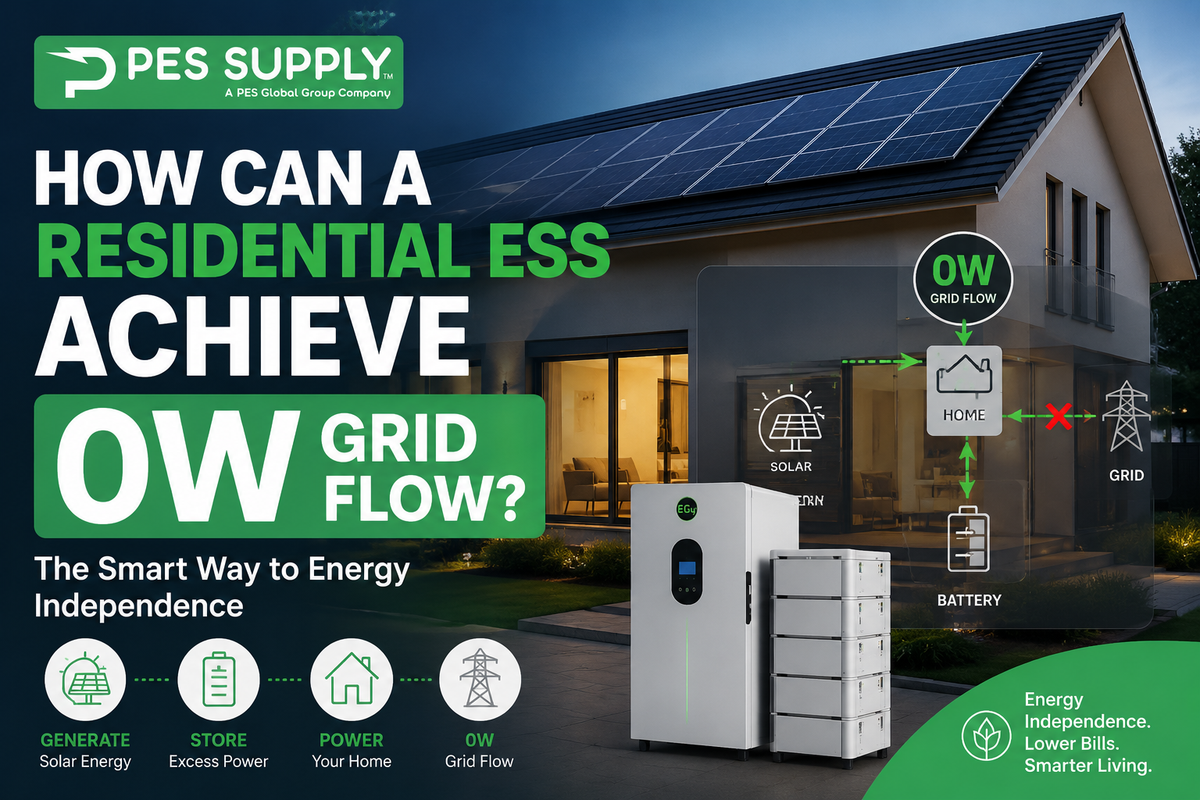
A residential energy storage system (ESS) achieves 0W grid flow through a real-time monitoring device called a CT clamp meter, paired with intelligent inverter software that continuously balances solar production, battery storage, and home consumption so that no power ever crosses the meter in either direction. This is commonly called zero export or zero feed-in
This guide breaks down the hardware and control logic behind zero grid flow, walks through how the system responds moment to moment, and explains why homeowners pursue it and what the practical limitations are.
⚡ Quick Answer
A CT (current transformer) clamp installed at the point of grid connection continuously measures real-time import and export flow, feeding that data to the inverter or energy management system. When excess solar production threatens to flow into the grid, the system first routes it into the battery, and if the battery is full, curtails solar panel output directly, keeping net grid flow at or near 0W.
Key Takeaways
- The CT Clamp Is the Sensing Core: Installed at the true grid connection point, it measures bidirectional current flow, not just inverter output, which is essential for accurate zero-export control.
- Battery Absorbs Excess First: Surplus solar energy is directed into the battery before any curtailment happens, maximizing self-consumption and storage use.
- Panel Curtailment Is the Last Resort: Once the battery is fully charged, the inverter reduces solar panel output directly to prevent any backflow.
- Control Response Is Near-Instant: Advanced systems use millisecond-level response and dynamic control algorithms to track rapidly changing load and generation.
- True Zero Is Rarely Literal: Most systems allow a small programmable leakage threshold (often 20-50W) to avoid nuisance tripping and control oscillation.
- Regulatory Approval Is Often Required: Zero feed-in configurations frequently need registration and grid operator sign-off, particularly in markets with strict interconnection rules.
- Communication Protocol Matters: Most systems use Modbus or wireless (LoRa) communication between the CT meter and inverter/EMS for real-time control.
In This Guide
What "0W Grid Flow" Actually Means
Zero grid flow, also called zero export or zero feed-in, means that no energy from your solar and battery system is ever sent into the utility grid, and ideally, no energy is drawn from it either during periods of self-sufficiency. The Zero Export function ensures the system's power output is entirely consumed by local loads and storage, preventing any excess power from crossing into the utility's distribution network.
The Hardware: CT Clamps and Meters
The essential hardware component is a current transformer (CT) clamp installed directly around the conductors at the point of common coupling, the exact spot where your home connects to the utility grid. Unlike internal inverter readings that only track what the inverter itself is producing, these external CTs monitor the true net flow of energy, distinguishing between what's happening inside your system and what's actually crossing the meter.
Some systems use wireless CT clamp meters with LoRa communication, which can transmit real-time current data up to roughly 300 meters line-of-sight to the energy management system, while others rely on wired Modbus connections back to the inverter. Manufacturer-specific solutions like the SMA Home Manager or dedicated Energy Meter units perform this same function, measuring power precisely at the grid connection point.
The Control Logic Sequence
Step 1. The CT clamp continuously measures real-time current flow at the grid connection point.
Step 2. This data streams to the inverter or EMS via Modbus or wireless communication.
Step 3. When solar production exceeds home consumption, the system detects the surplus attempting to flow backward.
Step 4. Excess energy is first routed into the battery for storage rather than exported.
Step 5. If the battery is already full, the inverter communicates with the solar array to curtail generation directly.
Step 6. The system continuously re-evaluates and adjusts in near real-time, often at millisecond-level response speed.
Result. Net grid flow stays at or near 0W, with only a small programmable leakage threshold sometimes permitted.
With Battery vs Without Battery
Zero export is achievable with or without a battery, but the approach and effectiveness differ significantly between the two setups.
| Configuration | How Zero Export Is Achieved | Tradeoff |
|---|---|---|
| Solar only, no battery | Inverter reduces production to match consumption in real time | Wastes potential generation; no energy storage for later use |
| Solar plus battery | Surplus stored in battery first, curtailment only as last resort | Requires battery capacity sized to daily surplus; higher upfront cost |
Why Homeowners Pursue Zero Export
Some utilities offer no compensation for exported solar energy, or actively penalize backflow with fees, making zero export financially preferable to sending power into the grid for nothing. In some markets, zero export configurations can save meaningfully on grid feed losses, and in certain jurisdictions it's a regulatory requirement rather than a choice, particularly for systems connected to grids with limited hosting capacity.
Practical Limitations
⚠ True 0W Is a Target, Not a Guarantee
Most zero-export systems allow a small configurable leakage threshold, often 20 to 50 watts, specifically to prevent the control loop from oscillating rapidly between import and export states. Homeowners in regulated markets should also confirm their zero feed-in system is properly registered and approved by their grid operator, since improperly configured or unapproved systems can create compliance issues even if they technically achieve near-zero flow.
Frequently Asked Questions
Is a battery required to achieve zero grid export?
No, zero export can be achieved through inverter curtailment alone by reducing solar production to match real-time consumption, but this wastes potential generation. Pairing the system with a battery is strongly preferred since it stores the surplus for later use instead of discarding it, making the overall system meaningfully more efficient.
Where exactly does the CT clamp need to be installed?
The CT clamp must be installed at the true point of common coupling, the exact location where your home's wiring connects to the utility grid, rather than measuring only the inverter's own output. This placement is what allows the system to see actual net import/export flow rather than an incomplete picture based purely on internal generation data.
Can zero export mode cause the system to trip or malfunction?
If the leakage threshold is set too tight (close to true 0W), rapid fluctuations in household load can cause the control loop to oscillate or trigger nuisance behavior]. Most installers configure a small buffer, commonly 20 to 50 watts, to give the system enough margin to respond smoothly without constant switching.
Do all utilities allow zero export configurations?
Zero feed-in is generally permitted for photovoltaic systems in most jurisdictions, but many require formal registration in a national or regional market data register and approval from the local grid operator before the system can be commissioned. Requirements vary significantly by country and utility, so it's worth confirming local rules before finalizing a zero-export design.
How fast does a zero-export system respond to changing loads?
Advanced systems use millisecond-level response times paired with dynamic control algorithms to track rapidly changing loads and solar output, allowing near-instant curtailment or battery redirection. This fast response is what allows the system to maintain net flow close to 0W even as household appliances cycle on and off throughout the day.
Design a Zero-Export System for Your Home
Portlandia Electric Supply stocks hybrid inverters, battery storage systems, and CT clamp meters compatible with zero-export and zero feed-in configurations. Our team can help you design a system tailored to your utility's interconnection requirements. Nationwide delivery from 12+ distribution hubs.
Shop Battery Storage Request a Project QuoteRelated Guides
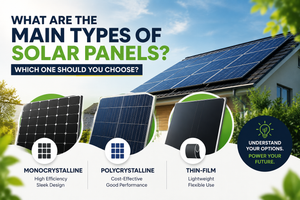
- What Are the Main Types of Solar Panels? - TOPCon, HJT, bifacial, and thin-film comparison
- How Much Can I Save With Solar Panels? - Calculate your annual and lifetime savings
- 12kW vs 16kW vs 20kW vs 24kW Standby Generator - Which size does your home actually need
- How Automatic Transfer Switches Work - Managed vs whole-house switch options
- Request a Quote - Get pricing on battery storage and hybrid inverter systems
About Portlandia Electric Supply
Portlandia Electric Supply is a nationwide distributor of Tier 1 solar panels, hybrid inverters, battery storage systems, standby and portable generators, EV charging hardware, racking, circuit breakers, and complete electrical project kits. With 12+ distribution hubs, 3,800+ in-stock SKUs, NABCEP-certified design support, and a network of 8,500+ solution providers, Portlandia serves contractors, EPCs, developers, and homeowners with fast delivery and expert procurement guidance.
Location: 1507 Portland Ave, Louisville, KY, United States | Phone: 1 888-876-0007 | Website: www.portlandiaelectric.supply
Article: How Can a Residential ESS Achieve 0W Grid Flow?
Category: Battery Storage | Zero Export | Solar Energy | Electrical Systems
Last Updated: July 2026 - Based on Sigenergy, Fortress Power, SMA, and Solis Zero-Export Technical Documentation
Disclaimer: Technical descriptions and configuration details are approximations based on manufacturer documentation and industry sources. Actual system behavior varies by brand, model, and local interconnection requirements. Always consult a licensed electrician or your utility provider before configuring a zero-export system.
Frequently Asked Questions
How long do solar batteries last?
Most lithium-ion solar batteries last 10-15 years or 6,000+ cycles. The 20-80% charging rule extends battery life significantly.
What size battery do I need?
Battery sizing depends on your backup power needs. A typical home needs 10-15kWh of storage for overnight backup. Calculate your critical loads first.
Are batteries BABA-compliant?
PES Supply provides BABA documentation for qualifying products. Contact us for specific compliance documentation.
Shop Related Products
PES Supply carries 80,000+ products from 300+ manufacturers. One PO, one invoice, every trade covered.
Need help sizing? Our team can calculate loads, select equipment, and source everything from one PO.
Call (502) 790-0600