Last Updated: May 2026 • Based on Tesla Master Plan Part 3, Tesla Energy deployment reports, and independent analyst tracking (Wood Mackenzie, BloombergNEF)
In April 2023, Tesla published Master Plan Part 3 — a 41-page engineering and economics document that tries to answer a single question: what would it actually take to run the entire global economy on sustainable energy? The answer the document lands on is roughly 30 terawatts of renewable generation (mostly solar) and 240 PWh of storage. Buried inside that vision is the manufacturing number that matters to everyone in this trade: Tesla wants to be producing solar at a rate of 100 gigawatts per year by 2028.
Stop and think about that number the way we do at the supply-house counter. The whole planet installed somewhere around 450–500 GW of solar in 2023. Tesla is saying one company — a company that deployed about 4.1 GW of solar in 2023 — intends to manufacture a fifth of today's global annual volume on its own within five years. We've watched module makers ramp from 5 GW to 50 GW before; it took Jinko the better part of a decade. Tesla wants to do a 24× ramp in five years.
This guide breaks down how Tesla says it will get there: the Gigafactory manufacturing playbook, the Solar Roof versus panel two-track product strategy, why Powerwall and Megapack integration is the real moat, the supply-chain wall the plan has to climb, and — most important for our customers — what a Tesla at 100 GW means for installers, EPCs, developers, and equipment buyers between now and 2030.
⚡ Quick Answer
Tesla's 100 GW-by-2028 solar target rests on four pillars: (1) Gigafactory-scale, vertically integrated solar manufacturing; (2) in-house cell, glass, and module production to strip out supplier margin; (3) a two-track product line — premium Solar Roof for the re-roofing market, commodity panels for volume; and (4) bundling every watt with Powerwall or Megapack storage and Tesla's energy software. Analyst consensus puts a realistic 100 GW run rate closer to 2030–2032, but even a partial ramp pushes module prices down and makes storage a standard line item on every quote.
Master Plan Part 3 is not a marketing deck. It's a capacity model. Tesla's engineers worked backward from a fully electrified global economy — all transport electric, all heat electrified, all industry electrified — and calculated the generation and storage hardware that economy requires. Their figure of roughly 30 TW of renewable capacity is dominated by solar because solar is the cheapest, most scalable, most universally available generation source on the planet.
The 100 GW/year target is Tesla's answer to the follow-up question: what share of that hardware does Tesla intend to build itself? At 100 GW per year sustained for a decade, Tesla alone would add a terawatt of solar manufacturing output — three percent of the 30 TW global requirement, from a single company. That's the ambition. Whether the factory construction, the polysilicon, the silver, and the labor all line up on that schedule is a different question, and we'll get to it.
I've sat in distributor meetings where manufacturers pitch five-year capacity roadmaps, and I've learned to discount them by a third and slide them two years right. Apply that rule of thumb to Tesla and you still get a company producing 60+ GW of solar a year by 2030 — which would make it one of the three largest module producers on earth. That is worth planning around whether or not the 2028 date holds.

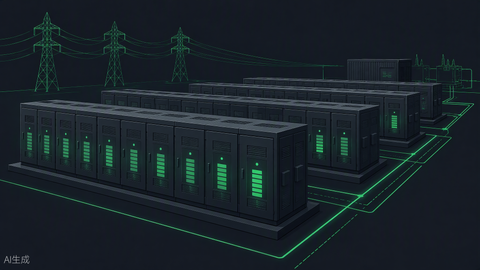
Tesla Energy's solar deployment in 2023 was approximately 4.1 GW across residential Solar Roof and conventional panel installations. Growth accelerated through 2024 and 2025 as the Solar Roof line at Gigafactory Texas ramped, but even generous estimates put Tesla's current solar run rate in the 8–12 GW/year range — an order of magnitude below the target. On the storage side the story is much stronger: Tesla has deployed more than 25 GWh of Megapack cumulative capacity and the Lathrop, California Megafactory is producing at roughly a 40 GWh/year clip.
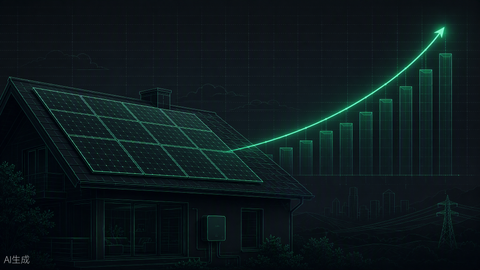
The asymmetry matters. Tesla's energy business is, today, primarily a storage company with a solar side hustle. The 100 GW plan flips that — and the table below shows how steep the required ramp really is.
| Metric | 2023 Actual | 2026 Estimated | 2028 Target | Required Growth vs. 2023 |
|---|---|---|---|---|
| Solar deployed (GW/year) | ~4.1 GW | ~8–12 GW | 100 GW | ~24× |
| Battery storage deployed (GWh/year) | ~14.7 GWh | ~40 GWh | ~300 GWh | ~20× |
| Solar factory capacity | ~5 GW (Buffalo) | ~10 GW (Buffalo + Texas) | Multiple 20+ GW plants | 4–5 new factories |
| Energy share of Tesla revenue | ~7% | ~12–15% | Projected 30–40% | Core business pivot |
For calibration, Tesla's vehicle production grew from about 500,000 cars in 2020 to 1.8 million in 2023 — a 3.6× ramp in three years, and that nearly broke the company twice. The solar plan demands a ramp more than six times steeper. Possible? Tesla has a habit of hitting the number late. But nobody in the supply chain should bank a project pipeline on the 2028 date.

The core of the plan is the same playbook that took Tesla from a boutique automaker to the most valuable car company on earth: build factories so large, so automated, and so vertically integrated that per-unit cost falls faster than competitors can chase with design tweaks alone. Applied to solar, that means five operational pillars:
- Vertical integration. Wafers, cells, glass, frames, and modules under one roof. Every supplier margin eliminated is two to four cents a watt off the stack — and in a market where Tier 1 modules trade at $0.20–0.35/watt, that's the whole ballgame.
- Robotics and automation. Tesla's vehicle lines taught it how to throw automation at assembly problems. Module assembly lines that used to need dozens of hands per shift can run with a fraction of the labor, which is how you make panels in New York or Texas at Chinese labor-cost parity.
- Co-location with storage. Building solar and battery lines in the same campus lets Tesla bundle hardware at the loading dock instead of at the job site — cutting freight, packaging, and channel cost on every solar-plus-storage system sold.
- Continuous process engineering. The iterative factory discipline behind the 4680 cell program applied to cell efficiency and line yield. Every half-point of efficiency gained is half a point of cost per watt removed without touching the bill of materials.
- Geographic diversification. Factories near demand centers cut freight cost, sidestep tariff exposure, and — critically in the US — qualify for IRA Section 45X manufacturing credits and domestic-content bonus stacking on the projects that buy the output.
Gigafactory New York in Buffalo, built under the old SolarCity/Panasonic partnership arrangement, runs at roughly 5 GW/year of Solar Roof and panel capacity. That is the proof of concept, not the plan. The plan requires four to five additional facilities at 20 GW or more each — the largest single-site solar factories ever attempted outside China.

Tesla is not trying to win one solar market. It's running two products at two different markets with two different moats, and understanding the split is the key to understanding where 100 GW of volume could actually come from.
| Attribute | Tesla Solar Roof | Tesla Solar Panels |
|---|---|---|
| Product type | Photovoltaic glass tiles that replace the roofing material itself (BIPV) | Conventional glass modules mounted over an existing roof |
| Target customer | Homeowners due for re-roofing; new construction | Homeowners and C&I sites with serviceable roofs |
| Real market | ~5 million US roof replacements per year; $400B+ global roofing market | Commodity residential, commercial, and utility solar |
| Margin profile | Premium — one invoice replaces a roof and adds generation | Thin — margin comes from volume and Powerwall bundling |
| Ramp speed to 100 GW | Slow — tied to roofing cycles and installer certification | Fast — can serve residential, C&I, and utility channels at once |
| Moat | Genuinely hard to replicate at quality and scale | Differentiated only by the Tesla app + Powerwall ecosystem |
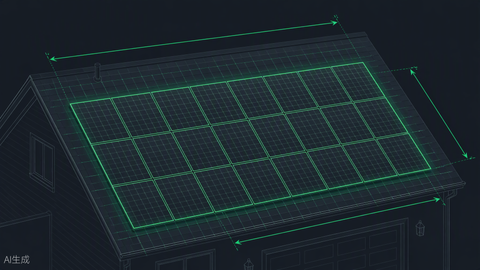
The Solar Roof is the premium play. Roughly five million US homes get re-roofed every year, and Tesla's pitch is simple: you're spending $25,000 on a roof either way — spend it on one that pays you back. The conventional panel line is the volume play, and it's the only track that can physically reach 100 GW of annual output. Expect the Solar Roof to carry the brand and the panels to carry the gigawatts.
We see the same split at our own counter. Customers who need a roof love the integrated pitch; customers with a ten-year-old architectural shingle roof just want the cheapest warranted watt on a rack. Tesla's two-track model is the first serious attempt by a US manufacturer to serve both without cannibalizing either.
On panel efficiency and cost per watt alone, Tesla loses to LONGi, JA Solar, and Jinko every day of the week. Those companies produce more gigawatts in a quarter than Tesla has produced in its history. So why does the 100 GW plan matter? Because Tesla is not selling panels — it's selling an integrated energy stack no panel maker can match:
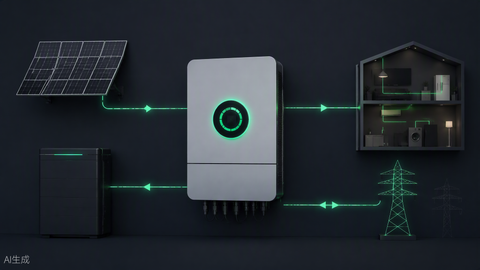
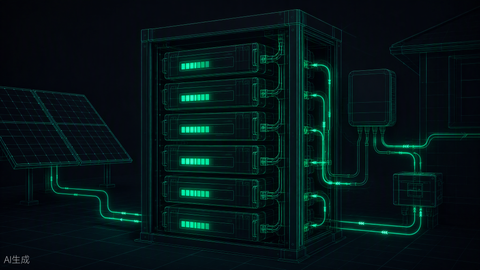
The Tesla Energy Stack: Solar Roof or panels → Powerwall (residential storage) → Tesla inverter → Tesla app (monitoring, time-of-use optimization) → Megapack (utility scale) → Virtual Power Plant revenue. One brand, one app, one truck roll. LONGi can sell you a cheaper module; it cannot sell you the system, the software, and the grid-services revenue stream wrapped around it.
As time-of-use rates spread, interconnection rules tighten, and grid instability makes backup a standard homeowner expectation, storage attachment rates on residential solar have climbed past 30% in California and are rising nationally. Every point of attachment rate is a point where Tesla's bundle beats a commodity panel plus third-party battery on simplicity, warranty, and commissioning labor. The 100 GW solar target and the ~300 GWh storage target are the same plan — neither works without the other.

Master Plan Part 3 puts the destination in one number: solar-plus-storage energy delivered below $0.05/kWh over system life — cheaper than any fossil alternative in almost every market on earth. Getting there requires four cost layers to fall together:
- Manufacturing scale. The solar industry's learning curve has held for four decades: every doubling of cumulative capacity cuts module cost roughly 20–30%. A 100 GW/year run rate is what the steep part of that curve looks like from the inside.
- Cell efficiency. Higher-efficiency cell architectures (heterojunction, and eventually perovskite-silicon tandems) squeeze more watts from the same glass, aluminum, and labor — dropping cost per watt without touching the BOM.
- Installation labor. Hardware is under half the cost of a residential system in the US; soft costs and labor are the rest. Tesla's standardized mounting and one-day-install targets attack the expensive half of the invoice, not the cheap half.
- Financing. As installed fleets mature and performance data accumulates, lender risk premiums compress — and at utility scale, a point of WACC is worth more than a point of module efficiency.
Here's the pricing context from the trenches: we've quoted Tier 1 410–450W modules through three full price cycles, and the trend line is brutal. Container-price panels that moved at $0.42/watt in early 2023 were crossing our dock under $0.18/watt by late 2025. If Tesla adds even 30–40 GW of real capacity by 2028, that curve steepens again. Great for project economics — painful for anyone holding inventory bought at last year's number.
The technology is not the bottleneck. The materials are. Producing 100 GW of modules a year consumes inputs at volumes that stress entire commodity markets, and each one has its own choke point:
| Material / Input | Challenge at 100 GW Scale | Tesla's Mitigation |
|---|---|---|
| Polysilicon | ~100 GW needs ~250,000+ metric tons/year; majority of global supply is China-sourced with UFLPA scrutiny intensifying | Long-term contracts with non-China producers; possible vertical integration |
| Silver (metallization) | ~3,000+ tonnes/year at current loadings — roughly 10% of annual global mine output | Lower-silver cell designs; copper-plating and silver-free metallization R&D |
| Solar glass | Float-glass volumes in the tens of millions of square meters; AR-coating capacity is the constraint | In-house glass lines on the Buffalo model; dedicated glass facilities |
| Skilled labor | 100 GW/year installed implies hundreds of thousands of installer-years globally | Standardized fast-mount hardware; certified installer network; partial automation |
| Capital | 4–5 new Gigafactories at $2–3B each — $10B+ capex before a watt ships | Energy-segment profits, IRA 45X credits, project financing |
⚠️ Treat 2028 as aspirational, not committed
Wood Mackenzie, BloombergNEF, and Morgan Stanley all credit Tesla's manufacturing execution — and nearly all model a 100 GW/year solar run rate arriving in 2030–2032, not 2028. The 2028 date assumes simultaneous flawless execution of factory construction, supply chain build-out, and product ramp. Plan your procurement around the direction, not the date.
Benchmark the ambition against the companies that actually own the module market today:
| Manufacturer | 2023 Shipments (GW) | Storage Product | Position vs. Tesla |
|---|---|---|---|
| JinkoSolar | ~78 GW | None at scale | 19× Tesla's volume; no integrated storage stack |
| LONGi | ~67 GW | None (modules only) | Dominant wafer/cell cost position; no US brand access |
| Trina Solar | ~50 GW | Emerging storage line | Mature modules; storage ecosystem years behind Tesla |
| JA Solar | ~57 GW | None (modules only) | Cost leader; no residential energy platform |
| First Solar | ~3.3 GW | None | Closest US-manufacturing peer; thin-film tech, utility focus |
| Tesla Energy | ~4.1 GW | Powerwall + Megapack | Smallest module volume; strongest integrated platform |
Read that table carefully and the strategy snaps into focus. Tesla will never out-ship Jinko in commodity modules, and it doesn't need to. Its 100 GW matters because every gigawatt arrives pre-attached to the industry's most mature storage and software stack — the thing the Chinese giants structurally cannot replicate in the US residential market.
Gigawatt numbers get thrown around until they stop meaning anything, so let's convert the target into units anyone in this trade can feel. Assume a blended average module wattage of 450W — the current sweet spot for residential and light commercial product. One hundred gigawatts a year is 100 billion watts, which works out to roughly 222 million modules a year, or about 608,000 modules rolling off the line every single day of the year.
| Unit of Measure | Math | Result |
|---|---|---|
| Modules per year | 100,000,000,000 W ÷ 450 W/module | ~222,000,000 modules |
| Modules per day | 222,000,000 ÷ 365 | ~608,000 modules/day |
| 40-ft containers per day | ~680 modules/container (22 pallets × ~31) | ~894 containers/day |
| Residential systems per year | 222M modules ÷ 18 modules per 8.1 kW system | ~12.3 million rooftops/year |
| Utility projects per year | 100 GW ÷ 250 MW average utility block | ~400 utility-scale projects/year |
Twelve million rooftop systems a year is more than double the total number of US homes that have ever gone solar. Nine hundred shipping containers a day is a port logistics operation on the scale of a small automaker. That's what the target means physically — and it's why the supply chain section of this article isn't filler. Glass, silver, frames, and freight all have to exist at that scale before a single panel ships.
From a distribution seat, the part of that math that keeps me up is the channel implication. Two hundred twenty-two million modules a year cannot move through traditional distribution alone; Tesla will push most of it direct. What remains for the channel is everything around the module — storage, racking, BOS, and the service layer. That's not a threat so much as a map of where the margin is moving.
Piecing together Tesla's public statements, permit filings, and analyst tracking, the ramp looks roughly like this:
| Period | Milestone | Indicative Run Rate |
|---|---|---|
| 2024 | Gigafactory Texas solar line expansion begins | ~6–8 GW/year |
| 2025 | Buffalo capacity upgrade; next-gen Solar Roof ramp | ~12–15 GW/year target |
| 2025–2026 | New dedicated solar Gigafactory announcement and groundbreaking | Site chosen on IRA incentives and silicon supply proximity |
| 2026–2027 | New facility online; international manufacturing partnerships | ~30–40 GW/year target |
| 2027–2028 | Second new facility; cell upgrade (HJT or tandem) | 100 GW aspirational — consensus realistic case 2030–2032 |
Whether the number lands in 2028 or 2031, the direction is set, and the direction has consequences for every seat at the table:
| Stakeholder | Implication | Smart Response |
|---|---|---|
| Residential installers | Module prices keep falling; Solar Roof competes with conventional solar-plus-reroof bids | Add storage to every quote; compete on design and service, not hardware margin |
| Commercial EPCs | Cheaper modules improve IRR; storage attachment becomes a customer expectation | Build storage integration capability now; spec hybrid inverters by default |
| Distributors | Tesla's direct model bypasses the channel for Tesla-branded product | Deepen Tier 1 non-Tesla lines; stock storage and BOS depth |
| Developers | Sustained module oversupply suppresses prices through the decade | Model declining module cost curves; avoid long fixed-price hardware commitments |
| Homeowners / buyers | System prices fall; payback periods compress | If the roof can wait 12–18 months, economics likely improve — but incentives and interconnection queues argue for acting now |
One thing we tell contractors every week: don't wait for Tesla's ramp to change your business model — the price pressure is already here. The installers thriving right now are the ones who stopped marking up modules and started selling design, storage, and monitoring. Tesla at 100 GW only accelerates a transition that's already underway.
Where PES Supply fits: as manufacturing scales, the winners in the channel are the ones with reliable Tier 1 sourcing and storage-ready inventory. We stock Tier 1 solar panels, hybrid and string inverters, battery storage systems, racking, and full balance-of-system depth — with nationwide LTL freight out of our Louisville, Kentucky supply house. If you're quoting solar-plus-storage into a falling-price market, get a project quote before you lock hardware pricing.
Is Tesla's 100 GW solar target realistic by 2028?
Technically possible, operationally brutal. It requires a ~24× production ramp in five years — faster than any solar manufacturer has ever scaled. Independent analysts generally model Tesla reaching a 100 GW run rate in 2030–2032. Tesla's automotive history is instructive here: it misses the date and hits the volume. Treat 2028 as a directional commitment, and plan around the capacity curve rather than the calendar.
What is the Tesla Solar Roof and how does it differ from solar panels?
The Solar Roof builds photovoltaic cells into tempered-glass tiles that replace the roofing material entirely — the roof is the array. Conventional panels mount over an existing roof. Solar Roof costs more per watt but competes on total project cost when a re-roof was already required, targeting the ~5 million US roof replacements each year. Conventional panels remain the volume product and the only realistic path to triple-digit gigawatt output.
How does Tesla's solar manufacturing compare to Chinese manufacturers?
On raw module volume, Tesla is a fraction of the leaders — ~4 GW deployed in 2023 against JinkoSolar's ~78 GW and LONGi's ~67 GW. Tesla's edge isn't module cost; it's the integrated Powerwall/Megapack/app ecosystem that no Chinese module maker offers in the US residential market, plus IRA manufacturing incentives and domestic-content eligibility that imported panels can't claim.
What is Master Plan Part 3 and what does it say about solar?
Published in April 2023, Master Plan Part 3 is Tesla's technical model of a fully sustainable global energy economy. It calculates that full electrification requires roughly 30 TW of renewable generation — predominantly solar — and 240 PWh of storage. The 100 GW/year solar manufacturing target is Tesla's intended contribution to that 30 TW, sustained at terawatt-per-decade scale.
How will Tesla's solar scale-up affect panel prices for buyers?
More capacity means more downward pressure on module prices, compounding a decline that has already cut prices more than 90% since 2010. Developers should model projects with declining module cost curves through 2028–2030 rather than locking today's prices into long-horizon pro formas. Installers should expect hardware margin to keep compressing and margin to migrate toward design, storage integration, and O&M.
Should I wait for cheaper Tesla panels before going solar?
Usually no. Module prices will likely drift lower, but panels are already the cheapest line item on a residential invoice — labor, permitting, and soft costs dominate. Meanwhile interconnection queues are getting longer and incentive structures can change with policy. If your roof and electrical panel are ready, the economics of acting now typically beat waiting for a $0.05/watt hardware improvement.
Source Tier 1 Solar Equipment for Your Next Project
As the market scales toward 100 GW+ annual deployments, the installers who win are the ones with dependable supply chains and storage-ready designs. PES Supply stocks Tier 1 panels, inverters, batteries, racking, and complete project kits with nationwide delivery from Louisville, KY.
Shop Solar Panels Request a Project QuoteRelated Guides & Resources
- Solar Panel Wiring Basics — DC conductor sizing for residential and utility arrays
- Solar Installation Guide — from design to commissioning
- How Big Is a 25 kW Solar Array? — footprint and layout math
- Best Solar Panels 2026 — our current Tier 1 picks
- EG4 vs Tesla Powerwall — storage head-to-head
- Solar Battery Buyer's Guide
- Solar System Calculator — size your array
- Solar ROI Calculator — payback and 25-year savings
- Solar Incentives by State
- NEC Code Compliance Guide
About PES Supply
PES Supply is a nationwide distributor of Tier 1 solar panels, inverters, battery storage, EV charging hardware, racking, breakers, generators, and complete electrical project kits — 50,000+ SKUs across 169 authorized brands with full OEM warranties and nationwide LTL freight from our Louisville, Kentucky supply house. Phone: 1-888-876-0007 • portlandiaelectric.supply
Last Updated: May 2026 • Based on Tesla Master Plan Part 3, Tesla Energy reports, and independent analyst data
Disclaimer: Production targets and timelines cited here are based on public Tesla communications and third-party analyst reports. Actual results may differ materially. This article is informational and does not constitute investment advice.