Last Updated: July 2026 • Based on Contractor Pricing Data, NEC 440.14, and 2026 Market Surveys.
Ductless mini splits are the fastest-growing segment of residential HVAC, and the first question every buyer asks is the one with the slipperiest answer: what's it cost installed? This guide gives you realistic 2026 price ranges by system size, a line-item breakdown of where the money goes, and, because we're an electrical supply house, a thorough treatment of the electrical requirements that most cost guides skip and many budgets miss entirely
Sizing ducts for the rest of the house? See our HVAC duct sizing chart.
⚡ Quick Answer
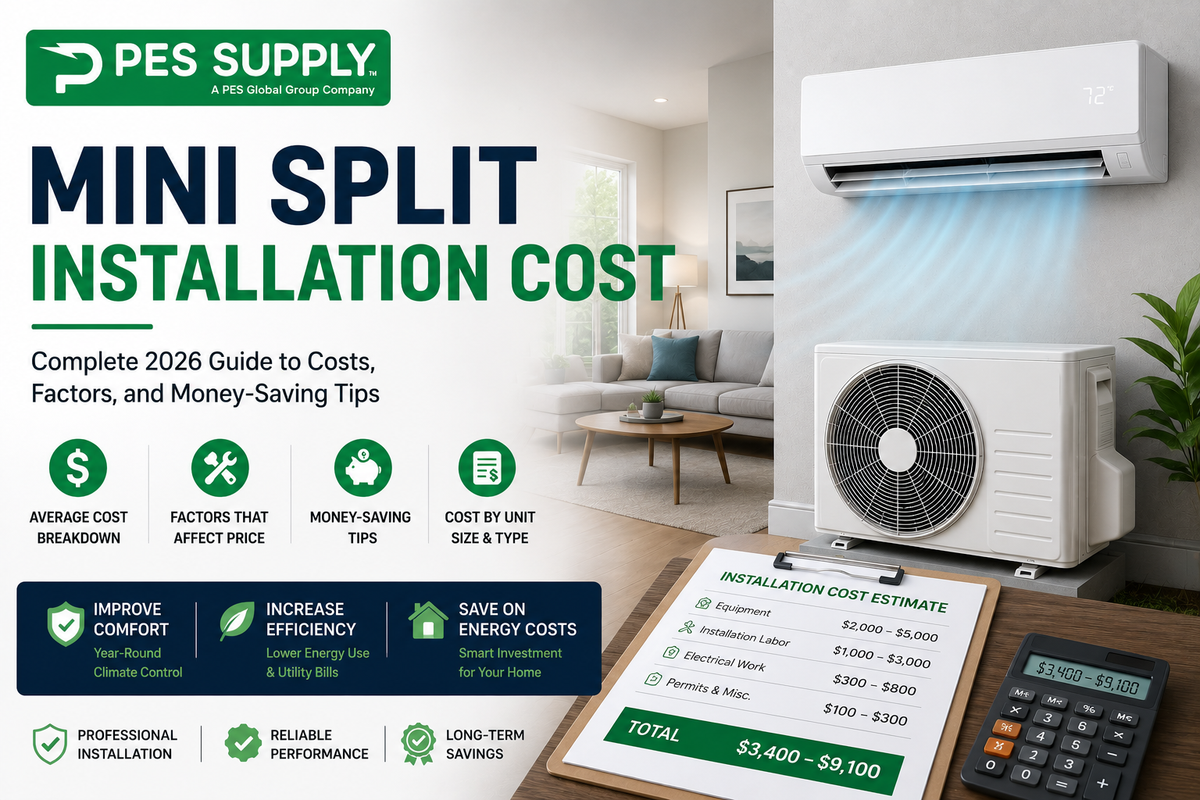
A single-zone mini split typically installs for $2,000-$4,500, while multi-zone systems run $4,500-$15,000+ depending on head count. Electrical work (dedicated circuit, breaker, disconnect) usually accounts for 5-15% of total cost but is the line item most generic guides leave out entirely.
Key Takeaways
- Per-Head Economics Are Unforgiving: Each additional indoor head adds roughly $1,500-$3,000 installed, so 5+ head projects deserve a ducted comparison quote.
- Equipment Is the Largest Cost Driver: Equipment typically represents 35-50% of total cost, with labor at 30-45%.
- Every Mini Split Needs a Dedicated Circuit: No sharing with other loads, sized from the nameplate MCA/MOCP, not from BTU rating alone.
- NEC 440.14 Disconnect Is the Most Commonly Failed Inspection Item: A disconnect switch is required within sight of the outdoor condenser.
- DIY Cuts Cost Roughly in Half: Pre-charged single-zone kits run $1,200-$2,800, but electrical work and permits still apply.
- Multi-Zone Wins at 2-3 Heads: Beyond that, separate single-zone systems or ducted options often become more cost-competitive.
- Cooling Economics Heavily Favor Mini Splits: Inverter-driven compressors modulate rather than cycle, cutting energy draw substantially versus central air for the same zone.
In This Guide
Mini Split Installation Cost Ranges (2026, US Market)
These are typical installed-price ranges across the US market. Your region, wall construction, and line-set length move the number.
| System Configuration | Equipment (Typical) | Total Installed (Typical) | Notes |
|---|---|---|---|
| Single-zone, 9k-12k BTU | $700-$1,800 | $2,000-$4,500 | One bedroom/office; the volume seller |
| Single-zone, 18k-24k BTU | $1,200-$2,600 | $3,000-$6,000 | Large living spaces, garages |
| Dual-zone (2 heads) | $2,000-$4,000 | $4,500-$8,500 | Two rooms sharing one condenser |
| Tri-zone | $3,000-$5,500 | $6,000-$11,000 | Three heads; line-set routing gets complex |
| Quad/5-zone whole-home | $4,500-$8,000 | $9,000-$15,000+ | Whole-home ductless; compare against ducted |
| DIY single-zone (pre-charged lines) | $1,000-$2,200 | $1,200-$2,800 | Homeowner installs; electrical still applies |
Per-head economics are unforgiving: each additional indoor head adds roughly $1,500-$3,000 installed. If you find yourself speccing five heads, get a ducted quote too.
Where the Money Goes (Line-Item Breakdown)
1. Equipment (35-50%). Condenser plus indoor heads. Higher SEER2 and low-temperature (hyper-heat) models cost more up front and less to run.
2. Labor (30-45%). A single-zone install is typically a one-day, two-tech job; multi-zone runs two days. Refrigerant handling requires EPA 608 certification.
3. Line sets and covers. Refrigerant lines run $15-$30 per foot installed; long runs through finished walls add up fast
4. Electrical (5-15%). See the electrical section below, this is the line item generic cost guides leave out
5. Permits and inspection. $100-$400 in most jurisdictions; both mechanical and electrical permits may apply
6. Miscellaneous. Condensate pump ($75-$250) when gravity drainage isn't possible, pad or wall bracket for the condenser, and line-hide covers
The Electrical Requirements (The Part Cost Guides Skip)
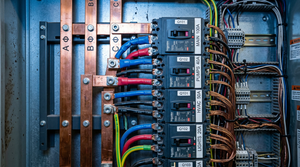
Every mini split needs a dedicated circuit, no sharing with other loads. The nameplate on the condenser gives you two numbers that drive the whole electrical design: MCA (minimum circuit ampacity) and MOCP/max fuse (maximum overcurrent protection).
| Mini Split Size (Cooling) | Typical MCA | Breaker (Per Nameplate MOCP) | Wire (Copper THHN, 75°C) | Voltage |
|---|---|---|---|---|
| 9k-12k BTU | 9-15A | 15-20A | 14-12 AWG | 208/230V (some 115V at 9k) |
| 18k BTU | 13-18A | 20-25A | 12-10 AWG | 208/230V |
| 24k BTU | 16-22A | 25-30A | 10 AWG | 208/230V |
| 36k BTU (multi-zone) | 22-30A | 30-40A | 10-8 AWG | 208/230V |
| 48k-60k BTU (multi-zone) | 30-45A | 40-60A | 8-6 AWG | 208/230V |
Three code points inspectors enforce on every job:
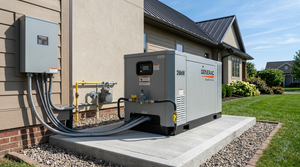
- NEC 440.14 — disconnect within sight. A disconnect switch must be installed within sight of the outdoor condenser (typically a 60A non-fused pull-out or rated switch). This is not optional and it's the most commonly failed inspection item
- Size to the nameplate, not a chart. Breaker and wire are selected from the unit's MCA/MOCP, which already accounts for compressor starting current. Charts like the one above are planning aids; the nameplate rules
- Dedicated means dedicated. No other receptacles or loads on the circuit, and the circuit lands in a panel with spare capacity, a multi-zone install on a full 100A panel can force a panel discussion
Worked Examples
12k BTU Single-Zone, Detached Garage
Nameplate reads MCA 15A, MOCP 20A, 208/230V. The electrical scope: a 20A double-pole breaker, 12/2 NM-B (or 12 AWG THHN in conduit for the outdoor run), a 60A non-fused disconnect mounted beside the condenser, and a 1/2-inch liquidtight whip from disconnect to unit. Materials at supply-house pricing run roughly $120-$220, a breaker from our circuit breakers collection, a disconnect from power disconnects, and cable from wires & cables. On the installer's invoice this same scope typically bills $400-$800 with labor and permit, worth knowing when you compare quotes.
Tri-Zone, 36k BTU Condenser
Nameplate MCA 28A, MOCP 40A → 40A breaker, 8 AWG copper, 60A fusible or non-fused disconnect rated for the load. Budget $600-$1,100 installed for the electrical scope if the panel has room; add $1,500+ if a panel upgrade enters the chat.
DIY vs Professional Install
Pre-charged DIY systems (quick-connect line sets) cut installed cost roughly in half and are legitimate for single-zone garage/shop applications. The honest caveats: you still own the electrical scope above, most jurisdictions still want the permit, multi-head systems are not DIY territory, and a botched flare fitting means a refrigerant leak and a service call that erases the savings. For bedrooms and main living spaces, professional install with a labor warranty is the play.
Multi-Zone vs Multiple Single-Zones
When two or three rooms need conditioning, buyers face a fork: one multi-zone condenser feeding multiple heads, or separate single-zone systems per room. Multi-zone wins on outdoor footprint, noise, and usually price at 2-3 heads. Separate single-zones win on redundancy (one failure doesn't kill the whole house), on efficiency at partial load (each condenser modulates independently), and sometimes at 3+ rooms where multi-zone line-set routing gets expensive.
⚠ Know the Crossover Point
The crossover point in most quotes: two rooms favor multi-zone; four-plus rooms deserve a price check on both configurations, and on a ducted system.
What It Costs to Run
Cooling economics favor mini splits heavily. A 12k BTU unit at 20+ SEER2 draws roughly 400-1,000W modulating versus 3,500W cycling for a comparable central system share, expect $30-$70 per cooling season-month for a bedroom zone at typical US rates. Heating with a hyper-heat model holds efficiency down to -13°F-class outdoor temps and routinely beats resistance electric heat by 2.5-3x; against gas furnaces the math depends on your gas and electric rates, but shoulder-season heating is almost always cheaper on the heat pump.
Frequently Asked Questions
How much does it cost to install a mini split in 2026?
A single-zone system typically installs for $2,000-$4,500 all-in; multi-zone systems run $4,500-$15,000+ depending on head count. DIY single-zone kits land around $1,200-$2,800.
What size breaker does a mini split need?
Whatever the nameplate MOCP says, commonly 15-20A for 9k-12k BTU, 20-30A for 18k-24k, and 30-60A for multi-zone condensers. Never size from the BTU rating alone.
Does a mini split need a disconnect?
Yes, NEC 440.14 requires a disconnect within sight of the outdoor unit. A 60A non-fused pull-out disconnect is the standard residential answer.
Is a mini split cheaper to run than central air?
Generally yes for the spaces they serve, inverter-driven compressors modulate instead of cycling, and there's no duct loss. Zoning means you condition occupied rooms only.
Can I install a mini split myself?
Single-zone pre-charged DIY kits make it possible for a handy homeowner, but the electrical work (dedicated circuit, disconnect) and permits still apply, and multi-zone systems belong to licensed installers.
Gear for the Electrical Scope
Portlandia Electric Supply stocks everything between the panel and the condenser: circuit breakers, power disconnects, wires & cables, and enclosures in electrical components. Pair the install with a smart thermostat where the system supports one, the ecobee Smart Thermostat Premium and ecobee Smart Thermostat Enhanced are in stock, and browse the HVAC Systems collection for the rest of the job. Pricing a multi-zone electrical scope? Call the counter with the nameplate MCA/MOCP and we'll kit it.
Shop HVAC Systems Request a Project QuoteAbout Portlandia Electric Supply
Portlandia Electric Supply is a nationwide distributor of Tier 1 solar panels, inverters, battery storage systems, standby and portable generators, HVAC systems, EV charging hardware, racking, circuit breakers, and complete electrical project kits. With 12+ distribution hubs, 3,800+ in-stock SKUs, NABCEP-certified design support, and a network of 8,500+ solution providers, Portlandia serves contractors, EPCs, developers, and homeowners with fast delivery and expert procurement guidance.
Location: 1507 Portland Ave, Louisville, KY, United States | Phone: 1 888-876-0007 | Website: www.portlandiaelectric.supply
Article: Ductless Mini Split Installation Cost 2026: Sizing, Electrical Requirements, and Line-Item Pricing
Category: HVAC | Mini Splits | Electrical Systems | Home Improvement
Last Updated: July 2026 - Based on Contractor Pricing Data, NEC 440.14, and 2026 Market Surveys
Disclaimer: Cost ranges, electrical specifications, and code references are approximations based on industry sources and NEC guidance current as of mid-2026. Actual pricing varies by region, brand, and installation complexity. Always size electrical components from the specific unit's nameplate MCA/MOCP and consult a licensed electrician for final circuit design.