Last Updated: July 2026 • Based on Cummins, Kohler, Generac, and Norwall Sizing Standards
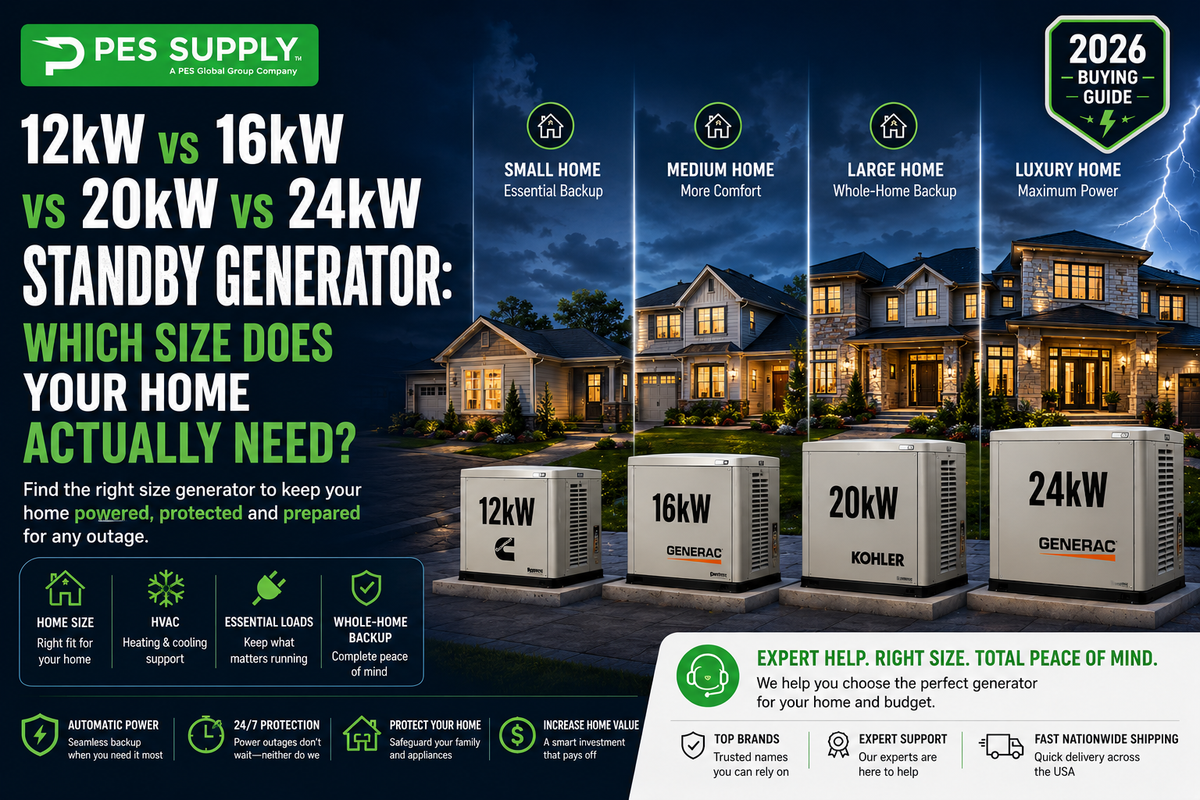
Standby generator sizing comes down to one core question: how much of your home do you actually want to keep running during an outage? A 12kW unit covers the essentials, while a 24kW unit can run an entire large home including multiple HVAC systems and every major appliance simultaneously.
This guide breaks down exactly what each size class covers, walks through the load-calculation math installers use, and gives you a straightforward decision framework based on home size, HVAC load, and backup priorities.
⚡ Quick Answer
12kW suits smaller homes running essential circuits only (fridge, sump pump, lights, furnace). 16-20kW covers mid-size homes with central air conditioning and most major appliances. 24kW is built for larger homes with multiple HVAC zones, electric water heaters, and full whole-house coverage with no circuit-shedding required.
Key Takeaways
- Sizing Is Load-Based, Not Just Square-Footage Based: Total connected wattage of the circuits you want backed up determines the size, not home size alone.
- Starting Watts Matter More Than Running Watts: Motors like central AC and well pumps draw up to 3x their running wattage on startup, and sizing must account for this surge .
- 12kW Covers Essential-Circuit Backup: Refrigerator, sump pump, furnace, lights, and outlets fit comfortably in the 10-14kW range .
- 16-20kW Is the Mid-Size Sweet Spot: This range adds central air conditioning and most major kitchen and laundry appliances .
- 24kW Is for Whole-Home, No-Compromise Backup: Larger homes with multiple HVAC systems or electric water heating typically need 20-26kW or more.
- Always Add a 20-25% Safety Margin: This buffers against underestimated loads and leaves room for future additions like an EV charger or hot tub.
- Cost Scales Meaningfully by Size: A 12kW unit installed runs roughly $8,000-$11,000, while 20kW+ systems commonly run $11,000-$15,000 or more.
In This Guide
How Generator Sizing Actually Works
Generator sizing starts with listing every circuit or appliance you want powered during an outage and adding up its running wattage . The trickier part is accounting for starting watts: motor-driven appliances like central air conditioners, well pumps, and sump pumps briefly draw two to three times their running wattage the moment they switch on, and your generator must be sized to handle that surge without stalling .
Once you have a total wattage figure, industry guidance is consistent: divide by 1,000 to get kilowatts, then add a 20-25% safety margin for unlisted loads and future needs like an EV charger. This final number is your minimum required generator capacity, and it's the figure that determines whether you land in the 12kW, 16kW, 20kW, or 24kW category.
12kW vs 16kW vs 20kW vs 24kW: What Each Covers
| Size | Best For | Typically Covers |
|---|---|---|
| 12kW | Small to mid-size homes, essential-circuit backup | Refrigerator, sump pump, furnace, lights, outlets, Wi-Fi/router |
| 16kW | Mid-size homes adding comfort systems | Everything in 12kW plus central AC (up to ~3 tons) and most kitchen appliances |
| 20kW | Larger homes wanting near-whole-house coverage | Central AC, electric range, washer/dryer, well pump, most simultaneous loads. |
| 24kW | Large homes, multiple HVAC zones, high-demand appliances | Full whole-home backup including multiple AC units, electric water heater, EV charger headroom. |
Step-by-Step Load Calculation
Follow this sequence to calculate your actual required generator size rather than guessing based on home size alone.
Step 1. List every circuit/appliance you want backed up and its running wattage
Step 2. Identify the single largest motor load (e.g., central AC) and multiply its wattage by 3 to capture starting surge
Step 3. Add up all running watts plus the adjusted starting watts from Step 2
Step 4. Divide total watts by 1,000 to convert to kilowatts.
Step 5. Multiply by 1.20-1.25 to add a safety margin for future loads
Result. This is your minimum required generator capacity — round up to the nearest standard size (12/16/20/24kW)
Worked Example
Total appliance watts (excl. AC): 8,200W
Central AC running watts: 3,500W × 3 (surge) = 10,500W
Total: 18,700W ÷ 1,000 = 18.7 kW
18.7 × 1.25 (safety margin) = 23.4 kW → Round up to 24kW unit
Full Comparison Table
| Size | Typical Home Size | Circuit Shedding Needed? | Installed Cost |
|---|---|---|---|
| 12kW | Up to ~2,500 sq ft | Often yes, via managed transfer switch | $8,000-$11,000 |
| 16kW | ~2,000-3,500 sq ft | Occasionally, for heavy simultaneous loads | $9,000-$13,000 (est. range) |
| 20kW | ~3,000-4,500 sq ft | Rarely | $11,000-$15,000 |
| 24kW | 4,000+ sq ft or multi-zone HVAC | No, full whole-home coverage | $13,000-$18,000+ (est. range) |
Installed Cost by Size
A popular mid-tier choice, the 20kW generator, typically costs $5,000-$6,000 for the unit alone, with full installation (transfer switch, concrete pad, electrical work, permits) pushing total project cost to $11,000-$15,000 for premium models. Smaller 12kW systems installed run $8,000-$11,000 depending on brand and site conditions, while 24kW systems climb higher due to larger transfer switches and heavier electrical service requirements .
⚠ Don't Undersize to Save on Upfront Cost
If your calculated minimum capacity lands just over a size threshold (e.g., 12.5kW), it's usually worth stepping up to the next standard size rather than squeezing onto a smaller unit with heavy circuit-shedding . The cost difference between adjacent sizes is often smaller than the inconvenience of losing AC or major appliances during a multi-day outage.
Which Size Should You Actually Choose?
Use this decision framework based on your priorities .:
- Choose 12kW if you only need refrigerator, lights, sump pump, and furnace running, and you're comfortable with a managed transfer switch shedding non-essential circuits
- Choose 16kW if you want central air conditioning included along with most kitchen and laundry appliances in a mid-size home
- Choose 20kW if you have a larger home and want near-total coverage with minimal circuit management during an outage
- Choose 24kW if you have multiple HVAC zones, electric water heating, or want full whole-home backup with headroom for future additions like an EV charger
Frequently Asked Questions
Is it better to oversize a standby generator?
A modest safety margin of 20-25% is recommended to handle unlisted loads and future needs, but significantly oversizing wastes money on fuel consumption and unit cost. The goal is matching your calculated load plus margin to the nearest standard size, not buying the largest unit available.
Can a 12kW generator run central air conditioning?
A 12kW generator can sometimes run a smaller central AC unit, but it typically requires shedding other loads during the AC's startup surge and may not handle simultaneous operation with other major appliances . For reliable AC coverage alongside other systems, 16kW or higher is generally recommended.
Does home square footage determine generator size?
Square footage is a rough starting reference, but actual load calculation based on specific appliances and HVAC equipment is far more accurate .. Two homes of identical size can need very different generator capacities depending on whether one has electric heat and multiple AC units and the other doesn't.
Why do starting watts matter so much for sizing?
Motor-driven equipment like central AC compressors, well pumps, and sump pumps draw a brief surge of up to three times their running wattage when they switch on . If a generator isn't sized to handle this surge on top of everything else already running, it can stall or shut down, which is why installers focus heavily on the single largest motor load during calculations.
What's the price difference between a 12kW and 24kW installed system?
Installed 12kW systems typically run $8,000-$11,000, while 24kW systems with larger transfer switches and heavier electrical work can run $13,000-$18,000 or more depending on brand and site conditions. The gap reflects both unit cost and the more substantial electrical infrastructure larger systems require.
Get the Right Generator Sized for Your Home
Portlandia Electric Supply stocks 12kW through 24kW+ standby generators from leading manufacturers, along with automatic transfer switches and installation hardware. Our team can help you run the load calculation and match the right size to your home. Nationwide delivery from 12+ distribution hubs.
Shop Standby Generators Request a Sizing ConsultationRelated Guides
- Natural Gas vs Propane vs Diesel Standby Generators - Fuel type comparison for home backup power
- How Automatic Transfer Switches Work - Managed vs whole-house switch options
- How Much Can I Save With Solar Panels? - Compare solar-plus-battery vs generator backup
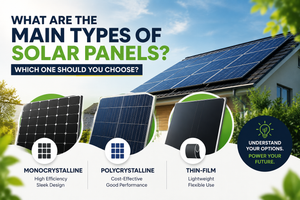
- What Are the Main Types of Solar Panels? - TOPCon, HJT, bifacial, and thin-film comparison
- Request a Quote - Get pricing on generators and backup power systems
About Portlandia Electric Supply
Portlandia Electric Supply is a nationwide distributor of Tier 1 solar panels, inverters, battery storage systems, standby and portable generators, EV charging hardware, racking, circuit breakers, and complete electrical project kits. With 12+ distribution hubs, 3,800+ in-stock SKUs, NABCEP-certified design support, and a network of 8,500+ solution providers, Portlandia serves contractors, EPCs, developers, and homeowners with fast delivery and expert procurement guidance.
Location: 1507 Portland Ave, Louisville, KY, United States | Phone: 1 888-876-0007 | Website: www.portlandiaelectric.supply
Article: 12kW vs 16kW vs 20kW vs 24kW Standby Generator: Which Size Does Your Home Actually Need?
Category: Standby Generators | Home Backup Power | Generator Sizing | Electrical Systems
Last Updated: July 2026 - Based on Cummins, Kohler, Generac, and Norwall Sizing Standards
Disclaimer: Sizing recommendations and cost estimates are approximations based on industry guidance and published pricing. Actual requirements vary by home electrical load, local climate, utility rates, and installation conditions. Always consult a licensed electrician for a site-specific load calculation before purchase.
Frequently Asked Questions
What size generator do I need for my home?
A typical whole-home generator is 22-26kW. Size based on your essential loads (AC, refrigerator, well pump, lights). A 26kW Generac runs two AC units plus standard household loads.
What is the difference between LP and NG generators?
LP (propane) generators produce more power than NG (natural gas) models. A 26kW Generac outputs 26kW on LP vs 24kW on NG.
Do you install generators?
PES Supply is a distributor, not an installer. We can connect you with a qualified installer through our PowerLink contractor network.
Shop Related Products
PES Supply carries 80,000+ products from 300+ manufacturers. One PO, one invoice, every trade covered.
Need help sizing? Our team can calculate loads, select equipment, and source everything from one PO.
Call (502) 790-0600