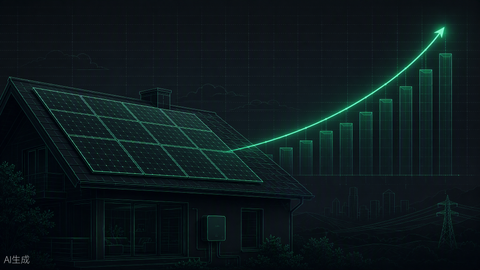
Commercial solar is where the real money lives — and where the real mistakes get expensive in a hurry. We've supplied equipment to hundreds of commercial installs, from 30 kW warehouse rooftops to megawatt-scale ground arrays, and the difference between projects that pencil and projects that haunt somebody's career almost never comes down to the panels. It's load analysis done honestly, financing structured correctly, and an EPC that answers the phone after commissioning. This guide is the nine-step process we'd hand a CFO who asked us over coffee how to actually do this right.

Step 1: Build the Business Case Before You Talk to Anybody
Solar salespeople will happily build your business case for you. Don't let them. The numbers that matter live in your utility bills and your tax situation, and you want them in hand — organized by you — before the first site walk.
Pull 24 months of utility bills, not 12. You're looking for three things: annual kWh consumption, the shape of your demand charges if you're on a commercial rate, and your tariff's escalation history. Many commercial tariffs are demand-dominated — a facility using 500,000 kWh a year might see half its bill driven by 15-minute demand peaks. That matters enormously because solar without storage reduces energy charges but does little for demand peaks that occur at 5 p.m. in January. If your bill is demand-heavy, storage enters the conversation early, not as an afterthought.
Then get your tax facts straight: does your business have the federal tax appetite to use a 30% Investment Tax Credit, plus MACRS depreciation? Companies without sufficient tax liability either structure around it (third-party ownership, transferability of credits under current law) or leave tens of thousands of dollars unclaimed. A one-hour conversation with your CPA before the first proposal saves a painful renegotiation later.
Step 2: Run a Real Energy Audit and Load Analysis
Every wasted kWh you eliminate before sizing the array is a kWh you don't have to buy panels for. We've watched facilities drop 15–20% off their consumption with LED retrofits, HVAC scheduling, and compressed-air leak repairs — then buy a smaller, cheaper solar system with the savings. Sequence matters: efficiency first, solar second.
For the load analysis itself, interval data is gold. Most utilities will provide 15-minute or hourly consumption data for commercial accounts. What you're looking for: when does the load peak, how flat is the baseline, and what runs on weekends and nights? A refrigerated warehouse with a flat 24/7 load profile is a solar dream. A school with a 3 p.m. spike and empty summers needs a different design conversation entirely.
| Assessment Area | What Is Evaluated | Common Issues Found | Impact on Project |
|---|---|---|---|
| Solar resource | Peak sun hours, shading from nearby buildings or trees | HVAC units, parapets, and vents shading prime roof area | Determines realistic production ceiling |
| Roof condition | Remaining membrane/roof life, structural capacity | Roof with <10 years life; rafters at capacity | Re-roof before solar or face $3–6/ft² removal-reinstall cost later |
| Electrical infrastructure | Service size, panel capacity, transformer rating | Full switchgear; undersized utility transformer | Upgrade costs of $10k–$100k+ can reshape project economics |
| Load profile | Interval data, demand peaks, weekend/night usage | Demand-heavy billing; low weekend loads | Determines storage value and optimal array size |
| Property tenure | Owned vs. leased, remaining lease term | Short remaining lease on rented building | Kills or restructures financing options |
Step 3: Assess Your Facility's Solar Potential Honestly
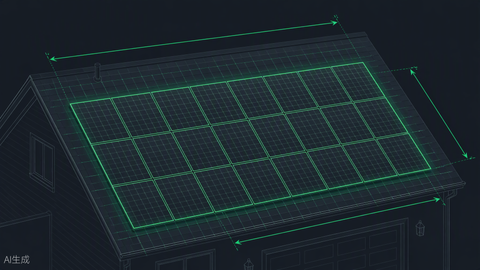
Rule-of-thumb numbers first: a commercial rooftop in most of the US supports roughly 10–15 watts per square foot of usable roof after setbacks, walkways, and equipment shading. A 50,000-square-foot warehouse with a clean flat roof realistically hosts 350–550 kW. That same roof with fifteen RTUs, skylights, and a parapet shading the south edge might host half that.
Structural capacity is the silent gatekeeper for flat-roof ballasted systems. Ballasted racking adds 4–6 psf of dead load before snow. Buildings designed to minimum code in the 1980s sometimes can't take it without reinforcement — we've seen reinforcement quotes kill projects and we've seen smart engineers find capacity others missed. Spend the $3,000–$8,000 on a structural letter early. It's the cheapest go/no-go decision in the entire project.
Don't ignore the boring alternatives. Carport arrays cost more per watt than rooftop but shade employee parking, qualify for the same incentives, and sidestep roof-condition problems entirely. Ground mounts make sense anywhere land is cheap. And for multi-tenant or leased facilities, community solar subscriptions or green tariffs sometimes beat an on-site project on pure economics — an honest assessment includes that comparison even though it means no project at all.
Step 4: Choose the Right System Architecture
| System Type | Best For | Typical Size Range | Key Consideration |
|---|---|---|---|
| Rooftop ballasted (flat roof) | Warehouses, retail, office with TPO/EPDM/PVC membranes | 50 kW – 2 MW | Structural capacity and membrane warranty coordination |
| Rooftop attached (pitched/metal) | Metal-standing-seam or shingle roofs | 20 kW – 500 kW | Standing-seam clamp systems avoid penetrations entirely |
| Carport/canopy | Parking lots, schools, municipal sites | 50 kW – 1 MW | ~30–50% cost premium over rooftop; dual-use value |
| Ground mount | Campuses with available land, agriculture | 100 kW – 5 MW+ | Land use, fencing, and interconnection run length |
| Tracker (single-axis) | Utility-scale and large C&I ground mounts | 1 MW+ | 15–25% production gain; more moving parts to maintain |
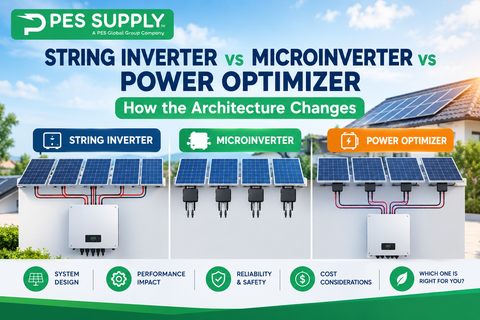
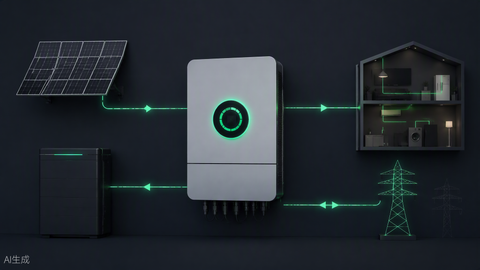
On the inverter side, commercial projects split three ways: string inverters (lowest cost, centralized, easy service), microinverters (rarely economic above ~100 kW, but superb for complex multi-face roofs), and DC-optimized string systems that split the difference. For most flat-roof warehouse projects, three-phase string inverters in the 50–125 kW class are the workhorse answer, and that's what we stock deepest in the inverter collections, including 100 kW and 125 kW classes for mid-size commercial rooftops.
Step 5: Structure the Financing Correctly
The financing decision is worth more than the equipment decision on most commercial projects. The options:
| Financing Option | How It Works | Who Captures the ITC | Best For |
|---|---|---|---|
| Cash purchase | Full payment upfront; you own the system immediately | You | Companies with capital and tax appetite; highest lifetime ROI |
| Equipment loan | Bank or specialty lender finances over 7–15 years | You | Preserving working capital while keeping incentives |
| Power Purchase Agreement (PPA) | Third party owns the system; you buy the power at a set rate | The third party | Nonprofits, municipalities, and companies without tax appetite |
| Operating lease | Monthly payment; lessor owns equipment | The lessor | Off-balance-sheet treatment preferences |
| C-PACE financing | Repaid via property tax assessment over 20–30 years | You | Long-term owners in C-PACE states; survives property sale |
Watch the PPA escalator. A 6.5-cent PPA with a 2.9% annual escalator passes your utility's expected rate around year 12 in many markets and never looks back. Zero- or 1%-escalator PPAs exist — negotiate. And if anyone quotes you a PPA without showing you the year-by-year rate schedule against your utility's historical escalation, they're hoping you don't do the math. Do the math.
Federal and State Incentives: The 2026 Landscape
| Incentive | Value | Who Qualifies | Notes |
|---|---|---|---|
| Federal ITC (Investment Tax Credit) | 30% of total installed cost | Businesses with federal tax liability; credits are now transferable | Adders possible: +10% domestic content, +10% energy community |
| MACRS depreciation | 5-year accelerated schedule; bonus depreciation per current law | System owners | Worth roughly 15–25% of system cost in present value depending on tax rate |
| State/local incentives | Varies: rebates, SRECs, property tax exemptions | Location-dependent | SREC markets (NJ, MA, DC, MD, IL) can add $0.01–0.05/kWh-equivalent revenue |
| USDA REAP grants | Up to 50% of project cost | Rural small businesses and agricultural producers | Underused; application windows matter — apply early in the cycle |
| Utility rebates | Varies | Service-territory-dependent | Usually capacity-capped; funds exhaust |
Stacked correctly — 30% ITC plus MACRS plus a state program — the effective first-year cost of a commercial array routinely lands at 40–55% of sticker. The domestic content adder deserves a strategy conversation with your supplier: qualifying US-manufactured content adds 10 percentage points to the ITC, and we track which of our panels carry qualifying content specifically because that adder changes bid math. Our solar panel inventory notes domestic-content-eligible models, including options like the Silfab 530W commercial bifacial with domestic content.
Worked Example: A 250 kW Warehouse Project, Start to Finish
Abstract advice is worth what you paid for it, so here's a composite project — real numbers from the kind of job we supply monthly. Facility: 60,000 ft² distribution warehouse in the Midwest. Usage: 480,000 kWh/year, blended rate $0.118/kWh, moderate demand charges (about 25% of the bill). Annual electric spend: roughly $56,600.
| Line Item | Value | Notes |
|---|---|---|
| System size | 252 kW DC | Sized to ~75% of annual consumption; roof could hold more, load couldn't use it |
| First-year production | ~340,000 kWh | 1,350 kWh/kW, typical Midwest fixed-tilt |
| Turnkey cost | $453,600 ($1.80/W) | Ballasted rooftop, string inverters, standard complexity |
| 30% federal ITC | −$136,080 | Dollar-for-dollar credit |
| MACRS present value | ~−$80,000 | At a 25% effective tax rate |
| Effective net cost | ~$237,500 | ~52% of sticker |
| First-year bill savings | ~$38,500 | Energy offset plus modest demand benefit |
| Simple payback | ~6.2 years | Before any rate escalation |
| 25-year cumulative savings | $900k–$1.1M | At 2.5–3% utility escalation |
What made this project work: the owner did efficiency first (an LED high-bay retrofit cut consumption 18% and shrank the required array), the roof had nine years of life left so they restored the membrane before racking went down, and the interconnection application went in the week the contract signed — the utility study took five months, and construction took seven weeks. What almost broke it: the utility's initial study wanted a $74,000 transformer upgrade; the EPC redesigned to a zero-export-over-200kW configuration with export limiting, the utility accepted, and the upgrade disappeared. That one conversation saved more money than any equipment negotiation on the job.
Demand Charges: The Part of the Bill Solar Alone Won't Fix
Commercial tariffs bill two things: energy (kWh, what you used) and demand (kW, the fastest you used it). Demand is typically measured as your highest 15-minute average draw in the billing period, charged at $8–$25 per kW depending on the utility. A facility that cruises at 150 kW all month but spikes to 400 kW for one hot afternoon pays for 400 kW of demand — every month, sometimes with ratchet clauses that carry 70–80% of the annual peak into subsequent months.
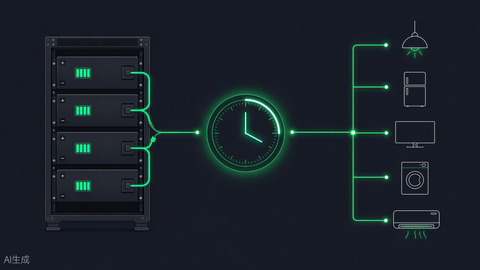
Solar reduces demand charges only when your peak coincides with sunshine. Afternoon-peaking retail and manufacturing? Good overlap. Refrigerated warehouses peaking at 4 a.m. defrost cycles, or evening-peaking restaurants? Almost none. This is the analysis your proposal must show with your interval data, and it's why storage pairing has become the default conversation on demand-heavy tariffs: batteries dispatch against the 15-minute peak regardless of when the sun shines.
Net Metering, Net Billing, and Why Your Export Rate Matters
What the utility pays you for exported solar energy shapes design as much as the roof does. Under full retail net metering (an endangered species in commercial tariffs), every exported kWh offsets a retail kWh — oversizing makes sense. Under net billing or avoided-cost export (the growing majority), exports earn 2–5 cents while imports cost 9–15 cents, and the economics flip entirely: design for self-consumption, size to your daytime baseline load, and let storage absorb the midday hump rather than exporting it cheap and buying it back dear. Ask your EPC which regime you're under before you approve a system size. If they answer without looking it up, they're guessing about the single most important number in your pro forma.
Resilience: When the Array Becomes a Business Asset Beyond the Bill
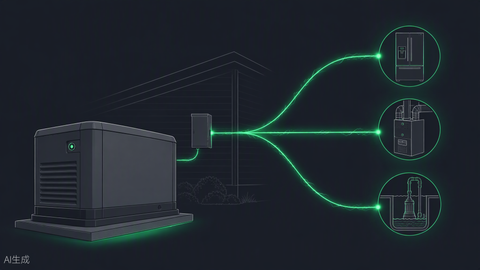
Solar alone provides zero blackout protection — grid-tied inverters shut down with the grid by code (UL 1741 anti-islanding). Solar plus storage with a transfer scheme is a different asset class: refrigerated inventory protected, point-of-sale systems alive, production lines riding through the flicker that takes competitors down for the afternoon. We've watched a cold-storage customer justify an entire storage retrofit on a single avoided spoilage event. If resilience is part of your business case, say so in the first design meeting — it changes the inverter selection, the panel-board design, and the interconnection configuration, and retrofitting those decisions later costs multiples of designing them in.
Step 6: Select a Commercial EPC With Teeth
Commercial solar EPC selection runs on the same verification discipline as residential, scaled up: license and bonding check, insurance certificates verified with the agent, and references — but the reference bar rises. Ask for three projects of comparable size completed at least two years ago, then call those facilities managers and ask two questions: "Did they hit the production guarantee?" and "What happened when something broke?"
Contract terms to pin down before signature: production guarantee with liquidated damages (not a vague "estimate"), milestone-based payment schedule (never more than 10–15% deposit), a named equipment list with no open-ended "or equal" clause, commissioning and performance testing procedures, and O&M pricing for years 1–5. If the EPC's own proposal glosses over interconnection risk — who's paying if the utility demands a $200,000 transformer upgrade — get it in writing before you sign, not after the utility study lands.
Step 7: Survive Permitting and Interconnection
Interconnection is where commercial project timelines go to die. Residential-scale systems sail through in weeks; commercial systems enter a study queue that runs months and occasionally discovers that the local feeder needs upgrades — with a cost allocation conversation attached. Budget four to nine months for interconnection on anything above 250 kW, longer in congested territories, and treat the interconnection application as day-one critical path, not a mid-project errand.
Practical moves that save months: have your EPC request a pre-application meeting with the utility before finalizing system size (a 499 kW design and a 501 kW design can land in entirely different study processes); submit a complete application the first time — incomplete packages restart queues; and design with the utility's export limits in mind from day one, including zero-export configurations where the alternative is a two-year queue. On the building-permit side, fire-code access pathways, roof-load letters, and electrical plan review are the three places commercial permits stall; an EPC that has permitted in your AHJ before knows the reviewers' pet peeves, which is worth real money.
Step 8: Manage Construction Like an Owner

Commercial installs run one to four months depending on size. The owner's job during construction is verification, not supervision: confirm delivered equipment matches the contract's model numbers (photograph nameplates on arrival — substitution happens), walk the roof attachment and wire management before modules cover everything, and require the commissioning test reports before final payment. IV curve tracing, insulation resistance tests, and torque verification on structural attachments are standard on professional commercial jobs; ask for the reports by name. We torque-mark every structural bolt on our own projects with paint pens so a later inspector can verify at a glance — small discipline, big signal about crew quality.
Schedule around your operations honestly. Crane days on a working distribution dock, shutdowns for switchgear ties, and roof access through occupied space all need coordination with your operations team. The smoothest commercial projects we've supplied had a weekly 30-minute owner-EPC call from contract to PTO. The rough ones communicated by angry email.
Step 9: Monitoring and Maintenance — Where the ROI Actually Lives
A commercial array with nobody watching it underperforms by 5–15% within a few years. Soiling, a tripped inverter, a failed optimizer, a blown string fuse — each is a small loss that compounds silently until somebody compares the utility bill against the pro forma and asks uncomfortable questions. Fleet-level monitoring with per-string or per-module granularity pays for itself faster than any other line item in the O&M budget.
| Task | Frequency | Typical Cost | Consequence of Skipping |
|---|---|---|---|
| Monitoring review | Weekly (automated alerts daily) | $0–50/month (software) | Underperformance discovered at year-end instead of day-of |
| Visual inspection | Quarterly | In-house staff, 1–2 hours | Damage, debris, and wire issues compound |
| Panel cleaning | 1–2×/year (climate-dependent) | $0.01–0.03/W per cleaning | 3–7% soiling losses in dusty regions; up to 15%+ near agriculture or highways |
| Electrical testing (IR scans, torque checks) | Annual | $0.005–0.01/W | Connection failures; thermal events |
| Vegetation management (ground mounts) | 2–4×/year | Site-dependent | Shading losses, fire risk, fence damage |
| Inverter service/fan filters | Per manufacturer (usually annual check) | $150–500/unit | Premature inverter failure — the most expensive common repair |
Should Your Business Add Battery Storage?
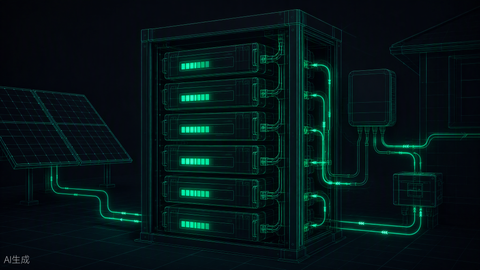
For demand-charge-heavy tariffs, the answer is increasingly yes. Batteries shave the 15-minute peaks that dominate those bills, and demand-charge savings of 30–50% are achievable on the right tariff with the right load shape. The honest caveats: storage economics depend entirely on your specific tariff structure (run the interval data through actual dispatch modeling, not a sales brochure), and storage adds permitting, fire-code, and interconnection complexity to the project. Standalone storage also qualifies for the 30% ITC, which changed retrofit economics fundamentally. For sizing methodology, our battery bank sizing guide covers the fundamentals, and the backup runtime calculator translates kWh into hours your facility actually cares about. Browse battery storage options for the current commercial product landscape.
What a Professional Proposal Actually Contains
You'll receive proposals that are glossy brochures with a price on the last page, and you'll receive proposals that are engineering documents. Buy from the second kind. A commercial solar proposal worth signing includes: 12 months (minimum) of your interval usage data with the tariff named, a shade and production model from Aurora, Helioscope, or PVsyst with the loss assumptions printed, a single-line electrical diagram, a roof plan showing module layout with fire setbacks, the structural approach (ballast calculations or attachment schedule), an interconnection strategy with identified risks, named equipment with datasheets attached, a production guarantee with remedies, a payment schedule tied to milestones, and O&M pricing through year five. Count how many of those items are in each proposal you receive. The bidder who gives you all of them up front is the bidder whose projects finish.
Roof Membrane Warranties: The Detail That Bites in Year Seven
Your roof membrane has a manufacturer's warranty, and drilling into or ballasting onto it without involving the membrane manufacturer can void it. The correct sequence: notify the roofing manufacturer before design, use their approved details for attachments and walkways, and have their inspector review the completed array so the warranty survives. Reputable EPCs handle this as routine; we've also seen the aftermath when they don't — a leak dispute where the roofer blames the solar, the solar contractor blames the roof, and the building owner funds both lawyers. One letter from the membrane manufacturer at the start of the project prevents the entire genre of dispute.
Agricultural Operations and the REAP Advantage
Farms and rural small businesses hold the single best incentive hand in American solar: USDA Rural Energy for America Program grants covering up to 50% of project cost, stackable with the 30% ITC. On a qualifying $100,000 agricultural project, that's potentially $50,000 of grant plus $30,000 of credit against the remainder — effective costs that make payback periods almost silly. The catches are process catches: REAP has application windows, scoring criteria, and paperwork that rewards early, complete applications. Operations that qualify and don't apply are leaving six figures on the table. Poultry houses, dairy operations, irrigation pumping, grain drying — all high-value solar applications because their loads are big, steady, and often daytime-coincident.
Multi-Site Rollouts: Portfolio Discipline
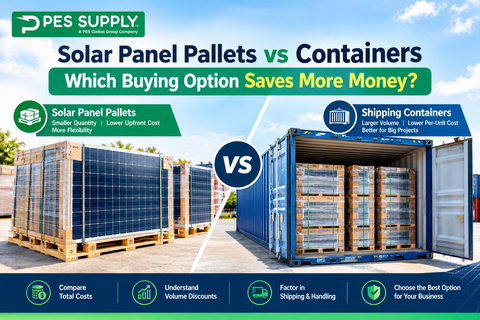
For businesses with five to fifty locations, the portfolio approach beats site-by-site improvisation. Standardize where you can (racking family, inverter platform, monitoring system) and localize where you must (reroof timing, utility regime, structural capacity). Sequence sites by tariff value, not by roof size — the site with the highest blended rate and best net metering goes first, because early wins fund organizational patience for the harder sites. And negotiate equipment at portfolio scale: a five-site, 2 MW aggregate buy earns pricing and supply priority that five separate 400 kW purchases never see. This is exactly the scale where working directly with a wholesale supplier for the equipment package starts to make structural sense.
Equipment Selection at Commercial Scale: What Actually Matters
At 250 kW and up, equipment decisions get simpler in some ways and more consequential in others. Modules: buy current-generation TOPCon N-type panels from a manufacturer with a real balance sheet — the 25-year performance warranty is only as good as the company standing behind it, and the industry's manufacturer churn is a documented risk. Bifacial modules earn their premium on white-membrane roofs and ground mounts (5–10% rear-side gain) and waste money on dark shingle roofs. Wattage class matters less than availability: a 580W panel that ships in week three beats a 620W panel arriving in month five when your interconnection clock is running. This is where a supplier with real inventory — not a broker with a spreadsheet — changes project risk. We stock commercial-format modules deep for exactly this reason, from Jinko 580W bifacial pallets to Canadian Solar 620W TOPCon.
Inverters: string architecture dominates commercial rooftops because service is a truck roll, not a roof crawl, and because a failed 100 kW string unit is swappable in an afternoon. Specify spares into the contract — one spare inverter on the shelf turns a two-week RMA wait into a two-hour swap. Rapid shutdown compliance (NEC 690.12) is non-negotiable and module-level electronics or listed transmitter systems handle it; verify the exact compliance method appears in the plan set, because inspectors will.
Racking: the least glamorous and most consequential line item. Ballast math, wind tunnel reports, and membrane compatibility all live here. Choose racking with published PE-stamped calculations for your wind zone, and confirm the walkway and wire-management accessories exist in the catalog — field-fabricated wire management is how you get failed inspections and chafed conductors in year four.
The Tax Appetite Conversation, Expanded
Because this decision shapes everything downstream, it deserves more than a paragraph. The 30% ITC plus MACRS is worth roughly half the system cost to a profitable company — and roughly nothing to one without tax liability. Three structures solve the mismatch. Credit transferability lets you sell the ITC to a third party for cash (typically 88–92 cents on the dollar through established brokers) — simple, increasingly liquid, no ongoing relationship. Third-party ownership (PPA or lease) hands the incentives to a financing partner and buys you cheap power instead of tax benefits — you give up roughly a third of the total value but get simplicity and zero capital outlay. And partnership-flip structures exist for larger projects where both parties bring something to the table. Run all three past your CPA with real numbers before the EPC's financing arm makes the choice for you by default.
Reading Your Commercial Tariff Like a Pro
Before any vendor conversation, spend one hour with your rate schedule — the actual tariff document from the utility website, not the summary on the bill. You're hunting five numbers: the energy charge per kWh by time period, the demand charge per kW, any ratchet clause (peak demand carried forward at a percentage into future months), the export compensation rate, and available optional tariffs. That fifth one surprises people: many utilities offer alternate commercial tariffs, and solar-plus-load-shape changes sometimes make switching tariffs worth more than the solar itself. We've seen a facility save $11,000 a year by moving to a time-of-use tariff their solar made favorable — a change that cost nothing but a phone call.
Watch for standby charges and solar-specific fees too. Some tariffs penalize large self-generators with monthly standby or grid-access charges that meaningfully dent pro formas. They show up in the tariff document's fine print and mysteriously absent from aggressive proposals. A proposal that never names your tariff schedule is a proposal built on the generic version of your utility, and generic is where the savings estimates inflate.
Getting Internal Buy-In: The Facilities-vs-Finance Alignment
Commercial solar projects die in internal politics more often than in engineering. The facilities manager worries about roof penetrations and maintenance burden; the CFO worries about capital allocation and risk; the CEO wants the sustainability announcement. The proposals that survive present each audience its own truth: facilities gets the structural letter, the membrane-warranty coordination plan, and the O&M schedule; finance gets the sensitivity analysis — payback at 0%, 2.5%, and 5% utility escalation, with the downside case honest; leadership gets the emissions math (a 250 kW array offsets roughly 240 metric tons of CO₂ annually, depending on grid mix) and the ribbon-cutting timeline. Bring all three documents to the same meeting. Projects stall when any one of those audiences discovers an unanswered concern in month four.
Your First 90 Days: The Checklist
If this guide has you ready to move, here's the sequence compressed. Days 1–14: pull 24 months of bills, download your tariff document, request interval data from the utility, and schedule the CPA conversation about tax appetite. Days 15–30: commission the energy audit and the structural roof letter, walk the roof yourself with a camera, and shortlist three EPCs using the verification discipline from Step 6. Days 31–60: collect proposals built on your actual interval data, run the financing comparison (cash versus loan versus PPA, all three modeled, not narrated), and call the references — especially the ones from year-two-plus projects. Days 61–90: sign with the EPC whose proposal read like an engineering document, file the interconnection application immediately, and put the weekly owner-EPC call on the calendar before anyone asks for it. Ninety days from standing start to signed contract with interconnection in process is an aggressive but normal pace for a well-run commercial project. The projects that take two years to reach the same point usually spent eighteen of those months re-deciding things this checklist settles in week two.
The Mistakes That Sink Commercial Projects
Pattern-matched from two decades of watching projects succeed and fail:
- Sizing to the roof instead of the load. A 500 kW array on a facility that uses 200 kW of real load just sells power back at wholesale rates — usually 2–4 cents — while retail offset is worth 9–15 cents. Size to consumption first; expansion-ready second.
- Ignoring demand charges. A solar-only proposal on a demand-dominated tariff will "save" 40% on paper and 15% on the actual bill. If the proposal doesn't discuss your demand profile, the proposer hasn't read your tariff.
- Skipping the structural letter. Discovered at permit time instead of design time, structural upgrades become change orders. Discovered after racking ships, they become disasters.
- Accepting "or equal" equipment language. The value-engineered substitution always flows downhill to your production guarantee.
- No O&M plan priced at signing. Year-one monitoring is always included; year-three is when you find out whether anyone is actually watching.
The Bottom Line for Your Business
One pattern deserves its own sentence before the summary: the companies that get the most from commercial solar are the ones that assign a named internal owner to the project — a facilities director or CFO's analyst who survives the EPC's project manager. Vendor accountability follows internal accountability.
Commercial solar in 2026 is a mature, bankable technology with a 30% federal tailwind — and it still rewards the prepared and punishes the casual. Audit first, verify the roof and the switchgear, structure financing around your real tax situation, lock the equipment list in the contract, and put someone in charge of watching production from day one. One last observation from the supply side: the businesses that succeed with solar treat it as an energy procurement project with a construction phase, not a construction project with an energy benefit. That framing keeps the pro forma honest, keeps the O&M budget funded, and keeps somebody accountable for the production number in year nine, when the novelty is long gone and the savings are the whole point. If you want an equipment-side sanity check on any proposal — what the hardware should cost, whether the design matches your load, which panels qualify for the domestic content adder — send it our way.
We supply the installers who do this right, and we're happy to help you become the kind of buyer they take seriously. For deeper reading, the solar system size calculator and system components overview build the vocabulary, and the guide to vetting solar companies applies to EPC selection at every scale.