Last Updated: July 2026 • Based on NREL Cell Efficiency Records, Manufacturer Datasheets, and Oxford PV Tandem Pilot Data
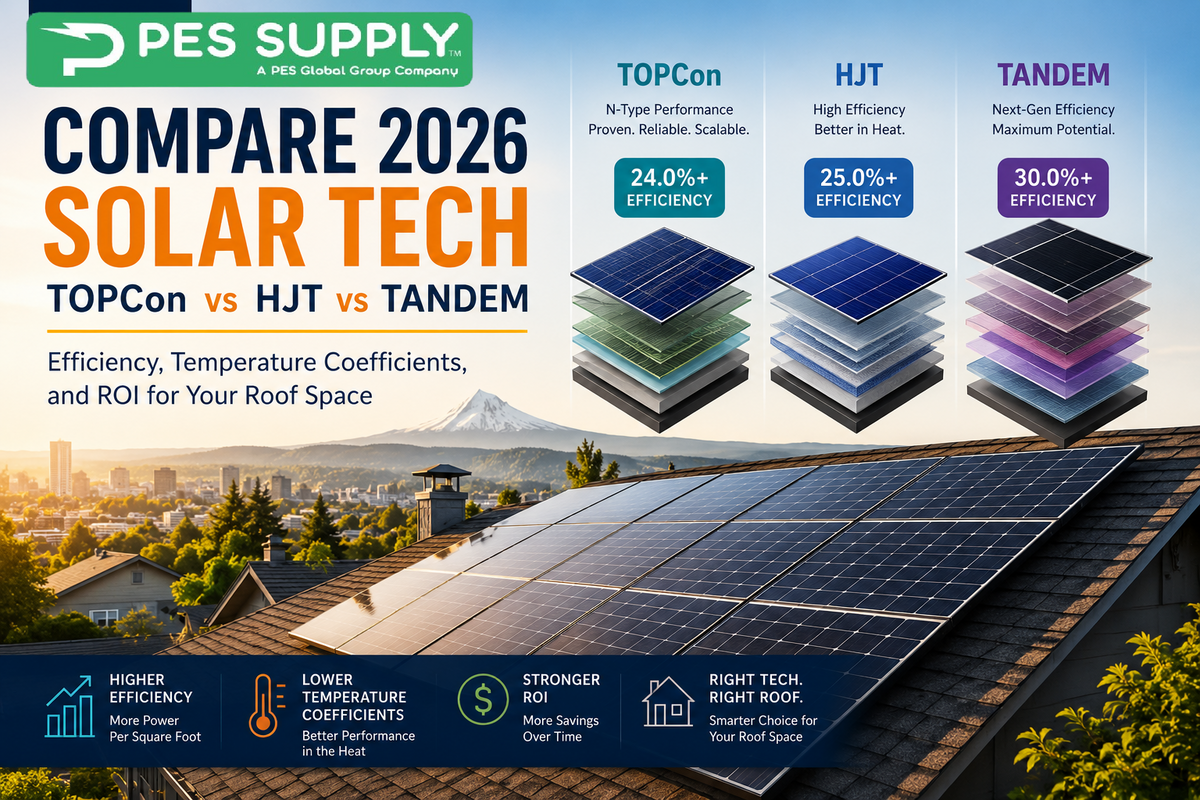
Choosing between TOPCon, HJT, and Tandem cells in 2026 comes down to one core tradeoff: TOPCon offers the best cost-to-efficiency ratio for most roofs, HJT wins in heat and low-light performance, and Tandem is the future ceiling that is not quite ready for mainstream rooftop use yet. Each technology takes a different engineering path to squeeze more electricity out of the same square foot of sunlight, and the differences between them have real financial consequences over a 25-year system life.
This guide breaks down efficiency, temperature performance, degradation, and real ROI for different roof sizes so you can choose the right cell technology for your specific project rather than defaulting to whatever an installer proposes first.
⚡ Quick Answer
For most residential and commercial roofs in 2026, N-type TOPCon is the best default choice, delivering 21.5 to 23.5% efficiency at a manageable 8 to 15% price premium over older PERC panels. Choose HJT for genuinely space-constrained roofs or hot climates where its superior temperature coefficient compounds over 25 years. Treat Tandem (perovskite-silicon) as a technology to watch rather than buy, since it lacks the long-term field data and commercial-scale pricing needed for a typical rooftop installation today.
Key Takeaways
- TOPCon Efficiency: 21.5 to 23.5% in commercial products. Dominant technology in 2026 because it retrofits existing PERC production lines cheaply.
- HJT Efficiency: 22 to 24%, with the best temperature coefficient of any commercial silicon technology at -0.24 to -0.26%/°C.
- Tandem Potential: Lab records exceed 33% efficiency. Early commercial modules from Oxford PV rate at 26 to 28%, but volume is tiny and long-term durability data is still limited.
- Temperature Matters More Than Datasheets Suggest: Rooftop panels regularly hit 50 to 65°C in summer, where HJT's better coefficient delivers a real-world 2 to 4% production advantage over TOPCon on hot roofs.
- ROI Depends on Your Constraint: If space is scarce, pay the premium for HJT or Tandem. If you have adequate roof area, TOPCon delivers better value per dollar spent.
- Degradation Rates: HJT degrades slowest at 0.35 to 0.40% per year, TOPCon at 0.40 to 0.45%, and Tandem's long-term degradation profile remains unproven beyond accelerated lab aging tests.
- Bankability: TOPCon and HJT are backed by full 25-year warranties from Tier 1 manufacturers. Tandem currently lacks equivalent long-term warranty support at commercial scale.
In This Guide
- Quick Comparison Table
- How Each Technology Works
- Efficiency: What You Actually Get Per Square Foot
- Temperature Coefficient: Why It Matters More Than Datasheets Suggest
- Degradation and Long-Term Performance
- Cost Premium and Manufacturer Availability
- ROI by Roof Size: Which Technology Actually Pays Off
- Decision Guide: Which Technology Fits Your Project
- The Reality Check on Tandem Cells
- Frequently Asked Questions
Quick Comparison Table
| Metric | TOPCon | HJT | Perovskite-Silicon Tandem |
|---|---|---|---|
| Typical Efficiency | 21.5 to 23.5% | 22 to 24% | 26 to 28% (lab: 33%+) |
| Temperature Coefficient | -0.29 to -0.32%/°C | -0.24 to -0.26%/°C | -0.25 to -0.30%/°C (estimated) |
| Annual Degradation | 0.40 to 0.45%/yr | 0.35 to 0.40%/yr | Unproven long-term; early data 0.5 to 1%/yr |
| Cost Premium vs. PERC | +8 to 15% | +20 to 30% | Not yet commercially scaled |
| Commercial Maturity | High. Dominant new-build technology in 2026. | Moderate. Premium niche. | Low. Pilot production lines only. |
| Best Roof Type | Most residential and commercial roofs | Hot climates, space-constrained roofs | Not yet buyable at meaningful scale |
| Manufacturers | LONGi, JinkoSolar, Trina, JA Solar | REC Group, Panasonic, Canadian Solar | Oxford PV (pilot), LONGi/Jinko R&D |
How Each Technology Works
All three technologies start from the same crystalline silicon base but modify the cell structure differently to reduce energy losses and capture more of the incoming sunlight as usable electricity.
The Engineering Behind Each Cell Type
- TOPCon (Tunnel Oxide Passivated Contact): Adds a thin tunnel oxide layer and doped polysilicon layer on the rear of an N-type silicon wafer. This passivation layer reduces electron recombination losses at the rear contact, the primary efficiency loss mechanism in older PERC cells. TOPCon can be manufactured using largely the same equipment as PERC production lines with modest retrofit investment, which is why it scaled to dominant market share so quickly.
- HJT (Heterojunction): Sandwiches a crystalline N-type silicon wafer between thin layers of amorphous silicon on both the front and rear surfaces. This creates multiple junctions that passivate the entire cell surface, not just the rear contact. The amorphous silicon layers require an entirely different, more expensive production process using low-temperature deposition equipment, which explains the higher cost.
- Perovskite-Silicon Tandem: Stacks a perovskite solar cell directly on top of a conventional silicon cell. The perovskite top layer captures high-energy blue and green light, while the silicon bottom layer captures the red and infrared light the perovskite layer lets through. This two-layer capture is what allows tandem cells to exceed the theoretical single-junction silicon efficiency limit of roughly 29%.
Efficiency: What You Actually Get Per Square Foot
TOPCon dominates 2026 shipments because it retrofits existing PERC production lines cheaply. Mainstream modules land at 21.5 to 23.5% efficiency, a meaningful jump over older PERC (19 to 21%) without a dramatic cost increase.
HJT pushes higher, into the 22 to 24% range, by combining crystalline silicon with thin amorphous layers on both sides. The efficiency gain over TOPCon is modest, roughly 0.5 to 1 percentage point in real products, but the architecture unlocks better temperature and low-light behavior that compounds into real production gains over time.
Tandem (perovskite-silicon) is the technology everyone is watching. Lab records have already broken 33% efficiency, and Oxford PV has begun limited commercial shipments of tandem modules rated around 26 to 28%, a genuine step-change over silicon-only cells. However, this is still early-stage. Production volume is tiny, pricing is not competitive for most buyers, and long-term durability data (perovskite layers are historically moisture- and UV-sensitive) is still being established through accelerated aging tests rather than 20+ years of field data.
| Technology | Roof Space Saved vs. Standard PERC | Panel Count for a 10 kW System (400W baseline) |
|---|---|---|
| Standard PERC | Baseline | 25 panels |
| TOPCon | ~8% less space | 23 panels (higher wattage per panel) |
| HJT | ~11 to 13% less space | 22 panels |
| Tandem (projected at scale) | ~15 to 20% less space | 20 panels (not yet commercially available at this scale) |
Temperature Coefficient: Why It Matters More Than Datasheets Suggest

Panels rarely operate at the 25°C used for efficiency ratings. Rooftop panels regularly reach 50 to 65°C in summer, and this is where the temperature coefficient decides real-world output more than the headline efficiency number.
| Technology | Temperature Coefficient | Output Loss at 60°C (35°C above STC) | Why It Performs This Way |
|---|---|---|---|
| Standard PERC | -0.35 to -0.40%/°C | 12.3 to 14.0% | Higher recombination losses at rear contact worsen with heat |
| TOPCon | -0.29 to -0.32%/°C | 10.2 to 11.2% | Passivation layer reduces heat-driven recombination compared to PERC |
| HJT | -0.24 to -0.26%/°C | 8.4 to 9.1% | Full-surface passivation from amorphous silicon layers minimizes heat losses |
| Tandem (estimated) | -0.25 to -0.30%/°C | 8.8 to 10.5% | Varies significantly by perovskite formulation and is not yet standardized across manufacturers |
Real-World Impact: On a hot roof running at 60°C for 6+ hours a day, HJT's better coefficient translates into a 2 to 4% real-world production advantage over TOPCon on top of its raw efficiency edge. This is why HJT is disproportionately popular in Arizona, Texas, Nevada, and similar high-heat markets despite the price premium. The hotter your climate, the more the temperature coefficient matters relative to the STC efficiency rating on the datasheet.
Degradation and Long-Term Performance

Efficiency at Year 1 only tells part of the story. What matters for a 25-year investment is how much output the panel retains as it ages. This is where N-type technologies (TOPCon and HJT) meaningfully outperform older P-type PERC cells, and where Tandem's long-term picture remains genuinely uncertain.
| Technology | Annual Degradation | Output at Year 25 | Warranty Confidence |
|---|---|---|---|
| Standard PERC | 0.50 to 0.70%/yr | 85 to 88% | High. Decades of field data. |
| TOPCon | 0.40 to 0.45%/yr | 89 to 90% | High. Strong field data since 2020. |
| HJT | 0.35 to 0.40%/yr | 90 to 91% | High. Strong field data, particularly from Panasonic and REC Group. |
| Tandem | 0.5 to 1.0%/yr (early data, unproven) | Unknown beyond accelerated aging tests | Low. No 10+ year field data exists yet. Perovskite moisture/UV sensitivity is an active research area. |
Cost Premium and Manufacturer Availability
Price is where the practical decision-making usually happens. Here is what each technology actually costs relative to a standard PERC baseline in wholesale pricing as of mid-2026.
| Technology | Approx. Wholesale Price | Availability | Leading Manufacturers |
|---|---|---|---|
| Standard PERC | $0.25 to $0.35/W | Widely available, declining share | Most legacy Tier 1 lines |
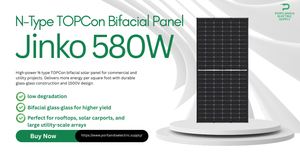
| TOPCon | $0.28 to $0.42/W | Very high, becoming the default | LONGi Hi-MO X6, JinkoSolar Tiger Neo, Trina Vertex N, JA Solar DeepBlue 4.0 Pro |
| HJT | $0.40 to $0.60/W | Moderate, premium segment only | REC Alpha Pure/Pro, Panasonic EverVolt, Canadian Solar HiHero |
| Tandem | Not standardized; pilot pricing significantly above HJT | Very limited, pilot lines only | Oxford PV (limited commercial shipments) |
ROI by Roof Size: Which Technology Actually Pays Off
The right choice depends heavily on whether your constraint is space or budget. Here is how the decision plays out across common project types.
| Roof Situation | Recommended Technology | Why |
|---|---|---|
| Small/constrained roof (under 400 sq ft usable, need to hit a specific kWh target) | HJT or TOPCon | HJT's higher efficiency lets you hit your production target with fewer panels, meaningful when every square foot is scarce. The 20 to 30% cost premium is often justified because the alternative is not fitting enough capacity at all. |
| Standard residential roof (400 to 800 sq ft, no major space constraint) | TOPCon | Clear value winner. You get most of the efficiency and durability benefits of the premium tier without paying the HJT premium. Default recommendation for the majority of homeowners in 2026. |
| Large commercial or ground-mount | TOPCon (often bifacial) | Wins on cost per watt at scale. HJT's premium is harder to justify when land or roof area is not the limiting factor. Cheaper TOPCon spread over more area often beats HJT on total installed cost per kWh produced. |
| Hot climate (Arizona, Texas, Nevada, Florida) | HJT | Superior temperature coefficient compounds over 25 years of high-heat operation, delivering a real-world production advantage beyond the STC efficiency numbers. |
| Anyone considering Tandem today | Wait | The technology is compelling on paper, but with no 25-year field track record, limited manufacturer warranty backing, and pricing that is not yet competitive outside of pilot or demonstration projects, it does not make financial sense for a typical buyer in 2026. Revisit in 2 to 3 years as bankability improves. |
Decision Guide: Which Technology Fits Your Project
Question 1: Is your usable roof or ground area a hard constraint that limits the system size you can install?
Yes: Choose HJT for maximum output per square foot.
No: Move to Question 2.
Question 2: Is your project located in a consistently hot climate where panels regularly exceed 55°C?
Yes: HJT's temperature coefficient delivers a meaningful real-world advantage. Consider HJT if budget allows.
No: Move to Question 3.
Question 3: Are you optimizing for the best cost-to-performance ratio on a standard-sized roof or large commercial/ground-mount project?
Yes: Choose TOPCon from a Tier 1 manufacturer (LONGi, JinkoSolar, Trina, JA Solar).
No: Move to Question 4.
Question 4: Are you specifically interested in emerging technology and willing to accept unproven long-term reliability for a possible efficiency ceiling?
Yes: Monitor Tandem developments, but do not commit a primary residential or commercial project to it yet.
No: TOPCon remains the safe, well-supported default.
Default Recommendation for Most Buyers in 2026: N-Type TOPCon from a Tier 1 manufacturer. It captures nearly all the efficiency and degradation improvements over old PERC technology at a manageable price premium.
The Reality Check on Tandem Cells
Perovskite-silicon tandem technology generates enormous excitement in solar industry media, and for good reason. It represents the first realistic path beyond the roughly 29% theoretical efficiency ceiling of single-junction silicon cells. But excitement about lab records should not be confused with a buyable, bankable product for a typical rooftop or commercial project in 2026.
⚠ Why Tandem Is Not Ready for Mainstream Adoption Yet
- No long-term field data: Perovskite materials have historically shown sensitivity to moisture and UV exposure. Manufacturers rely on accelerated aging chamber tests to estimate 25-year performance, but there is no substitute for actual multi-decade field exposure data, which simply does not exist yet for this chemistry.
- Limited manufacturing scale: Oxford PV operates pilot-scale production. Volume is a tiny fraction of what LONGi, JinkoSolar, or Trina produce in TOPCon alone. This limits availability and keeps unit economics uncompetitive.
- Warranty uncertainty: A 25-year performance warranty is only as good as the company backing it and the data supporting the claim. Tandem manufacturers currently cannot point to the same depth of field evidence that TOPCon and HJT manufacturers can.
- Pricing not yet competitive: Early commercial tandem pricing sits well above HJT, without the offsetting benefit of a proven track record to justify the premium for most buyers.
None of this means Tandem will not eventually become the dominant technology. Efficiency ceilings this much higher than silicon alone tend to win out over time as manufacturing scales and durability data accumulates. But for a decision being made in 2026 about a system that needs to perform reliably for 25 years, TOPCon and HJT remain the financially sound choices.
Frequently Asked Questions
Is HJT worth the extra cost over TOPCon?
It depends on your constraint. If your roof space is genuinely limited and you need to maximize output from a fixed area, HJT's higher efficiency and better temperature coefficient can justify the 20 to 30% premium over TOPCon. If you have adequate roof space and are optimizing for the best overall value, TOPCon typically delivers a better return on investment because the incremental efficiency gain from HJT does not offset its higher cost per watt for most standard installations.
Should I wait for Tandem panels instead of buying TOPCon or HJT now?
No, not for a typical residential or commercial project in 2026. Tandem technology lacks the long-term field data, manufacturing scale, and competitive pricing needed for a bankable 25-year investment today. Waiting for Tandem to mature could mean delaying your solar savings by several years for a technology that is not yet proven to justify that wait. TOPCon and HJT are both well-supported, field-tested options that deliver strong returns now.
How much does the temperature coefficient actually matter in a mild climate?
Less than in a hot climate, but it still matters. Even in moderate climates like the Pacific Northwest or New England, rooftop panels can reach 40 to 50°C during summer afternoons. The gap between TOPCon and HJT temperature performance narrows in cooler climates, making the cost premium for HJT harder to justify outside of consistently hot regions like the Southwest and Southeast US.
What is the difference between N-type and P-type cells, and does it matter for TOPCon vs. HJT?
Both TOPCon and HJT use N-type silicon wafers, which are less susceptible to light-induced degradation and generally perform better over time than the P-type silicon used in older PERC cells. This is one reason both technologies degrade more slowly than PERC. The difference between TOPCon and HJT comes down to how they passivate the cell surface to reduce recombination losses, not the base wafer type.
Are TOPCon and HJT panels backed by the same warranty length?
Generally yes. Tier 1 manufacturers of both TOPCon and HJT panels typically offer 25 to 30-year product and performance warranties, consistent with industry standards for premium silicon technology. Always verify the specific warranty terms for the exact model you are purchasing, since coverage details vary between manufacturers even within the same cell technology category.
Source TOPCon and HJT Panels at Wholesale Pricing
Whether you need N-Type TOPCon for a value-focused residential project or premium HJT for a space-constrained or high-heat installation, Portlandia Electric Supply stocks Tier 1 panels from LONGi, JinkoSolar, Trina, JA Solar, REC Group, and Panasonic. Wholesale pricing, nationwide delivery from 12+ distribution hubs, and NABCEP-certified design support.
Shop Solar Panels Request a Project QuoteRelated Guides
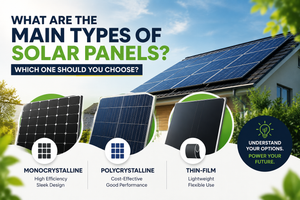
- What Are the Main Types of Solar Panels? Which One Should You Choose? - Full panel category breakdown
- Solar Panel Cost: What Should I Actually Pay? - 2026 pricing by brand and technology
- How Much Can I Save With Solar Panels? - Calculate your annual and lifetime savings
- How to Buy Solar Panels at Wholesale Prices - Direct sourcing guide for contractors and buyers
- Request a Quote - Get competitive pricing on TOPCon, HJT, and complete system kits
About Portlandia Electric Supply
Portlandia Electric Supply is a nationwide distributor of Tier 1 solar panels, inverters, battery storage systems, EV charging hardware, racking, circuit breakers, generators, and complete electrical project kits. With 12+ distribution hubs, 3,800+ in-stock SKUs, NABCEP-certified design support, and a network of 8,500+ solution providers, Portlandia serves contractors, EPCs, developers, and homeowners with fast delivery and expert procurement guidance.
Location: 1507 Portland Ave, Louisville, KY, United States | Phone: 1 888-876-0007 | Website: www.portlandiaelectric.supply
Article: TOPCon vs. HJT vs. Tandem: Complete 2026 Solar Cell Technology Comparison
Category: Solar Energy | Solar Technology | TOPCon | HJT | Perovskite Tandem | Panel Comparison
Last Updated: July 2026 - Based on NREL Cell Efficiency Records, Manufacturer Datasheets, and Oxford PV Tandem Pilot Data
Disclaimer: Efficiency ratings, temperature coefficients, and pricing are based on publicly available manufacturer data and market conditions as of July 2026 and are subject to change. Tandem cell performance data is based on limited pilot production and accelerated aging tests rather than long-term field data. Always verify current specifications with your distributor or installer before making purchasing decisions.
Frequently Asked Questions
What size solar panel do I need?
Sizing depends on your daily energy consumption, available roof space, and peak sun hours in your area. A typical home uses 15-25 panels (400W each) for full offset. Call (502) 790-0600 for a free sizing consultation.
How much do solar panels cost in 2026?
PES Supply distributes panels from major manufacturers including Jinko, Mission Solar, and more. Pricing varies by wattage and quantity. Request a quote for current pricing.
Do you offer BABA-compliant solar panels?
Yes. PES Supply provides BABA documentation at no extra charge. All our solar products meet Build America, Buy America requirements.
Shop Related Products
PES Supply carries 80,000+ products from 300+ manufacturers. One PO, one invoice, every trade covered.
Need help sizing? Our team can calculate loads, select equipment, and source everything from one PO.
Call (502) 790-0600