Last Updated: April 2026 • Based on Tesla Energy Product Specifications and NEC 2026 Grid-Interconnection Standards
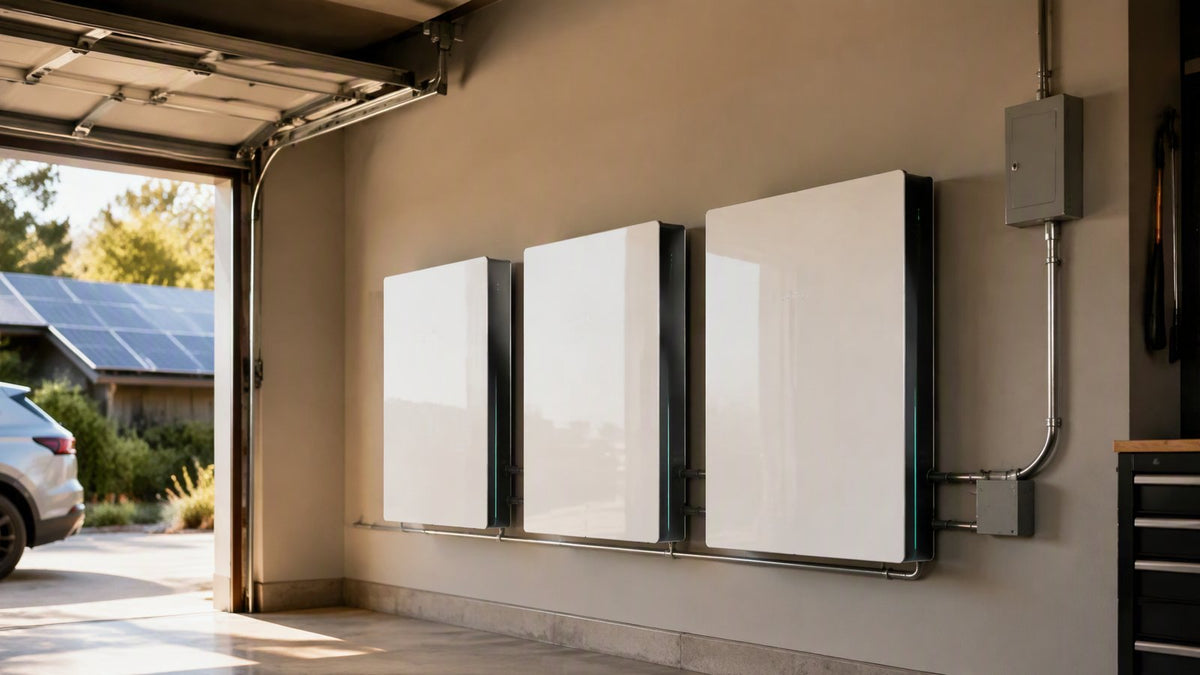
Tesla has officially launched the Powerwall 3P -a three-phase variant of its flagship residential and light-commercial battery storage system. Designed specifically for markets and applications that require balanced three-phase power delivery, the Powerwall 3P is a significant step forward for solar installers, EPCs, and developers working on commercial tenant buildouts, three-phase residential properties, small industrial sites, and grid-tied microgrid projects.
This guide covers what the Powerwall 3P is, how it differs from the standard single-phase Powerwall 3, who it is designed for, what installers need to know about wiring and NEC compliance, and how to procure it efficiently for your next project.
⚡ Quick Answer
The Tesla Powerwall 3P is a three-phase battery storage system delivering 11.5 kW continuous / 22 kW peak power output with 13.5 kWh usable capacity per unit. It integrates natively with three-phase solar inverters and utility connections, supports whole-home and light-commercial backup, and is designed for markets including the US (208V 3-phase), Europe (400V 3-phase), and Australia. Multiple units can be stacked for larger capacity needs.
Key Takeaways
Three-Phase Native:
- The Powerwall 3P outputs balanced three-phase AC power -eliminating the phase-balancing workarounds previously required on commercial properties.
- 11.5 kW continuous, 22 kW peak -sufficient for whole-home backup including HVAC, EV charging, and heavy appliances simultaneously.
- 13.5 kWh usable per unit -same as the standard Powerwall 3, but delivering that capacity across three phases.
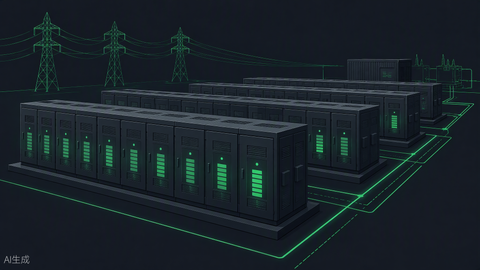
- Up to 4 units can be stacked per gateway for a maximum of 54 kWh usable capacity and 46 kW continuous output -suitable for light commercial applications.
- Native integration with Tesla Solar Inverter and compatible three-phase third-party inverters via the Tesla Gateway 2.
- Supports time-of-use optimization, demand response, virtual power plant (VPP) participation, and storm watch automatic backup mode.
- 10-year product warranty with a guaranteed 70% capacity retention at end of warranty period.
- In-stock battery storage systems, solar panels, inverters, and complete grid-tied and off-grid kit pricing with nationwide delivery and expert procurement support.
In This Guide
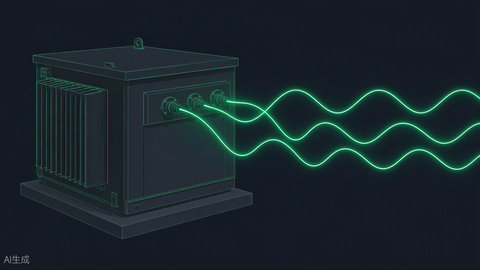
The Tesla Powerwall 3P is the three-phase evolution of Tesla's residential and light-commercial battery storage platform. While the original Powerwall and the Powerwall 3 operate on single-phase AC power, the 3P variant delivers balanced three-phase AC output -the power standard used by the majority of commercial utility connections globally and by a significant share of residential connections in Europe, Australia, and multi-family US properties.
The three-phase capability is not a minor product tweak. For installers and EPCs working on light-commercial buildouts, three-phase residential properties, or small industrial sites, the standard single-phase Powerwall created a fundamental technical mismatch -requiring additional hardware, phase-coupling inverters, or complex multi-unit configurations to deliver balanced power across all three phases. The Powerwall 3P resolves this mismatch natively, in a single wall-mounted unit that integrates directly with the Tesla Gateway 2 and compatible three-phase solar inverters.
Why Three-Phase Matters for Commercial and International Projects
US Commercial:
- Nearly all commercial utility connections in the US are three-phase (208V or 480V). A single-phase battery system cannot provide balanced backup without additional phase-coupling hardware.
- Standard residential connections across Europe are 400V three-phase. Single-phase battery systems require phase-specific installation that limits whole-home backup capability.
- Three-phase residential connections are common in newer Australian homes -a key target market for the 3P from launch.
- Apartment buildings and multi-family properties typically have three-phase service panels, making the 3P the correct specification for shared storage systems.
| Specification | Powerwall 3P Value |
|---|---|
| Usable Capacity | 13.5 kWh per unit |
| Continuous Power Output | 11.5 kW (3-phase balanced) |
| Peak Power Output | 22 kW (10 seconds) |
| AC Output Voltage | 208V / 400V three-phase (market dependent) |
| AC Frequency | 50 Hz / 60 Hz (auto-detecting) |
| Round-Trip Efficiency | ≥ 90% |
| Units per Gateway (Max) | 4 units (54 kWh / 46 kW continuous) |
| Operating Temperature | -20°C to 50°C (-4°F to 122°F) |
| Installation | Floor or wall mount; indoor or outdoor rated |
| IP Rating | IP67 (dust and water immersion resistant) |
| Warranty | 10 years -70% capacity retention guaranteed |
| Connectivity | Wi-Fi, Ethernet, Cellular (via Gateway 2) |
| Certifications | UL 9540, UL 9540A, IEC 62619, NEC 2023/2026 compliant |
Understanding the key differences between the Powerwall 3 and Powerwall 3P is critical for correct specification. The wrong choice creates expensive rework -a single-phase unit on a three-phase panel will not provide balanced whole-property backup.
| Feature | Powerwall 3 (Single-Phase) | Powerwall 3P (Three-Phase) |
|---|---|---|
| AC Output | Single-phase (120/240V split-phase US) | Three-phase balanced (208V / 400V) |
| Continuous Power | 11.5 kW | 11.5 kW (balanced across 3 phases) |
| Usable Capacity | 13.5 kWh | 13.5 kWh |
| Best For | Standard US residential single-phase service | Commercial, European/Australian residential, multi-family |
| Whole-Property Backup | Full backup on single-phase properties | Full backup on three-phase properties |
| Phase Balancing | Not applicable (single phase) | Native -no external phase-coupling hardware required |
| Inverter Compatibility | Tesla Solar Inverter + single-phase 3rd party | Tesla Solar Inverter + three-phase 3rd party |
| Primary Markets | US residential | US commercial, Europe, Australia, international |
⚠️ Specify the Correct Variant -Mistakes Are Expensive
Installing a single-phase Powerwall 3 on a three-phase commercial or European residential property will not provide balanced backup across all three phases -loads on unprotected phases will drop during a grid outage. Verify the utility service type (single-phase vs. three-phase) and voltage level before specifying. A wrong unit on a completed install requires full removal, refund processing, and re-installation -a costly and schedule-breaking error.
The Powerwall 3P is purpose-built for a specific set of project types. Specifying it correctly avoids over-engineering on standard residential projects while unlocking the full capability of the system on the properties where three-phase power is the standard.
Light Commercial Properties (US):
- Offices, retail units, small industrial facilities, and medical suites with 208V three-phase utility service -the dominant commercial service voltage in the US.
- Multi-tenant commercial buildings where individual tenants want solar + storage on three-phase sub-metered service panels.
- Standard residential and commercial service in Europe is 400V three-phase -the Powerwall 3P is the correct product for virtually all European storage projects.
- A significant and growing share of Australian new-build homes have three-phase service connections -especially in states with high solar penetration like Queensland, NSW, and Victoria.
- Apartment buildings, strata complexes, and shared-services properties where a communal battery must provide balanced backup across a three-phase building service panel.
- Farm operations, irrigation pumping, and agricultural processing facilities with three-phase utility service and high solar + storage ROI from time-of-use arbitrage.
The Powerwall 3P installation process is more complex than a standard single-phase residential Powerwall installation. Installers must be certified by Tesla (or work under a Tesla-certified EPC) and must ensure the installation complies with NEC Article 706 (Energy Storage Systems), applicable fire codes (including NFPA 855 for ESS installations), and local Authority Having Jurisdiction (AHJ) requirements.
Key NEC and Safety Requirements
NEC Article 706 (ESS):
- All energy storage system wiring, disconnects, overcurrent protection, and labeling must comply with Article 706 requirements -including dedicated ESS disconnects accessible to first responders.
- Governs energy storage system installation location, separation distances, fire suppression requirements, and maximum capacity per fire area. Critical for commercial and multi-unit installations.
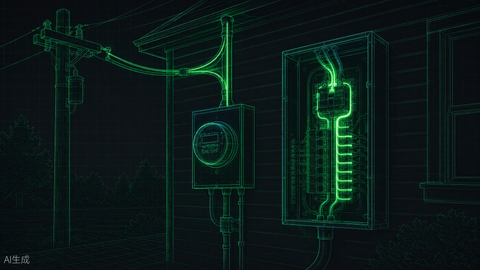
- A dedicated three-phase lockable AC disconnect must be installed between the Powerwall 3P and the main service panel -accessible without tools or keys in an emergency.
- The Powerwall 3P enclosure, mounting bracket, and all associated metallic conduit must be bonded to the building's grounding electrode system.
- NEC 706 requires specific warning labels on all ESS equipment -"ENERGY STORAGE SYSTEM" labels, rapid shutdown signage, and first-responder hazard identification.
- Grid-tied installations require a utility interconnection agreement before commissioning. Processing times vary by utility -plan 4–12 weeks in most markets.
⚠️ NFPA 855 Capacity Limits for Commercial Installations
NFPA 855 imposes maximum energy storage capacity limits per fire area (typically 20 kWh for indoor non-sprinklered spaces, up to 80 kWh for sprinklered commercial spaces). A 4-unit Powerwall 3P stack reaches 54 kWh -which may require sprinkler systems, fire-rated separation, or dedicated ESS rooms depending on your local AHJ interpretation. Verify NFPA 855 compliance with the AHJ before specifying a multi-unit installation.
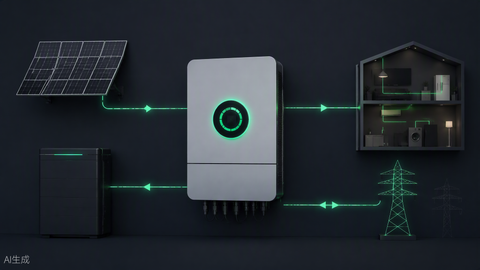
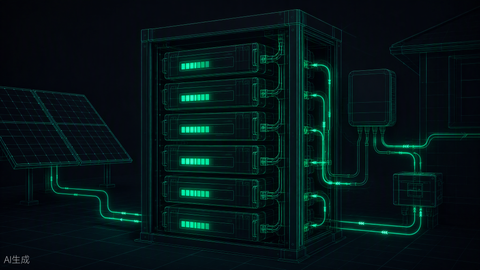
① Utility Three-Phase Service Panel
↓
② Tesla Gateway 2 -monitors grid, manages load, controls battery
↓
③ Three-Phase Solar Inverter (Tesla or compatible third-party)
↓
④ Powerwall 3P Unit(s) -up to 4 per Gateway
↓
⑤ AC Three-Phase Loads (whole-property backup distribution panel)
↓
⑥ Tesla App -commissioning, monitoring, and grid services enrollment
The Powerwall 3P -like its single-phase predecessor -is not simply a backup battery. Through the Tesla Gateway 2 and Tesla app, it participates in a range of intelligent grid services that improve both project economics and grid stability. For commercial EPCs and asset owners, these capabilities are increasingly central to project ROI models.
Time-of-Use (TOU) Optimization:
- The system automatically charges from solar or cheap off-peak grid power and discharges during expensive peak pricing periods -directly reducing utility bills.
- For commercial customers with demand charges on their utility bill, the Powerwall 3P can cap peak demand draw from the grid, providing significant monthly bill reductions.
- When severe weather is forecast, the system automatically charges to 100% in preparation for a potential grid outage -no manual intervention required.
- In eligible markets, Powerwall 3P owners can enroll in Tesla's VPP programs -earning compensation for allowing Tesla to dispatch stored energy to the grid during demand events.
- A user-defined minimum state of charge is maintained at all times specifically for outage scenarios, separate from the TOU or solar self-consumption optimization.
- The Tesla app provides live power flow visualization, energy production and consumption history, battery state of charge, and system health status accessible from any device.
The financial case for the Powerwall 3P is built on four revenue and cost-reduction streams. The relative weight of each depends on the utility rate structure, local incentive landscape, and the specific load profile of the property.
| Value Stream | How It Works | Best Market Conditions |
|---|---|---|
| Solar Self-Consumption | Store excess solar production and use it at night instead of drawing from grid | High retail electricity rates; low or no net metering credit |
| TOU Arbitrage | Charge cheap off-peak, discharge during expensive peak rate periods | Markets with high peak-to-off-peak rate spreads ($0.15/kWh delta) |
| Demand Charge Reduction | Cap peak 15-min demand intervals billed by the utility at $/kW | Commercial customers with demand charges $10/kW/month |
| VPP / Grid Services | Earn payments for dispatching stored energy during grid demand events | Markets with active VPP programs: CA, TX, UK, AU |
Federal Tax Credit: 30% ITC Applies
The Powerwall 3P qualifies for the federal Investment Tax Credit (ITC) at 30% of the installed system cost when paired with a solar installation (or when installed as a standalone storage system charged primarily from solar). The ITC significantly improves the payback period and is a central element of the commercial project financial model. Consult a tax advisor to confirm eligibility based on your specific project structure and ownership model.
The Powerwall 3P is a new product launch -and as with any Tesla Energy launch, initial demand typically outpaces supply in the first 6–12 months of availability. For EPCs and developers with near-term project schedules, procurement planning must account for these realities:
Tesla Certified Installer Requirement:
- Powerwall systems are sold through Tesla's certified installer network -not through general electrical wholesale distribution. Verify your installer certification status before quoting projects.
- Current market lead times for the Powerwall 3P are estimated at
- from order to delivery in most US markets. Europe and Australia timelines are market-dependent.
- Factor utility interconnection agreement processing (typically
- ) into project scheduling -this runs in parallel with hardware procurement but must be completed before commissioning.
- Budget
- for building permit and AHJ approval on commercial installations, longer in jurisdictions with heavy ESS review requirements.
- Pair the Powerwall 3P order with your solar panel, inverter, and electrical BOS procurement to consolidate freight and align delivery timelines to your installation schedule.
PES Supply Tip: Bundle your Powerwall 3P installation with your complete solar BOS package -panels, inverter, racking, conduit, and electrical gear -through a single procurement channel. Consolidated freight, aligned delivery timelines, and a single point of contact reduce coordination overhead and protect your installation schedule from supplier-specific delays.
Source Your Battery Storage and Solar BOS Package
Whether you're specifying a single Powerwall 3P for a commercial tenant buildout or a 4-unit stack for a light-industrial solar + storage project, PES Supply stocks Tier 1 solar panels, inverters, racking, electrical BOS, and complete project kit pricing -with bundled freight and nationwide delivery to keep your schedule on track.
Request a Project Quote Shop Solar EquipmentWhat We've Learned on Three-Phase Battery Installs
- I've walked more than one small commercial site where the owner assumed they had "three-phase, so everything's fine" — until we metered a 208V high-leg delta service and had to redesign around the wild leg before any battery hardware got ordered.
- My rule of thumb on multi-unit Powerwall stacks: the Gateway and its wiring get sized for the final unit count on day one, because retrofitting a bigger combiner after the walls are closed costs triple.
- On a winery install last year, the 3P's balanced three-phase output let the existing three-phase well pump and glycol chiller stay on backup without the phase-imbalance alarms that plagued their old single-phase workaround.
- We always confirm NFPA 855 capacity limits per fire area before quoting a four-unit stack — 54 kWh in one location can trigger spacing or suppression requirements that change the room layout.
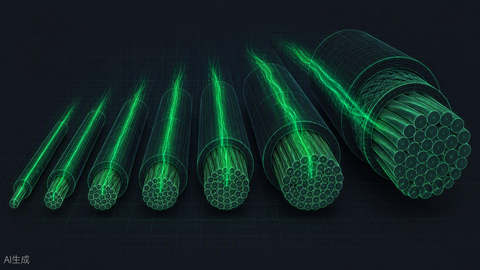
Each Powerwall 3P delivers 11.5 kW continuous. On a 208V three-phase service, that's 11,500 ÷ (208 × √3) = 31.9A per phase. NEC 690.8/705 continuous sizing at 125% gives 39.9A — a 40A three-pole breaker (an NEC 240.6(A) standard rating) with 8 AWG copper at 75°C per Table 310.16. Stacked configurations scale linearly:
| Units | Continuous Output | Current @208V 3φ | ×1.25 (NEC 690.8) | Breaker (240.6(A)) | Copper @75°C (310.16) |
|---|---|---|---|---|---|
| 1 × 3P | 11.5 kW | 31.9A | 39.9A | 40A 3-pole | 8 AWG |
| 2 × 3P | 23.0 kW | 63.9A | 79.8A | 80A 3-pole | 4 AWG |
| 3 × 3P | 34.5 kW | 95.8A | 119.8A | 125A 3-pole | 2 AWG |
| 4 × 3P | 46.0 kW | 127.7A | 159.6A | 175A 3-pole | 2/0 AWG |
Most multi-unit installs break out each unit on its own 40–50A breaker into the Gateway rather than one large feeder — simpler protection coordination and easier service isolation. Confirm the final design with your AHJ and Tesla's current installation manual.
What is the difference between the Powerwall 3 and Powerwall 3P?
The Powerwall 3 outputs single-phase AC power (120/240V split-phase in the US) -the correct specification for standard US residential service. The Powerwall 3P outputs balanced three-phase AC power (208V in the US; 400V in Europe and Australia). Both have the same 13.5 kWh usable capacity and 11.5 kW continuous output, but the 3P delivers that output balanced across three phases -eliminating the need for phase-coupling hardware on commercial and international properties.
Can I install multiple Powerwall 3P units together?
Yes. Up to 4 Powerwall 3P units can be connected to a single Tesla Gateway 2, providing a maximum of 54 kWh usable capacity and 46 kW continuous output. For larger commercial installations exceeding these limits, multiple Gateways or an alternative commercial ESS platform (such as Tesla Megapack or Powerpack) may be required. Always verify NFPA 855 capacity limits for your installation fire area before specifying a multi-unit stack.
Does the Powerwall 3P qualify for the federal ITC?
Yes -the Powerwall 3P qualifies for the federal 30% Investment Tax Credit when installed in conjunction with a solar system, or as a standalone system charged primarily from solar. The ITC applies to the full installed cost of the storage system including installation labor. Consult a tax professional to confirm eligibility under your specific project ownership structure (commercial vs. residential, direct ownership vs. leased).
What inverters are compatible with the Powerwall 3P?
The Powerwall 3P integrates natively with the Tesla Solar Inverter (three-phase version). It also supports compatible third-party three-phase string inverters from brands including SolarEdge, Fronius, SMA, and others that support the Tesla Gateway's AC-coupled integration protocol. Confirm compatibility with specific inverter models and firmware versions in Tesla's current certified compatibility list before specification -this list is updated periodically as new firmware versions are validated.
What permits are required for a commercial Powerwall 3P installation?
Commercial Powerwall 3P installations typically require: a building permit (electrical and structural review); an NEC Article 706 compliant ESS plan set; NFPA 855 compliance documentation for fire area capacity; a utility interconnection application and signed agreement; and Tesla installer certification documentation. Budget 3–6 weeks for building permit approval and 4–12 weeks for utility interconnection processing in most US markets. Requirements vary significantly by jurisdiction -always engage the local AHJ early in the design phase.
What is the warranty on the Powerwall 3P?
The Powerwall 3P carries a 10-year product warranty with a guaranteed minimum of 70% capacity retention at the end of the warranty period. The warranty covers defects in materials and workmanship and includes capacity degradation protection -if the battery falls below 70% of rated capacity within 10 years under normal use conditions, Tesla will repair or replace the unit. Warranty transferability to new property owners is supported and is an important value consideration for commercial asset owners considering eventual property sale.
Related Guides
Circuit Breaker Sizing Guide
- -Size breakers for ESS interconnection and three-phase panels
- -DC and AC wiring for solar + storage systems
- -Seasonal production modeling for storage dispatch optimization
- -Three-phase panel sizing for storage integration
- -Solar panels, inverters, and complete solar + storage project kits
About PES Supply
PES Supply is a nationwide distributor of Tier 1 solar panels, battery storage systems, grid-tied and off-grid inverters, EV charging hardware, racking, circuit breakers, generators, and complete electrical project kits. With a Louisville, Kentucky supply-house fulfillment network, a 50,000+ SKU catalog, and 169 authorized brands with full OEM warranties, PES Supply serves contractors, EPCs, developers, and facility owners with fast delivery, expert procurement support, and warranty-aligned supply chain coordination.
Location: 1507 Portland Ave, Louisville, KY, United States | Phone: 1 888-876-0007 | Website: www.portlandiaelectric.supply
Article: Tesla Launches Three-Phase Powerwall 3P -Specifications, Installation Guide, and Procurement Advice for EPCs and Installers
Category: Battery Storage | Tesla Energy | Commercial Solar | ESS Installation | Grid Services
Last Updated: April 2026 • Based on Tesla Energy Product Specifications and NEC 2026 Grid-Interconnection Standards
Disclaimer: Product specifications, pricing, availability, and incentive eligibility described in this article are based on information available at time of publication and are subject to change. Always verify current specifications, lead times, and tax credit eligibility with Tesla Energy, your local utility, and a qualified tax advisor before finalizing project specifications or financial models.
Related Resources:
- Best Solar Panels 2026 — Buyer's Guide
- EG4 vs Tesla Powerwall
- Qcells vs Trina vs JA
- Solar Inverter Buyer's Guide
- Solar Battery Buyer's Guide
- 5kW Solar Kit
- 10kW Solar + Battery Kit
- Off-Grid Cabin Kit
- EG4 Batteries
- Qcells Solar Panels
- Trina Solar
- JA Solar
- REC Solar
- Mission Solar
- Sol-Ark Inverters
- SolarEdge Inverters
- Generac PWRcell
- Powerwall 2 vs Powerwall 3: Full 2026 Comparison
Calculate how much storage you need with our battery sizing calculator.
Check solar incentives available in your state.
Use our free solar system calculator to size your array.
Check out our Solar Panel Comparison Tool. Check out our Inverter Sizing Calculator.
Calculate your solar payback and 25-year savings with our Solar ROI Calculator. Follow our complete DIY solar installation guide for step-by-step instructions. Keep your system running at peak performance with our Solar Maintenance Guide.
Related Resources
- Solar System Calculator
- Battery Sizing Calculator
- Solar Panel Comparison Tool
- Inverter Sizing Calculator
- Solar ROI Calculator
- Solar Installation Guide
- Solar Maintenance Guide
- Solar Permitting Guide
- Battery Installation Guide
- NEC Code Compliance Guide
- Solar Panel Mounting Guide
- Grounding & Bonding Guide
- Solar Incentives by State
- PES PowerLink — Contractor Program
PES Supply carries a catalog of 50,000+ SKUs from 169 authorized brands. One PO, one invoice, every trade covered.
Need help sizing? Our team can calculate loads, select equipment, and source everything from one PO.
Call (502) 790-0600