Last Updated: May 2026 • Based on New York State FY2027 Executive Budget, NYSERDA Program Data, and CLCPA Progress Reports
New York State's Fiscal Year 2027 budget makes an unmistakable statement about the state's energy priorities: solar is no longer a supplemental policy it is the cornerstone of New York's path to a clean economy. The budget allocates billions in new and expanded solar incentives, accelerates permitting reform for utility-scale projects, expands community solar access to underserved households, and sets aggressive interconnection modernization funding all in direct service of the state's legally binding Climate Leadership and Community Protection Act (CLCPA) targets.
For solar installers, EPCs, developers, and procurement managers operating in the New York market, this budget represents one of the most significant policy tailwinds in the state's history. This article breaks down every major solar provision, what it means in practice, and how to position your business to capture the opportunity.
⚡ Quick Answer
New York's FY2027 budget prioritizes solar through five core actions:
(1) expanded NY-Sun incentive program funding,
(2) accelerated permitting for solar projects under 25 MW,
(3) community solar expansion targeting 1M+ low-income households,
(4) grid interconnection modernization investment, and
(5) new workforce development funding for solar and storage installation trades. The budget directly supports New York's CLCPA target of 70% renewable electricity by 2030 and 100% zero-emission electricity by 2040.
Key Takeaways for Solar Professionals
- The FY2027 budget provides substantial new funding for NYSERDA's NY-Sun Incentive Program increasing incentive rates for residential, commercial, and community solar installations statewide.
- Projects under 25 MW will benefit from streamlined Article 10 / Article 23 permitting targeting approval timelines under 12 months for most projects.
- New income-qualified subscriber mandates and bill credit enhancements expand community solar to over 1 million underserved New York households. >
- $500M+ in transmission and distribution investment to address the interconnection queue backlog that has been the single largest constraint on New York solar deployment.
- Battery storage paired with solar receives enhanced incentives under the FY2027 budget accelerating the solar + storage bundled project pipeline.
- $150M+ in solar and clean energy workforce development creating a larger pool of certified installers to absorb the project pipeline.
- The budget includes new reporting requirements and enforcement mechanisms for utilities failing to meet renewable procurement milestones.
In This Article
The Climate Leadership and Community Protection Act (CLCPA), signed into law in 2019, is the most ambitious climate legislation in New York State history. It legally requires New York to achieve 70% renewable electricity by 2030, 100% zero-emission electricity by 2040, and an 85% economy-wide reduction in greenhouse gas emissions by 2050. These are not aspirational goals they are binding statutory mandates with annual progress benchmarks.
As of 2026, New York is behind pace. The state has deployed approximately 7 GW of solar capacity substantial progress, but still far short of the 10 GW by 2030 solar target embedded in the CLCPA implementation framework. The interconnection queue backlog, permitting delays on utility-scale projects, and persistent financing barriers for low-income community solar subscribers have collectively slowed the deployment pace the CLCPA requires.
| CLCPA Milestone | Target | Status (2026) | Gap |
|---|---|---|---|
| Solar Installed Capacity | 10 GW by 2030 | ~7 GW deployed | 3 GW needed in 4 years |
| Offshore Wind | 9 GW by 2035 | ~2.4 GW operational | 6.6 GW pipeline in development |
| Renewable Electricity Share | 70% by 2030 | ~38% renewable (2025) | 32 percentage points in 4 years |
| Battery Storage | 6 GW by 2030 | ~1.5 GW deployed | 4.5 GW needed |
| Community Distributed Generation | 3 GW by 2023 (CDG target) | ~2.1 GW deployed | Missed original target; FY2027 budget re-accelerates |
The FY2027 budget is Governor Hochul's direct legislative response to this deployment gap. Every major solar provision in the budget is engineered to remove a specific identified barrier: funding gaps, permitting delays, interconnection backlogs, workforce shortages, or equity access failures.
The NY-Sun Incentive Program, administered by NYSERDA, is New York's primary financial mechanism for incentivizing solar deployment across residential, commercial, and community solar segments. Since its launch in 2014, NY-Sun has helped install over 4 GW of solar capacity statewide. The FY2027 budget provides a substantial funding boost extending and increasing incentive rates across all market segments for FY2027 through FY2029.
FY2027 NY-Sun Program Key Changes
Residential Incentive Rate Increase:- Per-watt incentives for residential systems ≤25 kW increased in Con Edison and PSEG LI territories the highest-cost installation markets in the state.
- New incremental incentive for residential and small commercial systems that pair solar with battery storage at installation not as a retrofit addition.
- Increased incentives for commercial and industrial systems in upstate New York utility territories to address the historically lower installation rate in those markets.
- Systems installed for households at or below 80% Area Median Income (AMI) receive a premium incentive adder increasing the economic case for serving LMI customers.
- New incentive structure for solar on multifamily residential buildings (5+ units), previously underserved by NY-Sun's single-family-focused incentive design.
For Residential Installers: The income-qualified adder and multifamily building incentive structure open two historically difficult market segments LMI households and apartment buildings that previously could not generate sufficient project economics for standard residential installers. With FY2027 incentive rates, these projects now pencil. Build those customer relationships now before competitors recognize the opportunity.
Permitting delays have been one of the most persistent and costly barriers to solar deployment in New York. Utility-scale solar projects have historically faced 3–7 year approval timelines under the state's Article 10 and Article 23 siting processes timelines that make New York one of the most difficult states in the nation for large solar project development.
The FY2027 budget includes sweeping permitting reform provisions targeting a dramatic compression of approval timelines:
| Project Category | Previous Typical Timeline | FY2027 Target Timeline | Key Reform Mechanism |
|---|---|---|---|
| Residential ≤25 kW | 30–90 days (local) | ≤30 days | Deemed-approval if municipality does not act within 30 days |
| Commercial 25 kW – 5 MW | 6–24 months | ≤6 months | Streamlined state review; pre-approved site type designations |
| Utility-Scale 5 MW – 25 MW | 3–5 years (Article 10/23) | ≤12 months | Office of Renewable Energy Siting (ORES) expanded authority; mandatory decision deadlines |
| Large Utility-Scale >25 MW | 5–7 years | ≤24 months | Consolidated federal/state review; ORES staffing expansion |
⚠️ Local Preemption Provisions: Know Your Municipal Rights
The FY2027 budget's deemed-approval provision for residential solar where a municipality's failure to act within 30 days constitutes automatic approval has generated pushback from some local governments who view it as state preemption of local land use authority. Installers should be prepared for municipalities to challenge these provisions and may encounter local resistance during the phase-in period. Always verify current local requirements with your NYSERDA program contact before relying on deemed-approval timelines in project scheduling.
Community Distributed Generation (CDG) commonly called community solar allows households and businesses that cannot host rooftop solar (renters, apartment dwellers, households with shaded roofs) to subscribe to shares of a nearby solar farm and receive bill credits for their portion of the electricity generated. New York has been a national leader in community solar deployment, but the FY2027 budget aims to dramatically expand access to the households most likely to benefit from it: low-to-moderate income subscribers.
FY2027 Community Solar Expansion Provisions
- New community solar projects receiving state incentives must allocate a minimum of
- to income-qualified subscribers (households at or below 80% AMI) up from 20% under the previous CDG rules.
- LMI subscribers receive a premium credit rate at least
- for their community solar subscription credits ensuring a meaningful bill reduction rather than a marginal one.
- NYSERDA funding for community organizations, utilities, and nonprofits to actively enroll eligible LMI households addressing the enrollment gap that has left hundreds of thousands of eligible New Yorkers without subscriptions despite available capacity.
- Community solar projects ≥5 MW must designate at least 1 MW as a dedicated LMI-only allocation with enhanced credit terms and enrollment support funding.
- LMI subscribers enrolled through the navigator program receive rate-stabilized subscription terms for up to 10 years protecting low-income households from subscription repricing as community solar market rates evolve.
The target is enrolling more than 1 million New York households in community solar by 2030 approximately doubling the current subscriber base and ensuring the benefits of the renewable energy transition reach every income level in the state, not just homeowners with the capital for rooftop installations.
The single largest structural barrier to solar deployment in New York is not permitting, incentives, or installer capacity it is grid interconnection. New York's transmission and distribution infrastructure was not designed for distributed generation at the scale CLCPA demands. As of early 2026, NYISO's interconnection queue contained over 120 GW of requested solar and storage projects a backlog so large that projects submitted today face study timelines of 5–7 years before receiving a final interconnection agreement.
The FY2027 budget addresses this with a $500M+ transmission and distribution modernization investment directed through NYSERDA, NYISO, and the state's six major utilities. The funding targets three specific bottlenecks:
① Interconnection Queue Reform NYISO process redesign to cluster studies; reduce per-project study time
↓ Target: Reduce average interconnection timeline from 5 years to 2 years by 2028
↓
② Distribution System Upgrades targeted T&D upgrades in high-solar-density zones to remove hosting capacity constraints
↓ Con Edison, National Grid, and NYSEG zones prioritized
↓
③ Advanced Inverter Deployment grid-smart inverter standards for all new solar installations to improve voltage and frequency support
↓
④ Transmission Build-Out new upstate-to-downstate transmission capacity to move large-scale solar from the Southern Tier and Capital Region to NYC load center
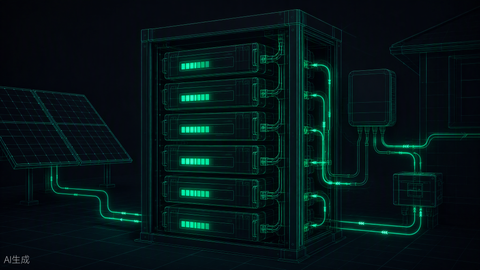
The FY2027 budget recognizes that solar without storage is an incomplete solution for a state targeting 100% zero-emission electricity. A solar array that cannot store excess midday generation cannot provide the evening and overnight power that displaces fossil fuel peakers. The budget therefore introduces a paired-system incentive structure that meaningfully improves the economics of installing battery storage alongside solar rather than as a future retrofit.
| System Type | FY2027 Incentive Enhancement | Program Administrator |
|---|---|---|
| Residential Solar + Storage | NY-Sun adder of $0.25–$0.40/Wh for co-installed battery storage; income-qualified households receive higher adder rate | NYSERDA NY-Sun |
| Commercial Solar + Storage | Demand Flexibility Incentive for commercial storage paired with solar credits based on demonstrated peak demand reduction | NYSERDA / Utility programs |
| Community Solar + Storage | Incentive premium for CDG projects that co-locate storage priority queue position in interconnection studies for paired projects | NYSERDA CDG Program |
| Utility-Scale Storage (standalone) | NYSERDA Bulk Storage Program expansion increased MW targets for competitive solicitations in FY2027–FY2029 | NYSERDA |
A perennial tension in New York's solar ambitions has been the mismatch between the project pipeline and the workforce available to install it. The FY2027 budget invests more than $150M in clean energy workforce development training, credentialing, and apprenticeship programs specifically designed to grow the pool of solar and storage installers, particularly in underserved communities that have historically been excluded from clean energy jobs.
FY2027 Workforce Development Investments
Clean Energy Apprenticeship Expansion:- Funding for IBEW and NABCEP-affiliated apprenticeship programs to train 5,000+ new solar and storage installation technicians by 2028.
- Capital investment in six SUNY campuses to establish or expand solar, storage, and EV installation training facilities with hands-on lab space. >
- Projects in Disadvantaged Communities (as defined by the CLCPA) must demonstrate local hire plans with a minimum of 40% of project labor hours from Disadvantaged Community residents.
- Dedicated funding for women-owned and minority-owned solar contracting businesses including bid support, bonding assistance, and mentorship matching with established solar EPCs.
- All solar projects receiving state incentives above a minimum threshold must pay prevailing wages ensuring the clean energy boom creates middle-class jobs, not poverty-wage employment.
New York is the fourth-largest solar market in the United States by installed capacity, trailing only California, Texas, and Florida. The state's solar industry employs approximately 12,000 workers and generated roughly $2.5B in annual economic activity in 2025. Despite this scale, New York remains well below its CLCPA solar potential with roughly 70% of the state's rooftop solar technical potential still untapped.
| Market Segment | Installed Capacity (2025) | 2030 Target | FY2027 Budget Impact |
|---|---|---|---|
| Residential Solar | ~2.8 GW | ~4.5 GW | NY-Sun rate increase; LMI adder; multifamily program |
| Commercial & Industrial | ~1.6 GW | ~2.5 GW | Streamlined permitting; storage pairing incentive |
| Community Solar (CDG) | ~2.1 GW | ~3.0 GW | LMI mandate; bill credit enhancement; navigator program |
| Utility-Scale Ground Mount | ~0.5 GW | ~2.0+ GW | ORES reform; 24-month permitting target; grid investment |
| Budget Provision | Funding / Policy Change | Administering Agency | Effective Date |
|---|---|---|---|
| NY-Sun Expansion | Increased per-watt incentive rates; new LMI adder; multifamily program | NYSERDA | April 1, 2026 |
| Residential Permitting Reform | 30-day deemed approval for ≤25 kW residential systems | DOS / Local municipalities | July 1, 2026 |
| ORES Utility-Scale Reform | Mandatory 12-month decision deadline for 5–25 MW projects | ORES / DPS | October 1, 2026 |
| Community Solar LMI Mandate | 50% LMI subscriber allocation requirement for incentivized CDG projects | NYSERDA | January 1, 2027 |
| Grid Modernization Investment | $500M+ T&D upgrades; NYISO queue reform; advanced inverter standards | NYISO / DPS / Utilities | Phased 2026–2029 |
| Storage Paired Incentive | $0.25–$0.40/Wh adder for co-installed residential battery storage | NYSERDA | April 1, 2026 |
| Workforce Development | $150M+ for apprenticeships, SUNY training centers, MWBE support | NYSERDA / SUNY / DOL | FY2027 budget year |
| CLCPA Utility Enforcement | New financial penalties for utilities missing renewable procurement milestones | DPS / PSC | January 1, 2027 |
New York's FY2027 budget creates the most favorable state-level policy environment for solar deployment the industry has seen in decades. The combination of enhanced incentives, faster permitting, grid investment, and storage pairing creates a multi-year project pipeline opportunity that will reward contractors, developers, and distributors who are positioned before the wave fully materializes.
| Stakeholder | Immediate Opportunity | Action to Take Now |
|---|---|---|
| Residential Installers | LMI adder makes income-qualified installations economically viable; 30-day permitting reduces sales cycle length | Develop LMI customer outreach; register as NYSERDA-approved contractor; train staff on storage pairing |
| Community Solar Developers | 50% LMI mandate creates certainty on subscriber mix; storage pairing incentive improves CDG project economics | Partner with LMI navigator organizations now; develop storage co-location design capability |
| Utility-Scale Developers | 12-month ORES permitting target dramatically de-risks project development timelines and financing | Submit projects to ORES immediately; advance interconnection studies in parallel with permitting |
| Commercial EPCs | Storage pairing incentive + demand flexibility credits improve commercial project payback periods significantly | Develop Megapack / commercial storage proposal capability; build demand flexibility modeling into proposals |
| Solar Distributors | Increased NY installation volume drives panel, inverter, racking, and storage component demand | Increase NY warehouse inventory; build storage SKU depth; add NYSERDA program-compliant product lines |
PES Supply: We stock Tier 1 solar panels, battery storage systems, inverters, racking, and all balance-of-system components with nationwide delivery from a Louisville, Kentucky supply-house fulfillment network. As New York's project pipeline accelerates through FY2027–FY2030, we can ensure your supply chain keeps pace with bulk pricing, fast shipping, and in-house design support to help you win and execute more New York projects.
I've shipped product into New York through three budget cycles now, and I've learned to read appropriation bills the way I read weather forecasts: the headline number matters less than the timing. When NY-Sun block allocations get refreshed, our order book from Long Island installers moves within thirty days. When permitting reform passes, it takes six months to show up — but then it holds.
A contractor in Albany told me something last spring that stuck: his limiting factor wasn't customers or capital, it was the four months he used to lose waiting on a municipal permit for a two-week install. If the deemed-approval provisions in this budget survive contact with reality, that's the single biggest cost cut in the whole document.
We also watch the storage pairing rules closely. Every time paired-system incentives get richer, our battery attach rate on New York orders climbs. This budget pushes that direction again, and our warehouse racking plan reflects it.
What is NY-Sun and how does the FY2027 budget change it?
NY-Sun is NYSERDA's statewide solar incentive program, providing per-watt cash incentives to residential, commercial, and community solar installations. The FY2027 budget increases incentive rates particularly in high-cost territories like Con Edison and PSEG LI adds a new income-qualified household adder, introduces a multifamily building incentive structure, and creates a battery storage pairing adder for systems that co-install solar and storage simultaneously. These changes improve project economics across all market segments and open previously marginal markets including LMI households and multifamily buildings.
How does the 30-day deemed-approval rule work for residential solar?
Under the FY2027 permitting reform provision, New York municipalities have 30 days to act on a residential solar permit application for systems ≤25 kW. If the municipality does not approve, deny, or request additional information within 30 days, the permit is deemed approved by operation of law allowing installation to proceed. This eliminates the indefinite delay that has historically plagued residential solar in municipalities with slow or under-resourced building departments. Note that this provision applies to state law and may face legal challenges from municipalities asserting local land use authority during the implementation period.
What are the community solar LMI subscriber requirements under FY2027?
Community solar projects receiving state incentives in FY2027 and beyond must allocate a minimum of 50% of project capacity to income-qualified subscribers households at or below 80% Area Median Income. These subscribers receive an enhanced bill credit rate at least 10% above market value, and are enrolled through a NYSERDA-funded navigator program. Projects ≥5 MW must dedicate at least 1 MW specifically to LMI-only allocations with enhanced terms. LMI subscribers enrolled through the program receive 10-year rate-stabilized subscription terms.
Is New York on track to meet its CLCPA solar targets?
As of 2026, New York is behind pace. The state has deployed approximately 7 GW of solar against a 10 GW target for 2030 a 3 GW gap with only four years remaining. The FY2027 budget is specifically designed to close this gap by removing the three primary deployment barriers: permitting delays (ORES reform), interconnection backlogs (grid investment), and financing gaps (NY-Sun expansion). Whether the budget provisions are sufficient depends heavily on how quickly the interconnection queue reform takes effect, as this remains the most binding constraint on deployment pace in 2026–2027.
How does the FY2027 storage pairing incentive work?

The FY2027 budget adds a new per-watt-hour incentive through NY-Sun for battery storage systems co-installed with solar at the same time not as a retrofit. Residential systems receive $0.25–$0.40 per Wh of storage capacity, with higher rates for income-qualified households. This incentive stacks with the existing Con Edison and utility demand flexibility programs and can be combined with the federal ITC for battery storage, making the total incentive package for a solar + Powerwall system in New York among the most attractive in the nation as of FY2027.
Ready to Capture New York's Solar Opportunity?
New York's FY2027 budget creates one of the most favorable solar policy environments in the state's history. Whether you're scaling a residential installation business, developing community solar projects, or building utility-scale infrastructure PES Supply has the Tier 1 solar panels, battery storage, inverters, racking, and in-house design support to keep your New York project pipeline moving. Nationwide delivery from a Louisville, Kentucky supply-house fulfillment network. a 50,000+ SKU catalog. Expert procurement support.
Shop Solar PanelsRequest a Project QuoteRelated Guides
- Seasonal production benchmarks for NY project modeling
- DC conductor sizing for residential and commercial NY installs
- Complete system setup from design through NYSERDA incentive application
- NEC-compliant breaker sizing for solar backfeed and storage systems
- NY-project-ready solar panels, storage, and complete system kits
About PES Supply
PES Supply is a nationwide distributor of Tier 1 solar panels, inverters, battery storage systems, EV charging hardware, racking, circuit breakers, generators, and complete electrical project kits. With a catalog of 50,000+ SKUs spanning 169 authorized brands, full OEM warranties, and nationwide LTL freight delivery from our Louisville, Kentucky supply house, PES Supply serves contractors, EPCs, developers, and homeowners across New York and the nation with fast delivery, expert procurement guidance, and warranty-aligned supply chain coordination.
Location: 1507 Portland Ave, Louisville, KY, United States | Phone: 1 888-876-0007 | Website: www.portlandiaelectric.supply
Article: New York Prioritizes Solar in 2027 State Budget Complete Guide to NY-Sun Expansion, Permitting Reform, and Installer Opportunities
Category: Solar Policy | New York State | CLCPA | NY-Sun | Community Solar | Solar Incentives
Last Updated: May 2026 • Based on New York State FY2027 Executive Budget, NYSERDA Program Data, and CLCPA Progress Reports
Disclaimer: Budget provisions, incentive rates, and program timelines referenced in this article are based on the FY2027 Executive Budget proposal and publicly available NYSERDA program documents. Final enacted provisions may differ from the Executive Budget. Always verify current program terms directly with NYSERDA or your NYSERDA-approved trade ally before making project commitments.
Related Resources:
- Best Solar Panels 2026 — Buyer's Guide
- EG4 vs Tesla Powerwall
- Qcells vs Trina vs JA
- Solar Inverter Buyer's Guide
- Solar Battery Buyer's Guide
- 5kW Solar Kit
- 10kW Solar + Battery Kit
- Off-Grid Cabin Kit
- EG4 Batteries
- Qcells Solar Panels
- Trina Solar
- JA Solar
- REC Solar
- Mission Solar
- Sol-Ark Inverters
- SolarEdge Inverters
- Generac PWRcell
Calculate how much storage you need with our battery sizing calculator.
Check solar incentives available in your state.
Use our free solar system calculator to size your array.
Check out our Solar Panel Comparison Tool. Check out our Inverter Sizing Calculator.
Calculate your solar payback and 25-year savings with our Solar ROI Calculator. Follow our complete DIY solar installation guide for step-by-step instructions. Keep your system running at peak performance with our Solar Maintenance Guide.
Related Resources
- Solar System Calculator
- Battery Sizing Calculator
- Solar Panel Comparison Tool
- Inverter Sizing Calculator
- Solar ROI Calculator
- Solar Installation Guide
- Solar Maintenance Guide
- Solar Permitting Guide
- Battery Installation Guide
- NEC Code Compliance Guide
- Solar Panel Mounting Guide
- Grounding & Bonding Guide
- Solar Incentives by State
- Pro Account — Wholesale Pricing
- PowerLink Network — Contractor Program