NEC 2026 Code Changes: Top 10 Updates Affecting Solar Installers
Published July 28, 2026 · PES Supply Technical Brief · ~19 min read
The 2026 edition of NFPA 70 is published, and early adopters are already enforcing it — Colorado's electrical board approved it May 27, 2026 with Denver submittals required to comply as of August 1, and Massachusetts adopted it with state amendments. If your AHJ hasn't moved yet, it will. The installers who read the changes now will spend 2027 doing change orders; the ones who don't will spend it doing rework.
None of the 2026 changes are revolutionary. They're evolutionary — the code catching up with bifacial modules, integrated storage, and module-level electronics that the 2020 cycle never anticipated. But evolutionary changes still fail inspections. Here are the ten that matter for solar work, what each one changes in the field, and the design habits to update before your jurisdiction adopts. Where a change has teeth on a plan set or on a rooftop, we've said so plainly; where it's paperwork-only, we've said that too.
PES Supply carries 50,000+ SKUs from 169 authorized brands — modules, inverters, storage, and the BOS hardware that code compliance actually hangs on. Delivery runs 7–10 business days.
Adoption reality check
The NEC is not law when NFPA publishes it. It becomes law when your state, county, or city adopts it — and adoption lags run from months to years. As of mid-2026 most of the country still enforces the 2020 or 2023 edition. Design to the edition your AHJ enforces today; keep the 2026 deltas in your back pocket for the jobs that cross the adoption line mid-stream.
1. Fractions of an Ampere Now Count (690.4(G))


![) Enphase IQBATTERY-5P-1P-NA [240V]](https://cdn.shopify.com/s/files/1/0613/5188/6982/files/ZZ010600323_O1_600x600_bd13fb5a-1fd9-4103-b22c-d600878780d1_400x.jpg?v=1783632118)
Previous editions let you round current values, and plenty of designers rounded down. NEC 2026's new 690.4(G) requires fractions of an ampere to be carried through PV circuit calculations consistently. It's a small change with real teeth: a string calc landing at 39.6A no longer becomes "39, close enough" — and if your conductor table entry tops out at 40A after adjustments, that 0.6A you used to shave off is now the difference between pass and fail.
Update your calculation spreadsheets to carry one decimal place through Isc sums, the 125% continuous factor, and ampacity comparisons. The designs most exposed are ones that were deliberately tuned to sit just under a standard conductor or breaker size.
| Worked Example | Old Habit (2023) | NEC 2026 (690.4(G)) |
|---|---|---|
| Three parallel strings, Isc 11.32A each | 33.96A → "34A" | 33.96A carried as-is |
| Maximum circuit current (×1.25) | 42.5A | 42.45A |
| Conductor ampacity basis (×1.25 again) | 53.1A | 53.06A |
| Boundary case | Rounded values can hide a 0.5A miss | Exact comparison against adjusted ampacity |
Does a fraction of an amp fail an inspection? Usually not by itself. But it changes how the reviewer reads the rest of your calc block — a plan set that carries decimals signals a designer who sweats details, and reviewers extend benefit of the doubt to those packages. The inverse is also true, and you know which pile you want to be in.
Older codes forced systems above 100 kW into a different calculation methodology — engineered, stamped designs instead of the standard Isc-based math. The 2026 edition removes the threshold. The same engineer-calculated methods now apply regardless of system size, which simplifies commercial rooftop design in the 100–500 kW band that used to straddle an awkward regulatory cliff.
For C&I shops this is genuinely good news: one calculation method, one template, no discontinuity at 100 kW. For residential installers it changes nothing — but the commercial teams quoting carports and warehouse roofs just got a cleaner path. If your pipeline includes a job hovering near the old threshold, the 2026 method also tends to produce slightly more favorable (and more accurate) conductor sizes, because an engineered calc can account for actual module behavior instead of worst-case stacking of generic factors.
Code transitions reward shops that stock the right hardware before the first 2026-edition inspection. Our short list: listed module-level or system-level rapid-shutdown equipment with UL 3741 documentation, PV SPDs marked for DC array circuits, 1,000V-rated disconnects for commercial strings, and inverters with current UL 1741 SB certification — the Sol-Ark 12K, EG4 12000XP, and SolarEdge Energy Hub lines all ship with the listing packages reviewers ask for. Pair them with listed 10 AWG PV wire and the paperwork side of plan check gets quiet fast.
Bifacial is the default on ground-mounts and an increasing share of flat roofs, and the code finally has a clean answer for how to size conductors around rear-side gain. NEC 2026 lets designers use manufacturer-provided instructions for determining bifacial module current instead of generic derating factors that under- or over-state the real number.
| Bifaciality Factor | Rear-Side Contribution | Typical Application | Design Impact on Isc Basis |
|---|---|---|---|
| 70% | Minimal gain (0–5%) | Low-albedo rooftop over dark membrane | Monofacial Isc usually still governs |
| 80% | 5–15% additional yield | Standard ground-mount, ~3 ft clearance | Use manufacturer bifacial Isc if provided |
| 85–90% | 15–25% additional yield | High-albedo surface, elevated racking, trackers | Bifacial Isc basis required; conductor size may step up |
The practical move: when you spec a bifacial module, pull the manufacturer's bifacial short-circuit current from the datasheet and use it in the 690.8 calc. If the datasheet doesn't publish it, document why the monofacial value is the basis. Browse bifacial-ready modules in our bifacial panel category — the datasheets we ship include the numbers plan reviewers ask for.
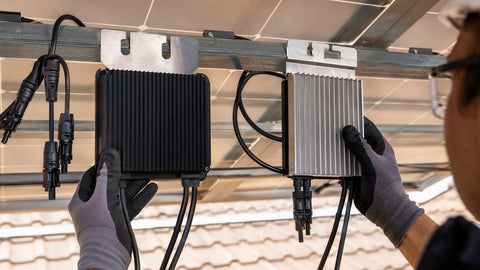
The performance targets didn't move. Conductors more than 1 foot outside the array boundary still drop to 30V or less within 30 seconds; inside the boundary it's 80V within 30 seconds, or a listed PV hazard control system per UL 3741. What changed is the initiation-device language, reorganized under 690.12(C) with an explicit allowance for listed E-stop style emergency switches.
That E-stop allowance matters on commercial jobs. A dedicated, plainly-marked emergency switch at the fire command point is a more practical initiation device than the service disconnect on a building with multiple tenants. Residential compliance paths stay the same: microinverters or optimizers that shut down inherently, module-level RSD devices, or array-boundary exceptions on qualifying layouts. Our deep dive on initiation and boundaries lives in the solar permitting and inspection guide.
Not retroactive — but modifications trigger it
NEC 2026 doesn't reach back to existing systems. But expanding or materially modifying an older array usually pulls the new work under the current adopted edition. A 2019 system getting a string extension in a 2026-adoption jurisdiction may need 2026-compliant rapid shutdown on the new work. Ask the AHJ before you assume.
Every PV system tied to a building still needs a readily accessible disconnecting means, and the 2026 text aligns the disconnect language with the reorganized rapid-shutdown structure. Grid-tie systems keep two disconnect points: DC between array and inverter, AC between inverter and service. The field requirements that fail inspections haven't changed — they've just gotten easier to cite:
- Voltage and current rating: Most residential string systems use 600V, 30–60A disconnects; commercial arrays may need 1,000V-rated switches. Rating must exceed actual operating values with margin.
- Enclosure: NEMA 3R minimum outdoors; NEMA 1 acceptable indoors.
- Lockability: Lockable in the open position per 110.25 — first responders must be able to isolate the array.
- Marking: "PV SYSTEM DISCONNECT" with rated maximum voltage, current, and short-circuit current per 690.13(C).
The 2026 edition expands arc-fault protection scope in dwelling units and tightens AFCI/GFCI coordination. Solar installers feel this at the point of interconnection: PV backfeed breakers sharing a panel with newly protected circuits need coordination to avoid nuisance tripping. Separately, PV-specific DC arc-fault protection under 690.11 remains required for DC circuits at 80V or more on or penetrating buildings — most modern string inverters have it listed and built in. If you're specifying a unit without integrated AFCI, the plan reviewer will ask where the external protection lives.
The coordination question is worth a bench test before rollout. Newer combination AFCI breakers from different manufacturers behave differently on panels with active backfeed, and a nuisance trip pattern discovered after a subdivision rollout is a warranty-claim generator. Pick one panel-and-breaker combination per edition cycle, test it against your standard inverter fleet, and standardize. Field crews should never be mixing breaker families to use up truck stock on a solar interconnection.
NEC 2023 dropped a conductor-length limit on supply-side interconnections; the 2026 edition puts it back under 705.11(C)(1). The limit restricts how long the conductors can run between the interconnection point and the overcurrent protection device. On systems where the inverter sits far from the service — detached structures, ground-mounts trenched to the house — this reinstated rule forces shorter, better-protected runs or a relocated connection point. Measure at the site survey. We've watched a 90-foot tap run force a redesign that a five-minute measurement would have prevented.
The engineering logic is fault protection: a long tap conductor between the utility connection and its OCPD is an unprotected extension cord with service-level fault current behind it. If a backhoe or a framing nail hits it, nothing upstream trips fast enough to matter. Where the run can't be shortened, the compliant answers are a fused disconnect at the tap point or relocating the interconnection to the load side with a 120%-rule-compliant panel — which loops you right back to section 10 of this article. The code is a system; these sections talk to each other.
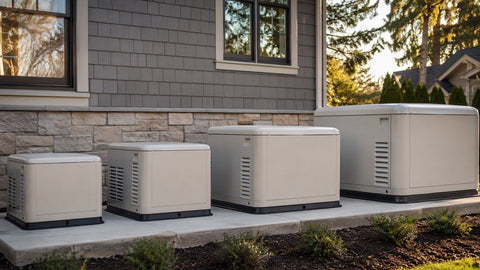
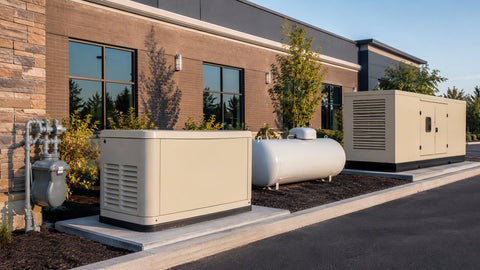
The biggest structural change for solar-plus-storage: 706.16 is deleted, and most dwelling backup-storage systems now route through Article 702 (Optional Standby Systems) with a new backup-power option at 702.4 for one- and two-family dwellings. The compliance path for a home battery gets simpler and sits next to generator rules your AHJ already understands.
Read that again if you do residential storage: the reviewer who already approves standby generators now has a familiar frame for your battery backup submittal. In practice, that means fewer blank stares at the counter, fewer requests for documentation that doesn't exist, and a plan-check conversation about transfer equipment and load management instead of a chemistry lecture. For contractors, simpler review is margin — every avoided correction cycle is a week of crew schedule you get back.
| ESS Requirement | 2023 NEC Basis | 2026 NEC Basis | Field Impact |
|---|---|---|---|
| Dwelling backup storage | 706.16 (deleted) | 702.4 (new) | Simpler path; aligns with standby-generator review habits |
| Disconnecting means | 706.15-series | 706 disconnect rules + 702 transfer equipment | Clearer location and control requirements |
| Emergency operations | Large BESS documentation | Documented Emergency Operations Plan retained for BESS sites | Commercial storage still carries EOP paperwork |
| Commissioning | Varies | Formal commissioning + maintenance logging | Add commissioning checklist to closeout package |
If you're speccing dwelling backup, listed equipment with complete documentation — like the Enphase IQ Battery 5P or packaged ESS cabinets — shortens review because the inspector recognizes the listing trail. Generator-style backup comparisons live in our standby generator category and the whole-home generator sizing guide.
DC voltage marking consolidates at 690.7(D); rapid-shutdown labeling consolidates at 690.12(D); PV definitions that lived in Article 690 moved to Article 100 with the rest of the code's definitions. The labels themselves barely changed — the citations did. That's the trap: pre-printed label stock and plan-set label schedules that cite 2023 section numbers will draw red ink from a 2026-edition reviewer.
| Location | Label Type | Key Information |
|---|---|---|
| Inverter / AC disconnect | AC disconnect ID | Operating voltage, current, dual-power-source warning |
| DC disconnect | PV system disconnect | Operating Vdc, operating A, max system voltage, Isc |
| RSD initiation device | Rapid shutdown plaque | Shutdown instruction and system identification |
| Service equipment | Interconnection warning | Multiple sources, disconnect location, OCPD ratings |
| Combiner box | PV power source | Max DC voltage, circuit identification |
| Battery / ESS | ESS disconnect | Nominal AC voltage, max DC voltage, available fault current |
Rebuild your labeling template now, with 2026 citations, and keep both versions on the truck until your AHJ completes the switch. Verify which edition governs before you print.
The interconnection math didn't change: main breaker plus PV backfeed breaker ≤ 120% of busbar rating, PV breaker at the opposite end of the bus. On a 200A panel with a 200A bus and 200A main, that's a 40A solar breaker — roughly a 7.6–9.6 kW inverter. Bigger systems need a derated main, a 225A-bus panel, or a supply-side connection under 705.12(A). What the 2026 edition does change around the edges is how the interconnection point gets marked, per the labeling consolidation above. For the full busbar math and tap options, see the interconnection section of our permitting guide.
| Jurisdiction | Status (mid-2026) | Effective Detail |
|---|---|---|
| Colorado | 2026 NEC approved May 27, 2026 | Denver submittals must comply from August 1, 2026 |
| Massachusetts | 2026 NEC adopted with state amendments | Check the MA amendment package before designing |
| Most other states | 2020 or 2023 NEC | 2026 adoption expected on 1–3 year lags |
The four sections that generate the most inspection failures remain rapid shutdown (690.12), conductor sizing (690.8), labeling, and interconnection (705.12). Put them in your design checklist, not your punch list.
Update design templates. Plan sets built on 2023 templates will start failing plan check as adoption spreads. Revise single-line diagrams, label schedules, and citation blocks now.
Train the crew. Mayfield Renewables, Solar Energy International, and most licensing-renewal platforms have NEC 2026 courses live. The office needs the design changes; the field needs the RSD and disconnect details. I've sat through enough of these update courses to know the ones with real plan-set examples are worth the fee and the ones that just read the code aloud are not — choose accordingly.
Verify component listings. RSD devices, disconnects, inverters, and ESS equipment need listings that match the standards the 2026 text references — UL 3741 for hazard control, UL 1741 SB for grid support, UL 9540 for storage. Our inverter and storage catalogs carry current listing documentation.
Order ahead of adoption. When a populous state flips to a new edition, compliant-component demand spikes and lead times stretch. Standard PES delivery is 7–10 business days; jobs in announced-adoption jurisdictions should order early. Request a quote with your target inspection date and we'll sequence the kit around it.
Half of transition planning is knowing what to leave alone. The fundamentals held: the 1,000V DC cap on one- and two-family dwellings, the 30-second/80V/30V rapid-shutdown performance targets, the 125% continuous-load factors in 690.8, the 690.31 wiring methods (PV Wire or USE-2 exposed, metal raceway or MC inside buildings), and the grounding architecture of 690.41 through 690.47. If your install practices were clean under 2023, your install practices remain clean. The 2026 exposure is concentrated in documentation — citations, labels, calculation habits — more than in hardware.
That distinction matters for procurement. You do not need to re-spec your standard residential bill of materials. You do need to re-print your label schedule and re-point your plan-set citations. Budget the engineering hours where they'll actually be spent.
Most regional installers now work across jurisdictions enforcing two or even three different NEC editions at once. The shops that handle this without chaos treat the code edition as a project field — stamped on the folder at intake, confirmed with the AHJ before design, printed on the title block of every sheet. Version your templates by edition: a 2023 one-line template and a 2026 one-line template, with the label schedule and citation blocks swapped, and a project checklist that starts with "which edition governs this job?" It sounds bureaucratic until the first time a 2026-cited plan set lands on a 2020-edition reviewer's desk and the correction notice writes itself.
NEC 2026 is the code catching up with the equipment already on your truck: bifacial modules, module-level shutdown, integrated storage. None of it is exotic. All of it is enforceable the day your AHJ adopts, and the contractors who updated templates early will watch their competitors eat correction notices. For the market context behind this cycle, read the 2025 H1 industry retrospective.
A final word on adoption timing, because it trips up even experienced shops: the NEC has no force of law on publication day. It becomes enforceable only when your state or local jurisdiction adopts it, and adoption schedules range from immediate to a decade behind. That lag is not an excuse to wait — it is a runway. Design templates, label schedules, and plan-set citation blocks updated now, against the 2026 text, will sail through plan review in every jurisdiction that still enforces 2023 (the newer standard almost always satisfies the older one's intent) and will be instantly ready when adoption lands. The contractors who treat the code cycle as a calendar event instead of a surprise are the ones whose revision costs approach zero.
Frequently Asked Questions
When does NEC 2026 take effect?
Only when your state or local jurisdiction adopts it. NFPA publishes the code; AHJs make it law. Colorado and Massachusetts are early adopters; most states will follow over the next one to three years. Always confirm the enforced edition with your building department before finalizing a design.
What are the biggest NEC 2026 changes for solar installers?
The ten that matter most: the fractions-of-ampere rule (690.4(G)), removal of the 100 kW engineering threshold, the bifacial current calculation path (690.8(A)(1)(a)(2)), rapid shutdown reorganization with E-stop allowance (690.12(C)), tightened DC disconnect language (690.13), dwelling AFCI/GFCI coordination, the reinstated interconnection conductor-length limit (705.11(C)(1)), storage rerouting through Article 702, labeling consolidation (690.7(D)/690.12(D)), and the unchanged-but-restated 120% interconnection rule (705.12).
Do NEC 2026 changes apply to existing solar systems?
No — the code is not retroactive. Existing compliant systems remain compliant. But expansions and major modifications generally must meet the edition in force when the new work is permitted, which can pull part of an old system into 2026 requirements.
How does NEC 2026 handle bifacial modules?
Article 690.8(A)(1)(a)(2) allows designers to use manufacturer-provided instructions for determining bifacial module current, accounting for rear-side gain (typically 5–25% depending on bifaciality factor, albedo, and mounting height) when sizing conductors and overcurrent protection.
What labeling changes does NEC 2026 require?
DC voltage marking consolidates under 690.7(D) and rapid-shutdown labeling under 690.12(D), with PV definitions moved to Article 100. The label content is largely stable, but the code citations changed — update pre-printed label stock and plan-set label schedules before your AHJ adopts the new edition.
Is the 120% rule changed in NEC 2026?
No. NEC 705.12(B) still limits main plus PV backfeed breakers to 120% of busbar rating — a 40A solar breaker on a standard 200A/200A residential panel. The surrounding labeling and marking requirements are what the 2026 edition adjusts.