Updated September 2026 — refreshed against the live PES catalog; product pricing verified 2026-09-26.
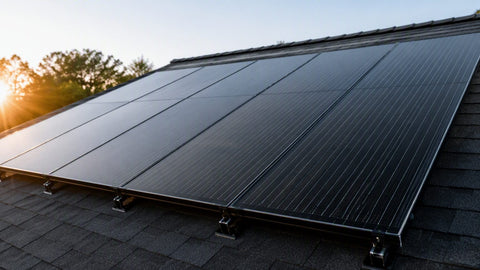
I've been speccing modules for residential and light commercial installs since the 400-watt class was considered exotic, and the 2026 efficiency race is the strangest I've watched. The leaderboard is crowded with back-contact cells pushing numbers that would have been lab curiosities three years ago, while half the brands installers actually ask us for sit a full point lower and still outsell the chart-toppers on real jobs. This guide ranks the most efficient solar panels available in 2026, but more importantly, it tells you when that extra percentage point matters and when it's an expensive flex.
Every figure below comes from manufacturer datasheets, the Kiwa PVEL 2026 Module Reliability Scorecard, and InfoLink's 1H26 shipment data. Where we stock the panel, we say so. Where we don't, we say that too.
Top 12 Most Efficient Solar Panels of 2026
Ranked by maximum module efficiency at STC (1,000 W/m², 25°C cell temperature, AM1.5 spectrum) — the number on the datasheet, not a marketing-adjusted figure.
| Rank | Brand | Model | Efficiency | Power | Technology | PES Stocks? | PVEL 2026 |
|---|---|---|---|---|---|---|---|
| 1 | Aiko Solar | G4 Full-Screen Ultra | up to 26.0% | 690W | ABC | No | Top Performer (all 7 categories) |
| 2 | Aiko Solar | INFINITE Gen 3 / Neostar | 25.0% | 545W | ABC | No | Top Performer (all 7 categories) |
| 3 | LONGi | Hi-MO X10 | 23.7–24.8% | 475–485W res / 645–670W large | HPBC 2.0 | Yes | Top Performer (9th consecutive year) |
| 4 | Recom Technologies | Black Tiger Series | 24.8% | 510W | n-type BC bifacial | No | — |
| 5 | Canadian Solar | 3rd-gen TOPCon | 24.8% | 670W | TOPCon | Yes | Recent Top Performer |
| 6 | Tongwei Solar | TNC 3.0 | 24.8% | 770W (G12-66) | TOPCon | Limited | — |
| 7 | JinkoSolar | Tiger Neo 3.0 | 24.0% | 520W | TOPCon | Yes | Recent Top Performer |
| 8 | Maxeon | Maxeon 7 | 24.1% | 440W | IBC | Yes (3 SKUs) | — |
| 9 | Trina Solar | Vertex N Gen 3 | ~23.5%+ | 760W | TOPCon 3.0 | Yes | Top Performer (Vertex S+) |
| 10 | REC Solar | Alpha Pure-RX | 22.6% | 470W | HJT | Yes | — |
| 11 | Risen Energy | Hyper-ion Pro 740 | 23.8% | 740W | HJT | Limited | — |
| 12 | Huasun Solar | Himalaya G12-132 | 23.5% | 730W | HJT | No | — |
Read that table carefully and a pattern jumps out: everything above 24% is a back-contact or n-type cell. PERC, the workhorse that built most of the roofs in America between 2016 and 2023, doesn't even appear. If a supplier is still quoting you p-type PERC at "deal" pricing in 2026, that's liquidation inventory, not a bargain.
What Solar Panel Efficiency Actually Means (and What It Buys You)
Module efficiency is the percentage of incoming solar energy the panel converts to electricity under standard test conditions. STC assumes 1,000 watts of irradiance per square meter, so the conversion is simple arithmetic: efficiency × 1,000 W/m² = watts per square meter of panel face. A 22% module produces 220 W/m². A 26% module produces 260 W/m².
That single relationship drives everything efficiency actually buys you in the field:
| Module Efficiency | W/m² at STC | W/ft² at STC | Face Area for 400W Module | kW on a 420 ft² Usable Roof Face |
|---|---|---|---|---|
| 18.0% (legacy poly) | 180 | 16.7 | 2.22 m² (23.9 ft²) | 7.0 kW |
| 20.5% (good PERC) | 205 | 19.0 | 1.95 m² (21.0 ft²) | 8.0 kW |
| 22.5% (mainstream TOPCon) | 225 | 20.9 | 1.78 m² (19.1 ft²) | 8.8 kW |
| 24.0% (premium TOPCon/BC) | 240 | 22.3 | 1.67 m² (18.0 ft²) | 9.4 kW |
| 26.0% (Aiko G4 class ABC) | 260 | 24.2 | 1.54 m² (16.6 ft²) | 10.1 kW |
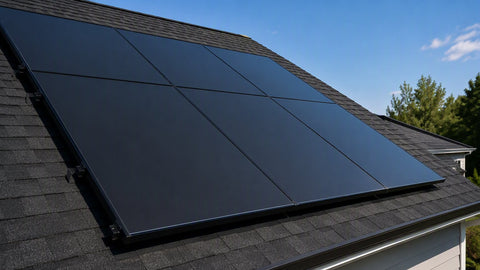
Run the roof math on a real job and the conclusion gets concrete fast. On that 420 ft² south face — typical for a 2,000 sq ft ranch after you pull out the vents, skylights, and the 3-foot ridge and eave setbacks the fire marshal wants — the jump from a 20.5% PERC panel to a 24% TOPCon or BC panel buys you 1.4 kW of extra nameplate on the same roof. That's roughly 2,000 kWh a year at 1,400 kWh/kWp. On a roof with room to spare, it buys you nothing but a higher invoice.
We tell contractors the same thing every week: efficiency is a space-constraint tool, not a performance badge. If the roof fits the load with a mid-efficiency panel, spend the premium on the inverter or the racking, where failures actually happen.
Solar Cell Technology Comparison: What to Spec in 2026
| Technology | Efficiency Range | Annual Degradation | Best For | Price Tier | 2026 Status |
|---|---|---|---|---|---|
| ABC (All Back Contact) | 24.0–26.0% | ~0.25% | Premium residential, space-constrained | Ultra-premium | Mainstreaming (~16% of shipments) |
| HPBC / BC (Back Contact) | 23.7–24.8% | ~0.30% | Premium residential, C&I rooftop | Premium | Mainstreaming |
| TOPCon N-type | 22.5–24.8% | 0.30–0.40% | Volume residential, C&I, utility | Mid-range | Dominant (~83% of shipments) |
| HJT (Heterojunction) | 22.6–23.8% | ~0.25% | Hot climates, premium residential | Premium | Niche (no maker in top 10) |
| IBC (Interdigitated Back Contact) | 24.0–24.1% | ~0.30% | Premium residential (legacy) | Premium | At risk (Maxeon only; judicial management) |
| PERC P-type | 19.0–21.5% | 0.50–0.70% | — | Budget | EOL — liquidate only |
A few field notes on each chemistry, from jobs we've actually supplied:
TOPCon is the default now. At roughly 83% of global shipments per InfoLink's 1H26 numbers, TOPCon is what PERC was in 2020 — the safe, bankable, everyone-stocks-it choice. Degradation around 0.30–0.40% per year, first-year LID mostly solved, and pricing that makes PERC pointless. If a bid doesn't have a reason to be exotic, it should be TOPCon.
Back contact (ABC/HPBC/IBC) is the roof-space weapon. All the metallization lives behind the cell, so nothing shades the active face — that's where the 24–26% numbers come from. The all-black look with no visible busbars also wins HOA battles. The catch is price per watt, which still runs 15–25% over TOPCon in our quoting experience.
HJT keeps a toehold in hot climates. Heterojunction cells carry the best temperature coefficients in mass production (around -0.24 to -0.26%/°C versus -0.29 to -0.35%/°C for TOPCon) and very low degradation. On a Phoenix or Houston roof where cell temperatures sit above 60°C for months, that coefficient clawback is real energy.
IBC is a brand risk now, not a technology risk. Maxeon is essentially the only volume IBC maker left, and the company entered judicial management proceedings in 2025. The panels are excellent. The 40-year warranty is only as good as the company behind it. We still stock three SKUs for replacement-matching jobs, but we flag the situation on every quote.
The Temperature Coefficient Math Nobody Puts in the Proposal
Efficiency is measured at 25°C cell temperature. On a dark roof in July, cells run 60–70°C. Every degree above 25°C costs power at the module's temperature coefficient, and the differences between chemistries are big enough to reorder the efficiency leaderboard in hot climates.
| Technology (Example Class) | Typical Pmax Temp Coefficient | Power at 65°C Cell Temp (400W Nameplate) | Loss vs STC |
|---|---|---|---|
| HJT (best in class) | -0.24%/°C | 400 × (1 − 0.0024 × 40) = 361.6W | -9.6% |
| TOPCon (typical) | -0.30%/°C | 400 × (1 − 0.0030 × 40) = 352.0W | -12.0% |
| PERC (typical) | -0.35%/°C | 400 × (1 − 0.0035 × 40) = 344.0W | -14.0% |
| Thin-film CdTe (reference) | -0.28%/°C | 355.2W equivalent class | -11.2% |
The math: cell temp 65°C is 40 degrees above STC. Multiply 40 by the coefficient, subtract from 1, apply to nameplate. A 400W HJT panel at summer operating temperature out-produces a 400W TOPCon panel by nearly 10 watts in that moment — about 2.7%. Over a Texas summer that shows up in the production meter. In Minnesota, you'll never notice. This is why "most efficient" has a zip code attached.
Degradation: What the Panel Is Worth in Year 25
The other number that separates a good panel from a cheap one is the degradation rate. Every module loses a little output each year; the question is how much is left when the loan is paid off and the customer is finally in pure-profit territory.
| Degradation Rate (after year 1) | Remaining Output, Year 10 | Remaining Output, Year 25 | Remaining Output, Year 30 | Typical Technology |
|---|---|---|---|---|
| 0.70%/yr | 93.7% | 84.5% | 81.3% | Legacy PERC |
| 0.50%/yr | 95.5% | 88.7% | 86.3% | Good PERC / early n-type |
| 0.40%/yr | 96.4% | 90.8% | 88.9% | Mainstream TOPCon |
| 0.30%/yr | 97.3% | 93.1% | 91.6% | Premium TOPCon / BC |
| 0.25%/yr | 97.8% | 94.2% | 93.0% | ABC / HJT flagships |
Year-25 output = (1 − rate)^24, applied after the first-year light-induced degradation (typically 1–2% on n-type, which warranties handle separately). The spread between a 0.50% panel and a 0.25% panel is 5.5 percentage points of output in year 25. On a 10 kW system producing 14,000 kWh in year one, that's about 770 kWh a year at year-25 rates — real money, but only if the owner keeps the property and the warranty holder still exists. Underline that second condition for your customers. A 30-year performance warranty from a company that won't exist in 2030 is a brochure, not a guarantee.
PVEL 2026 Scorecard: Efficiency Is Only Half the Story
The Kiwa PVEL Module Reliability Scorecard is the closest thing this industry has to an independent torture test: thermal cycling, damp heat, mechanical load, PID, LID/LETID, PAN performance. Aiko swept all seven test categories in 2026 — a genuine first. LONGi made the list for the ninth consecutive year. Trina's Vertex S+ and recent TOPCon entries from Canadian Solar and JinkoSolar all showed up.
What the scorecard tells a buyer is simple: high efficiency and high reliability now correlate, because the same manufacturers with the process control to hit 24%+ also pass the stress tests. What it doesn't tell you is availability. Several chart-toppers have no meaningful U.S. distribution, no domestic warranty service, and lead times measured in quarters. A panel you can't buy is a panel you can't install.
Buyer-Impact: For Homeowners
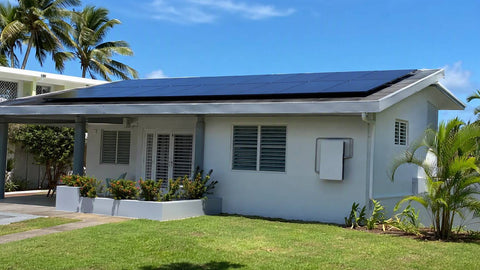
If your roof is small, shaded in patches, or chopped into dormers, premium efficiency is worth the premium — it may be the only way to fit your offset target. Ask your installer to show you the watts-per-square-foot math on your usable roof area, not the brochure efficiency. If your roof is big and open, a quality 22.5% TOPCon panel from a brand with a U.S. warranty office will serve you exactly as well per dollar and leave budget for a battery or a better inverter.
Also ask who holds the warranty and where. A U.S. entity with a service line beats a higher-efficiency import with an email address in another time zone, every single time. We've helped homeowners chase warranty claims on orphaned brands; it is not a fun hobby.
Buyer-Impact: For Installers & Contractors
Three rules we run our own purchasing by:
1. Spec for the constraint, not the chart. Space-constrained residential → BC or premium TOPCon. Volume residential and C&I → mainstream TOPCon from a PVEL Top Performer. Hot-climate ground mounts → check HJT pricing before defaulting.
2. Bankability beats datasheet. Your customer's financing, your warranty exposure, and your callback rate all depend on the manufacturer surviving. Check the PVEL list, check who has a U.S. legal entity, and be honest about brands in financial distress even when the panel itself is superb.
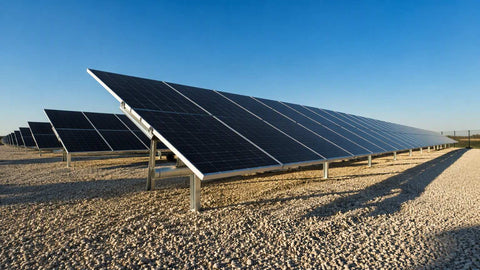
3. Buy from stock, not from a container dream. We stock high-efficiency lines from Qcells, REC, Mission Solar, JA Solar, Trina, and LONGi, plus bifacial options for ground and carport work. Specific high-efficiency modules we move every week include the Qcells XL G11S for C&I, the Silfab Elite 370W n-type TOPCon all-black and its residential sibling for premium rooftops, the Canadian Solar CS3N-395MS, and value TOPCon like the Solar4America S4A-550 and Sunevo SE5-54H 450W. Every one of those ships from U.S. stock with a warranty you can actually phone in.
Cost Per Watt: What the Premium Actually Looks Like
Efficiency premiums are easier to judge in dollars than in percentage points. These are representative U.S. wholesale ranges we've seen quoted in 2026 — your numbers will vary with volume, but the relationships hold:
| Panel Class | Typical Efficiency | Wholesale $/W Range | Premium vs Value TOPCon | 10 kW Array Module Cost Delta |
|---|---|---|---|---|
| Value TOPCon (Solar4America, Sunevo class) | 21.5–22.5% | $0.22–$0.27/W | baseline | baseline |
| Mainstream TOPCon (Qcells, JA, Trina) | 22.5–23.5% | $0.27–$0.34/W | +$0.05–$0.07/W | +$500–$700 |
| Premium HJT (REC Alpha class) | 22.6–23.8% | $0.35–$0.45/W | +$0.13–$0.18/W | +$1,300–$1,800 |
| Back Contact (Maxeon IBC, LONGi HPBC) | 23.7–24.8% | $0.40–$0.55/W | +$0.18–$0.28/W | +$1,800–$2,800 |
| ABC flagship (Aiko class, import) | 25.0–26.0% | $0.50–$0.65/W landed | +$0.28–$0.38/W | +$2,800–$3,800 |
On a 10 kW residential job, the jump from value TOPCon to a back-contact flagship adds $1,800–$2,800 in module cost — call it 6–9% of a typical turnkey residential price. On a space-constrained roof where that premium buys the last 1.5 kW of offset the customer needs, it pencils instantly. On an open roof, it buys the customer a nicer-looking black rectangle and nothing else. Put both options in the proposal and let the roof decide.
Efficiency vs. Energy: The Nameplate Trap
One more thing we correct on job sites constantly: a higher-efficiency panel does not automatically produce more energy. A 400W panel at 22% efficiency and a 400W panel at 26% efficiency both produce 400 watts at STC — the efficient one is just smaller. Energy yield per watt depends on the temperature coefficient, low-light behavior, bifaciality, and degradation, not the efficiency figure itself.
Where efficiency converts to energy is system size: 24% modules let you fit 9.4 kW where 20.5% modules fit 8.0 kW on the same roof face. That extra 1.4 kW is where the extra kilowatt-hours come from. If the array size is fixed either way, compare temperature coefficients, warranties, and PAN-file performance — not the efficiency headline.
What the PVEL Scorecard Actually Tests
Since we lean on PVEL results above, here's what a "Top Performer" badge means in practice. Kiwa PVEL's 2026 Product Qualification Program subjects production-sample modules to seven stress sequences:
| PVEL Test | What It Simulates | Why You Care on the Roof |
|---|---|---|
| Thermal Cycling (TC600) | 600 cycles, -40°C to +85°C | Solder joint and interconnect fatigue over 25+ winters and summers |
| Damp Heat (DH2000) | 2,000 hours at 85°C / 85% RH | Delamination, corrosion, and backsheet failure in humid climates |
| Mechanical Stress Sequence | Static + cyclic load with thermal cycling | Cell microcracks from snow load, wind, and handling |
| PID (Potential-Induced Degradation) | High system voltage stress | Output loss on long strings, especially 1,000V/1,500V commercial |
| LID + LETID | Light and elevated-temperature degradation | First-year output drop beyond the warranted figure |
| PAN Performance | Modeled energy yield across climates | Real kWh per kW in your customer's actual weather file |
| Hail Stress (optional sequence) | Impact resistance | Hail-belt insurance claims and module survival |
Aiko's all-seven sweep in 2026 is legitimately impressive. LONGi's nine consecutive years as a Top Performer is the record we'd weight more heavily for a 25-year purchasing decision — consistency across product generations is harder to fake than one great model year.
String Design Note: High-Wattage Modules Change Your Layout
A practical consequence of the efficiency race that catches designers off guard: today's 440–485W residential modules are physically large. The Silfab Elite 370W fits older layout grids; a 475W LONGi Hi-MO X10 residential unit may not. Re-check rafter-span compatibility, rail spans, and roof-zone fit before swapping module classes mid-design, and rerun your string math — higher-wattage modules often carry higher Voc and Isc values that shift string lengths under NEC 690.7 cold-temperature correction. Our solar wire and cable guide and conduit fill chart cover the downstream wiring side once the strings are set.
Frequently Asked Questions
What is the most efficient solar panel available in 2026?
Aiko Solar's G4 Full-Screen Ultra, at up to 26.0% module efficiency using All Back Contact (ABC) cells. It's the first mass-produced module family to break 25–26%, and Aiko swept all seven categories of the PVEL 2026 scorecard. U.S. availability remains limited, so most installers will actually buy from the 23–24.8% tier.
Is a more efficient solar panel always worth the money?
No. Efficiency buys watts per square foot. If your roof or site has room for a lower-efficiency array that meets your production target, the premium for 24%+ modules returns very little. Reserve premium-efficiency panels for space-constrained roofs, high land-cost sites, or customers who want maximum offset from minimum array footprint.
What efficiency should I target for a typical residential install in 2026?
The 22.5–23.5% mainstream TOPCon band is the value sweet spot: modern n-type degradation (~0.30–0.40%/yr), full warranty support, and pricing roughly 15–25% below back-contact flagships. Step up to 24%+ BC panels only when roof area forces the issue.
How much power do panels lose in hot weather?
Apply the temperature coefficient: at 65°C cell temperature (40°C above STC), a panel with a -0.30%/°C coefficient loses 12% of nameplate power; HJT at -0.24%/°C loses 9.6%. Summer cell temperatures of 60–70°C are normal on dark shingle roofs, so hot-climate buyers should weight the coefficient alongside efficiency.
Are high-efficiency panels less reliable?
Current evidence says the opposite. The 2026 PVEL Top Performers cluster at the high-efficiency end — Aiko, LONGi, Trina, Canadian Solar, JinkoSolar — because the process control needed for 24%+ efficiency also produces modules that survive thermal cycling, damp heat, and mechanical load testing. Reliability risk today is corporate (manufacturer survival), not technological.
What happened to PERC panels?
End of life. PERC topped out around 21.5% module efficiency, degrades faster (0.50–0.70%/yr), and has been displaced by TOPCon at roughly 83% of global shipments. Remaining PERC inventory is liquidation stock — fine for matching existing arrays, wrong for new installs.
Does PES Supply stock the most efficient panels on the list?
We stock the efficient panels that make sense to install: LONGi, Trina, Canadian Solar, JinkoSolar-class TOPCon, REC HJT, and three Maxeon IBC SKUs for matching work. We pass on brands without U.S. warranty infrastructure regardless of where they rank — a chart position doesn't service a claim.
Ready to Source High-Efficiency Panels?
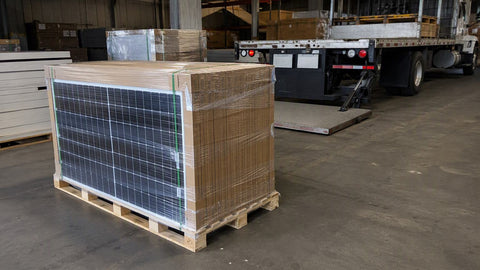
Tell us the roof dimensions, the offset target, and the zip code. We'll come back with two or three module options — usually one value TOPCon and one premium BC or HJT — with the watts-per-square-foot math done for your actual constraint. Browse current stock in solar panels, compare against commercial formats, or check the brand-by-brand breakdown and our system size calculator before you call. Bulk pricing starts at pallet quantities, and every quote includes datasheets, warranty terms in writing, and a realistic lead time — not the optimistic one. For historical context on how premium efficiency leaders have evolved, see our vintage comparison of the SunPower X-Series vs LG NeON R from 2019.
Related: For the full story on how REC brought heterojunction technology to mass production, read our vintage analysis of the REC Alpha Debuts at Intersolar: HJT Cells Hit Mass Production — from the 2019 Intersolar debut through today's Pure-RX flagship.
Need pricing or availability on anything in this guide?
Portlandia Electric Supply dropships direct from the manufacturer — most items Ship Direct with lead times stated up front, no surprises.
Get a quote from PESBulk, pallet and contractor pricing available.