1. Company Overview
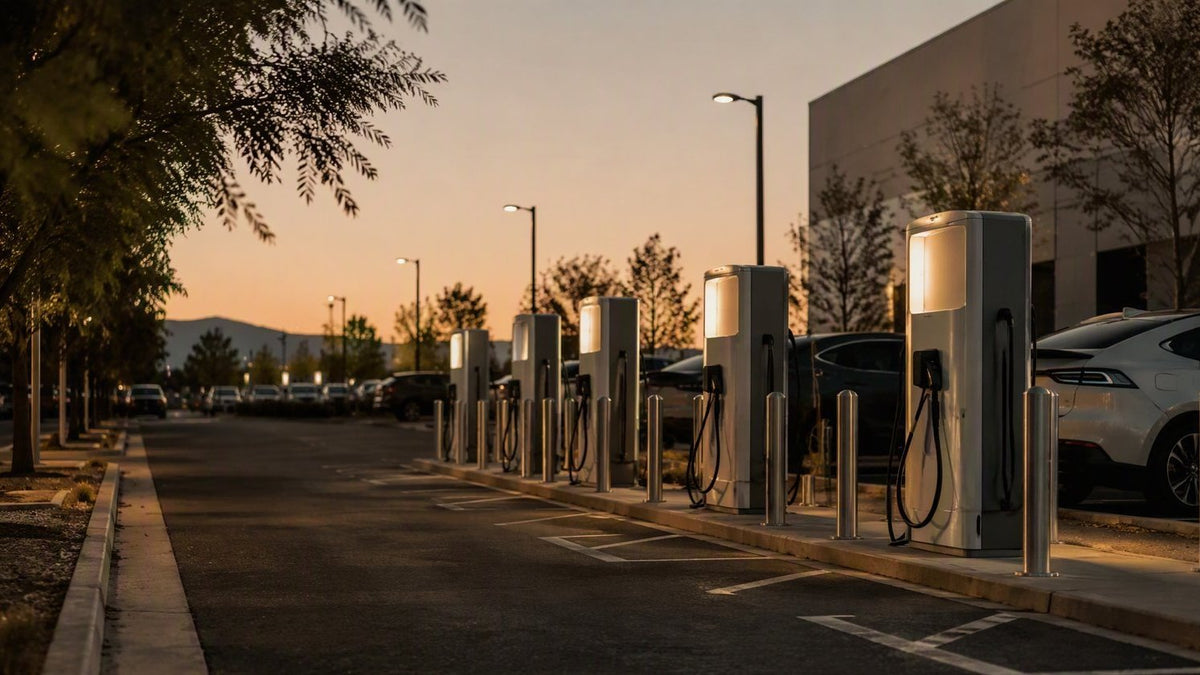
ChargePoint is the company that built America's electric vehicle charging map. Founded in 2007 in Campbell, California — before the first mass-market EVs even shipped — it grew into the largest independently owned charging network in North America, with hundreds of thousands of charging spots on its platform and a business model that looks less like a hardware vendor and more like a network operator. That distinction matters to buyers: when you purchase ChargePoint hardware, you're buying into a cloud-managed ecosystem with driver-facing apps, access control, energy reporting, and over-the-air firmware that keeps stations current for years.
Our read from the equipment side: ChargePoint's sweet spot is networked commercial charging — workplaces, multifamily properties, fleets, retail, and municipalities that need billing, access control, and uptime reporting, not just electrons. For single-family homeowners who just want to charge a car, the Home Flex is a solid but premium-priced option, and the network features mostly go unused. Match the product to the use case and the ecosystem pays for itself; mismatch it and you're paying subscription prices for a dumb charger job — the most expensive kind of charger job there is, and the one we talk buyers out of weekly. Browse our EV charger collection and the full EV charging lineup.
2. Current Product Lines
| Product Family | Type | Power Class | Best For |
|---|---|---|---|
| ChargePoint Home Flex | AC Level 2, residential | Up to 50A / 12kW class | Single-family homes, app-managed home charging |
| CT4000 family | AC Level 2, commercial | Single/dual port, pedestal or wall | Workplace, retail, multifamily |
| CP6000 series | AC Level 2, commercial/fleet | Higher-power AC, fleet-oriented | Depot and fleet AC charging |
| Express 250 | DC fast | ~62.5kW class | Retail corridors, small sites needing DCFC |
| Express Plus | DC fast, modular | Scales to hundreds of kW with power modules | Highway sites, fleet hubs, high-utilization DCFC |
Confirm current model-year specifications before quoting — ChargePoint revises hardware and the exact output of a given configuration depends on site electrical service and power-sharing settings, not just the nameplate.
3. AC vs. DC: The Architecture Decision
Every charging project starts with one fork: AC Level 2 or DC fast. AC charging uses the car's onboard charger — the station is a smart, safe contactor delivering 240V (or 208V commercial) power, and the vehicle rectifies it. DC fast charging moves the rectifier into the station and feeds the battery directly, which is why DCFC hardware costs an order of magnitude more and demands serious utility service. The decision table we walk customers through:
| Factor | AC Level 2 | DC Fast |
|---|---|---|
| Typical added range | ~25–40 miles per hour | Hundreds of miles per hour, tapering with battery state |
| Dwell time fit | 1+ hours: work, home, hotel, dining | 15–45 minutes: corridors, convenience retail |
| Site electrical demand | 40–80A 240V circuits; panel-friendly | Three-phase service, often utility upgrades |
| Hardware + install cost | Low thousands per port | High five to six figures per dispenser |
| Revenue model | Amenity or modest fee | Retail kWh or per-minute pricing |
For the install-cost side of that decision, see our EV charging installation cost breakdown and the commercial installation guide.
4. The Network Is the Product: Software, Subscriptions, and Uptime
Hardware is half a ChargePoint purchase. The other half is the cloud subscription that activates driver payments, access policies, energy management, and the reporting that commercial hosts need for utility programs and ESG accounting. Budget honestly: commercial stations carry ongoing network and warranty plans, and a station let lapse into an unsupported state becomes an expensive paperweight with a screen. The flip side is real value — ChargePoint's uptime tooling and remote diagnostics are genuinely good, and on networked commercial sites the software catches failing stations before drivers do.
Field note from commissioning networked sites: involve IT early. Stations need network connectivity (cellular or Ethernet), firewall allowances, and sometimes VLAN decisions, and the projects that slip are almost never delayed by conduit — they're delayed by a network jack that never got provisioned. Power-sharing configuration matters just as much: ChargePoint's panel-sharing features let multiple stations divide a limited electrical service intelligently, which routinely saves five-figure service upgrades on multifamily and workplace installs.
One more operational truth the brochures skip: station placement drives utilization more than station specs. The ports closest to the building entrance fill first, the ones behind the dumpster gather dust, and cable reach decides whether a dual-port station serves two spaces or four. We walk every commercial site with a tape measure and the parking map before we finalize station count, because the cheapest port you'll ever install is the one a well-placed dual station made unnecessary.
5. Electrical Requirements: The NEC Side of EV Charging
EV charging is a continuous load, and NEC 625 treats it accordingly: the circuit must be sized at 125% of the charger's rated current. That single rule drives everything downstream:
| Charger Setting | Continuous Current | Breaker (125% rule, NEC 240.6) | Copper THHN @ 75°C (310.16) |
|---|---|---|---|
| 16A Level 2 | 16 A | 20 A | 12 AWG |
| 32A Level 2 | 32 A | 40 A | 8 AWG |
| 40A Level 2 | 40 A | 50 A | 8 AWG (50A rating) |
| 48A Level 2 | 48 A | 60 A | 6 AWG |
| 80A commercial AC | 80 A | 100 A | 3 AWG (100A rating) |
Wire sizing references: wire ampacity chart and the NEC wire sizing guide; conduit selection from the conduit fill chart. For anything beyond a simple garage circuit, our NEC compliance guide covers load calculations — and note NEC 220.83 and local amendments, because adding a 48A charger to a 100A residential service often triggers a load calculation or a service upgrade conversation that should happen before hardware ships.
6. Certifications & Listings
ChargePoint stations carry UL listing and ENERGY STAR certification where applicable, with utility-program approvals across most major rebate territories. Networked stations also meet the payment and accessibility requirements that public-facing installs demand — ADA reach ranges, payment card standards, and local signage rules. For public DCFC, expect the permitting conversation to include utility interconnection, accessibility layout, and often a traffic-engineering review. Residential Home Flex installs are simpler: permitted 240V circuit, hardwired or NEMA receptacle per the manual, done.
7. Warranty & Support Terms
| Element | Typical Structure | Buyer Note |
|---|---|---|
| Home Flex hardware | Multi-year limited warranty | Among the better residential terms; register it |
| Commercial hardware | Base warranty + extended plans | Price the extended plan into the pro forma |
| Network subscription | Annual, per port | Required for payments, reporting, remote management |
| Uptime / support SLAs | Tiered by plan | Public sites should carry the response-time tiers |
8. Popular ChargePoint Products at PES Supply
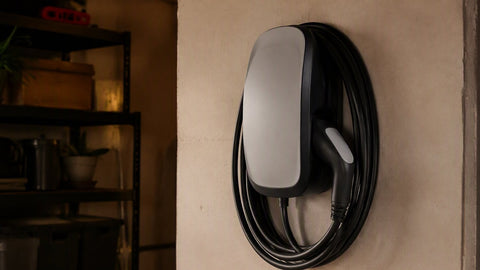
Residential buyers land on the Home Flex for its adjustable amperage (16–50A, settable to match existing panel capacity — the feature that saves a service upgrade) and its Alexa/app integration; cross-shop it in our home 240V fast charger range and Level 2 charger collection. Commercial buyers start at the CT4000/CP6000 tier for workplace and multifamily; public-corridor and fleet customers step to the Express DC fast lines. Accessories — pedestals, cable management, signage, protection bollards — live in EV charger accessories, and the EV charging hub organizes the whole category. Sites pairing charging with on-site generation should also see solar EV charging and public charging station options.
9. Technical Comparison: ChargePoint vs. Competitors
| Dimension | ChargePoint | Tesla (Wall/Supercharger) | Value L2 brands | Other DCFC networks |
|---|---|---|---|---|
| Network scale (NA) | Largest independent | Largest single-brand | None / app-only | Regional |
| Hardware price | Premium | Moderate | Low | High |
| Software / payments | Best-in-class network | Closed ecosystem | Basic apps | Varies |
| Ongoing costs | Subscriptions required | Minimal (residential) | None | Network fees |
| Best fit | Commercial hosts, fleets | Tesla-centric drivers | Cost-first homeowners | Corridor DCFC |
The honest summary: for a homeowner who wants cheap overnight charging, a value L2 unit or even a dryer-circuit strategy wins on cost. For a business whose stations must take payment, report energy, manage access, and stay online for years, ChargePoint's subscription economics are the price of a network that actually works — and the failure mode of "cheap networked charger with dead software company" is one we've watched strand entire properties.
10. Installation Notes From the Field
Residential: hardwire where the manual allows it — hardwired installs avoid the GFCI-nuisance and receptacle-wear issues that plague plug-in 50A setups, and inspectors like them. Set the Home Flex amperage to match the panel's real headroom, not the maximum. Commercial: stub extra conduit at initial trenching (the second station always comes), pour pedestals with bollard protection in any lot where vehicles move fast, and commission every port with a real vehicle session, not just a self-test. I've signed off stations that passed every self-diagnostic and failed the first actual car because of a mis-wired proximity pilot — test with a car, log the session, and keep the record with the commissioning file forever.
Plan for load growth from day one. Power-sharing lets you hang more stations on the same service later, and utilities increasingly offer make-ready programs that subsidize the service side. Get the utility involved early on DCFC — six-month transformer lead times have killed more fast-charging timelines than any hardware problem.
Home Flex Deep-Dive: The One Residential Product
The Home Flex earns its premium in three places. First, the adjustable amperage dial: installers set it anywhere from 16A to 50A to match the circuit that actually exists, which means a buyer with 40A of panel headroom doesn't pay for a service upgrade to charge at 48A they don't need. Second, the cable — 23 feet, flexible in cold weather, and thick enough to feel serious. Cheap chargers ship cables that stiffen into garden-hose behavior at 20°F; the Flex cable behaves in a Minnesota January. Third, the app integration actually works: scheduling around time-of-use rates, charge history for reimbursement, and Alexa control for the household that lives by voice.
The caveats: it's a premium-priced unit in a market full of competent cheaper ones, the NEMA plug configurations demand a correctly rated receptacle and circuit if you go plug-in rather than hardwired, and the network features shine brightest for drivers who care about utility rate scheduling — if you plug in whenever and don't care, half the software value is invisible to you. For the cross-shop, our home fast charger range shows the field.
The Workplace and Multifamily Playbook
Commercial AC charging succeeds or fails on policy, not hardware. The pattern that works: power-shared dual-port stations on dedicated circuits, priced at or slightly above electricity cost to discourage squatting, with four-hour limits enforced by escalating fees rather than by hope. Multifamily properties add assigned or access-coded ports, because an open charger in an apartment lot becomes a neighborhood free-for-all by the second week. ChargePoint's software handles all of this natively — pricing tiers, driver groups, waitlists, and the reporting that turns charging from an amenity argument into a line item that pays.
Design for the second phase on day one. Trench extra conduit, oversize the pedestal foundations, and leave breaker space. Every commercial site we've touched that started with two ports wanted six within two years, and the sites that planned for it spent thousands; the ones that didn't spent tens of thousands re-cutting concrete. This is the single cheapest insurance in commercial EV infrastructure.
Economics: What Hosting Charging Actually Returns
Retail hosts recover costs through dwell-time spending — the charger is a traffic device, and the revenue is in the store. Workplaces treat charging as a recruiting amenity that costs less per employee than most benefits. Multifamily operators increasingly treat it as rent-adjacent revenue. Fleets treat it as fuel-cost arbitrage against gasoline. In every model, the math hinges on utilization: a station charging four sessions a day pays for itself; one sitting idle is a sculpture. That's the real argument for the network subscription — the driver-facing map visibility that puts cars at your plugs. A station invisible to the ChargePoint app is a station most drivers will never find.
On the cost side, incentives still reshape projects: utility make-ready programs, state rebates, and federal credits covered in our incentive resources routinely cover half or more of commercial project cost in active territories. File the paperwork before construction starts; several programs reject retroactive applications, and we've watched that mistake cost a project five figures.
Recent Releases and Direction (2025–2026)
ChargePoint's current trajectory runs along three tracks: NACS connector support as the industry consolidates on the Tesla-originated standard, modular DC fast architecture in the Express Plus line that lets sites scale power modules as utilization grows, and fleet software deepening — depot scheduling, energy management, and vehicle-integration features that turn chargers into a dispatch system. The strategic picture: hardware is commoditizing, and ChargePoint is leaning into the network and software layers where its scale is hardest to replicate. Buyers should expect hardware revisions and connector transitions; quote against current datasheets, and for any public install, spec stations with both connector futures in mind.
Common Mistakes We See on Charging Projects
One: buying DCFC for a site where cars park for hours — the hardware never pays at low utilization. Two: skipping the load calculation on residential installs, then tripping the main on hot evenings when the AC and the charger coincide. Three: mounting stations where snowplows, delivery trucks, or bad drivers will find them — bollards are cheaper than one replacement dispenser. Four: commissioning without a vehicle test. Five: ignoring cellular signal strength at the station location; a networked charger in a parking-garage dead zone needs an Ethernet plan before install day. None of these are exotic. All of them are on actual service tickets we've closed, and every one of them was cheaper to prevent than to repair after the fact.
Connectors: J1772, NACS, and CCS in One Lot
The North American connector map consolidated fast: NACS (the Tesla-originated standard, now standardized as SAE J3400) is the direction of the industry, while J1772 AC and CCS DC connectors remain everywhere in the installed base. For site hosts the practical answer is flexibility — stations and adapters that serve both worlds during the transition, and procurement language that doesn't lock a twenty-year parking asset to a five-year connector war. Residential buyers have it easier: know what your car takes, and if the household might add a second EV of the other connector type, buy the station with the future car in mind or plan for a quality adapter. The charger hardware lasts a decade or more; connector standards move faster than concrete.
Fleet and Depot Charging: Where the Software Pays for Itself
Fleet charging is the use case where ChargePoint's premium stops being debatable. Depot operations need scheduled charging against route requirements, load management that keeps a yard of vehicles under the service limit, per-vehicle energy accounting, and alerts when a vehicle that must roll at 6 AM didn't charge. That is exactly what the network layer does, and assembling it from dumb chargers plus spreadsheets is a part-time job that fails at scale. The sizing discipline differs from public charging too: fleet depots optimize for overnight dwell and power-shared AC where possible, reserving DC fast for opportunity charging — because demand charges on unmanaged DCFC can exceed the diesel bill the fleet was escaping. We model interval data before any fleet quote; the utility rate tariff decides the architecture as much as the vehicles do.
Safety, Code, and the Inspector's Checklist
EVSE is one of the most inspection-mature categories in the NEC, and the checklist is predictable: listed equipment (UL), correct branch circuit per NEC 625 with the 125% continuous factor, GFCI protection where required, proper disconnect for hardwired units where specified, and load management documentation when the service calculation depends on it. Outdoor and wet-location installs want the right enclosure ratings and cable protection. Public-facing sites add ADA reach and access-aisle requirements plus signage. Inspectors who see a clean, labeled, properly permitted EV circuit approve it in minutes; the failures we get called to rescue are almost always unpermitted plug-in work with an undersized receptacle circuit and a melted NEMA 14-50 in the wall. Buy quality receptacles or hardwire; the $12 big-box 14-50 is not rated for nightly EV duty no matter what the package says.
The Buyer's Decision Framework
When a customer asks us "is ChargePoint right for me," we run four questions. First: do drivers pay, or does the host? Payment needs mean networked hardware — ChargePoint's home turf. Second: how long do vehicles dwell? Hours means AC Level 2; minutes means DC fast or a different site design. Third: what's the electrical service reality? Power-sharing and adjustable amperage solve more problems than service upgrades do. Fourth: who owns uptime? If a dead station costs you customers or routes, buy the support tier; if it's a home charger, your own extension cord discipline is the backup plan. Answer those four honestly and the brand question mostly answers itself — ChargePoint wins the networked-commercial argument, shares the residential argument on value, and invented the fleet-software argument. Run those four questions before you spend, every single time.
Sources & Standards
Electrical guidance references NEC Article 625 (electric vehicle power transfer), NEC 220.83 (residential load calculations), NEC 240.6 (breaker ratings), and NEC 310.16 (conductor ampacity). Product capabilities reflect manufacturer-published documentation and our field experience; ChargePoint revises hardware, connector support, and subscription tiers frequently, so current datasheets and plan documents govern any live quote.
11. Frequently Asked Questions
Is ChargePoint a good home charger?
The Home Flex is a capable, well-supported Level 2 charger with adjustable amperage and a polished app. It costs more than basic units; you're paying for build quality, support, and software. If you only need a dumb 240V circuit, cheaper hardware does the job.
How fast does a ChargePoint Home Flex charge?
At its maximum 50A setting it delivers up to 12kW class — roughly 35–45 miles of range per hour on most EVs, limited by the car's onboard charger. At lower settings it matches whatever circuit you have.
Do ChargePoint commercial stations require a subscription?
Yes — network plans activate payments, access control, reporting, and remote management. Budget the annual per-port fee into the operating pro forma; an unsubscribed commercial station loses most of its value.
What electrical service do I need for a 48A home charger?
A 60A dedicated circuit (NEC 625's 125% continuous rule) with 6 AWG copper at 75°C ratings. On a 100A service with other large loads, run the NEC 220.83 load calculation first — many homes need load management or a service upgrade.
Can ChargePoint stations share power between ports?
Yes — power-sharing is a core feature. Multiple stations divide available capacity dynamically, which routinely avoids service upgrades on multifamily and workplace sites. Configure it at commissioning, not after drivers complain.
Who services ChargePoint stations?
ChargePoint coordinates support through its network plans and partner technicians. For public-facing sites, carry the support tier with response-time commitments — a dead DCFC on a corridor is a reputation problem, not just a maintenance ticket.
12. Shop ChargePoint at PES Supply — and Let's Talk About Your Site First
Browse the EV charger collection, start at the EV charging hub, or request a quote with your site details — panel capacity, parking layout, expected vehicles — and we'll spec the hardware, the circuit, and the network plan as one system, because that's how charging actually succeeds. Charging projects fail in the gaps between trades: the electrician who sized the wire but not the service, the network that nobody provisioned, the pedestal that met the snowplow. Our quotes close those gaps before the trench opens. Bring us the load list, the utility account number, and the site photos, and you'll get back a plan that survives installation day — and more importantly, the five years of drivers, firmware updates, and winter storms that come after it.