Ampacity Derating Calculator: NEC 310.16, Temperature Correction, and Bundling Adjustment
Reading time: ~8 min read
📋 Key Takeaways
- NEC 310.16 is a starting point, not an answer. The table assumes a 30°C (86°F) ambient and no more than three current-carrying conductors in a raceway. Hot attics, rooftops, and crowded conduits both force the ampacity down.
- Apply two multipliers. The ambient-temperature correction factor from NEC Table 310.15(B)(1) and the bundling adjustment factor from Table 310.15(C)(1) stack: adjusted ampacity = table ampacity × temp factor × bundling factor.
- You may start from the 90°C column for derating math when the insulation is THHN-2/THWN-2 (90°C), but the final ampacity can never exceed the termination-temperature column — 60°C or 75°C per NEC 110.14(C).
- More than three current-carrying conductors in one conduit costs real capacity: 4–6 conductors drop you to 80%, 7–9 to 70%, and 10–20 to 50% of the table value.
- Small-conductor caps in NEC 240.4(D) still apply after derating — 14 AWG copper stays a 15A circuit no matter how friendly the ambient is.
"What's the ampacity of 10 AWG THHN?" has one honest answer: it depends where the wire lives. NEC Table 310.16 rates that conductor at 40A from the 90°C column — but only at a 30°C ambient with three or fewer current-carrying conductors sharing the raceway. Run it across a 60°C rooftop or pack it into a conduit with eight other loaded conductors, and the usable ampacity can fall below the 30A circuit you thought you were protecting. The calculator below starts at the NEC 310.16 table value, applies the ambient-temperature correction and the bundling adjustment, and then enforces the termination-temperature ceiling so the result is one an inspector will accept.
Need the wire itself? Our electrical supplies collection stocks THHN-2/THWN-2 and XHHW-2 in every common gauge. If you are still choosing the base conductor size, start with the wire size by amps ampacity chart, then come back here to derate for the actual install conditions.
Ampacity Derating Calculator
Copper ampacities from NEC 310.16.
Correction factors come from the insulation's own column.
Final ampacity can never exceed this column.
°F to °C: 86°F = 30°C, 104°F = 40°C, 122°F = 50°C, 140°F = 60°C.
Count hots and neutrals; EGCs and pure ground wires do not count.
Table ampacity (310.16, insulation column): —
Temperature correction factor: —
Bundling adjustment factor: —
Derated ampacity: —
Termination ceiling / usable ampacity: —
Sizing logic: base ampacity from NEC Table 310.16 for the insulation column; ambient correction per NEC Table 310.15(B)(1); bundling adjustment per NEC Table 310.15(C)(1); result capped at the termination column per NEC 110.14(C). NEC 240.4(D) small-conductor caps (14 AWG → 15A, 12 AWG → 20A, 10 AWG → 30A) still govern overcurrent protection. Informational — the AHJ and equipment markings govern.
Derating in Action: 10 AWG THHN-2 Copper
The same conductor, four very different installations. Notice how the 90°C starting column helps — but only until the termination ceiling or the multipliers take over:
| Installation | Ambient | Conductors in conduit | Math | Usable ampacity |
|---|---|---|---|---|
| Basement panel homerun | 30°C | 3 | 40 × 1.00 × 1.00 → cap 35A (75°C) | 35 A |
| Hot attic run | 55°C | 3 | 40 × 0.76 × 1.00 | 30.4 A |
| Crowded conduit, temperate | 30°C | 9 | 40 × 1.00 × 0.70 → 28 A | 28 A |
| Rooftop conduit, packed | 60°C | 9 | 40 × 0.71 × 0.70 | 19.9 A |
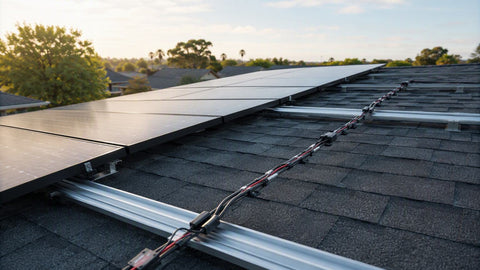
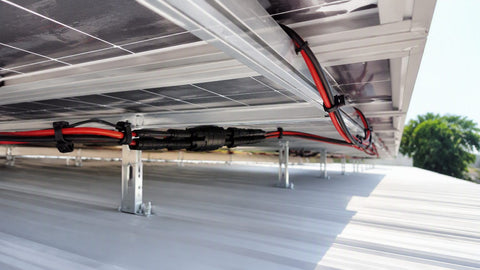
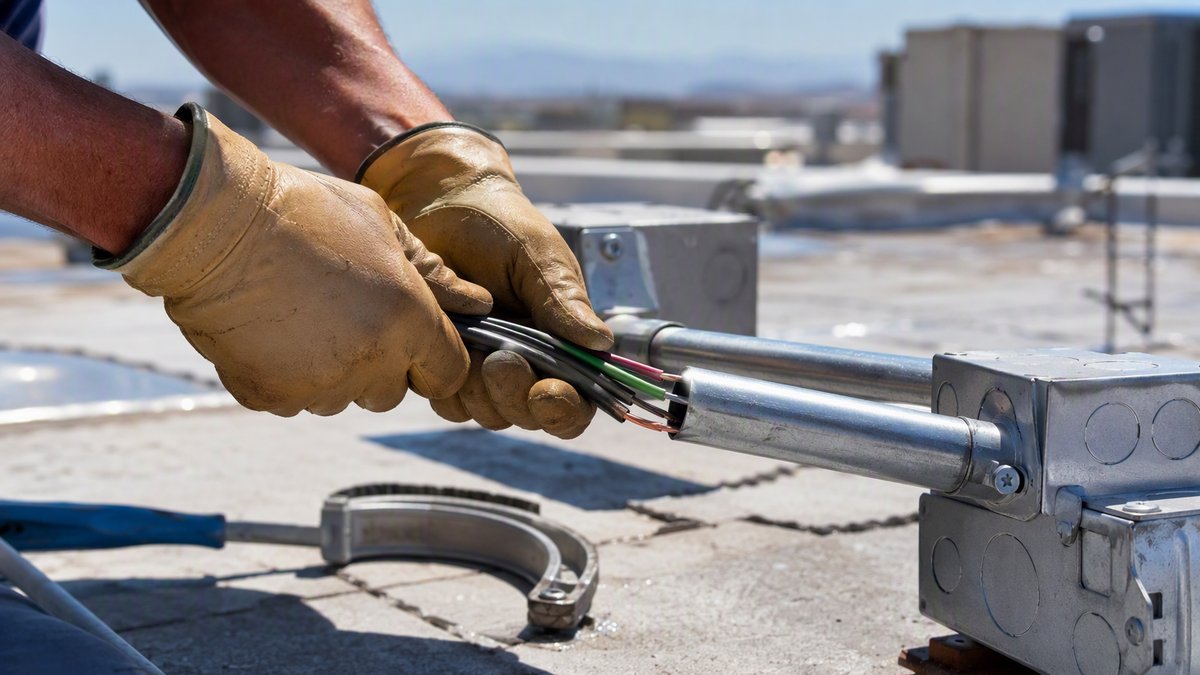
That last row is the one that burns people: a "40A" conductor legally protecting a 20A load. Where rooftop conduit is unavoidable, NEC 310.15(B)(2) adds ambient adders for conduits in direct sunlight — the table's ambient input assumes you have already added those degrees.
How the Two Correction Tables Work
Ambient temperature correction (NEC Table 310.15(B)(1)) derates for heat. Ampacity is a thermal rating — the table assumes heat can escape into 30°C surroundings. At 40°C ambient, a 90°C conductor keeps 91% of its table ampacity; a 75°C conductor keeps 88%; a 60°C conductor keeps just 82%. Higher-rated insulation loses less in percentage terms because it starts with more thermal headroom, which is exactly why the code lets you derate from the 90°C column for THHN-2 even when terminations cap the final number at 75°C values.
Bundling adjustment (NEC Table 310.15(C)(1)) derates for crowding. More than three current-carrying conductors in a raceway or cable means each conductor's heat has nowhere to go:
| Current-carrying conductors | Adjustment factor |
|---|---|
| 1–3 | 1.00 |
| 4–6 | 0.80 |
| 7–9 | 0.70 |
| 10–20 | 0.50 |
| 21–30 | 0.45 |
| 31–40 | 0.40 |
| 41 and above | 0.35 |
Neutrals count when they actually carry current — the neutral of a single-phase 120/240V circuit counts, while the neutral of a balanced three-phase wye generally does not (except where third-harmonic content dominates, per 310.15(E)). Equipment grounding conductors never count. If crowding is the binding constraint, splitting circuits across two conduits is usually cheaper than upsizing every conductor — and our conduit fill calculator will tell you how many conductors each trade size legally holds.
The Termination Ceiling: NEC 110.14(C)
Derating from the 90°C column feels like a loophole until you remember the equipment at both ends. NEC 110.14(C) says the conductor's final ampacity cannot exceed the temperature rating of the lowest-rated termination in the circuit. The defaults: circuits rated 100A or less, or using 1 AWG and smaller conductors, use the 60°C column unless the equipment is marked otherwise; circuits over 100A with larger conductors use the 75°C column. Modern breakers and lugs are almost universally marked 75°C, so the 75°C column is the practical ceiling for most work — which is the calculator's default.
The strategic takeaway: in hot or crowded conditions, the 90°C starting column can preserve enough ampacity to keep your conductor size; in benign conditions it adds nothing because the 75°C termination column already governs. Run the numbers both ways before you buy — the AWG wire gauge chart has the full ampacity reference by size if you want the raw table in front of you.
Frequently Asked Questions
What is ampacity derating?
Derating reduces a conductor's NEC 310.16 table ampacity for real-world conditions. Two multipliers apply: the ambient-temperature correction factor from NEC Table 310.15(B)(1) when the surrounding air is above or below 30°C, and the bundling adjustment factor from Table 310.15(C)(1) when more than three current-carrying conductors share a raceway. Adjusted ampacity = table ampacity × temp factor × bundling factor, capped by the termination-temperature column per NEC 110.14(C).
Can I use the 90°C column of NEC 310.16 for THHN wire?
Yes — for derating calculations only. THHN-2/THWN-2 is 90°C-rated insulation, so you may start temperature and bundling corrections from the 90°C column. But the final usable ampacity can never exceed the termination column: 75°C for modern marked equipment, 60°C for unmarked equipment rated 100A or less per NEC 110.14(C). In cool, uncrowded installations the 90°C column adds nothing; in hot or crowded ones it preserves ampacity.
How many wires can I put in a conduit before derating?
Up to three current-carrying conductors with no adjustment. At 4–6 conductors ampacity drops to 80%, 7–9 to 70%, 10–20 to 50%, 21–30 to 45%, 31–40 to 40%, and 41+ to 35% of the table value per NEC Table 310.15(C)(1). Ground wires and unused spares do not count, and this is separate from conduit fill — a conduit can be legally full at 40% cross-section per NEC Chapter 9 yet still trigger ampacity adjustment.
Does the neutral wire count as a current-carrying conductor?
Sometimes. The neutral of a single-phase 120V or 120/240V circuit counts because it carries the unbalanced load current. The neutral of a balanced three-phase four-wire wye circuit generally does not count — unless the loads are nonlinear (LED drivers, computers, VFDs), where third-harmonic currents can make the neutral the most loaded conductor per NEC 310.15(E). Equipment grounding conductors never count toward the adjustment.
What temperature rating are circuit breaker terminals?
Modern breakers and lugs are almost always marked 75°C, and NEC 110.14(C) defaults circuits over 100A (conductors larger than 1 AWG) to the 75°C column anyway. Circuits 100A and under with unmarked equipment default to 60°C. When both ends are marked 75°C you may use the 75°C column as the ampacity ceiling; check the breaker and lug markings rather than assuming — mixing a 75°C breaker with a 60°C device puts you back on the 60°C column.
Spec'ing Wire for a Tough Run?
PES Supply stocks THHN-2/THWN-2, XHHW-2, conduit, fittings, and listed lugs from 169 authorized brands. Send the run list and ambient conditions — we'll quote the full package at contractor pricing.
Shop Electrical Supplies Contact Us for Bulk PricingRelated Resources
- Wire size by amps: ampacity chart and breaker matching
- AWG wire gauge chart: diameter, resistance, and ampacity
- Conduit fill calculator: NEC Chapter 9 tables
- Breaker size calculator: the NEC 125% rule
- THHN-2, XHHW-2, conduit, and lugs