Service Entrance Cable Size Calculator: 100A, 200A & 400A Services
Reading time: ~10 min read
📋 Key Takeaways
- For a dwelling service or feeder carrying the entire load, NEC 310.12 lets you size conductors at 83% of the service rating — a 200A dwelling service needs wire rated for just 166A: 2/0 Cu or 4/0 Al.
- Non-dwelling and non-full-load circuits size straight off Table 310.16 (75°C column for these sizes): a 200A commercial service is 3/0 Cu or 250 kcmil Al — a full size heavier.
- The 200A residential standard answer: 2/0-2/0-2/0-4 AWG Al SER is out of code for 310.12 dwellings (4/0 is the minimum neutral/EGC math aside) — use 4/0-4/0-4/0-2/0 Al SER or 2/0 Cu THHN in conduit.
- SER is the default for interior runs to the panel; USE-2/RHW for underground laterals; THHN/XHHW-2 in conduit when the AHJ or job spec requires raceway.
- Long service runs (200+ ft to a detached structure or ranch panel) need a voltage-drop check — 3% on the service can push you one or two sizes past the ampacity answer.
"What size wire for a 200-amp service?" is the single most-asked wire question in the trade, and it has two correct answers depending on which NEC table applies. For dwelling units, NEC 310.12 (the old 310.15(B)(7)) recognizes that residential services never actually carry their full rating and lets you size at 83% — that's why 2/0 copper and 4/0 aluminum are everywhere. Everything else sizes off Table 310.16 at the 75°C column. The calculator below handles both paths: pick the service rating, material, and method, and it returns the conductor size, then runs a voltage-drop check if you give it a one-way run length.
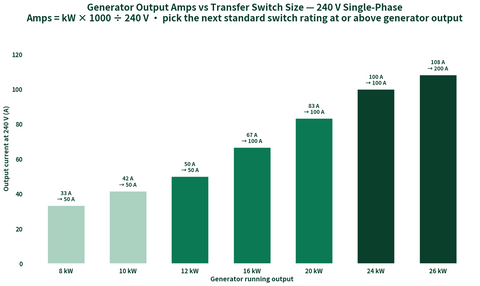
Building a service package? Our electrical supplies collection stocks SER, USE-2, THHN/XHHW-2, meter bases, and panels from 169 authorized brands — and our generators collection pairs naturally with transfer equipment for backup-ready services.
Service Entrance Cable Calculator
310.12 applies only when the service/feeder carries the entire dwelling load.
Voltage-drop check at full service rating, 240V single-phase.
Required conductor: —
Typical cable assembly: —
Voltage drop check: —
Dwelling sizes per NEC Table 310.12 (2020/2023); standard sizes per Table 310.16 at 75°C (terminals at these ratings are 75°C listed per 110.14(C)). Voltage drop computed as 2·K·I·L/cmil with K=12.9 (Cu) / 21.2 (Al) at 240V single-phase against a 3% target — informational only; the NEC treats service VD as a design recommendation, not a hard limit. Final sizing belongs to the NEC 220 load calculation and the AHJ.
Service Entrance Size Chart (Dwelling vs. Standard)
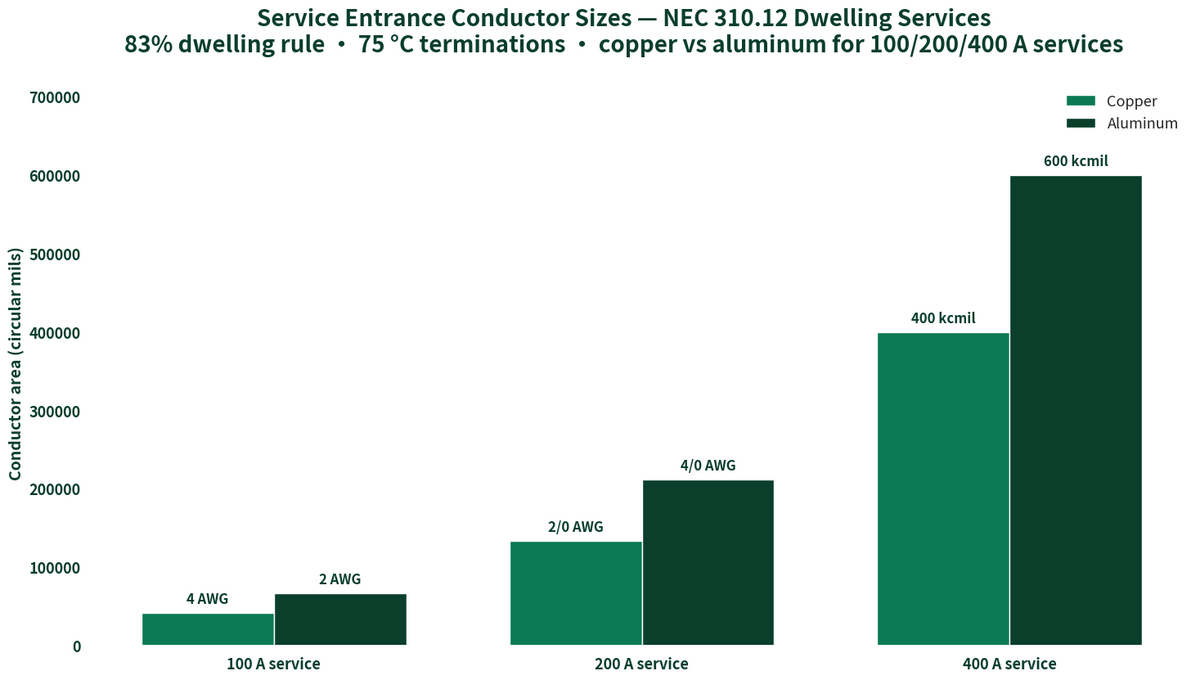
The two code paths side by side. The dwelling column assumes NEC 310.12 applies — service or feeder carries the entire load of a dwelling unit. Anything else (commercial, detached-building feeders that don't carry the whole dwelling, services feeding multiple units) uses the standard column:
| Service rating | Dwelling 310.12 — Cu | Dwelling 310.12 — Al | Standard 310.16 (75°C) — Cu | Standard 310.16 — Al |
|---|---|---|---|---|
| 100 A | 4 AWG | 2 AWG | 3 AWG | 1 AWG |
| 125 A | 2 AWG | 1/0 AWG | 1/0 AWG | 2/0 AWG |
| 150 A | 1 AWG | 2/0 AWG | 1/0 AWG | 3/0 AWG |
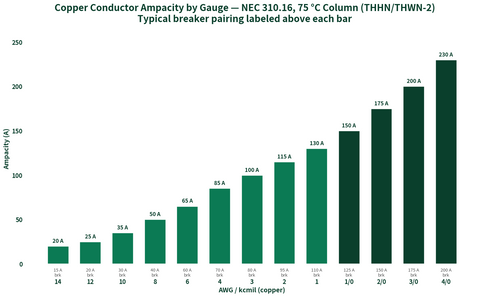
| 200 A | 2/0 AWG | 4/0 AWG | 3/0 AWG | 250 kcmil |
| 225 A | 3/0 AWG | 250 kcmil | 4/0 AWG | 300 kcmil |
| 320 A (400A class) | 350 kcmil | 500 kcmil | 400 kcmil | 600 kcmil |
| 400 A | 400 kcmil | 600 kcmil | 600 kcmil | 800 kcmil (or parallel 250 kcmil Al) |
The 400A row deserves a footnote: most residential "400A" services are actually 320A continuous-class meter bases feeding two 200A panels, which is why 350 kcmil Cu / 500 kcmil Al is the honest dwelling answer. True 400A services at the 75°C column land at 600 kcmil Cu or parallel runs — at which point most shops run parallel 250 kcmil Al or a CT cabinet with utility-approved conductors.
The 83% Rule (NEC 310.12), Explained Without Folklore
310.12 isn't a discount and it isn't optional voodoo — it's the NEC formalizing diversity. Dwelling loads are wildly non-coincident: the range, dryer, AC, and water heater never peak together. So for a service or feeder carrying the entire load of a dwelling unit (one-family, two-family, or an individual unit of a multifamily), the conductors only need an ampacity of 83% of the service rating. 200 × 0.83 = 166A, and 2/0 Cu at 75°C (175A) or 4/0 Al (180A) covers it.
Where contractors get burned is applying 310.12 to things it doesn't cover:
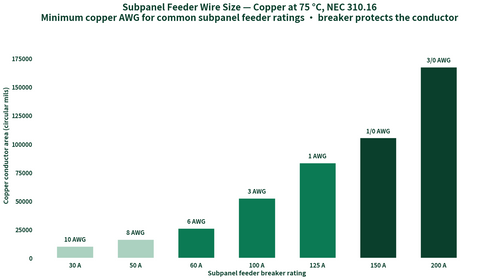
- Subpanel feeders that carry only part of the dwelling load — a 100A feeder to a garage subpanel fed from the main panel is not the entire dwelling load; it's straight 310.16 (though 2023 NEC added 310.12(B) covering feeders serving the entire load of a dwelling unit, e.g., a downstream main panel after a service disconnect).
- Commercial and mixed-use services — no 83%, ever. 310.16 at the termination column.
- Services with no capacity margin — the conductor must still carry the calculated NEC 220 load; if the load calc exceeds 83% of rating, the calc governs.
SER vs. SEU vs. THHN vs. USE-2: Picking the Assembly
Once the size is settled, the assembly question is mostly about the route:
- SER (service entrance, round): the residential default overhead/interior answer — two or three insulated conductors plus a bare neutral/ground in an overall jacket, sunlight-resistant, run exposed or in raceway. 4/0-4/0-4/0-2/0 Al SER is the classic 200A dwelling assembly.
- SEU (U-style): flat twin-hot with concentric neutral — older stock, still listed, less common on new work.
- THHN/XHHW-2 in conduit: required when the AHJ wants raceway end-to-end, in commercial work, and whenever you want the neutral insulated and full-size. Costs more in labor, wins on flexibility and repairability.
- USE-2/RHW direct burial: the underground lateral answer — single conductors, no overall assembly, sunlight-resistant and rated for direct earth burial. Triplex/quadplex URD assemblies are the utility-side cousin.
One trap: NM-B and UF are not service-entrance wiring methods (338.10/340.10 restrictions aside, 338.12 limits SE use), and SER used indoors must still respect the 60°C NM-style rules only when the AHJ treats it as a cable assembly — most read SER at 75°C because the conductors inside are XHHW-2. Ask before you pull.
Voltage Drop on Long Service Runs
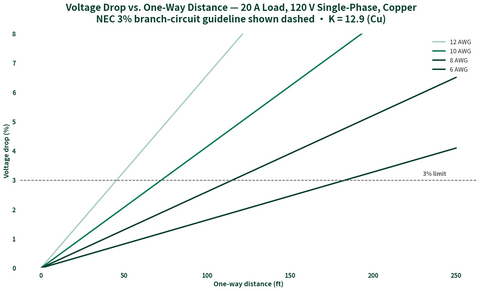
Rural lots, detached shops, and deep-set panels turn an ampacity answer into a voltage-drop problem fast. The math at 240V single-phase: VD = 2·K·I·L ÷ cmil, with K=12.9 for copper and 21.2 for aluminum. A 200A service run 300 feet on 4/0 Al drops about 15.4V — 6.4%, double the 3% design target — and the fix is 300 kcmil Al or stepping to copper. The NEC's 3% figures are informational notes for services (design practice, not a hard limit), but 210.19/215.2 make 3% branch/feeder numbers enforceable-adjacent in many jurisdictions, and every inspector has seen a dimming-light callback from a skinny lateral. Run the calculator above with your actual length before ordering wire; the cost of one size up is trivial next to a re-pull.
Frequently Asked Questions
What size wire do I need for a 200-amp service?
For a dwelling under NEC 310.12 (the 83% rule): 2/0 AWG copper or 4/0 AWG aluminum — typically installed as 4/0-4/0-4/0-2/0 Al SER or 2/0 Cu THHN in conduit. For non-dwelling services sized from Table 310.16 at 75°C: 3/0 AWG copper or 250 kcmil aluminum. Long runs over ~200 ft should also be checked for voltage drop, which can push the size up regardless of the table answer.
What size wire for a 100-amp service?
Dwelling sizing per NEC 310.12: 4 AWG copper or 2 AWG aluminum — the common assembly is 2-2-2-4 Al SER. Standard Table 310.16 sizing at 75°C for non-dwelling applications: 3 AWG copper or 1 AWG aluminum. Note that some AHJs and older stock conventions still quote 2 AWG Cu for 100A — that's the 310.12 answer and applies only to full dwelling loads.
What is the 83% rule for service entrance cable?
NEC 310.12 allows conductors for a service or feeder carrying the entire load of a dwelling unit to be sized at 83% of the service rating, recognizing residential load diversity. A 200A dwelling service therefore needs conductors rated for 166A (2/0 Cu or 4/0 Al), not 200A. It does not apply to commercial services, partial-load subpanel feeders, or any case where the calculated load exceeds 83% of the rating.
Can I use aluminum wire for a service entrance?
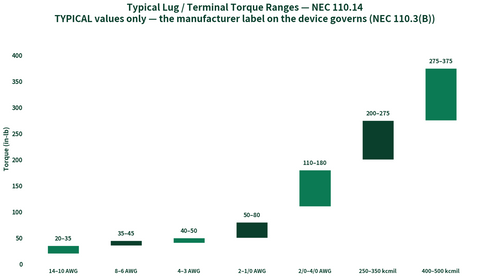
Yes — aluminum (AA-8000 series) is the standard residential service-entrance material and what most SER and URD cable is made of. Use 75°C-rated terminations, wire-brush and apply antioxidant compound per manufacturer instructions, torque lugs to spec with a calibrated tool, and never use aluminum smaller than the minimums in 230.31/338.10. The two-sizes-larger penalty versus copper is already reflected in Tables 310.12 and 310.16.
What size wire for a 400-amp residential service?
Most residential "400A" services are 320A-class meter bases feeding two 200A panels. Under NEC 310.12 for the full dwelling load, the 320/400A row calls for 350 kcmil copper or 500 kcmil aluminum; true 400A sizing from Table 310.16 at 75°C is 600 kcmil copper or parallel aluminum. Because single conductors that large are unwieldy, many installs use parallel 250 kcmil Al runs or a CT cabinet — coordinate with the utility and AHJ before ordering.
Quoting a Service Change or New Service?
PES Supply stocks SER, USE-2, THHN/XHHW-2, meter bases, and panels from 169 authorized brands. Send the one-line and run lengths — we'll quote the complete service package at contractor pricing.
Shop Electrical Supplies Contact Us for Bulk PricingRelated Resources
- Electrical supplies: SER, THHN, panels, and meter bases
- Generators and transfer switches
- Solar panels and interconnection hardware
- EV chargers and dedicated circuits