Anker SOLIX Buying Guide: C2000 Gen 2 vs F3800 vs E10
Reading time: ~9 min read
📋 Key Takeaways
- The C2000 Gen 2 (2,048Wh / 2,400W) is the sweet spot for home essentials and RV use — it runs a dual-door fridge up to 32 hours, recharges from the wall in 58 minutes, and doubles to 4kWh with one BP2000 expansion battery.
- The F3800 is the first SOLIX with native 120V/240V split-phase output — 6,000W continuous, 9,000W surge, a NEMA 14-50 that can charge an EV, and expansion to 26.9kWh with six BP3800 batteries.
- The E10 is a permanently installed whole-home system (9,600W at 240V with automatic failover via the Power Dock), not a portable — choose it when you want the backup to switch over without you touching anything.
- Every SOLIX uses LFP (LiFePO4) cells rated for 3,000–4,000 cycles to 80% capacity — roughly a decade of regular use — backed by a 5-year warranty.
- Match watt-hours to your outage plan first, watts second. Capacity decides how long you run; output decides what you can start.
Anker's SOLIX line has quietly become one of the most complete backup-power families on the market: pocket-size units at the bottom, a rolling 6kW dual-voltage flagship in the middle, and a permanently installed whole-home system at the top. The problem is the model names tell you nothing. C1000, C2000 Gen 2, F3000, F3800, E10 — the letters are a form-factor code (C = compact portable, F = full-size portable, E = installed energy system), and the numbers only loosely track capacity. This guide decodes the lineup we stock, with the specs that actually decide a purchase: usable watt-hours, continuous and surge output, solar input limits, and what each expansion battery buys you.
The lineup at a glance
| Model | Capacity | Output (cont. / peak) | Solar input | Expands to | Best for |
|---|---|---|---|---|---|
| C1000 Gen 2 | 1,024Wh LFP | 2,000W | — | — | Weekend camping, electronics, short outages |
| C1000X | 1,056Wh LFP | 1,800W | — | — | Budget 1kWh class, fast recharge |
| C2000 Gen 2 | 2,048Wh LFP | 2,400W / 4,000W | 800W (11–60V) | 4,096Wh (+1 BP2000) | Home essentials + RV (TT-30 port) |
| F3000 | 3,072Wh LFP | 3,600W | — | +BP3000 (3,072Wh ea) | Job sites, longer RV trips |
| F3800 | 3,840Wh LFP | 6,000W / 9,000W | 2,400W (2×1,200W) | 26.9kWh (+6 BP3800); 2 units → 12kW / 53.8kWh | Whole-home circuits, EV charging, 240V loads |
| E10 | 6–24kWh LFP (modular) | 9,600W @ 240V; 10–30kW turbo | via system | B6000 modules (6kWh ea) | Permanent whole-home backup, automatic |
C2000 Gen 2: the one most people should buy
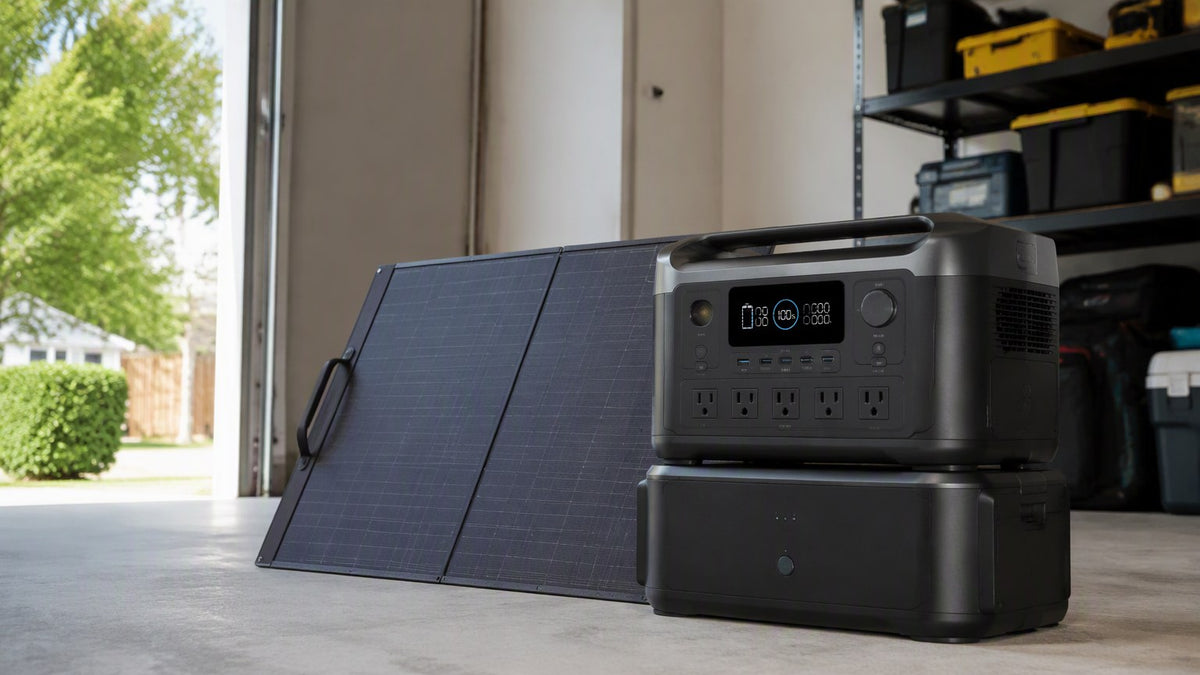
The C2000 Gen 2 packs 2,048Wh of LFP storage and a 2,400W inverter (4,000W peak) into a 41.6-lb box — about 25% lighter than the 2kWh class average. Two numbers make it stand out. First, recharge speed: 1,800W of AC input takes it from empty to 100% in 58 minutes (80% in 45), so a short generator run or a lunch-stop outlet resets a full day of capacity. Second, idle draw: at roughly 9W standby, it can hold a dual-door refrigerator for up to 32 hours where hungrier inverters burn a third of their capacity just being switched on.
It is also the cheapest SOLIX with a real RV port — a TT-30 that feeds a 30A travel-trailer panel directly — plus five NEMA 5-20 outlets, two 140W USB-C ports, and an 800W XT-60i solar input that works with any panels in the 11–60V window, including our Anker PS400 400W panel. Add the BP2000 expansion battery and you double to 4,096Wh — the bundle with the BP2000 included is usually the better buy. For road charging, the 800W alternator charger refills it from the vehicle about 8× faster than a 12V socket.
F3000 and F3800: when you need real power
The F3000 (3,072Wh / 3,600W) bridges the gap: it starts heavy corded tools and runs a full RV load, and each BP3000 battery adds another 3,072Wh. It stays a 120V machine, though — no 240V loads.
The F3800 is the flagship for a reason: 6,000W continuous (9,000W surge) with native 120V/240V split-phase output from a single unit. That means a well pump, a dryer, or a small central AC condenser — loads no 120V portable can touch. The NEMA 14-50 outlet charges an EV at up to 6,000W with nothing but your normal EV cable. Solar input doubles to 2,400W across two MPPT channels, and up to six BP3800 batteries take one unit to 26.9kWh; a second F3800 on the Double Power Hub reaches 12kW and 53.8kWh — genuine multi-day whole-home capacity on wheels. The F3800 Plus variant adds generator bypass, so any 240V generator (including the SOLIX Smart Generator 5500 tri-fuel) can recharge it at 6,000W while it keeps powering the house.
E10: the installed whole-home system
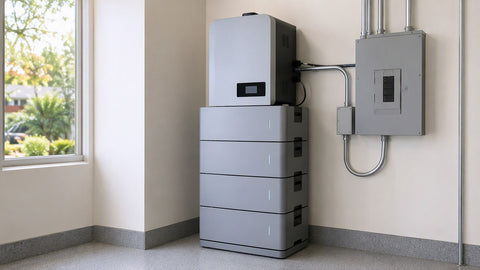
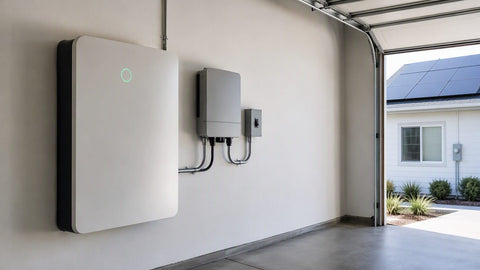
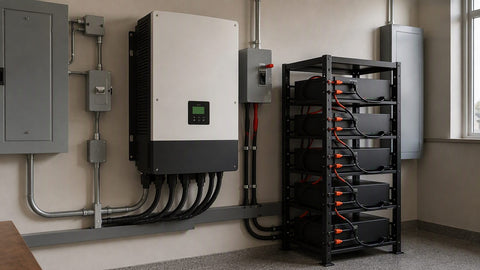
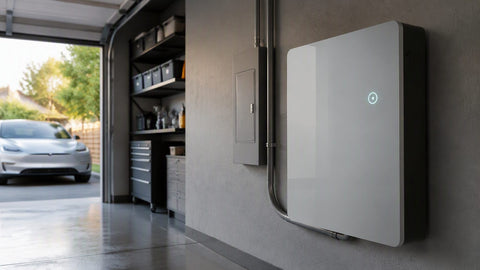
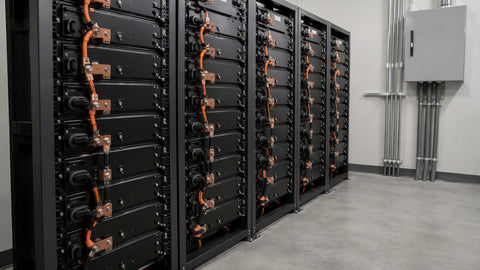
The E10 is a different animal: a fixed, modular system that wires into your panel through the Power Dock and switches over automatically when the grid drops — 9,600W at 240V with 10–30kW turbo output, and stackable B6000 modules (6kWh each) from 6kWh to 24kWh. Compared to the F3800 it costs more and never leaves the house, but there is no transfer-switch routine, no rolling anything out of the garage, and Storm Guard pre-charges the batteries when severe weather is forecast. If you want backup that behaves like a standby generator without the engine, this is the SOLIX to quote.
Which Anker SOLIX should you buy?
- Essentials only (fridge, router, lights, phones): C1000 Gen 2 or C1000X — 1kWh is enough for an overnight outage.
- Essentials + RV or frequent outages: C2000 Gen 2, with a BP2000 if you want two-day fridge coverage.
- 240V loads without an electrician: F3800 — the only portable here with split-phase output and EV charging.
- Multi-day whole-home, manual is fine: F3800 + BP3800s; add the Smart Generator 5500 for indefinite runtime.
- Whole-home, automatic, permanent: E10 with Power Dock — size the B6000 modules to your critical-load list.
For capacity planning, our solar battery backup runtime calculator turns your load list into the watt-hours you actually need, and the charge-time calculator shows how fast a given solar array refills each of these units.
Frequently Asked Questions
What can the Anker SOLIX C2000 Gen 2 actually run?
With 2,400W continuous (4,000W peak) it runs a full-size refrigerator (150–200W running), a 1/2 HP sump pump, a microwave, lights and electronics — several at once. Its 2,048Wh capacity holds a dual-door fridge for up to 32 hours thanks to a ~9W idle draw. What it will not run is 240V equipment: well pumps, dryers and central AC need the F3800 or E10.
Is the Anker SOLIX F3800 worth it over the C2000 Gen 2?
Yes if you need 240V or EV charging — the F3800's 6,000W split-phase output and NEMA 14-50 have no equivalent in the C series. For 120V essentials only, the C2000 Gen 2 is half the weight, a third of the price, and recharges faster from a wall outlet (58 minutes to 100%).
How long do Anker SOLIX batteries last?
All SOLIX units use LiFePO4 (LFP) cells: the C2000 Gen 2 is rated for 4,000 cycles to 80% capacity and the F3800 for 3,000+ cycles — roughly 10 years of regular use — and every unit carries a 5-year warranty.
Can I charge a SOLIX with any solar panel, or only Anker panels?
Any panel works as long as it fits the input window — the C2000 Gen 2 accepts 11–60V up to 800W via XT-60i, and the F3800 takes two 1,200W channels. Anker's PS400 400W panel is the matched option, but standard MC4 residential panels with an adapter work within the same voltage limits.
What is the difference between the F3800 and the E10?
Portability and automation. The F3800 is a 132-lb rolling power station: 6,000W, manual hookup through a transfer switch or direct cords. The E10 is a permanently installed system with a Power Dock that fails over automatically at 9,600W / 240V and expands with 6kWh B6000 modules up to 24kWh. Same LFP chemistry — different jobs.
Get Your Anker SOLIX System Quoted
PES Supply stocks the full SOLIX line — power stations, expansion batteries, panels, and the Smart Generator — at contractor pricing, plus the batteries, inverters and transfer gear around them. Send your load list and we will spec the right size.
Shop Battery & Backup Power Contact Us for Bulk PricingRelated Resources
- Solar battery backup runtime calculator: hours by load
- Solar battery charge time calculator
- Battery bank sizing calculator: kWh and days of autonomy
- Off-grid inverter sizing: continuous, surge and battery
- Batteries and home energy storage
- Solar panels