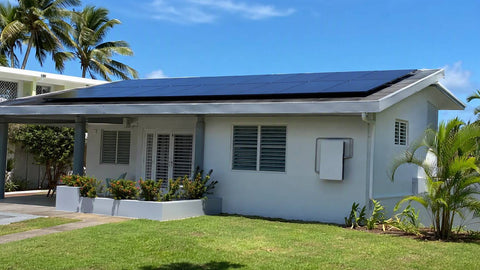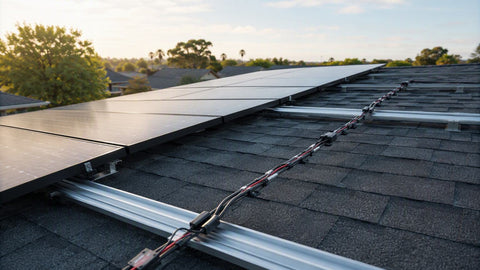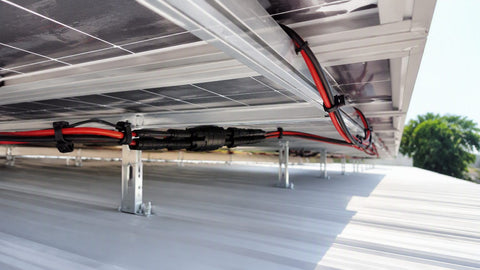
If you're in the Pacific Northwest, the Northeast, or anywhere that sees more gray than blue, you've heard the pitch: "solar doesn't work here." It's wrong — Germany ran a world-leading solar fleet on a cloud budget for decades. But cloudy climates do change which panels deserve your money. Here's what actually matters.
1. Efficiency buys you production when light is scarce
Under overcast skies, irradiance drops to 10–25% of full sun. Every point of module efficiency converts more of that diffuse light into kilowatt-hours. In a cloudy market, the premium for a 22%+ efficient panel is easier to justify than in Arizona — you're harvesting the same clouds, just more of them.
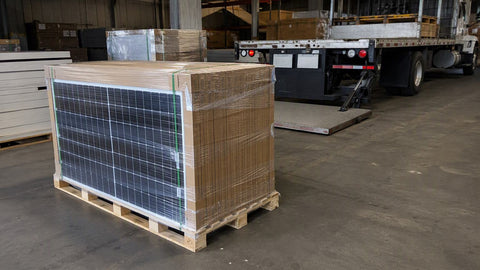
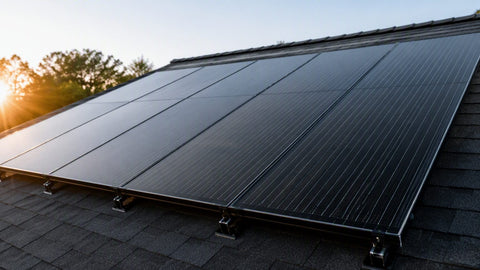
Modern N-type TOPCon and HJT modules lead on efficiency and degrade slower than older P-type PERC designs. See current options in our solar panels collection.
2. Low-light and bifacial behavior
Diffuse light is exactly what it sounds like — scattered, coming from the whole sky. Two panel traits help:
- Better low-irradiance response. N-type cells generally hold voltage better in weak light, which means the inverter wakes earlier and works later.
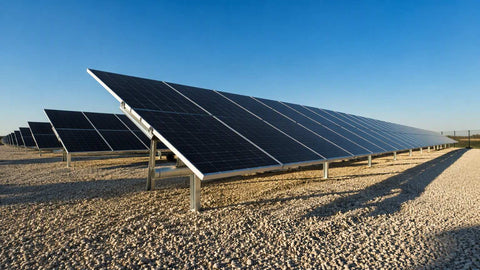
- Bifacial gain. On bright ground (light gravel, a white membrane roof, or snow — very relevant in cloudy climates), bifacial panels harvest reflected light on the rear side. Snow cover plus cold temperatures can produce surprisingly strong winter production.
3. Temperature coefficient matters less — but cold helps you
Panels lose output as they get hot. Cloudy climates are usually cool climates, so your panels run closer to their rated output more of the year. A modest temperature coefficient penalty hurts less in Seattle than in Phoenix.
4. Don't cheap out on the inverter pairing
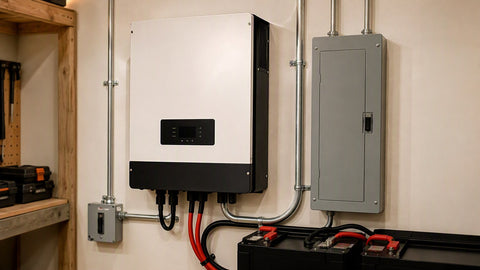
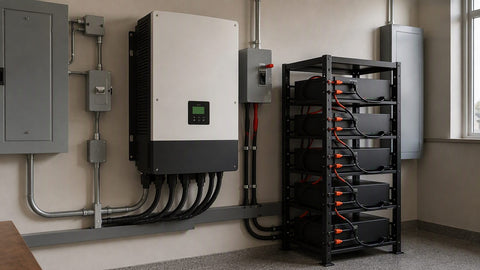
In low-light regions, inverter wakeup voltage and MPPT behavior at partial load shape your real harvest. Microinverters and optimizers also earn their keep where patchy cloud edges cause fast-moving shade. Pair your modules with the right electronics from our inverters collection.
The bottom line
Cloudy-climate solar works when the system is designed for it: high-efficiency N-type or bifacial modules, realistic production modeling, and electronics that make the most of weak light. If you're sizing a project, send us the details and we'll spec it against your actual conditions.
Frequently asked questions
Do solar panels work on cloudy days?
Yes — typically producing 10–25% of rated output under heavy overcast, and 40–60% under bright, thin cloud. Annual production is what matters, and cloudy regions still pencil out, especially with high electricity rates.
Are bifacial panels worth it in cloudy climates?
Often yes — diffuse and reflected light is a bigger share of total irradiance, and bifacial modules capture rear-side gain from bright surfaces and snow.
What's the single most important spec for a cloudy climate?
Module efficiency. When sunlight is scarce, converting more of it per square foot is the most direct way to protect your production.