kVA to kW Calculator: Power Factor Conversion, Amps, and Equipment Sizing
Reading time: ~8 min read
📋 Key Takeaways
- kW = kVA × power factor. kVA is apparent power (what the equipment must carry); kW is real power (the work actually done). The power factor is the ratio between them.
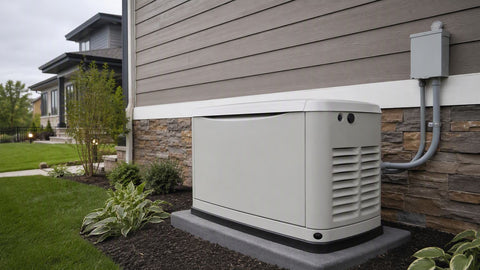
- Generators are rated at 0.8 PF. A 100 kVA standby set delivers 80 kW of real power. Size the load in kW, then divide by 0.8 to shop in kVA.
- Transformers are sized in kVA because they don't care about your power factor — they carry volts × amps either way. kVA = V × I ÷ 1,000 single-phase; kVA = V × I × 1.732 ÷ 1,000 three-phase.
- Low power factor costs twice: you buy more kVA of capacity to deliver the same kW, and many utilities bill demand or penalties on apparent power.
- Three-phase conversions need the √3 (1.732) multiplier — forgetting it under-sizes equipment by 42%.
kVA and kW measure two different things, and confusing them is how generators get undersized and transformers run hot. Real power (kW) turns motors and heats elements. Apparent power (kVA) is what the source has to supply to make that happen, and the gap between them is set by power factor — how much the load's current wave falls out of step with its voltage wave. Resistive loads run at PF 1.0, so kVA and kW match. Motors, compressors, and ballasts run at 0.8–0.9, so the source carries 10–25% more than the load uses. The calculator below converts in both directions and also turns kVA into full-load amps for single-phase and three-phase systems, which is the number you actually size wire and breakers from.
Shopping the hardware this math feeds? Browse our generators, inverters, and transformers and electrical supplies. For the full transformer sizing workflow including OCPD per NEC 450.3, see the transformer sizing calculator.
kVA ↔ kW Calculator
Pick the direction; amps mode adds voltage and phase.
kVA (modes 1 & 3) or kW (mode 2).
Generators: 0.8. UPS: 0.9–1.0. Resistive loads: 1.0.
Three-phase applies the √3 multiplier.
Line-to-line for three-phase.
Result: —
Relationship: —
Formulas: kW = kVA × PF; kVA = kW ÷ PF; single-phase kVA = V × I ÷ 1,000; three-phase kVA = V × I × √3 ÷ 1,000 (√3 ≈ 1.732). Generator standby ratings assume 0.8 PF unless the nameplate says otherwise. Informational — equipment nameplates and the AHJ govern.
Generator kVA to kW Chart (0.8 Power Factor)
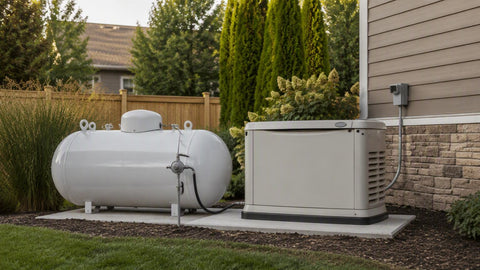
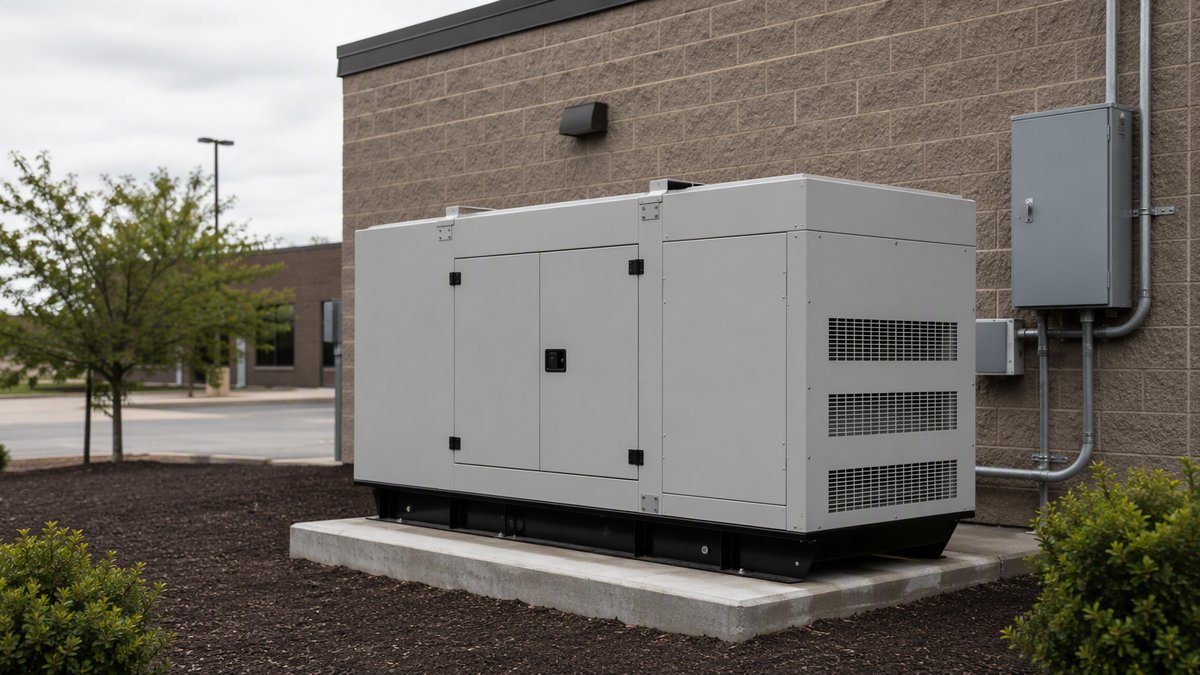
Standby generators are nameplated in kVA at 0.8 PF — the industry convention assumes your load mix of motors, electronics, and resistive heat averages out there. The kW column is what your loads actually get:
| Generator rating (kVA) | Real power (kW @ 0.8 PF) | Typical application |
|---|---|---|
| 10 kVA | 8 kW | Essential circuits — fridge, furnace, lights |
| 14 kVA | 11 kW | Small whole-home, no central AC |
| 20 kVA | 16 kW | Whole-home with one AC unit |
| 25 kVA | 20 kW | Whole-home, larger HVAC or well pump |
| 36 kVA | 29 kW | Large home / small commercial |
| 50 kVA | 40 kW | Small commercial, farm loads |
| 100 kVA | 80 kW | Commercial standby |
| 150 kVA | 120 kW | Commercial / light industrial |
Worked example: your load worksheet totals 14 kW of real demand. Dividing by 0.8 says the generator must supply 17.5 kVA — shop a 20 kVA unit and you have 14% headroom. Skip the conversion and buy a "14" anything and the set overloads the moment the compressor and well pump overlap. For the full worksheet — running watts, starting watts, motor LRA — use the generator sizing calculator.
Why Transformers and Generators Speak kVA
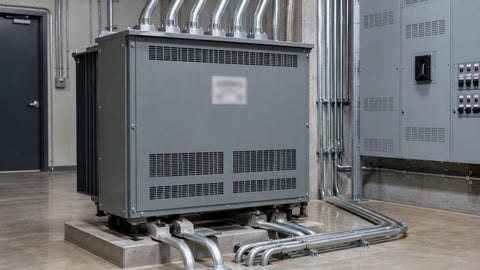
A transformer heats up according to the volts and amps moving through its windings — it has no idea whether those amps are in phase with the voltage or not. That's why transformers, generators, and UPS systems are rated in kVA: the rating describes what the equipment can carry, not what your loads happen to do with it. Your power factor determines how much of that carrying capacity becomes billable work. A 75 kVA transformer feeding a 0.8 PF plant tops out at 60 kW of real load; correct the plant to 0.95 PF and the same transformer supports 71 kW — capacity you bought once and unlocked with capacitors instead of copper.
Typical Power Factors by Load Type
| Load | Typical power factor |
|---|---|
| Resistive heat, incandescent lighting | 1.00 |
| Modern LED drivers, computers (PFC) | 0.95–0.99 |
| Standby generator industry convention | 0.80 |
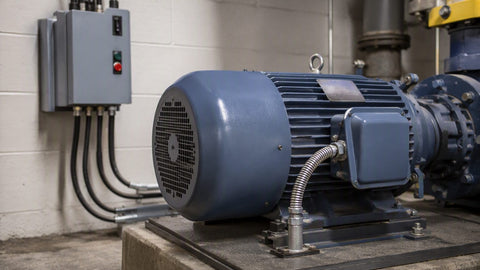
| Induction motors at full load | 0.80–0.90 |
| Induction motors at half load | 0.60–0.75 |
| Welders, older magnetic ballasts | 0.60–0.80 |
| UPS output rating (modern) | 0.90–1.00 |
The motor rows deserve attention: induction motors shed power factor as they unload, which is why a plant full of oversized motors runs a miserable PF even though every nameplate looks fine. Utilities notice — many tariff large customers on kVA demand or add PF penalties below 0.90, which turns power factor correction from an engineering nicety into a line item on the bill.
From kVA to Amps: The Sizing Handoff
Equipment is bought in kVA but wired in amps. Single-phase: amps = kVA × 1,000 ÷ volts — a 25 kVA transformer at 240V pulls 104A. Three-phase: amps = kVA × 1,000 ÷ (volts × 1.732) — a 75 kVA unit at 480V draws 90A per leg. Those full-load currents feed straight into conductor and OCPD selection per NEC 450.3 for transformers and NEC 445 for generators. Once you have amps, the rest of the workflow is standard circuit sizing: breaker, wire, and terminations.
Frequently Asked Questions
How do I convert kVA to kW?
Multiply kVA by the power factor: kW = kVA × PF. A 100 kVA generator at the industry-standard 0.8 PF delivers 80 kW of real power. At unity power factor (resistive loads), kVA and kW are equal. To go the other way — from a load you know in kW to the source capacity you must buy — divide: kVA = kW ÷ PF.
Why are generators rated in kVA instead of kW?
Because the generator can't control what you connect to it. The alternator's windings heat in proportion to volts × amps (apparent power) regardless of your load's power factor, so the honest rating is kVA. Manufacturers assume 0.8 PF by convention and print the equivalent kW alongside — a "100 kVA" standby set is an 80 kW machine. Size your load in kW, divide by 0.8, and shop in kVA.
How many amps is a 75 kVA transformer?
It depends on voltage and phase. Single-phase at 240V: 75,000 ÷ 240 = 312.5A. Three-phase at 480V: 75,000 ÷ (480 × 1.732) = 90.2A per phase. Three-phase at 208V: 75,000 ÷ (208 × 1.732) = 208.2A. That full-load current is the starting point for conductor and overcurrent device sizing under NEC 450.3 and Article 310.
What is a good power factor, and how do I improve it?
0.95 or higher is the usual target; many utilities penalize customers below 0.90. Power factor drops when inductive loads — induction motors, compressors, magnetic ballasts, welders — draw current out of phase with voltage. The standard fix is capacitor banks (or active correction at the service), which supply the reactive power locally so the utility and your upstream equipment don't have to. Right-sizing motors matters too: a motor at half load can run 0.65 PF while the same work at full load runs 0.85.
Is kVA the same as amps?
No — kVA is power (volts × amps ÷ 1,000); amps are current alone. You need voltage to move between them. 10 kVA is 83.3A at 120V single-phase, 41.7A at 240V single-phase, and 27.8A at 208V three-phase. This is why the same kVA rating means very different wire and breaker sizes at different system voltages — always convert to amps before opening the ampacity tables.
Sizing a Generator or Transformer?
PES Supply stocks standby generators, transformers, transfer switches, and the wire and OCPD to land them — 169 authorized brands. Send the kW load worksheet and we'll quote the right kVA package at contractor pricing.
Shop Generators Contact Us for Bulk PricingRelated Resources
- Transformer sizing calculator: kVA, load, and voltage
- Generator sizing calculator: running and starting watts
- Electrical load calculation: NEC 220 demand factors
- Breaker size calculator: the NEC 125% rule
- Standby and portable generators