Brand Guide · String & Hybrid Inverters
Sungrow: Residential, Commercial & Hybrid Inverter Guide
The installer's guide to Sungrow — SG-RS string inverters, SH-RS hybrids, SG-CX commercial line to 110 kW, sizing math, NEC interconnection, and honest comparisons to SMA and GoodWe.
Sungrow is the biggest inverter company most American homeowners have never heard of. Founded in 1997 by Professor Cao Renxian in Hefei, China, the company grew with the Asian solar boom into the largest PV inverter manufacturer on the planet by cumulative shipments — hundreds of gigawatts across utility-scale, commercial, and residential segments, plus a massive energy-storage business that makes it one of the top battery-system integrators globally as well. When the industry ranks bankability — the question of whether a manufacturer's warranty is money good — Sungrow sits in the tier that project finance signs without conditions.
The company's US distribution-grade lineup translates that scale into three product families: the SG-RS residential string inverters, the SH-RS residential hybrids with DC-coupled battery support, and the SG-CX commercial string line that scales to 110 kW per unit. The pitch is consistent across all three: top-tier efficiency and IP66 enclosures at a price per watt that undercuts the European brands by a meaningful margin.
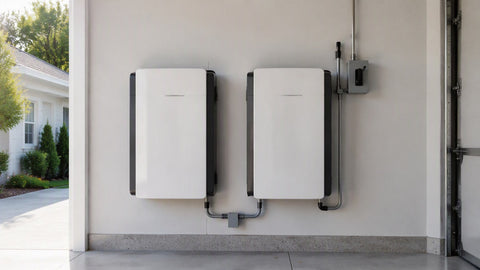
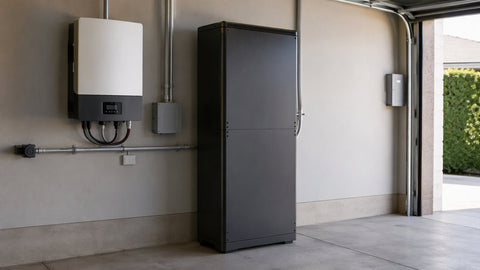
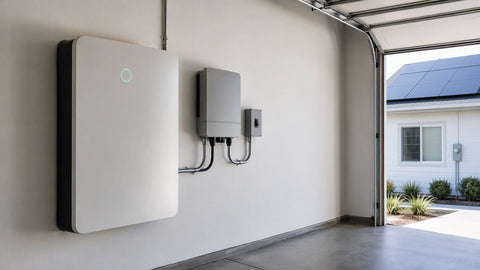
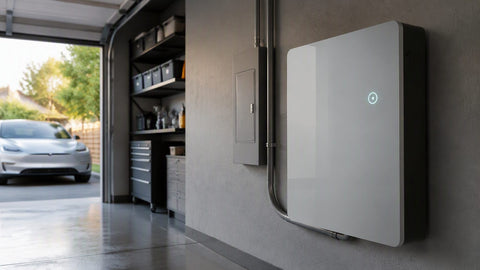
We've put Sungrow units on barns, commercial flat roofs, and residential garages, and the hardware first impression is consistent: heavy cast enclosures, serious gland plates, proper conduit entries — the boxes feel like industrial equipment because they come from a company whose home market expects exactly that.
The scale argument deserves one more paragraph because contractors underestimate it. A manufacturer shipping inverters by the gigawatt has seen every failure mode a distribution-level product can produce — grid events, lightning counties, desert heat, coastal salt — at sample sizes no boutique brand can approach. That field-data loop shows up in boring places: derating curves that don't surprise you, fans sized for August in the Central Valley, firmware that already knows about your utility's weird voltage ride-through requirement. Scale isn't a spec-sheet line, but it ships inside every unit.
The residential grid-tie anchors are the SG5.0RS (5 kW) and SG10RS (10 kW): single-phase, 2 MPPTs, 98.4% peak efficiency, IP66 outdoor rating, integrated DC switch. The storage-ready counterparts are the SH5.0RS and SH10RS hybrids with DC-coupled battery interfaces and backup output. Commercial work runs on the SG-CX line — 30 kW through 110 kW three-phase units with multi-MPPT architectures (9 MPPTs on the 110) and 98.5% peak efficiency. The lineup:
| Model | Type | Power | MPPT | Efficiency | Key Features | Price Range |
|---|---|---|---|---|---|---|
| Sungrow SG5.0RS | Residential string | 5.0 kW | 2 | 98.4% peak | IP66, compact, integrated DC switch | $900-$1,300 |
| Sungrow SG10RS | Residential string | 10.0 kW | 2 | 98.4% peak | Single-phase, high power, IP66 | $1,500-$2,000 |
| Sungrow SH10RS | Residential hybrid | 10.0 kW | 2 | 97.5% round-trip | DC-coupled battery, backup power | $2,000-$2,800 |
| Sungrow SG30CX | Commercial string | 30 kW | 3 | 98.5% peak | Three-phase, multi-MPPT, commercial | $3,500-$4,800 |
| Sungrow SH5.0RS | Residential hybrid | 5.0 kW | 2 | 97% round-trip | Compact hybrid, battery-ready | $1,400-$1,900 |
Pair the RS line with modules from our solar panel catalog, and the SH hybrids with high-voltage storage from the battery inventory. For the commercial CX line, the array-side math lives in our commercial installation cost breakdown.
Sungrow's 2025–2026 distribution-segment work concentrated on certification currency and storage integration: the RS and SH lines carry the current UL 1741 SB grid-function requirements, the iSolarCloud platform absorbed a round of fleet-management improvements installers had been requesting, and the high-voltage battery ecosystem around the SH hybrids expanded its stackable configurations. The CX commercial line's grid-support functions — volt-var, frequency-watt, ride-through per IEEE 1547-2018 — matured to the point where utility interconnection reviews on CX-based commercial projects have become routine rather than adventurous.
The storage side of the house deserves a sentence of its own: Sungrow's utility and C&I battery business is enormous globally, and that scale feeds the residential storage ecosystem's cell supply and BMS maturity. The SH-plus-battery bundle benefits from engineering that utility-scale projects paid to prove.
The US lineup carries UL 1741 SB, IEEE 1547-2018, and CSA C22.2 for Canada, with rapid shutdown via the standard SunSpec transmitter architecture at the array. The IP66 enclosure rating across the RS/SH/CX lines is a certification of a different kind — hose-directed water and dust sealing that permits outdoor mounting without a shade structure, which simplifies commercial wall-mounts and agricultural installs where the inverter lives in the weather. Permit packages with Sungrow listing files pass AHJ review without friction in our experience.
Sungrow warranties the distribution line for 10 years standard, with extension options at registration. The North American service organization handles claims domestically — our RMA experience has been unremarkable in the best sense: documentation submitted, diagnosis confirmed, replacement dispatched. The warranty's real backing is the company's scale: one of the largest renewable-energy manufacturers on earth is not going to orphan a product line over a regional service decision, which is the risk you actually underwrite when you pick a value-priced inverter brand.
Process notes from the service desk: register every unit at commissioning, photograph the serial label before the unit goes on the wall, and keep the commissioning report from iSolarCloud in the job file. Warranty claims live and die on documentation, and the ten minutes of record-keeping at install is the difference between a one-week RMA and a one-month email chain. We learned to treat registration as part of the commissioning checklist, not an afterthought — right between firmware verification and the customer walkthrough.
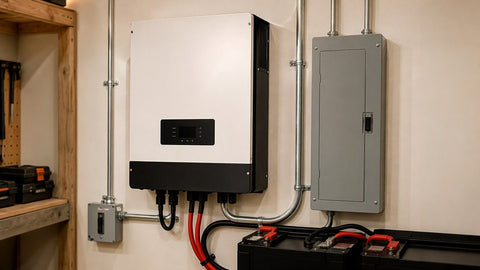
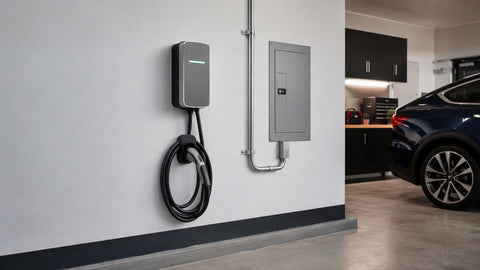
The RS units wall-mount with a separate bracket in the familiar pattern — bracket first, level, lift, latch. At roughly 40–50 lbs for the residential units, one tech can hang them, but two make it a five-minute job instead of a fifteen-minute wrestling match. The IP66 gland plate accepts real conduit fittings, and the DC terminals are spring-cage type that grip PV wire properly. Commissioning runs through the iSolarCloud app over the unit's local Wi-Fi: grid code, CT config on hybrids, firmware check, production verify. Fifteen minutes on a clean install.
On the CX commercial line, the discipline that matters is string planning across the multi-MPPT architecture. The 110 kW unit's nine trackers want balanced string plans — same module count per string on a tracker, consistent orientations grouped per MPPT — and the time to settle that plan is in the design tool, not on the roof with 300 modules staged. We've watched a crew improvise string assignments on a CX install and spend two days re-landing homeruns that a morning with the design tool would have prevented.
One more commercial field note: the CX units mount on racking or walls with serious clearance requirements for airflow — read the manual's clearance table and respect it, because an inverter banked tight against a parapet wall in a still-air corner will thermal-derate on the exact afternoons the building owner is watching the monitoring dashboard. We lay out inverter pads with the clearance dimensions marked in the plan set, and the install crew treats those lines like property boundaries. Derating is silent revenue loss, and it never shows up on a commissioning report.
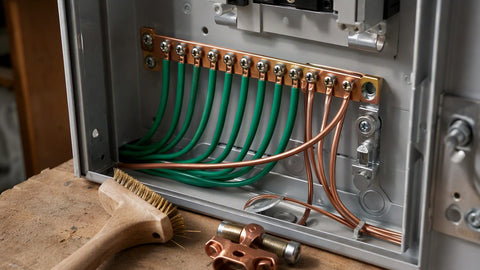
Conductor sizing for the runs follows the standard NEC playbook — our PV wire guide covers conductor types, the ampacity chart has the 310.16 tables, and the grounding and bonding guide handles the NEC 250/690.43 details that inspectors check first on transformerless systems.
Sungrow's string inverters reward the standard oversizing practice: arrays at 1.2–1.35× the inverter's AC rating harvest more energy in the shoulders of the day while brief midday clipping costs less than the next-larger inverter would. The working table across the range:
| Inverter | AC Rating | Array @ 1.2 Ratio | Array @ 1.35 Ratio | String Inputs | Typical Application |
|---|---|---|---|---|---|
| SG5.0RS | 5.0 kW | 6.0 kW | 6.75 kW | 2 MPPT | Small residential, offset partial load |
| SG10RS | 10.0 kW | 12.0 kW | 13.5 kW | 2 MPPT | Full residential offset, large roof |
| SH10RS (hybrid) | 10.0 kW | 12.0 kW | 13.5 kW | 2 MPPT | Residential backup + storage |
| SG30CX | 30.0 kW | 36.0 kW | 40.5 kW | 3 MPPT | Small commercial, agricultural |
| SG110CX | 110 kW | 132 kW | 148 kW | 9 MPPT | Commercial rooftops, ground-mount |
Run the site-specific math before finalizing — roof pitch, azimuth, local irradiance, and temperature all move the clipping point, and PVWatts with the actual inverter model is the ten-minute answer. Our system size calculator frames the residential end; for commercial arrays, the array footprint guide puts the roof requirements in real units.
Inverter outputs are continuous loads — 125% conductor and OCPD sizing per NEC 705.28, standard breaker ratings per 240.6(A), conductors from the 75°C column of 310.16. The table for the current line:
| Inverter | Max Continuous AC Current | 125% Sizing | Breaker (NEC 240.6(A)) | Copper Conductor (75°C, 310.16) |
|---|---|---|---|---|
| SG5.0RS @ 240V | 20.8 A | 26.0 A | 30 A (2-pole) | 10 AWG (35 A) |
| SG10RS @ 240V | 41.7 A | 52.1 A | 60 A (2-pole) | 6 AWG (65 A) |
| SH10RS @ 240V | 41.7 A | 52.1 A | 60 A (2-pole) | 6 AWG (65 A) |
| SG30CX @ 480V 3φ | 36.1 A | 45.1 A | 50 A (3-pole) | 8 AWG (50 A) |
| SG110CX @ 480V 3φ | 132.4 A | 165.5 A | 175 A (3-pole) | 2/0 AWG (175 A) |
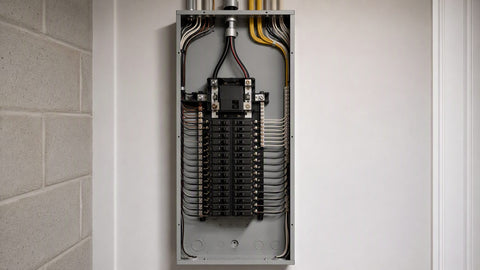
Residential interconnections hit the usual NEC 705.12 busbar constraint: a 200 A panel with a 200 A main allows 40 A of solar under the 120% rule, which means the SG10RS at 60 A needs a main-breaker derate, a line-side tap, or a supply-side connection. Our bus bar guide explains the math and the NEC 690 disconnect guide covers OCPD placement. Commercial CX interconnections are utility-territory engineering — start the interconnection application early, because it drives the schedule more often than the equipment does.
The RS/SH residential line and the CX commercial line are different tools that happen to share a logo. Residential jobs care about quiet operation, garage-wall mounting, Wi-Fi commissioning, and the storage question. Commercial jobs care about string voltage, tracker count, O&M accessibility, and the monitoring integration the building owner's accountant will never look at but the service contract depends on. Sungrow's strength is that both platforms come from an organization that ships commercial-scale gear by the gigawatt — the residential line benefits from commercial-grade thermal and enclosure engineering, and the commercial line's price per watt pressures every competitor's quote.
Where we steer around Sungrow: residential customers who want the deepest app ecosystem and brand recognition (that's the Enphase/SolarEdge conversation), and off-grid or heavy-backup designs where the hybrid platforms own the category. Everywhere else — especially price-sensitive commercial and clean-roof residential — the Sungrow quote wins often enough that not quoting it is leaving money on the table.
Sungrow against the brands it competes with on residential and light-commercial quotes:
| Feature | Sungrow | SMA | GoodWe |
|---|---|---|---|
| Peak efficiency | 98.4-98.5% | 98.2% | 97.6-98% |
| IP rating | IP66 | IP65 | IP65 |
| Standard warranty | 10 years | 10 years | 5-10 years |
| Hybrid option | SH series (DC-coupled) | Sunny Boy Storage (AC) | ET/EH/ES (DC-coupled) |
| Monitoring | iSolarCloud | ennexOS | SEMS+ |
| Cost per watt | $0.12-$0.20 | $0.15-$0.25 | $0.10-$0.18 |
| Commercial scale | Up to 110 kW string | Up to 30 kW string | Up to 250 kW |
Our read: on efficiency-per-dollar and enclosure rating, Sungrow leads this table outright. SMA counters with a longer US service history and the Smart Connected proactive-service program. GoodWe matches the price aggression with a broader hybrid catalog. For module-level work, the SolarEdge and Hoymiles architectures play a different game at a different price. The full field sits in our inverter top picks roundup.
iSolarCloud is Sungrow's monitoring platform: residential systems report production, faults, and (on hybrids) battery telemetry; commercial systems add string-level diagnostics and the IV-curve scanning tools that make Sungrow's utility O&M heritage visible at the distribution scale. The installer fleet view handles multi-site portfolios with alert triage, and the customer app covers the production-and-savings story homeowners actually check. The platform is functional and improving — a generation behind the polished consumer apps of the module-level brands, a generation ahead of the no-monitoring value tier. Set alert thresholds at commissioning and review the fleet weekly; the data catches soiling and string faults weeks before the customer's bill does, and every fault you catch remotely is a truck roll you never pay for.
Buy Sungrow when the job is price-sensitive without being quality-indifferent: clean-roof residential string work, storage-ready homes that want hybrid capability without the premium-brand tax, and commercial projects where 98.5% efficiency at $0.12–$0.20/W changes the pro forma. Skip it when the customer is buying the app ecosystem and brand name — Sungrow's software is good, not famous — and skip it for off-grid properties, which aren't the platform's design center. The 10-year warranty from a company of this scale is a different risk than the same number from a startup, and for most distribution-scale jobs, that combination of price, efficiency, and balance-sheet backing is the whole argument.
We stock the Sungrow RS, SH, and CX lines with the modules, racking, and balance-of-system to build complete systems from our inverter catalog. Compare architectures on the microinverter vs. string page, scope storage with the battery bank sizing guide, and get contractor volume pricing through quote request.
Specifications from Sungrow published datasheets (SG-RS, SH-RS, SG-CX series) and warranty documents current as of mid-2026. Electrical sizing per NFPA 70 (NEC) 2023 Articles 240.6(A), 310.16, 690, and 705. Clipping and sizing figures are directional — model the specific site before final design. Shipment and bankability rankings per industry analyst reporting current as of mid-2026. Pricing reflects typical US street pricing and varies by configuration and volume.
Is Sungrow a tier-1 manufacturer?
Yes — by shipment volume Sungrow is one of the largest PV inverter manufacturers on earth, and by bankability metrics it sits in the top tier that project finance will underwrite without blinking. The company has shipped hundreds of gigawatts of inverters globally and its utility-scale products anchor solar farms on every continent. The residential and commercial string lines covered here are the same company's distribution-grade products: different scale, same engineering organization, same balance sheet behind the warranty.
How does Sungrow's warranty compare to European brands?
Sungrow's standard warranty is 10 years on the string and hybrid lines — on par with SMA and Schneider, ahead of the 5-year value brands, behind the 12–25 year outliers. The practical question behind warranty duration is always the same: will the company exist and honor claims in year nine? Sungrow's scale and profitability answer that as well as anyone in the industry. Claims in North America run through their US service organization; our RMA experience has been routine — documentation, diagnosis, replacement, no drama.
Can Sungrow hybrid inverters work off-grid?
The SH-series hybrids support backup operation with a battery — grid-down transfer to protected loads works as expected, and the DC-coupled architecture charges the battery from the array efficiently. What they are not is a true off-grid platform for properties with no utility service: the backup mode assumes a grid-tied home that occasionally loses the grid, not a homestead that never has one. For full off-grid designs, the Sol-Ark and Schneider Conext platforms are the correct tools. For grid-tied backup at Sungrow's price point, the SH line is genuinely strong.
What is the difference between the SG and SH series?
SG is the straight grid-tied string inverter line: solar in, AC out, no battery interface. SH is the hybrid line: same string-inverter core plus a DC-coupled battery interface and backup-loads output. The buying decision is simple — if storage is in the plan now or within the warranty window, the SH's incremental cost beats retrofitting a separate battery inverter later. If the job is pure grid-tie production with no storage horizon, the SG is the cheaper, simpler box. Our hybrid inverter guide maps the architecture trade in detail.
Why is Sungrow so much cheaper per watt than SMA or Fronius?
Scale and supply chain, mostly. Sungrow's manufacturing volume lets it amortize engineering across enormous production runs, and its component supply chain is vertically integrated in ways the European brands aren't. The efficiency and reliability numbers on the current RS/CX lines are genuinely competitive — 98.4–98.5% peak efficiency and IP66 enclosures are not budget-hardware specs. The honest differential is in the intangibles: the European brands carry longer US service histories, deeper installer-training ecosystems, and monitoring platforms with more years of polish. Whether that premium is worth $0.05/W on your project is a business decision, and both answers are defensible.
Does Sungrow work with third-party batteries?
The SH series is designed around Sungrow's own high-voltage battery ecosystem for closed-loop operation, and that's the configuration we recommend — the integrated warranty and commissioning path are cleaner. Confirm third-party battery compatibility against Sungrow's current compatibility list before designing around a non-native battery; the list has expanded, but the native pairing remains the path of least resistance. For battery-agnostic architectures, that's precisely the Sol-Ark value proposition.
How long does delivery take from PES Supply?
Residential RS and SH units ship from stock in 1–3 business days; the CX commercial line moves by freight and typically delivers inside two weeks on stocked models. Large commercial orders quote on current lead times — on 100 kW-class projects, lock the inverter delivery date before you schedule the electrical rough-in, because the gear drives the critical path. Contractor volume pricing through our quote desk is same-day.
Shop Sungrow at PES Supply
Residential RS/SH hybrids and commercial CX string inverters — IP66, 98.5% efficiency, contractor pricing.
Browse Sungrow Inverters