Updated September 2026 — refreshed against the live PES catalog; product pricing verified 2026-09-26.
2026 product line update
| Product | Class | Price |
|---|---|---|
| Canadian Solar 710W TOPCon Bifacial Solar Panel | 710W | $340.80 |
| Hyundai 640W 156-Cell TOPCon Bifacial Solar Panel | 640W | $220.78 |
| Thornova Solar TS-BGT72(600) 600W Bifacial Solar Panel | 600W | $165.76 |
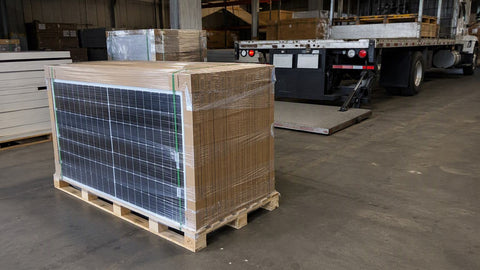
| Thornova Solar 595W Solar Panel 144 Cell Bifacial TS-BGT72(595) Wholesale 31 panels per pallet | 595W | $164.64 |
| ZNShine Solar 585W 144-Cell Bifacial Solar Panel | 585W | $246.99 |
| Hyundai HiS-S585OJ 585W Clear on Transparent156 Half-Cell Bifacial Solar Panel | 585W | $195.86 |
Live prices verified 2026-09-26. The current pallet line tops out at 550–640W, plus the Canadian Solar 710W TOPCon flagship panel.
Big Battery NEXUS 15kWh Explained: Specs & Scaling
Reading time: ~7 min read
📋 Key Takeaways
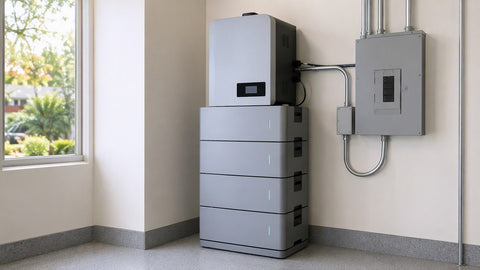
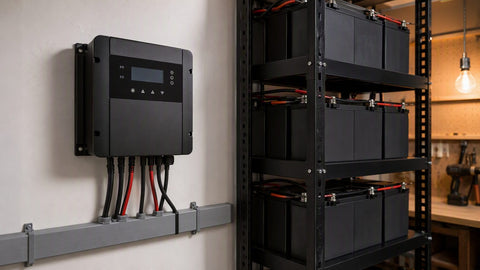
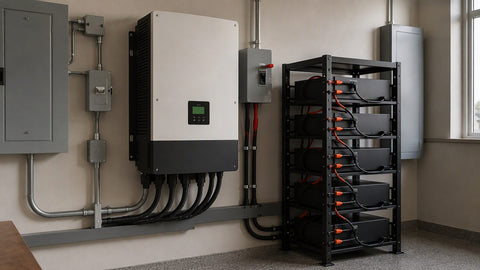
- One box, 15kWh usable. The NEXUS is a 48V (51.2V nominal) LiFePO4 floor-standing battery — roughly 280Ah in a 16S1P configuration — aimed at off-grid cabins, whole-home backup and scalable solar storage.
- Power limits matter more than capacity: 100A continuous discharge (about 7.6kW) with a 110A peak. Size your inverter to the battery, not the other way around.
- Scales by paralleling, up to 15 units / 215kWh, with RS485, CAN and RJ45 communications for closed-loop integration with EG4, Victron, Sol-Ark, LuxPower, Deye, Solis, GoodWe and Sofar inverters.
- Safety is built in, not bolted on: smart BMS with quadruple redundancy, an internal heater for cold charging, and aerosol fire suppression inside the enclosure.
- At $3,158.33 it lands near $0.21 per watt-hour — among the cheapest ways to buy a UL-conscious, heater-equipped 15kWh block today.
Shopping for a 48-volt battery bank in 2026 usually means choosing between rack modules you assemble yourself and a monolithic floor-standing block. The Big Battery NEXUS 15kWh is the second idea done properly: one enclosure, one BMS, one communications bus, and enough energy to run a cabin overnight or carry a home's critical loads through an outage — with a price per watt-hour that used to belong to sketchy import cells. Here is what the spec sheet actually says, and the math for what it will and will not run.
The honest spec sheet
| Specification | NEXUS 15kWh |
|---|---|
| Chemistry / configuration | LiFePO4, 16S1P |
| System / nominal voltage | 48V system, 51.2V nominal |
| Usable energy | 15kWh (~280Ah) |
| Continuous discharge | 100A (7.6kW max discharge power) |
| Peak discharge | 110A |
| Max charge current | 100A (charging range 53.5–57.6V; bulk/absorb ~56.8V) |
| Operating voltage range | 48–57.6V (suggested low-voltage cutoff 50.8V) |
| Temperature | Charge 32–113°F (0–45°C), discharge −4–113°F (−20–45°C) |
| Expansion | Up to 15 units in parallel → 215kWh |
| Communications | RS485 / CAN / RJ45 |
| Protection | Smart BMS (quadruple redundancy), internal heater, aerosol fire suppression |
| Form factor | Indoor floor-standing, IP21, 19.7" × 27.5" × 15.7", ~315 lb |
| Certifications / warranty | UN38.3; 12-year limited warranty (distributor-listed) |
What 100 amps really means for your inverter
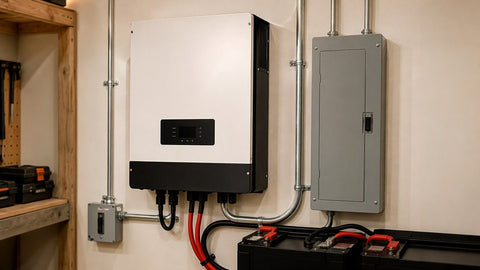
The number that decides whether the NEXUS fits your system is not 15kWh — it is 100A. At 51.2V nominal, 100 continuous amps is roughly 5.1kW of steady DC draw (Big Battery rates max discharge power at 7.6kW), with 110A available for short peaks. Pair it with a 5kW-class hybrid or off-grid inverter and the battery will never break a sweat. Pair a single unit with a 12kW inverter and you will spend your evenings watching the BMS current-limit your loads. Two NEXUS in parallel doubles the current budget to 200A — comfortably feeding an 8–10kW inverter — and that is the configuration we recommend for whole-home backup with a well pump or a mini-split in the mix. Use our off-grid inverter sizing guide to match continuous and surge ratings before choosing.
Runtime math you can do on a napkin
Fifteen usable kilowatt-hours, honestly applied:
- Refrigerator + lights + internet + furnace blower (~400W average): about 37 hours — a full weekend outage with conservation.
- Off-grid cabin daily cycle (~5kWh/day): three days of autonomy, or one day with margin while solar refills.
- Whole-home critical loads (~1,200W average): roughly 12 hours — overnight coverage, which is what most grid-tied backup systems are actually sized for.
- Running near the 7.6kW discharge limit: about two hours. Continuous high-draw is not what this battery is for; parallel units if that is your load profile.
For bank sizing across days of autonomy, the battery bank sizing calculator does the full math, and the backup runtime calculator converts your specific load list into hours.
Cold weather, fire safety and the BMS
Three details separate the NEXUS from the commodity 15kWh blocks flooding the market. First, the internal heater: LiFePO4 cells cannot accept charge below freezing, and the NEXUS warms itself so a cold garage in January does not brick your morning solar harvest — charging is rated from 32°F to 113°F, discharging down to −4°F. Second, aerosol fire suppression inside the enclosure — a last-line defense you hope never matters, on top of a smart BMS with quadruple redundancy handling over-voltage, under-voltage, over-current, temperature and cell balancing. Third, closed-loop communications: over RS485, CAN or RJ45 the battery talks state-of-charge and limits directly to EG4, Victron, Sol-Ark, LuxPower, Deye, Solis, GoodWe, Pylon and Sofar equipment, so the inverter charges and discharges against live BMS data instead of blind voltage guesses. Cable sizing between battery and inverter still applies at 100–200A — our battery cable size chart covers the 48V runs.
Who should buy it — and who should not
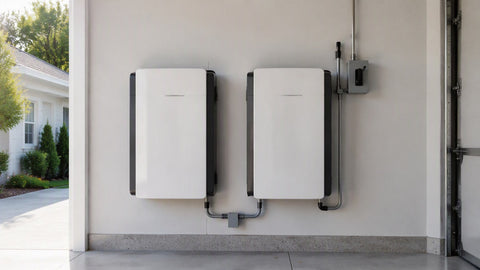
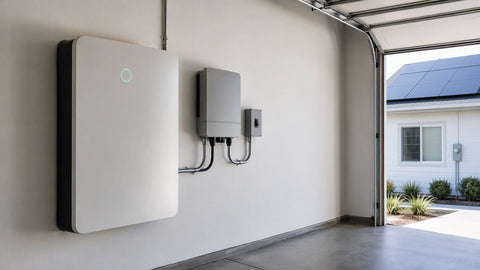
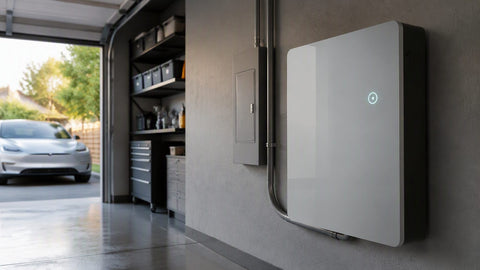
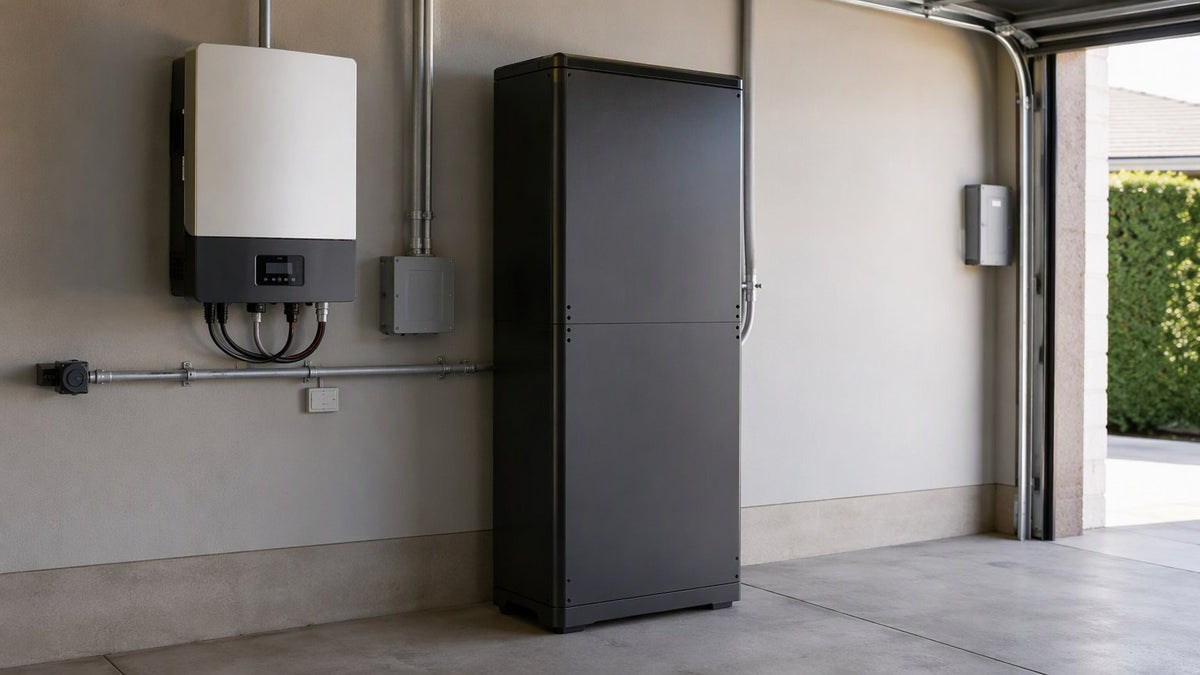
Buy the NEXUS if you want a single-SKU 15kWh answer for an off-grid cabin, a grid-tied backup system with a 5kW-class inverter, or the first block of a bank you will grow toward 30, 60 or 200+kWh over time. Skip it (or plan on multiples) if your inverter exceeds 8kW continuous, if you need outdoor installation without an enclosure — it is IP21, indoor-rated — or if you want wall-mount form factor; at 315 pounds this is a floor-standing appliance, and its 19.7" × 27.5" × 15.7" footprint belongs in a garage, utility room or tech closet.
Frequently Asked Questions
How long will a Big Battery NEXUS 15kWh run my house?
Divide 15kWh by your average load. Critical loads only (fridge, lights, internet, furnace blower at ~400W) run about 37 hours. A 1,200W whole-home critical panel runs roughly 12 hours — overnight coverage. A full un-managed home at 2–3kW average gets 5–7 hours. The runtime scales linearly as you parallel units: two NEXUS doubles every number.
Can the NEXUS run a 12kW inverter?
Not at full output from a single unit. The battery delivers 100A continuous (7.6kW max discharge power, 110A peak); a 12kW inverter at full draw wants roughly 235A at 51.2V. One NEXUS pairs well with inverters up to about 5kW continuous; two in parallel (200A) support 8–10kW; plan on three or more for a fully-loaded 12kW inverter.
Does the NEXUS work with my inverter brand?
Almost certainly. It speaks RS485, CAN and RJ45 with closed-loop profiles for EG4, Victron, Sol-Ark, LuxPower, Deye, Solis, GoodWe, Pylon and Sofar, and it also works in open-loop (voltage-based) mode with essentially any 48V inverter/charger. Closed-loop is worth the setup time — the inverter sees real state-of-charge and BMS limits instead of inferring them from voltage.
Can I install the NEXUS in an unheated garage?
Yes — that is exactly what the built-in heater is for. The battery discharges down to −4°F and the heater lets it accept charge from 32°F up, so winter solar harvest is not lost to cold-soaked cells. It is IP21 and indoor-rated, so it needs a dry, covered space; a damp shed or outdoor pad requires a weather enclosure. Weight is ~315 lb — plan the floor and the two-person lift.
How many NEXUS batteries can I connect together?
Up to 15 units in parallel, for 215kWh total. Each parallel unit also adds its 100A of discharge capability, so the bank's power budget grows with its capacity — 3 units give you 45kWh and 300A continuous. Communications daisy-chain over RS485/CAN, and one master BMS reports the bank to the inverter as a single battery.
Building a Bank? Price It by the kWh
PES Supply stocks the NEXUS 15kWh plus the inverters, cables and disconnects to complete the system — 169 authorized brands at contractor pricing. Tell us your load list and autonomy target and we will size the bank.
Shop Battery Storage Contact Us for Bulk PricingRelated Resources
- Battery bank sizing calculator: kWh and days of autonomy
- Solar battery backup runtime calculator
- Off-grid inverter sizing: continuous, surge and battery
- Battery cable size chart for 48V banks
- Solar battery charge time calculator
- Batteries and energy storage
Need pricing or availability on anything in this guide?
Portlandia Electric Supply dropships direct from the manufacturer — most items Ship Direct with lead times stated up front, no surprises.
Get a quote from PESBulk, pallet and contractor pricing available.