kWh to Amps Calculator: 120V, 240V, and Three-Phase
Reading time: ~8 min read
📋 Key Takeaways
- kWh is energy; amps are flow rate — you need time to convert. Average amps = kWh × 1,000 ÷ volts ÷ hours. One kWh over one hour at 120V is 8.33A; the same kWh spread over 24 hours is 0.35A.
- Three-phase adds the √3 divisor: amps = kWh × 1,000 ÷ (volts × 1.732 × PF × hours), using line-to-line voltage.
- The 30 kWh/day average US home runs at 5.2 average amps at 240V — yet needs a 200A service, because peak demand, not average, sizes the equipment.
- Battery banks speak both languages: kWh = volts × amp-hours ÷ 1,000, so a 48V 100Ah bank holds 4.8 kWh and a 12V 100Ah battery holds 1.2 kWh.
- Converting a utility bill's kWh into average amps is the fastest sanity check on whether a panel, subpanel, or generator is realistically loaded.
"How do I convert kWh to amps?" hides a missing ingredient — just like amps-to-watts needs volts, kWh-to-amps needs time. A kilowatt-hour is a bucket of energy; amps measure how fast it flows. Spread one kWh across ten minutes and you pull 50A at 120V; sip it over a full day and the same kWh is barely a third of an amp. The calculator below converts in both directions — kWh to average amps, and amps plus hours back to kWh — at 120V, 240V, and three-phase 208V/480V with power factor, and the tables after it give the reference numbers for homes, battery banks, and solar arrays.
Related conversions we already cover: the amps to watts calculator (instantaneous power, no time term), the power consumption calculator (watts × hours → kWh → dollars), and the kVA to kW calculator for apparent vs real power. Need hardware? Browse electrical supplies.
kWh ↔ Amps Calculator
Pick the direction of the conversion.
kWh (mode 1) or amps (mode 2).
Line-to-line for three-phase.
Over how long the energy flows (24 = daily average).
Three-phase applies the √3 factor.
Motors 0.8–0.9; resistive 1.0.
Result: —
Relationship: —
Formulas: average amps = kWh × 1,000 ÷ volts ÷ hours (single-phase/DC); three-phase divides by volts × 1.732 × PF × hours. Reverse: kWh = amps × volts × hours ÷ 1,000 (× PF, × 1.732 as applicable). Informational — this is average current, not peak demand.
One kWh in Amps: The Reference Chart
The same kilowatt-hour looks completely different depending on voltage and how fast you spend it. This table assumes a one-hour window and power factor 1.0:
| Energy | 12 V DC | 24 V DC | 48 V DC | 120 V AC | 240 V AC | 480 V 3-phase |
|---|---|---|---|---|---|---|
| 0.5 kWh over 1 h | 41.7 A | 20.8 A | 10.4 A | 4.2 A | 2.1 A | 0.6 A |
| 1 kWh over 1 h | 83.3 A | 41.7 A | 20.8 A | 8.3 A | 4.2 A | 1.2 A |
| 5 kWh over 1 h | 416.7 A | 208.3 A | 104.2 A | 41.7 A | 20.8 A | 6.0 A |
| 10 kWh over 1 h | 833.3 A | 416.7 A | 208.3 A | 83.3 A | 41.7 A | 12.0 A |
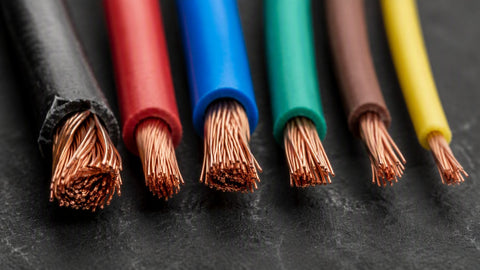
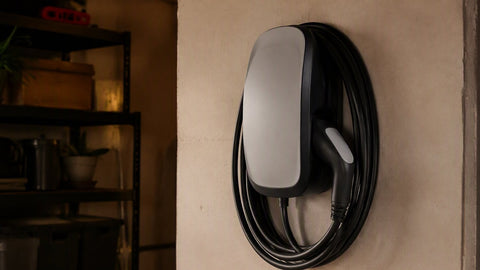
The DC columns explain why battery banks migrated from 12V to 48V: moving a single kWh in an hour takes 83A at 12V — cable the size of a thumb — but only 21A at 48V. The AC columns explain why big continuous loads live at 240V: a 10kWh EV charging session in one hour needs 83A at 120V (impossible on a branch circuit) but a manageable 42A at 240V.
Daily Energy to Average Amps: Homes and Systems
The most useful version of this conversion is the daily one — kWh per day ÷ 24 hours ÷ volts — because it turns a utility bill or a solar production estimate into an average current you can compare against equipment ratings:
| Daily energy | Avg amps @ 120 V | Avg amps @ 240 V | Typical source |
|---|---|---|---|
| 5 kWh/day | 1.7 A | 0.9 A | Efficient apartment, RV day |
| 10 kWh/day | 3.5 A | 1.7 A | Small efficient home |
| 30 kWh/day | 10.4 A | 5.2 A | Average US home |
| 50 kWh/day | 17.4 A | 8.7 A | Large home, heavy AC use |
| 100 kWh/day | 34.7 A | 17.4 A | Very large home + EV charging |
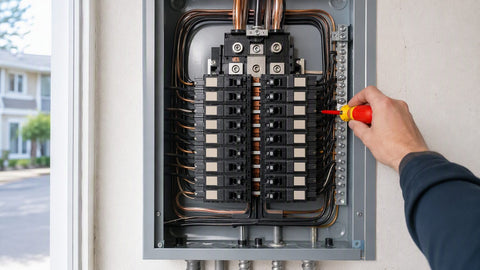
Here is the sanity check this table enables: the average home sips just 5A at 240V on average, yet correctly has a 200A service. Demand is spiky — the water heater, range, dryer, and AC can coincide for 15 minutes at 100A+ — so equipment is sized for peaks and NEC demand calculations, not averages. If you are checking whether a generator or battery system can cover your usage, this daily average is exactly the right number; if you are sizing wire and breakers, you need the peak figures from the NEC 220 load calculation guide and the breaker size calculator instead.
Battery Banks: Where kWh Meets Amp-Hours
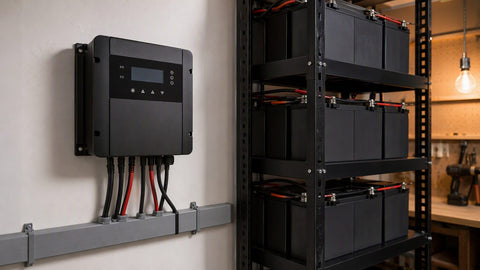
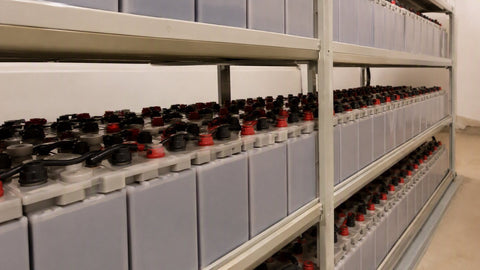
Batteries are rated in amp-hours but store kilowatt-hours, and this same formula bridges the two: kWh = volts × Ah ÷ 1,000. The reverse — Ah = kWh × 1,000 ÷ volts — is what "kilowatt hours to amp hours" searchers need:
| Battery / bank | Amp-hours | Energy (kWh) |
|---|---|---|
| 12 V battery | 100 Ah | 1.2 kWh |
| 24 V battery | 100 Ah | 2.4 kWh |
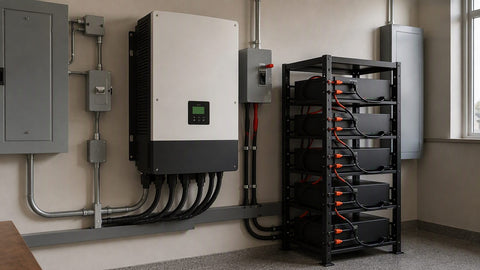
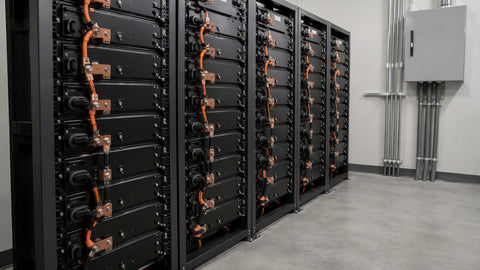
| 48 V server-rack module | 100 Ah | 4.8 kWh |
| 48 V bank (4 × 100Ah) | 400 Ah | 19.2 kWh |
| 12 V deep-cycle pair | 200 Ah | 2.4 kWh |
Notice the two 2.4kWh rows: a 24V 100Ah battery and two 12V 100Ah batteries store identical energy — amp-hours alone never tell you capacity until you multiply by voltage. That is why kWh is the honest unit for comparing storage, and why a "5kWh battery" claim should always state the voltage behind it. Size the full bank with the battery bank sizing calculator.
Frequently Asked Questions
How do I convert kWh to amps?
Divide the energy by voltage and by time: average amps = kWh × 1,000 ÷ volts ÷ hours. One kWh delivered over one hour at 120V is 8.33A; at 240V it is 4.17A. Spread that same kWh across 24 hours and the averages drop to 0.35A and 0.17A. For three-phase, also divide by 1.732 × power factor.
How many amps is 1 kWh at 240V?
It depends on the time window: 1 kWh ÷ 240V = 4.17 amp-hours, so one kWh used in one hour averages 4.17A, in two hours 2.08A, in ten hours 0.42A. There is no single amp number for a kWh until you say how fast the energy flows — kWh measures quantity, amps measure rate.
How do I convert amps back to kWh?
Multiply amps × volts × hours, then divide by 1,000: kWh = A × V × h ÷ 1,000. A 10A load at 120V running 5 hours uses 6 kWh. For single-phase motor loads multiply by power factor; for three-phase multiply by 1.732 × PF and use line-to-line voltage.
How many kWh is a 100Ah battery?
Multiply amp-hours by voltage and divide by 1,000. A 12V 100Ah battery stores 1.2 kWh; a 24V 100Ah battery stores 2.4 kWh; a 48V 100Ah server-rack module stores 4.8 kWh. Amp-hours are meaningless for comparing capacity until you attach the system voltage — kWh is the honest unit.
How does the kWh-to-amps formula change for three-phase?
Divide by one more factor: average amps = kWh × 1,000 ÷ (line-to-line volts × 1.732 × power factor × hours). Ten kWh over one hour on a 480V three-phase service at 0.9 PF averages 13.4A per leg. The 1.732 (√3) term accounts for the three legs sharing the load 120° apart; skip it and you oversize the current by 73%.
Turning kWh into a Circuit, Panel, or Battery?
PES Supply stocks the wire, breakers, panels, and battery banks behind these numbers — 169 authorized brands at contractor pricing. Send your usage figures and we will quote the equipment that carries them.
Shop Electrical Supplies Contact Us for Bulk PricingRelated Resources
- Amps to watts calculator: 120V, 240V, 12V
- Power consumption calculator: kWh and cost
- kVA to kW calculator: power factor converter
- Breaker size calculator: the NEC 125% rule
- Battery bank sizing calculator: kWh and days of autonomy
- Wire, breakers, and electrical supplies